Ibc Tank
Ibc Tank
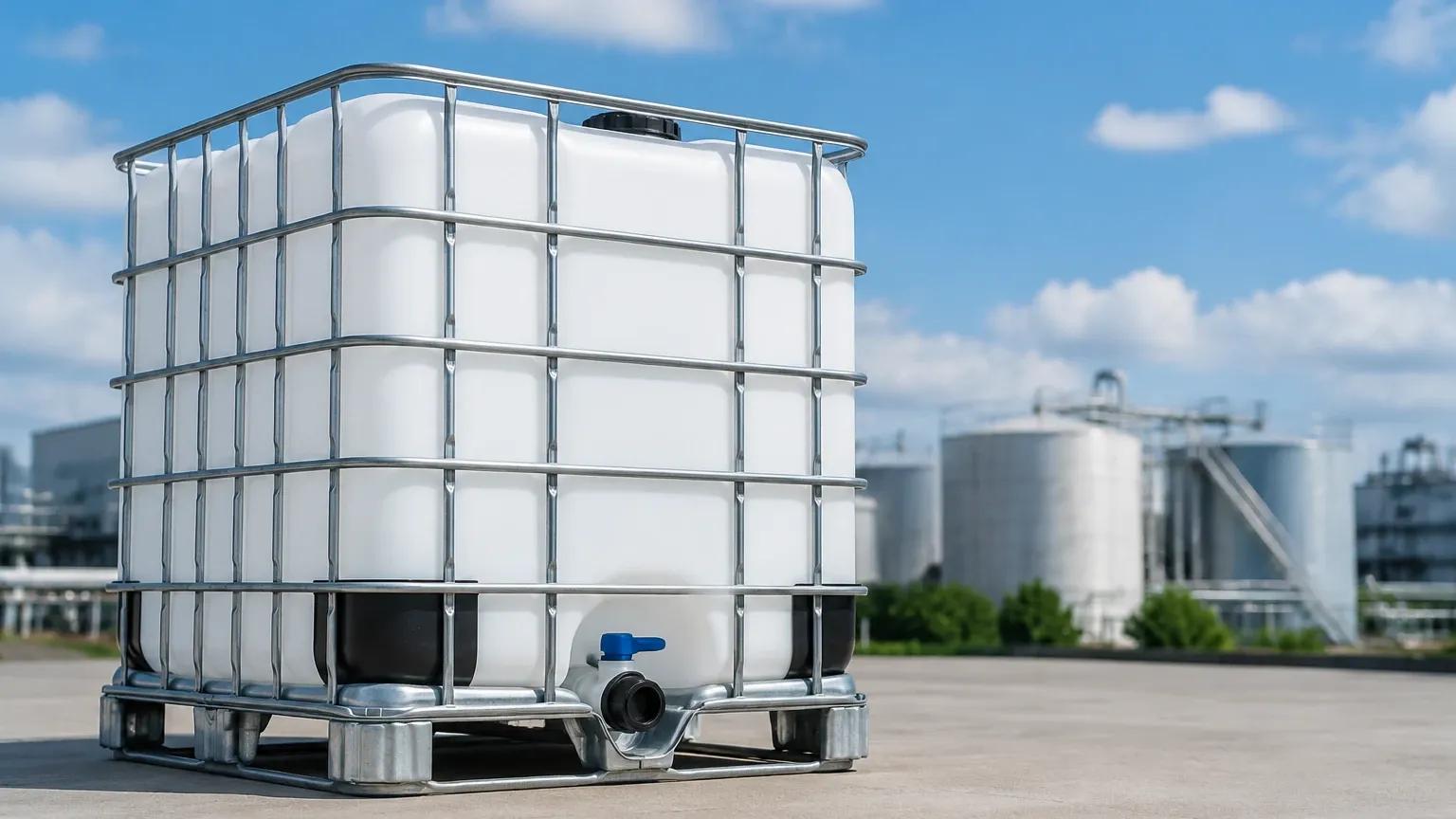
In modern industrial logistics and fluid management, the Intermediate Bulk Container, commonly referred to as an ıbc tank, serves as a fundamental unit for the storage and transport of liquids, semi-solids, and granulated materials. These containers, typically holding 1,000 liters (approximately 275 gallons), are ubiquitous in chemical processing, water treatment, food and beverage production, and the oil and gas sector. However, the efficiency of using an ıbc tank depends heavily on the ability to accurately monitor its contents.
Reliable level measurement prevents overfills, ensures process continuity, and optimizes supply chain logistics. For engineers and facility managers, selecting the right instrumentation requires a deep understanding of measurement principles, chemical compatibility, and the physical constraints of the container itself. This guide explores the technical landscape of monitoring an ıbc tank, providing the factual foundation necessary for informed procurement and installation.
Measurement Principles for IBC Level Monitoring
Before selecting a sensor, it is essential to understand the physics behind the most common measurement technologies. Each method interacts differently with the liquid surface and the tank environment.
1. Ultrasonic Level Measurement (Non-Contact)
Ultrasonic sensors operate on the "Time of Flight" (ToF) principle. The sensor emits high-frequency sound waves that travel through the air, reflect off the liquid surface, and return to the transducer. By measuring the time taken for the pulse to return, the device calculates the distance to the liquid level.
* Advantages: Non-contact, meaning the sensor does not touch the medium, which is ideal for corrosive liquids.
* Limitations: Performance can be degraded by heavy foam, which absorbs sound waves, or by high-pressure vapors that change the speed of sound in the tank headspace.
2. Radar Level Measurement (FMCW and Pulse)
Radar sensors, particularly those operating at 80GHz, use electromagnetic waves rather than sound. Frequency Modulated Continuous Wave (FMCW) radar is the current industry standard for high precision. The sensor emits a continuous signal with a changing frequency; the difference between the emitted and received frequency is proportional to the distance.
* Advantages: Radar is unaffected by temperature fluctuations, vacuum, or pressure. Because 80GHz radar has a very narrow beam angle, it can often measure through the plastic wall of a polyethylene ıbc tank, allowing for completely non-invasive monitoring.
* Limitations: Materials with a very low dielectric constant (like certain oils) may produce weak reflections.
3. Hydrostatic Pressure Measurement
This principle relies on the relationship between the height of a liquid column and the pressure it exerts at the bottom of the tank. The formula $P = \rho \cdot g \cdot h$ (where $P$ is pressure, $\rho$ is density, $g$ is gravity, and $h$ is height) allows the sensor to determine the level based on weight.
* Advantages: Highly reliable for vented tanks and unaffected by foam or surface turbulence.
* Limitations: If the density of the liquid changes (e.g., due to temperature or mixing), the level reading will become inaccurate unless the sensor is recalibrated.
4. Capacitance and Point Level Switches
For applications requiring only "High" or "Low" alerts rather than continuous measurement, level switches are used. Capacitance sensors detect the change in electrical capacitance when the probe is submerged. Tuning fork switches vibrate at a specific frequency, which changes when the liquid contacts the tines.
Practical Selection Table for IBC Tank Instrumentation
Choosing the right technology depends on the specific requirements of the application. The following table provides a comparison of the most common solutions for an ıbc tank.
| Technology | Accuracy | Typical Range | Best Use Case | Main Limitation |
| :— | :— | :— | :— | :— |
| Ultrasonic | ±0.25% | 0.1m – 5m | Water, dilute acids, bases | Foam, heavy vapors |
| 80GHz Radar | ±1mm to 2mm | 0.1m – 30m | High-precision, non-invasive | Higher initial cost |
| Hydrostatic | ±0.5% | 0m – 10m | Vented tanks, viscous liquids | Sensitive to density changes |
| Magnetic Float | ±5mm | 0.2m – 3m | Clear liquids, no power required | Moving parts can clog |
| Capacitance | Point Level | N/A | Overfill prevention | Requires contact with medium |
Installation and Engineering Considerations
Successful deployment of a level sensor on an ıbc tank requires attention to the physical geometry of the container. Most standard IBCs feature a 150mm (6-inch) or 225mm (9-inch) top opening with a 2-inch (50mm) bung hole.
Mounting Location
The sensor should be mounted away from the fill inlet to avoid false readings during filling cycles. For ultrasonic and radar sensors, the "dead zone" or "blocking distance" (the area immediately below the sensor where measurement is impossible) must be considered. If the tank is 1,200mm high and the sensor has a 100mm dead zone, the tank can only be measured accurately up to 1,100mm.
Non-Invasive Measurement
One of the most significant trends in ıbc tank management is the use of radar to measure through the tank wall. Since HDPE (High-Density Polyethylene) is transparent to radar waves, a sensor can be mounted above the tank without any holes being drilled. This maintains the integrity of the container and is ideal for food-grade or hazardous chemicals where contamination or leakage is a concern.
Tank Geometry and Obstructions
Standard IBCs often have a metal cage or frame. While this does not usually interfere with internal sensors, any internal heating coils or agitators must be accounted for. Radar and ultrasonic beams must have a clear "line of sight" to the liquid surface. Narrow beam angles (e.g., 3° to 6°) are preferred to avoid reflections from the tank walls.
Limitations and Application Risks
While modern sensors are highly advanced, certain conditions can compromise the accuracy of level data in an ıbc tank:
1. Condensation: In outdoor environments, temperature swings can cause condensation on the sensor face. While radar is largely immune to this, ultrasonic sensors may experience signal attenuation. Sensors with PTFE (Teflon) faces are often used to encourage droplets to shed.
2. Agitation and Turbulence: If the liquid is being mixed, the surface will not be flat. This can scatter the signal of non-contact sensors. In such cases, a stilling well (a pipe inside the tank) can be used to provide a calm surface for measurement.
3. Crystallization: Some chemicals may crystallize on the sensor probe or face. Regular maintenance or the use of non-contact radar is recommended for these substances.
4. Dielectric Constant (dk): Radar requires a reflection. Liquids with a dk value below 1.5 (such as certain liquefied gases or pure hydrocarbons) may require a guided wave radar (GWR) or a high-sensitivity FMCW radar to be detected reliably.
Frequently Asked Questions (FAQs)
Q: Can I use the same sensor for different types of liquids in an IBC?
A: It depends on the technology. Radar and ultrasonic sensors are generally versatile, provided the chemical vapors do not corrode the sensor housing. Hydrostatic sensors must be recalibrated if the liquid density changes significantly.
Q: How do I power a level sensor on a mobile ıbc tank?
A: For mobile applications, battery-powered IoT (Internet of Things) sensors are common. These devices often use LPWAN (Low Power Wide Area Network) technologies like NB-IoT or LoRaWAN to transmit data to a cloud platform once or twice a day, extending battery life to several years.
Q: Is it possible to measure the level of a stainless steel IBC from the outside?
A: No. Unlike plastic tanks, metal is opaque to radar and ultrasonic waves. For stainless steel IBCs, the sensor must be installed through a bung hole or flange on the top of the container.
Q: What is the best way to handle foam in an IBC?
A: If the foam is thick and persistent, a hydrostatic pressure transmitter or a guided wave radar (GWR) is usually the best choice. GWR uses a physical probe to guide the signal, allowing it to penetrate through foam to find the true liquid level.
Q: How accurate are these sensors in a 1,000-liter tank?
A: High-end radar sensors can provide accuracy within ±1mm, which equates to approximately 0.8 liters of volume in a standard 1,000L IBC. Ultrasonic sensors typically provide accuracy within ±5mm to ±10mm.
Conclusion
Efficiently managing an ıbc tank fleet requires a strategic approach to level measurement. By understanding the strengths and limitations of ultrasonic, radar, and hydrostatic technologies, engineers can select a solution that minimizes maintenance and maximizes data reliability. Whether the goal is to prevent dry-run conditions in a pump or to automate chemical reordering, the right instrumentation is the key to operational excellence.
For a comprehensive overview of industrial instrumentation and to explore specific sensor models for your application, visit our Main Page. Selecting the appropriate device ensures that your ıbc tank remains a reliable asset in your production and distribution chain.