Bluetooth Transducer
Bluetooth Transducer
In the landscape of industrial automation, the integration of wireless communication into traditional sensing hardware has revolutionized how process data is collected and managed. A Bluetooth transducer, specifically within the context of level measurement, is a sophisticated instrument that combines a sensing element—such as a radar or ultrasonic sensor—with a Bluetooth Low Energy (BLE) communication module. This integration allows engineers and operators to configure, monitor, and troubleshoot level measurement points from a distance using mobile devices or tablets, eliminating the need for physical cabling for local display or manual adjustments in hazardous or hard-to-reach areas.
As industrial facilities move toward Industry 4.0, the role of the Bluetooth transducer has expanded from a simple convenience to a critical tool for operational efficiency. By providing a secure, wireless interface, these devices bridge the gap between physical tank levels and digital data management systems. For a comprehensive overview of industrial-grade sensing technology, professionals often refer to the Main Page of specialized manufacturers to evaluate the full spectrum of available measurement technologies.
Understanding the Bluetooth Transducer Principle
To understand a Bluetooth transducer, one must distinguish between the measurement principle (how it detects the level) and the communication protocol (how it transmits the data). The term "transducer" refers to the component that converts one form of energy—such as acoustic waves or electromagnetic pulses—into an electrical signal. The "Bluetooth" aspect refers to the wireless protocol used to transmit this signal or its processed data to a receiver.
Measurement Principles
Most industrial Bluetooth transducers utilize one of two primary non-contact measurement technologies:
1. Radar (Radio Detection and Ranging): These transducers emit high-frequency electromagnetic pulses (typically in the 26 GHz or 80 GHz range). These pulses travel at the speed of light, reflect off the surface of the medium, and return to the sensor. The time-of-flight (ToF) is measured to calculate the distance. Radar is highly effective in environments with dust, steam, or varying pressure and temperature.
2. Ultrasonic: These devices emit high-frequency sound waves. The transducer measures the time interval between the emission of the ultrasonic pulse and the reception of the echo. While cost-effective, ultrasonic transducers are more susceptible to air temperature fluctuations and surface foam compared to radar.
The Bluetooth Integration
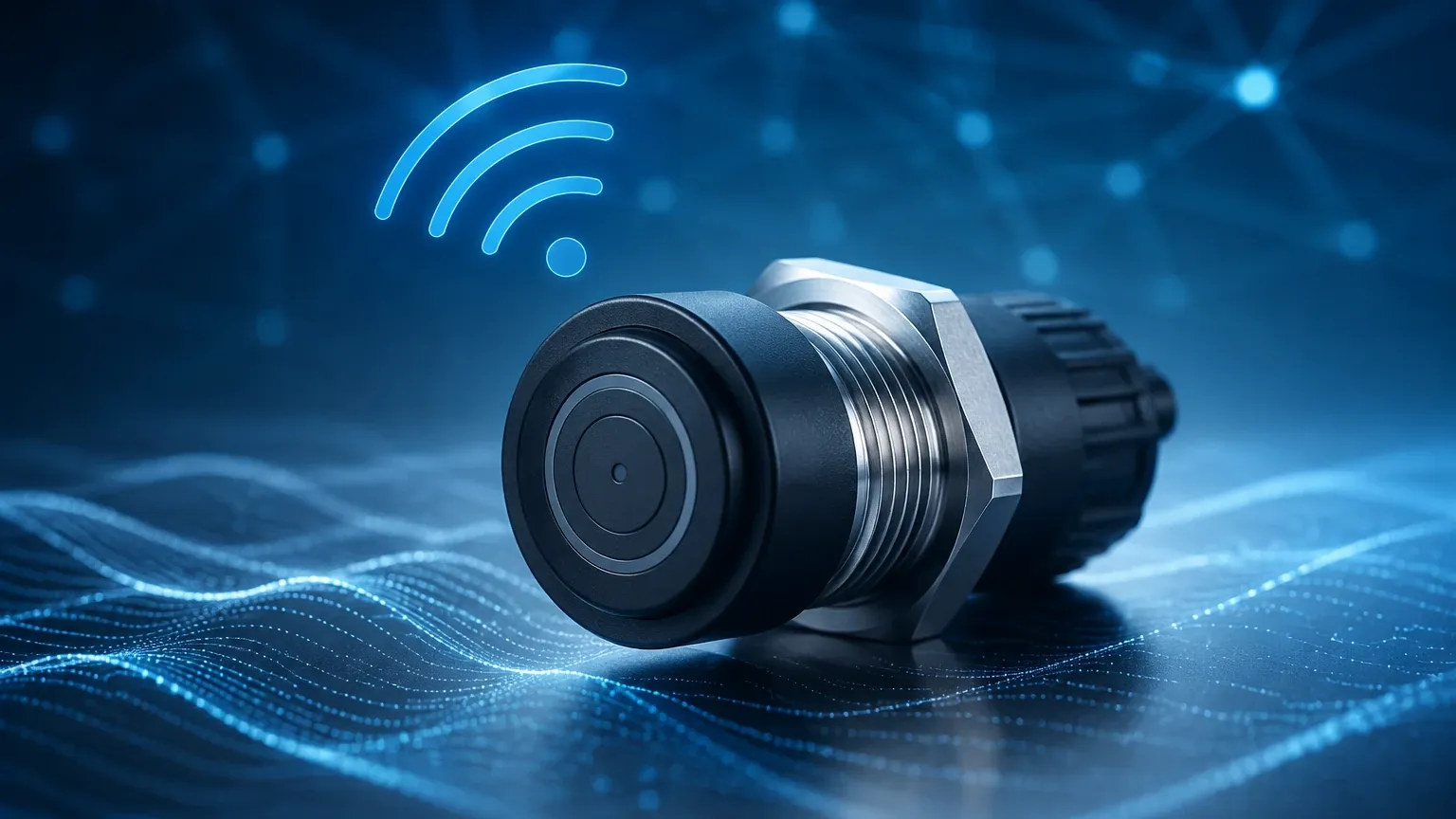
Inside the housing of the transducer, a micro-processor handles both the signal processing of the level data and the management of the Bluetooth stack. Modern industrial units typically use Bluetooth Low Energy (BLE), which provides a stable connection with minimal power consumption. This is particularly important for battery-powered or loop-powered (2-wire) instruments where power budget is a critical design constraint.
Key Advantages for Industrial Operations
The adoption of Bluetooth-enabled level measurement offers several tangible benefits over traditional wired-only or local-display-only instruments.
Enhanced Safety
Level measurement points are frequently located at the top of tall silos, inside chemical storage tanks, or in zones with hazardous atmospheres (ATEX/IECEx zones). A Bluetooth transducer allows technicians to perform commissioning and diagnostic checks from the safety of the ground or a nearby walkway, up to 25 meters (82 feet) away. This significantly reduces the need for climbing ladders or entering confined spaces.
Simplified Commissioning
Traditional transducers often require a dedicated handheld programmer or a laptop connected via a HART modem. With Bluetooth integration, a smartphone app replaces proprietary hardware. Operators can visualize echo curves in real-time, set span and zero points, and adjust damping factors through a user-friendly graphical interface. This visualization is crucial for identifying and "masking" false echoes caused by internal tank obstructions like agitators or ladders.
Cost Reduction
While the initial cost of a Bluetooth-enabled sensor may be slightly higher than a basic analog unit, the total cost of ownership is often lower. The reduction in labor time for setup, the elimination of expensive local display units, and the simplified maintenance routines contribute to rapid ROI. For facilities managing hundreds of tanks, the time saved per unit adds up to significant operational savings.
Technical Selection Criteria
When selecting a Bluetooth transducer for industrial applications, several technical parameters must be evaluated to ensure compatibility with the process environment.
| Feature | Radar Bluetooth Transducer | Ultrasonic Bluetooth Transducer |
| :— | :— | :— |
| Measurement Range | Up to 30m – 120m (98ft – 393ft) | Typically up to 15m (49ft) |
| Accuracy | ±2mm to ±5mm | ±0.25% of range |
| Pressure Limits | Up to 40 bar (580 psi) or higher | Typically atmospheric |
| Temperature Range | -40°C to +200°C (-40°F to +392°F) | -40°C to +80°C (-40°F to +176°F) |
| Media Compatibility | Liquids, solids, corrosive chemicals | Primarily liquids and stable solids |
| Influence of Dust/Vapor | Minimal | Significant |
| Bluetooth Range | 10m to 25m (33ft to 82ft) | 10m to 25m (33ft to 82ft) |
Material Compatibility
The wetted parts of the transducer must be resistant to the process media. For corrosive chemicals, PVDF or PTFE-coated sensors are standard. For food and beverage applications, stainless steel (316L) with sanitary connections is required. The Bluetooth signal itself is transmitted through the non-metallic parts of the housing (usually a plastic window or the entire radome), so the housing material must be robust enough for the environment while remaining transparent to 2.4 GHz radio waves.
Installation and Commissioning Considerations
Proper installation is paramount to the accuracy of any level transducer, regardless of its communication capabilities.
1. Dead Zone (Blocking Distance): Every transducer has a minimum distance it cannot measure, known as the dead zone. For ultrasonic sensors, this is usually 0.25m to 0.5m (10" to 20"). For high-frequency radar, this can be as low as 0.05m (2"). The transducer must be mounted high enough that the maximum liquid level never enters this zone.
2. Beam Angle: The signal is emitted in a cone. The installation must ensure that this cone does not intersect with tank walls or internal structures. Bluetooth apps are particularly helpful here, as they allow the installer to see the signal strength and identify if the beam is hitting an obstruction.
3. Orientation: The transducer should be mounted perpendicular to the liquid surface. In solids applications, an aiming flange may be used to point the transducer at the angle of repose of the material.
4. Bluetooth Signal Path: While Bluetooth does not require a strict line-of-sight, heavy metal shielding or thick concrete walls can attenuate the signal. For sensors located inside thick-walled metal tanks, the Bluetooth module is usually positioned in the sensor head outside the tank to ensure connectivity.
Security and Data Integrity
A common concern in B2B environments is the security of wireless signals. Industrial Bluetooth transducers address this through several layers of protection:
* PIN Protection: Access to the sensor's configuration menu is protected by a unique PIN code, preventing unauthorized changes to process parameters.
* Encrypted Communication: Data transmitted between the transducer and the mobile device is encrypted to prevent eavesdropping.
* Read-Only Modes: Systems can be configured so that Bluetooth is used for monitoring only, requiring a physical connection or a higher-level password for configuration changes.
* Range Limitation: The short-range nature of BLE (under 25 meters) acts as a physical security layer, as an individual must be in close proximity to the equipment to attempt a connection.
Limitations of Bluetooth Transducers
While highly versatile, these devices are not a universal solution for every scenario. It is important to recognize their limitations:
* Range Constraints: Bluetooth is not a long-range telemetry solution. It is intended for local diagnostics and configuration. For transmitting data to a control room kilometers away, integrated cellular (NB-IoT/LTE-M) or LoRaWAN solutions are more appropriate.
* Power Consumption: Although BLE is efficient, continuous Bluetooth broadcasting can drain batteries in wireless-only units. Most industrial units allow the user to schedule the Bluetooth "wake-up" time or require a physical button press to activate the radio.
* Signal Interference: In environments with extremely high electromagnetic interference (EMI), such as near large variable frequency drives (VFDs) or high-voltage transformers, Bluetooth stability may be affected.
Maintenance and Troubleshooting
Maintaining a Bluetooth transducer is generally simpler than maintaining traditional units. The primary maintenance task is ensuring the sensor face remains clean. If the app shows a "Low Echo Quality" warning, it often indicates buildup on the transducer face.
Troubleshooting is facilitated by the diagnostic data available via Bluetooth. Most modern apps provide error codes that correspond to specific issues, such as "Loss of Echo," "Supply Voltage Out of Range," or "Hardware Failure." Having this information available on a handheld device allows for faster resolution without dismantling the instrument.
Frequently Asked Questions (FAQ)
Q: Can I use a Bluetooth transducer in an explosive atmosphere?
A: Yes, many Bluetooth transducers are certified for ATEX, IECEx, and Class I, Div 1 areas. The Bluetooth module and the circuitry are designed to be intrinsically safe.
Q: Do I need an internet connection to use the Bluetooth configuration app?
A: Generally, no. The connection is peer-to-peer between your mobile device and the transducer. However, you may need an internet connection initially to download the app and the specific device drivers (DDs/DTMs).
Q: How many transducers can I connect to at once?
A: Most apps allow you to scan and see all nearby transducers, but for security and data integrity, you typically connect to and configure one device at a time.
Q: What happens if I lose my PIN code?
A: Manufacturers usually provide a master reset procedure, which often involves a physical hardware key or a unique PUK code provided at the time of purchase. This ensures that the device remains accessible even if the custom PIN is forgotten.
Conclusion
The Bluetooth transducer represents a significant leap forward in process instrumentation, combining robust measurement physics with modern wireless convenience. By simplifying the installation, commissioning, and maintenance of level sensors, these devices allow industrial facilities to improve safety and reduce operational costs. When selecting a device, it is essential to match the measurement principle (Radar or Ultrasonic) to the specific process conditions while ensuring the Bluetooth implementation meets the facility's security standards. For those seeking to integrate these solutions into their operations, exploring the technical documentation on the Main Page of an established manufacturer is the recommended next step to ensure the right technology is selected for the application.