Batch Controllers
Batch Controllers
In industrial fluid handling and solids processing, the ability to accurately dispense specific quantities of material is fundamental to quality control and operational efficiency. Batch controllers serve as the primary logic interface in these systems, bridging the gap between measurement sensors—such as flow meters or level transmitters—and final control elements like pumps and valves. As automated systems become more complex, understanding the technical nuances of batch controllers is essential for process engineers and system integrators.
Measurement Principles and System Architecture
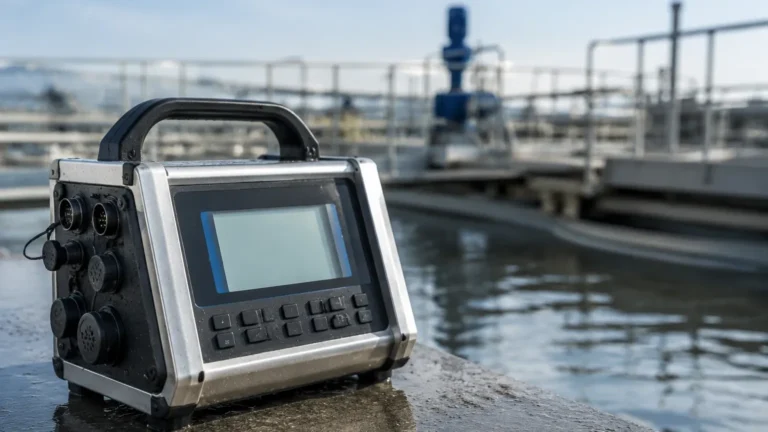
A batch controller is an electronic instrument designed to automate the delivery of a preset volume or mass of material. The operational principle relies on continuous feedback from a primary measurement device. This feedback is typically delivered in one of two ways: pulse signals or analog signals.
Pulse-Based Batching
In systems using volumetric flow meters (such as turbine or oval gear meters), the batch controller receives a pulse for every discrete unit of volume that passes through the meter. The controller counts these pulses and compares the total against a user-defined "setpoint." Once the count reaches the setpoint, the controller triggers a relay to close a valve or stop a pump.
Level-Based Batching
In many storage tank applications, batching is managed through level measurement. Instruments such as radar level meters or hydrostatic level transmitters monitor the change in the liquid surface. The batch controller calculates the volume based on the tank's geometry. This method is particularly useful for large-scale chemical dosing or water treatment processes where installing an in-line flow meter is impractical. By visiting the Main Page of instrumentation providers, engineers can identify which level measurement technologies—radar, ultrasonic, or hydrostatic—best complement their specific batching requirements.
Key Components of a Batching System
To ensure a successful batching operation, several components must work in synchronization:
1. The Controller: The central processing unit that handles the logic, display, and user interface.
2. The Sensor: A flow meter or level transmitter providing real-time data.
3. The Control Valve: Usually a two-stage valve (solenoid or pneumatic) that manages the flow rate to prevent hydraulic shock and overfilling.
4. The Pump: The prime mover for the fluid, often controlled via a relay or variable frequency drive (VFD).
Technical Selection Criteria for Batch Controllers
Selecting the appropriate batch controller requires an evaluation of the process environment and the required precision. The following table outlines the primary considerations for B2B procurement and engineering design.
| Feature | Specification Detail | Application Significance |
| :— | :— | :— |
| Input Type | Pulse (TTL, Open Collector, Reed) or Analog (4-20mA) | Determines compatibility with existing flow or level sensors. |
| Control Stages | Single-stage or Dual-stage (Pre-close) | Dual-stage prevents "water hammer" and improves accuracy by slowing flow before the final cutoff. |
| Accuracy Class | 0.1% to 0.5% of total batch | Critical for high-value chemical or pharmaceutical ingredients. |
| Environmental Rating | IP65, IP67, or NEMA 4X | Necessary for wash-down environments or outdoor installations. |
| Communication | RS485 (Modbus RTU), Ethernet, or Profibus | Allows for integration into broader SCADA or PLC networks. |
| Power Supply | 24V DC, 110V AC, or 220V AC | Must match the available facility infrastructure. |
| Explosion Protection | ATEX / IECEx Certification | Required for handling flammable liquids or powders in hazardous zones. |
Advanced Features: Overrun Compensation and Multi-Stage Control
One of the most significant challenges in batching is "overrun." When a batch controller signals a valve to close, there is a physical delay as the valve moves and the fluid in the pipe settles. This results in more material being delivered than the setpoint intended.
Modern batch controllers utilize Automatic Overrun Compensation. The controller monitors the excess volume from previous batches and automatically adjusts the valve closure signal for the next batch. For example, if a 500-liter batch consistently results in 502 liters, the controller will learn to signal the valve at 498 liters.
Multi-stage batching is another critical feature. In high-speed filling lines, a single-stage valve closure can cause significant pressure spikes. A dual-stage controller opens the valve fully for the majority of the batch, then switches to a "slow-flow" or "dribble" state when the batch is 90% complete. This ensures the final cutoff is precise and the piping system is protected from mechanical stress.
Integration with Level Measurement Instruments
While flow meters are the traditional input for batch controllers, integrating level sensors provides a redundant safety layer and expanded functionality. In chemical processing, a batch controller might use a flow meter for the primary measurement but rely on a high-level switch or a radar level meter to provide a "permissive" signal. If the level meter detects that the receiving tank does not have enough ullage (available space) for the intended batch, the controller will inhibit the start of the process to prevent an environmental spill.
Welk’s range of radar and ultrasonic sensors are frequently used in these integrated systems. For instance, in a water treatment facility, a hydrostatic level transmitter can provide the continuous volume data to a batch controller for precise dosing of coagulants into a settling tank. This synergy between level detection and batch logic ensures both accuracy and safety.
Installation Considerations and Best Practices
Proper installation is vital for the longevity and accuracy of batch controllers. Engineers should adhere to the following guidelines:
* Signal Integrity: Ensure that the signal cables from the flow meter or level sensor to the batch controller are shielded. Industrial environments are rife with electromagnetic interference (EMI) from large motors and VFDs, which can cause "ghost pulses" and lead to inaccurate batching.
* Grounding: Both the sensor and the controller must be properly grounded to a common earth point to prevent ground loops.
* Valve Placement: The control valve should be placed as close to the discharge point as possible to minimize the amount of fluid remaining in the pipe after the valve closes.
* Air Elimination: In liquid systems, the presence of air or vapor will be counted as volume by most flow meters, leading to significant errors. Air eliminators should be installed upstream of the measurement point.
* User Accessibility: The controller should be mounted at eye level with a clear display, especially in manual-start applications where operators need to monitor progress in real-time.
Limitations and Operational Risks
Despite their sophistication, batch controllers have limitations that must be managed:
1. Viscosity Changes: Significant changes in fluid temperature or viscosity can affect the accuracy of the primary flow sensor, which in turn affects the batch controller's performance.
2. Latency: In very small batches (e.g., less than 5 liters), the mechanical latency of the valve may be greater than the total batch time, making accurate control impossible without specialized high-speed equipment.
3. Power Failures: If power is lost during a batch, the controller must have non-volatile memory to retain the current batch count and the state of the process to prevent a double-batching error upon restart.
Frequently Asked Questions (FAQ)
Q: Can a batch controller handle multiple ingredients?
A: Standard batch controllers are designed for single-stream applications. However, multi-channel batch controllers exist that can sequence multiple ingredients or manage a master-slave relationship between different fluids for ratio blending.
Q: What is the difference between a batch controller and a PLC?
A: A PLC (Programmable Logic Controller) is a general-purpose industrial computer that can be programmed to perform batching. A batch controller is a dedicated instrument pre-configured with batching logic, offering a simpler interface, dedicated buttons (Start/Stop/Reset), and specialized features like overrun compensation out-of-the-box.
Q: How often should a batch controller be calibrated?
A: The controller itself rarely requires calibration as it is a digital counter. However, the system as a whole—specifically the flow meter or level sensor—should be calibrated at least annually, or more frequently if the material is abrasive or corrosive.
Q: Are batch controllers compatible with all types of valves?
A: Most batch controllers provide relay or transistor outputs compatible with solenoid valves, motorized ball valves, and pneumatic actuators (via a pilot solenoid). It is essential to check the voltage and current ratings of the controller's relays against the valve's requirements.
Conclusion
Batch controllers remain a cornerstone of industrial process automation, providing a reliable and dedicated solution for material dispensing. By selecting the right controller and pairing it with high-quality level or flow measurement instruments, facilities can achieve higher throughput, reduced waste, and enhanced safety. For those looking to upgrade their current systems or design new process loops, reviewing the technical specifications and compatibility of sensors on the Main Page is a critical first step in ensuring system-wide performance.