Coke Drum
Coke Drum
In the refinery and petrochemical industry, the coke drum stands as one of the most demanding environments for process instrumentation. As the primary vessel in a delayed coking unit (DCU), the coke drum is responsible for converting heavy residual oils into lighter, higher-value products and solid petroleum coke. Managing the level within these vessels is not merely a matter of process efficiency; it is a critical safety requirement. Accurate level measurement prevents "foam-over" events that can lead to catastrophic downstream equipment failure and unplanned shutdowns.
For engineers and plant operators, selecting the right instrumentation requires a deep understanding of the physical transformations occurring inside the vessel. This guide examines the principles of level measurement within a coke drum, compares available technologies, and provides practical selection and installation guidance.
Understanding the Role of the Coke Drum in Delayed Coking
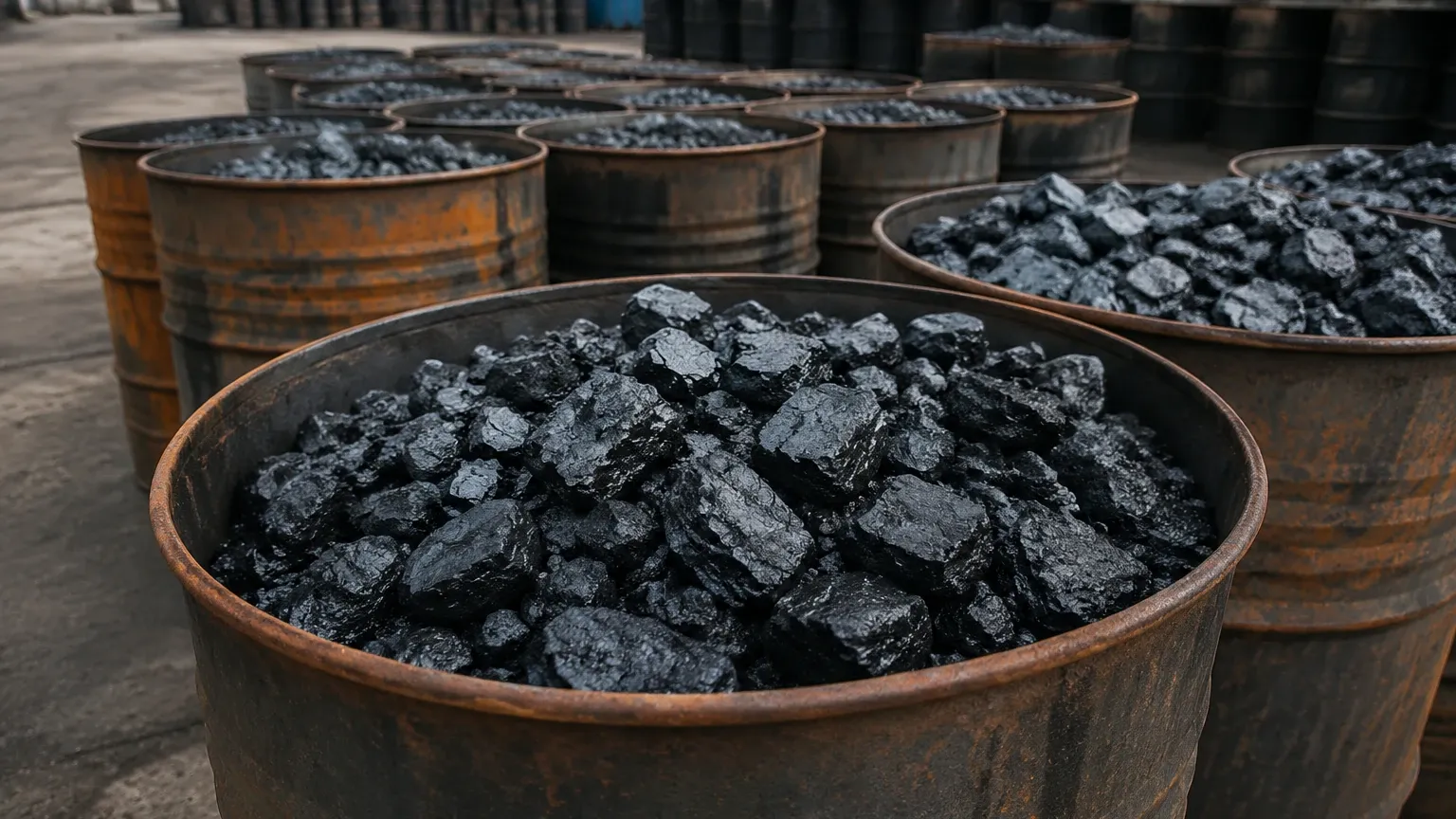
The delayed coking process is a thermal cracking operation. Residual oil from the vacuum distillation unit is heated to temperatures exceeding 480°C (896°F) and pumped into the bottom of a coke drum. Inside the drum, the heavy hydrocarbons undergo long-residence-time thermal cracking. This process results in the formation of hydrocarbon vapors—which are recovered and processed into gasoline, diesel, and gas oils—and a solid residue known as petroleum coke.
A typical coke drum cycle consists of several stages: preheating, filling (coking), steaming out, water cooling, and hydraulic decoking. During the filling stage, the drum contains a complex mixture of solid coke at the bottom, a transition layer of liquid pitch, a thick layer of foam, and a vapor space at the top. The extreme heat, high pressure (typically 2 to 4 bar or 30 to 60 psi), and the presence of abrasive coke particles make this a hostile environment for any measurement device.
Measurement Principles for Coke Drum Level Monitoring
To effectively monitor the contents of a coke drum, instrumentation must distinguish between the solid coke bed, the liquid/foam interface, and the vapor space. Several physical principles are employed to achieve this.
Nucleonic (Gamma) Measurement
This is a non-intrusive technology that relies on the attenuation of gamma radiation. A radioactive source (typically Cesium-137 or Cobalt-60) is placed on one side of the drum, and a detector is placed on the opposite side. As the density of the material between the source and detector increases (e.g., as the coke level rises), the amount of radiation reaching the detector decreases. Because the sensors are mounted outside the vessel, they are not exposed to the high temperatures or corrosive materials inside.
Radar Level Measurement
Radar instruments use the Time-of-Flight (ToF) principle. A sensor emits high-frequency microwave pulses that travel through the vapor space and reflect off the surface of the material. By measuring the time it takes for the pulse to return, the device calculates the distance to the surface.
* Non-contact Radar: These units are mounted on top of the drum. They face challenges in coke drums due to the heavy foam layer, which can absorb or scatter the radar signal, and the potential for coke buildup on the antenna.
* Guided Wave Radar (GWR): This technology uses a physical probe or cable to guide the microwave signal. While GWR provides a stronger return signal than non-contact radar, the probe is susceptible to damage during the hydraulic decoking process and can suffer from heavy coating.
Differential Pressure (DP)
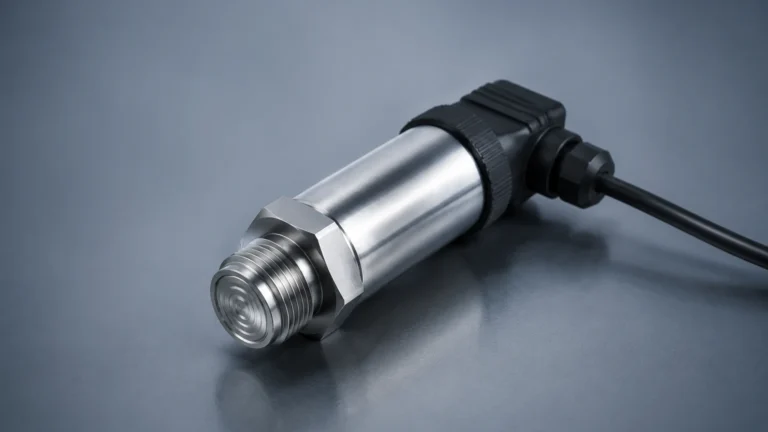
DP transmitters measure the hydrostatic head of the liquid in the vessel. However, in a coke drum, the varying density of the foam and the transition from liquid to solid coke make DP measurements highly unreliable for precise level control. They are more commonly used for general pressure monitoring rather than primary level detection.
Comparative Analysis of Level Measurement Technologies
Selecting the appropriate technology requires balancing reliability, maintenance requirements, and the specific needs of the refinery. For many facilities, a combination of technologies provides the necessary redundancy for safe operation. For a broader look at industrial measurement options, engineers often Review product options and application support to find the best fit for their specific vessel geometry.
| Feature | Nucleonic (Gamma) | Non-contact Radar | Guided Wave Radar (GWR) |
| :— | :— | :— | :— |
| Installation | External (Non-intrusive) | Top-mounted (Intrusive) | Top-mounted (Intrusive) |
| Temperature Resistance | Excellent (External) | High (with cooling) | Limited by probe material |
| Foam Sensitivity | Low (Measures density) | High (Signal absorption) | Moderate |
| Maintenance | Low (No contact) | Moderate (Antenna cleaning) | High (Probe cleaning/damage) |
| Regulatory Requirement | High (Radiation safety) | Low | Low |
| Accuracy | Good for density/interface | Excellent for vapor/liquid | Excellent for liquid |
Selection Criteria and Technical Specifications
When specifying a level meter for a coke drum, the following criteria must be evaluated to ensure long-term performance:
1. Vessel Height and Diameter: Coke drums are often very large, sometimes exceeding 30 meters (approx. 100 feet) in height. The measurement range of the instrument must cover the critical upper 25% of the drum where foam-over risks are highest.
2. Foam Characteristics: The density and thickness of the foam layer vary depending on the feedstock. Nucleonic systems are generally superior for detecting the foam-to-vapor interface because they measure mass density rather than surface reflection.
3. Nozzle Availability: If the drum does not have available top nozzles, non-intrusive nucleonic systems are the only viable option. If nozzles are available, radar can be considered, provided there is a clear line of sight.
4. Process Temperature: Instrumentation electronics must be protected. For radar systems, this often involves the use of high-temperature antennas and air or water cooling jackets. For nucleonic systems, the detectors are usually mounted with a stand-off to allow for ambient air cooling.
Installation and Maintenance Guidelines
Proper installation is the most significant factor in instrument longevity in a DCU. Because the coke drum undergoes extreme thermal cycling—from 480°C (896°F) during coking to ambient temperatures during water cooling—mechanical stress on nozzles and mounts is significant.
Installation Considerations
* Purging Systems: For radar units, a continuous steam or nitrogen purge is essential to prevent hydrocarbon vapors from condensing and coking on the antenna surface. The purge should be regulated to maintain a consistent pressure slightly higher than the drum pressure.
* Detector Alignment: For nucleonic systems, precise alignment between the source container and the detector is required. Any shift in the external mounting structure due to thermal expansion of the drum can lead to measurement errors.
* Vibration Isolation: Coke drums can experience significant vibration during the decoking process (when high-pressure water jets are used to cut the coke). Instruments should be mounted on vibration-dampening brackets where possible.
Maintenance Protocols
* Calibration Checks: Level meters should be calibrated against known manual "dip" measurements or by correlating with the known feed rate and drum geometry during the initial filling stages.
* Radiation Safety: Nucleonic sources require periodic leak testing and shutter functional checks as mandated by local nuclear regulatory commissions.
* Antenna Inspection: During turnaround periods, radar antennas should be inspected for signs of pitting, corrosion, or heavy coke deposits that the purge system failed to remove.
Managing Operational Risks: Foam-over and Safety Compliance
The primary risk in coke drum operation is a foam-over. This occurs when the foam layer rises too high and enters the overhead vapor line. If foam reaches the fractionator, it can contaminate the products and, more dangerously, if it reaches the gas compressor, it can cause immediate mechanical failure.
To mitigate this, most modern coke drum level strategies employ a "high-high" level alarm system. This system is often independent of the primary level control and uses a dedicated nucleonic switch or a high-frequency radar to trigger the injection of anti-foam chemicals.
Furthermore, the decoking process itself presents a risk to intrusive instruments. The hydraulic cutting tool uses water at pressures up to 200 bar (2,900 psi). If a guided wave radar probe is in the path of this water jet, it will be destroyed. Therefore, any intrusive probe must be retracted or positioned in a way that avoids the cutting path.
Frequently Asked Questions (FAQ)
Q: Why is radar measurement difficult in a coke drum?
A: The main difficulty lies in the foam. The foam layer in a coke drum is often very thick and has a low dielectric constant, which means it does not reflect radar waves well. Instead, it absorbs the energy, leading to a loss of signal. Additionally, the high temperature and the tendency for coke to build up on the sensor antenna can degrade performance.
Q: How often do nucleonic sources need to be replaced?
A: This depends on the isotope used. Cesium-137 has a half-life of approximately 30 years, meaning it can often remain in service for 15 to 20 years before the source strength becomes too low for accurate detection. Cobalt-60 has a much shorter half-life (about 5.3 years) and requires more frequent replacement.
Q: Can ultrasonic sensors be used in a coke drum?
A: Generally, no. Ultrasonic sensors rely on sound waves, which are heavily affected by the changes in gas density, temperature gradients, and the high levels of acoustic noise present during the coking and steaming processes. Radar and nucleonic technologies are far more reliable in these conditions.
Q: What is the benefit of using a continuous level transmitter versus point level switches?
A: Continuous level transmitters allow operators to see the rate of rise, providing time to adjust feed rates or anti-foam injection. Point level switches only indicate when a specific level has been reached, which may not provide enough lead time to prevent a foam-over in a rapidly changing process.
Conclusion
The coke drum remains one of the most challenging applications for level measurement in the industrial world. Success requires a departure from standard instrumentation approaches in favor of robust, high-temperature-capable technologies like nucleonic density measurement or specialized radar systems. By understanding the physics of the coking process and implementing rigorous installation and maintenance standards, refinery operators can ensure safe, continuous production and protect their downstream assets from the risks of foam-over and process upsets. For further technical specifications and to explore various measurement solutions, engineers are encouraged to visit the Main Page of professional instrumentation providers.