Pharmaceutical Tanks
Pharmaceutical Tanks
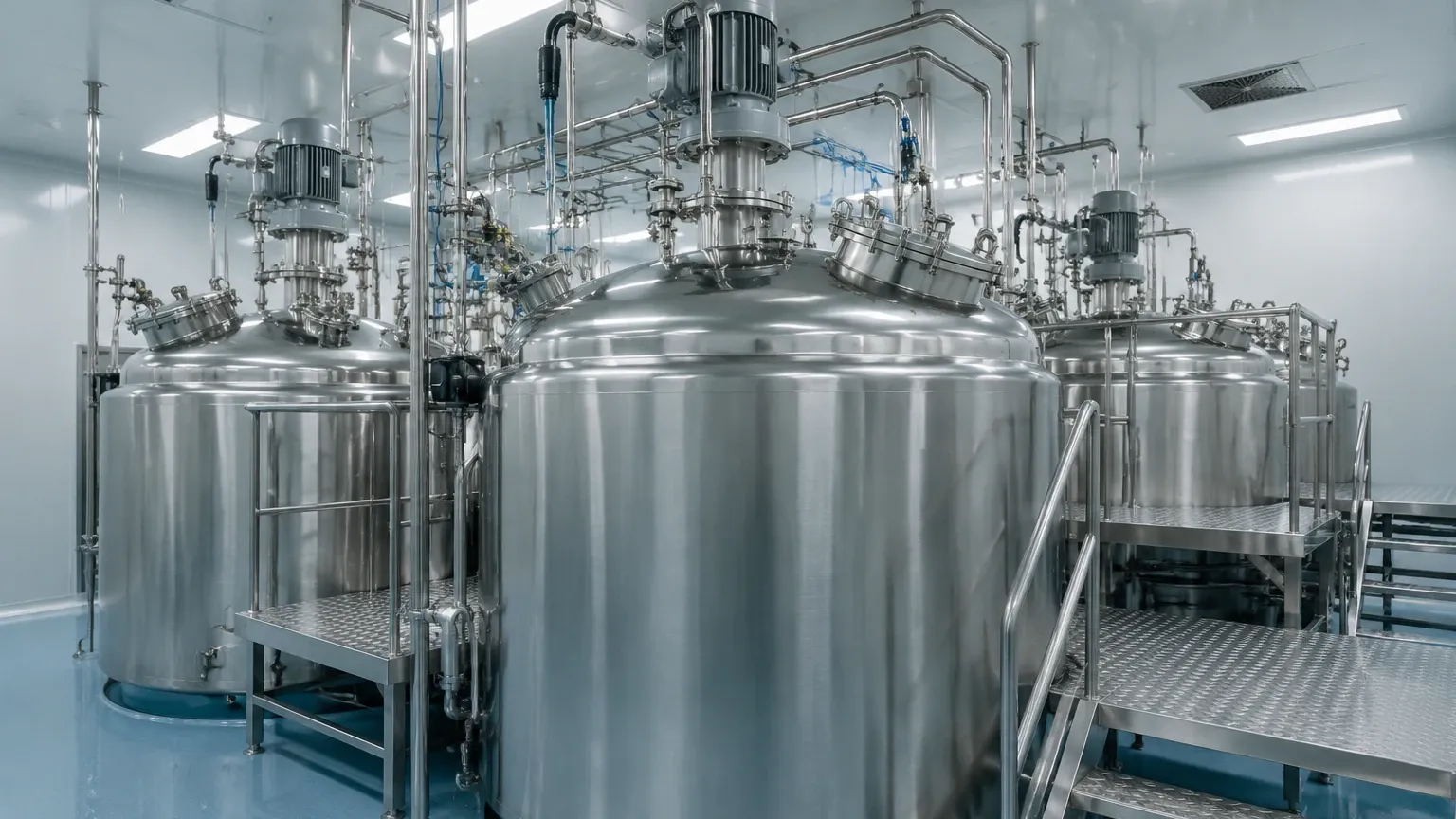
In the pharmaceutical industry, the integrity of storage and processing vessels is paramount. Pharmaceutical tanks are engineered to meet stringent regulatory standards, ensuring that life-saving medications, vaccines, and active pharmaceutical ingredients (APIs) are produced in sterile, controlled environments. Beyond the physical structure of the tank, the instrumentation used to monitor these processes—specifically level measurement—plays a critical role in maintaining batch consistency and safety.
Selecting the appropriate level measurement technology for pharmaceutical tanks requires a deep understanding of both the physical properties of the media and the rigorous cleaning protocols, such as Clean-in-Place (CIP) and Steam-in-Place (SIP). As a professional manufacturer, Welk provides high-precision instruments designed to meet these demanding requirements. For detailed technical specifications, engineers often refer to the Main Page for comprehensive product data.
Principles of Level Measurement in Pharmaceutical Applications
Before selecting a sensor for a pharmaceutical tank, it is essential to understand the underlying physical principles of the most common measurement technologies. Each method interacts differently with the sterile environment and the process media.
Radar Level Measurement (Non-Contact)
Radar level meters operate on the Time-of-Flight (ToF) principle. The sensor emits high-frequency electromagnetic waves (typically in the 26GHz or 80GHz range) toward the liquid surface. These waves are reflected back to the sensor. The time taken for the signal to travel to the surface and back is directly proportional to the distance, which is then converted into a level reading.
In pharmaceutical tanks, 80GHz radar is preferred due to its narrow beam angle. This allows the signal to avoid internal obstructions like agitators, baffles, and spray balls, which are common in complex mixing vessels.
Ultrasonic Level Measurement
Ultrasonic sensors use sound waves rather than electromagnetic waves. The transducer emits an ultrasonic pulse that reflects off the liquid surface. While cost-effective, ultrasonic measurement is sensitive to the medium's vapor space. In pharmaceutical processes involving high temperatures or vacuum, the speed of sound changes, which can lead to inaccuracies unless temperature compensation is precisely managed.
Hydrostatic Level Measurement
This principle relies on the relationship between liquid height and the pressure exerted at the bottom of the tank ($P = \rho gh$). A pressure transmitter is mounted at or near the bottom of the vessel. For pharmaceutical tanks, these must feature a "flush diaphragm" design. This ensures there are no cavities or recesses where bacteria could accumulate, maintaining the hygienic integrity of the system.
Magnetic Level Gauges
Used primarily for visual indication, magnetic level gauges utilize a float containing a permanent magnet. As the liquid level changes, the float moves a series of external magnetic flags or a follower. In pharmaceutical settings, these are often used on utility tanks (e.g., purified water storage) rather than primary reaction vessels, as they require a bypass chamber that must be carefully cleaned.
Key Evaluation Criteria for Pharmaceutical Tanks
When specifying instrumentation for pharmaceutical tanks, several technical factors must be evaluated to ensure compliance with cGMP (current Good Manufacturing Practice) and FDA standards.
1. Material Compatibility: All wetted parts must be made from non-reactive materials. Stainless steel 316L (1.4404) is the industry standard. For highly corrosive media, coatings such as PTFE or PFA are utilized.
2. Surface Finish: To prevent microbial growth, the internal surfaces of the tank and the sensor probes must be polished. A surface roughness ($R_a$) of less than 0.8 μm is typical, often achieved through electropolishing.
3. Sanitary Connections: Instruments must be installed using hygienic fittings. The Tri-Clamp (ISO 2852) is the most common connection type, providing a crevice-free seal that is easy to disassemble for manual cleaning if necessary.
4. Temperature and Pressure Resistance: During SIP cycles, tanks are subjected to saturated steam at temperatures typically between 121°C and 135°C. Level sensors must be rated to withstand these conditions without losing calibration or suffering mechanical failure.
Technology Selection Table
The following table provides a comparison of level measurement technologies specifically for pharmaceutical tank environments.
| Feature | 80GHz Radar | Hydrostatic (Flush) | Ultrasonic | Magnetic Gauge |
| :— | :— | :— | :— | :— |
| Contact Type | Non-contact | Contact (Diaphragm) | Non-contact | Contact (Float) |
| Accuracy | ±1 mm | ±0.1% to 0.2% Span | ±2 mm | ±5 mm |
| CIP/SIP Suitability | Excellent | Excellent | Limited | Moderate |
| Effect of Agitation | Minimal (Software filtered) | High (Pressure spikes) | Significant | Moderate |
| Foam Sensitivity | Low (High frequency) | None | High | None |
| Installation Cost | High | Moderate | Low | Moderate |
Installation Considerations for Pharmaceutical Tanks
Proper installation is as critical as the choice of technology. In pharmaceutical tanks, the geometry of the vessel often presents challenges.
* Dead Zones (Blocking Distance): Every non-contact sensor has a "dead zone" directly beneath the transducer where measurement is impossible. When the tank is full, the liquid must not enter this zone. For small pharmaceutical vessels, sensors with a very short blocking distance (e.g., <50 mm) are required.
* Agitator Interference: Many pharmaceutical tanks involve mixing. Radar sensors should be positioned so the signal beam does not strike the agitator blades. Modern radar units use "false echo suppression" to ignore reflections from fixed internal structures.
* Mounting Position: Sensors should be mounted away from the tank wall to avoid interference from weld seams or scaling. However, they must also be positioned to avoid the inflow stream of the liquid, which can cause surface turbulence and erratic readings.
* Drainage: All sensor mountings should be designed with a slight pitch or be flush-mounted to ensure full self-drainage during the CIP process.
Common Risks and Limitations
Despite advanced technology, certain conditions in pharmaceutical tanks can compromise measurement accuracy:
* Condensation: In hot processes, steam can condense on the sensor face. While radar can penetrate thin films of condensate, heavy buildup can attenuate the signal. Sensors with PTFE-faced antennas are often used to encourage droplets to shed.
* Vacuum Conditions: Some pharmaceutical reactions occur under vacuum. Ultrasonic sensors fail in a vacuum because sound waves require a medium (air) to travel. Radar and hydrostatic sensors are unaffected by vacuum, though hydrostatic sensors must be compensated for the vessel's internal pressure (using a differential pressure setup).
* Dielectric Constant ($D_k$): Radar relies on the reflectivity of the medium. Some pharmaceutical solvents have very low $D_k$ values, which result in weak signal returns. In these cases, high-sensitivity 80GHz radar is necessary to track the surface reliably.
Frequently Asked Questions (FAQ)
Q: Can a single level sensor handle both process monitoring and overfill protection?
A: While a radar sensor is highly reliable for process monitoring, safety standards (such as SIL2) often require a redundant, independent level switch (like a tuning fork level switch) for high-level alarms to prevent tank overfills.
Q: How does foam affect level measurement in fermenters?
A: Foam can absorb ultrasonic and radar signals. However, 80GHz radar has a better success rate at penetrating light foam to reach the liquid surface. For thick, dense foam, a hydrostatic transmitter may be more reliable as it measures the weight of the liquid column regardless of the foam on top.
Q: Why is 316L stainless steel used instead of 304?
A: 316L contains molybdenum, which significantly increases resistance to pitting and crevice corrosion, especially in the presence of chlorides or the aggressive chemicals used in CIP cycles.
Q: Is calibration required after every SIP cycle?
A: High-quality instruments from manufacturers like Welk are designed for thermal stability. While they do not usually require recalibration after every cycle, periodic verification is a standard requirement in pharmaceutical quality management systems.
Conclusion
Managing pharmaceutical tanks requires a holistic approach to engineering, where the vessel design and the instrumentation work in harmony. By understanding the measurement principles—from the precision of 80GHz radar to the reliability of hydrostatic pressure—engineers can ensure that their processes remain safe, sterile, and efficient. For further guidance on selecting the right instrument for your specific application, reviewing the Main Page provides a starting point for technical evaluation and product selection.