Csane
Csane
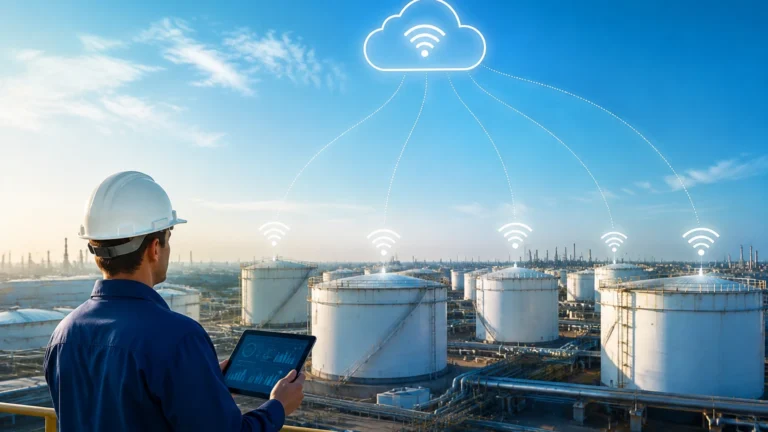
In the realm of industrial automation and process control, the integration of precise level measurement is a fundamental requirement for operational safety and efficiency. Within specialized frameworks such as Csane (Chemical-Structural Analysis and Networked Environments), the ability to monitor fluid and solid levels with high accuracy determines the success of complex chemical processing, water treatment, and oil and gas operations. As a professional manufacturer, Welk provides a comprehensive suite of instruments—ranging from radar level meters to hydrostatic transmitters—designed to meet the rigorous demands of these technical environments.
Selecting the appropriate technology for a Csane project requires a deep understanding of the underlying measurement principles, the physical properties of the medium, and the atmospheric conditions within the vessel. This guide explores the technical foundations of modern level measurement and provides engineering-led recommendations for optimizing instrument selection.
Principles of Industrial Level Measurement
Before implementing a level measurement solution, engineers must evaluate the physics of the sensing technology. Each method interacts differently with the process medium and the surrounding environment.
Radar Level Measurement (Non-Contact)
Radar level meters operate on the Time-of-Flight (ToF) principle. The instrument emits high-frequency electromagnetic pulses (typically in the 26GHz or 80GHz range) toward the surface of the medium. These pulses are reflected back to the sensor. The distance is calculated based on the time interval between emission and reception.
Because radar waves do not require a medium for propagation, they are largely unaffected by vacuum, high pressure, or temperature fluctuations. The dielectric constant (Er) of the material is the primary factor influencing the strength of the reflected signal. Materials with higher dielectric constants, such as water (Er ≈ 80), provide stronger reflections than hydrocarbons or solids.
Ultrasonic Level Measurement
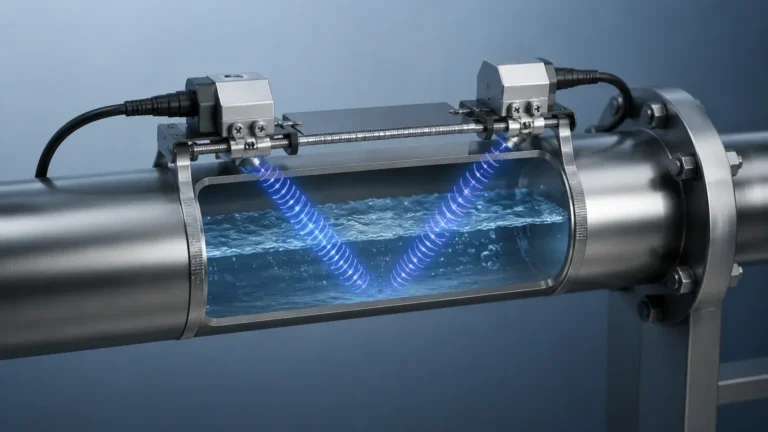
Ultrasonic sensors also use the ToF principle but rely on sound waves rather than electromagnetic waves. The transducer emits an ultrasonic pulse that travels through the air, hits the surface, and returns.
Unlike radar, the speed of sound is highly dependent on air temperature and density. Therefore, Welk ultrasonic sensors include integrated temperature compensation to maintain accuracy. These sensors are ideal for open-channel flow and liquid storage in stable atmospheric conditions, though they may struggle in the presence of heavy foam or steam, which can absorb or scatter the sound waves.
Hydrostatic Level Measurement
Hydrostatic transmitters measure level by sensing the pressure exerted by a liquid column. According to Pascal’s Law, the pressure at the bottom of a tank is directly proportional to the height of the liquid and its specific gravity. This is a contact-based method that is exceptionally reliable for deep wells, reservoirs, and vented tanks where the density of the liquid remains constant.
Technical Selection for Csane Environments
Choosing the right instrument involves balancing accuracy, cost, and environmental compatibility. The following table serves as a reference for comparing Welk’s primary level measurement technologies within a Csane context.
| Technology | Typical Accuracy | Max Range | Medium Type | Key Advantage | Limitations |
| :— | :— | :— | :— | :— | :— |
| 80GHz Radar | ±2 mm (0.078 in) | 120 m (393 ft) | Liquids / Solids | High precision, small beam angle | Higher initial cost |
| 26GHz Radar | ±5 mm (0.196 in) | 70 m (229 ft) | Liquids / Slurries | Versatile, cost-effective | Larger antenna required |
| Ultrasonic | ±0.25% of span | 15 m (49 ft) | Clean Liquids | Non-contact, economical | Affected by steam/foam |
| Hydrostatic | ±0.1% to 0.5% | 200 m (656 ft) | Liquids | Simple installation, submersible | Sensitive to density changes |
| Magnetic Gauge | Visual Reference | 6 m (19.6 ft) | Hazardous Liquids | No power needed for display | Contact-based, maintenance |
For engineers looking to explore specific product specifications or request application support, visiting the Main Page provides access to detailed data sheets and configuration tools.
Application Engineering in Complex Environments
In Csane-related applications, the environment often presents challenges that standard sensors cannot overcome without proper engineering.
Handling Agitation and Turbulence
In chemical reactors where agitators are constantly moving, a non-contact radar sensor with a wide beam angle may receive false echoes from the blades. In these instances, 80GHz radar is preferred due to its narrow beam angle (often as low as 3°), which allows the signal to bypass internal obstructions. Alternatively, a stilling well can be installed to provide a calm surface for the measurement, though this increases the maintenance requirements for cleaning the pipe.
Managing Corrosive Media
Chemical compatibility is paramount in Csane projects. Welk offers level meters with wetted parts made from PTFE (Polytetrafluoroethylene), PP (Polypropylene), or high-grade stainless steel (316L). For highly corrosive acids, a flange-mounted radar with a PTFE-sealed antenna ensures that no metallic parts are exposed to the process vapors, significantly extending the lifespan of the instrument.
High-Temperature and High-Pressure Constraints
Standard ultrasonic sensors are typically limited to temperatures below 80°C (176°F). For high-pressure boilers or high-temperature molten materials, radar sensors with specialized cooling fins or heat-resistant horn antennas are required. These configurations allow the electronics to remain within their operating temperature range while the antenna is exposed to process temperatures exceeding 250°C (482°F).
Installation Guidelines and Best Practices
Proper installation is as critical as the selection of the sensor itself. Even the most advanced radar meter will fail if mounted incorrectly.
1. Avoid the "Dead Zone": Every sensor has a blocking distance (dead zone) near the transducer face where measurement is impossible. Ensure the maximum expected liquid level does not enter this zone.
2. Nozzle Geometry: The height and diameter of the mounting nozzle can interfere with the signal. For radar, the antenna should ideally extend slightly beyond the bottom of the nozzle to prevent "ringing" or internal reflections.
3. Orientation: For solids measurement, the sensor should be aimed at the angle of repose to ensure the signal reflects back to the receiver. For liquids, the sensor must be mounted perpendicular to the surface.
4. Inflow Interference: Never mount a level sensor directly above the tank's filling inlet. The turbulence and falling material will create significant noise and may cause the sensor to lose its signal lock.

Limitations and Environmental Considerations
While Welk instruments are designed for durability, certain physical limitations must be acknowledged in a B2B engineering context:
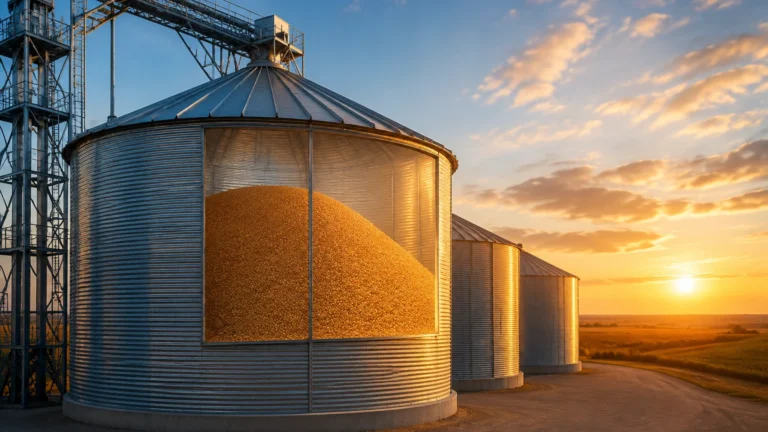
* Vapor and Dust: Heavy dust in grain silos can attenuate ultrasonic signals. In these cases, high-frequency radar is the only reliable non-contact option.
* Dielectric Constant Limits: Radar requires a minimum dielectric constant (typically Er > 1.4) to detect a surface. For materials like liquefied gases with very low Er, guided wave radar (GWR) or magnetic level gauges are more appropriate.
* Density Fluctuations: Hydrostatic sensors assume a constant density. If a process involves mixing fluids of different densities or significant temperature-induced density changes, the level reading will drift unless a differential pressure (DP) transmitter or a compensating algorithm is used.
Frequently Asked Questions (FAQ)
Q: How often do radar level meters need to be recalibrated?
A: Under stable conditions, Welk radar level meters are virtually maintenance-free. Recalibration is usually only necessary if the process medium changes significantly or if required by local regulatory standards for safety-critical loops.
Q: Can ultrasonic sensors be used in a vacuum?
A: No. Ultrasonic waves require a medium (air or gas) to travel. In a vacuum, there is no medium to carry the sound, so the sensor will not function. Radar is the preferred choice for vacuum applications.
Q: What is the difference between 26GHz and 80GHz radar?
A: 80GHz radar offers a much narrower beam and higher resolution, making it better for small tanks, vessels with internal obstructions, and measuring solids. 26GHz radar is a robust, cost-effective solution for larger tanks and simpler liquid applications.
Q: How do I protect level sensors from lightning or power surges?
A: Most Welk industrial transmitters include basic surge protection. However, for outdoor installations in high-risk areas, we recommend installing external surge arrestors and ensuring the instrument housing is properly grounded to the plant's earthing system.
Conclusion
Achieving precision in Csane environments requires a systematic approach to level measurement. By understanding the physics of radar, ultrasonic, and hydrostatic technologies, and by adhering to strict installation protocols, process engineers can ensure long-term reliability and safety. Whether managing water treatment facilities or complex chemical reactors, the right instrumentation serves as the eyes of the control system.
For further technical documentation, application notes, and to view our full range of measurement solutions, please refer to the Main Page. Welk remains committed to providing the global industrial market with accurate, cost-effective, and customized level measurement instruments.