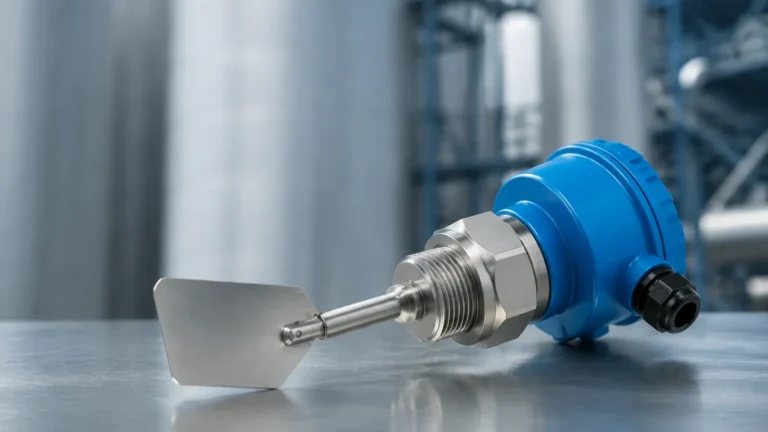
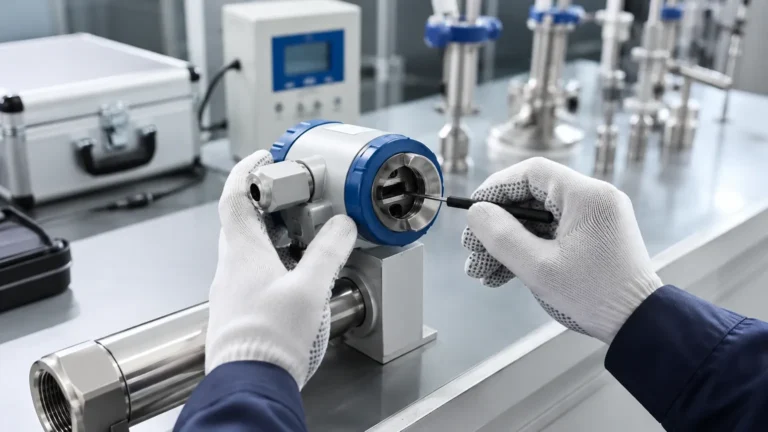
Picomag Flowmeter
Picomag Flowmeter
In the landscape of industrial automation and process control, the demand for compact, reliable, and digitally integrated measurement instruments has grown exponentially. The picomag flowmeter represents a specialized category of electromagnetic flowmeters designed specifically for utility applications and secondary process loops. Unlike large-scale magnetic flowmeters used in primary chemical processing or municipal water mains, compact electromagnetic meters focus on space efficiency, ease of integration, and cost-effectiveness for smaller pipe diameters.
For plant engineers and system integrators, selecting the right flow measurement technology requires a balance between accuracy, maintenance requirements, and the ability to communicate with modern control systems. This guide provides a comprehensive technical overview of the picomag flowmeter, its underlying physical principles, and practical considerations for its deployment in industrial environments.
Measurement Principle: Faraday’s Law of Induction
The operation of a picomag flowmeter is based on Faraday’s Law of Electromagnetic Induction. This principle states that a conductor moving through a magnetic field generates an electrical voltage. In the context of flow measurement, the conductive liquid serves as the moving conductor.
The Physical Equation
The relationship is defined by the formula:
U = B · v · d
Where:
* U is the induced voltage generated at the electrodes.
* B is the magnetic field strength (generated by internal coils).
* v is the flow velocity of the liquid.
* d is the distance between the electrodes (internal diameter of the pipe).
When the liquid flows through the pipe, the magnetic field produced by the meter’s coils induces a voltage that is directly proportional to the flow velocity. Because the internal diameter (d) and the magnetic field strength (B) are constants, the electronics can accurately calculate the volumetric flow rate by measuring the voltage (U). This method is highly effective because it is independent of fluid properties such as density, viscosity, and pressure, provided the liquid meets a minimum threshold of electrical conductivity.
Key Evaluation Criteria for Compact Magmeters
When evaluating a picomag flowmeter for a specific application, several technical factors must be confirmed to ensure long-term reliability and measurement accuracy.
1. Conductivity Requirements
Electromagnetic flowmeters require the medium to be electrically conductive. Typically, a minimum conductivity of 20 μS/cm is required. This makes the technology suitable for water, cooling fluids, and many chemicals, but unsuitable for hydrocarbons, deionized water (in some cases), or gases.
2. Digital Integration and IO-Link
One of the defining features of the picomag flowmeter is its integration with IO-Link technology. In a modern B2B industrial setting, the ability to transmit not just the flow rate, but also temperature and totalized flow over a single digital cable is essential. IO-Link allows for remote configuration, simplified wiring, and enhanced diagnostics, reducing the total cost of ownership.
3. Physical Footprint
In modular skid construction or tight factory floors, space is a premium. Compact magmeters are designed with short inlet and outlet runs in mind, often featuring integrated sensors that do not require the extensive straight-pipe diameters typically associated with traditional flowmeters.
Technical Selection Table
The following table outlines typical specifications for compact electromagnetic flowmeters used in industrial utility applications.
| Feature | Specification Detail | Application Note |
| :— | :— | :— |
| Nominal Diameters | DN 15 to DN 50 (1/2" to 2") | Ideal for secondary lines and skids. |
| Measuring Range | 0.4 L/min to 750 L/min | Varies by pipe diameter. |
| Accuracy | ±0.5% to ±0.8% of reading | Sufficient for utility and process monitoring. |
| Temperature Range | -10°C to +70°C (up to 85°C briefly) | Suitable for most cooling and heating loops. |
| Pressure Rating | Up to 16 bar (232 psi) | Standard for industrial water systems. |
| Output Signals | 4-20 mA, Pulse, IO-Link, Bluetooth | Provides flexibility for PLC integration. |
| Wetted Materials | PEEK, Stainless Steel, EPDM/FKM | Check compatibility with aggressive chemicals. |
Installation Considerations and Best Practices
Proper installation is critical to maintaining the accuracy of the picomag flowmeter. While compact meters are more forgiving than larger units, several engineering standards must be followed.
Orientation and Piping
* Vertical Flow: The preferred orientation is vertical flow upwards. This ensures that the pipe is always full and prevents the entrapment of air bubbles, which can cause measurement errors or "empty pipe" alarms.
* Horizontal Flow: If installed horizontally, the electrode axis must be horizontal. This prevents air bubbles at the top or sediment at the bottom from interfering with the electrical contact between the fluid and the electrodes.
* Inlet and Outlet Runs: To minimize turbulence, it is recommended to have at least 5 x DN (nominal diameter) of straight pipe before the meter and 2 x DN after the meter. If space is extremely limited, some compact models can operate with reduced runs, though a slight decrease in accuracy may occur.
Grounding and Interference
Since the meter measures micro-voltages, electrical noise can be a significant issue. The fluid, the sensor, and the pipe must be at the same electrical potential. In plastic piping systems, grounding rings or specialized grounding electrodes are necessary to provide a stable reference point.
Environmental Factors
Compact meters often feature local displays (OLED or LED). Ensure the meter is installed in a location where the display is visible, or utilize Bluetooth connectivity for commissioning in hard-to-reach areas. For comprehensive system monitoring, integrating flow data with level data is often required. Engineers looking to optimize their entire fluid management system can Review product options and application support to find compatible level measurement instruments that complement flow data.

Limitations and Common Risks
While the picomag flowmeter is a robust instrument, it is not a universal solution. Engineers should be aware of the following limitations:
1. Entrained Air: Large bubbles or foam in the liquid will result in inaccurate readings. The meter measures the volume of the mixture, not just the liquid, and air is non-conductive, which can break the circuit.
2. Conductivity Drops: If the process fluid changes (e.g., switching from tap water to highly purified deionized water), the meter may stop functioning if the conductivity falls below the 20 μS/cm threshold.
3. Magnetic Particles: Fluids containing high concentrations of magnetite or other ferromagnetic particles can accumulate on the internal magnets and electrodes, distorting the magnetic field and leading to drift.
4. Coating and Scaling: In hard water applications or sticky fluids, a layer of scale can build up over the electrodes. This insulates them from the fluid, eventually leading to signal loss. Periodic inspection is recommended in these environments.
Comparison: Electromagnetic vs. Ultrasonic Flowmeters
In the B2B sector, the choice often comes down to electromagnetic (like the Picomag) or ultrasonic technology.
* Electromagnetic (Picomag): Offers no moving parts and no pressure drop. It is generally more accurate for conductive liquids and less sensitive to flow profile disturbances compared to low-cost ultrasonic meters. However, it requires a conductive medium.
* Ultrasonic: Can measure non-conductive liquids (like oils and distilled water). Clamp-on versions offer the advantage of not breaking the pipe, but they are often more expensive and sensitive to pipe wall conditions and acoustic properties of the fluid.
Frequently Asked Questions (FAQ)
Q: Can the picomag flowmeter measure flow in both directions?
A: Yes, most modern electromagnetic flowmeters are bi-directional. They can distinguish between forward and reverse flow, which is useful for systems where backflow might occur.
Q: Does the meter require periodic calibration?
A: While magmeters have no moving parts to wear out, industrial quality standards (like ISO 9001) often require annual or biennial calibration verification to ensure the electronics haven't drifted and the electrodes remain clean.
Q: Is it possible to use this meter for steam or gas?
A: No. Electromagnetic induction requires a liquid conductor. Gases and steam are non-conductive and cannot be measured using this principle. For those applications, vortex or thermal mass flowmeters are required.
Q: How does temperature measurement work in these units?
A: Compact magmeters often include an integrated temperature sensor (usually a Pt1000) within the sensor body. This allows the device to output both flow and temperature data simultaneously via IO-Link or analog outputs, eliminating the need for a separate temperature penetration in the pipe.
Conclusion for Project Planning
Integrating a picomag flowmeter into an industrial system provides a high level of transparency for utility monitoring, such as cooling water circuits or process water distribution. Its compact design and digital communication capabilities align with the requirements of modern "Smart Factory" initiatives.
Before proceeding with a purchase, project leads should confirm the minimum conductivity of their process fluid, verify the chemical compatibility of the wetted materials (PEEK and EPDM are common), and ensure that the electrical integration (IO-Link vs. Analog) matches the existing PLC infrastructure. By adhering to standard installation practices regarding pipe orientation and grounding, the picomag flowmeter serves as a low-maintenance, high-reliability component in the broader ecosystem of industrial fluid measurement.