Eh Flow Meter
Eh Flow Meter
In the landscape of industrial process automation, the term "eh flow meter" is often synonymous with high-precision instrumentation designed for complex fluid dynamics. Whether managing the flow of corrosive chemicals, food-grade liquids, or high-pressure steam, selecting the correct flow measurement technology is critical for operational efficiency and safety. This guide explores the principles, selection criteria, and engineering considerations for high-end flow meters, while also examining how these instruments integrate with level measurement systems to provide a comprehensive view of process performance.
Understanding Flow Measurement Principles
Before selecting an eh flow meter, it is essential to understand the physical principles that govern different measurement technologies. Each principle offers specific advantages depending on the fluid properties and process conditions.
Electromagnetic Flow Measurement (Magmeters)
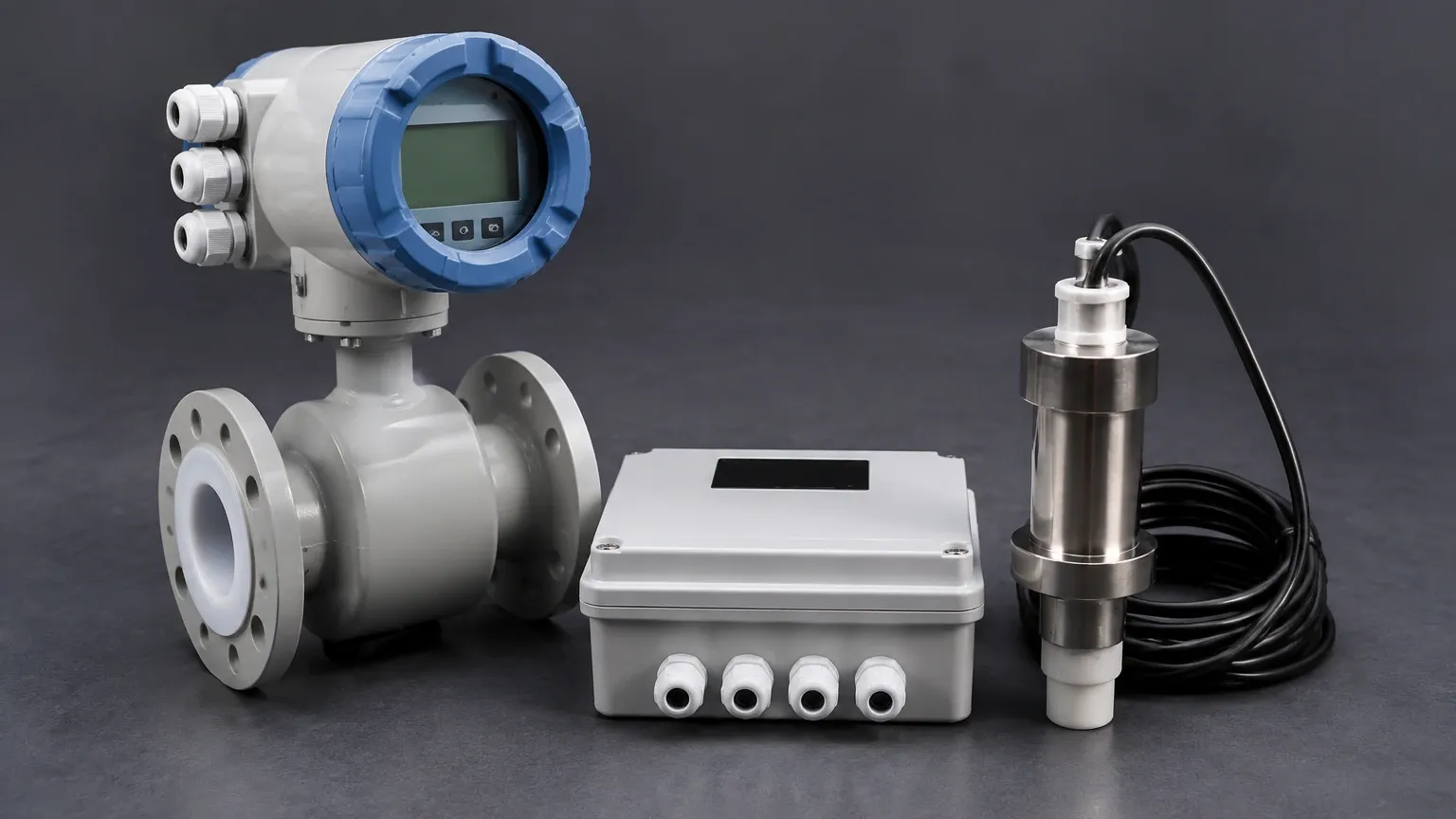
Electromagnetic flow meters operate based on Faraday’s Law of Induction. This law states that a voltage is induced when a conductive fluid moves through a magnetic field. The magnitude of the induced voltage is directly proportional to the velocity of the fluid.
The basic equation is $E = B \cdot v \cdot d$, where:
* E is the induced voltage.
* B is the magnetic field strength.
* v is the fluid velocity.
* d is the distance between electrodes (pipe diameter).
Because there are no moving parts and no obstructions in the flow path, magmeters offer zero pressure drop. However, they require the medium to have a minimum conductivity, typically $\ge 5 \mu S/cm$.
Coriolis Mass Flow Measurement
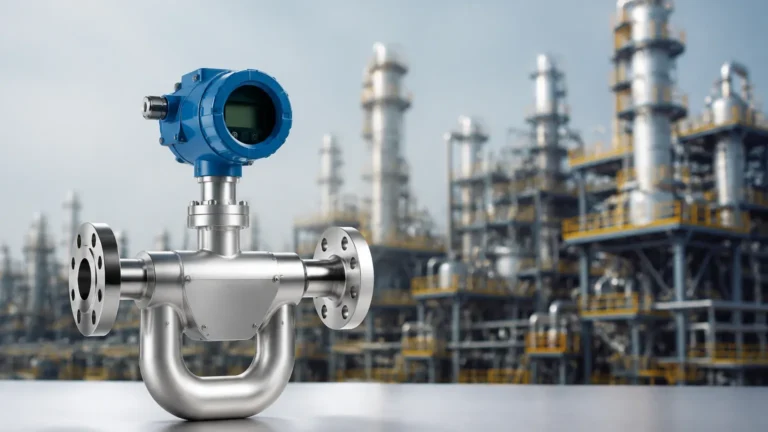
Coriolis meters are unique because they measure mass flow directly rather than volume. They operate by inducing a vibration in a measuring tube through which the fluid flows. As the fluid moves through the vibrating tube, the Coriolis force causes the tube to twist. The degree of twist is proportional to the mass flow rate.
These meters are highly valued in the chemical and oil and gas industries because they are independent of fluid properties such as density, viscosity, and temperature. They also provide simultaneous measurement of density and temperature.
Vortex Flow Measurement
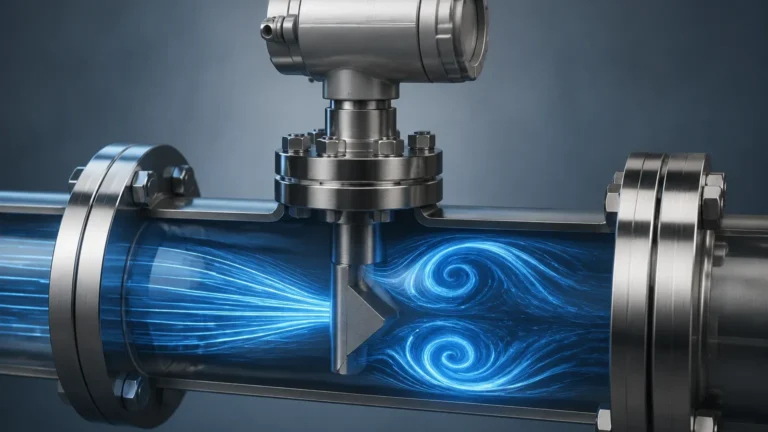
Vortex meters utilize the Karman Vortex Street principle. When a fluid encounters a bluff body (a non-streamlined object) in the flow stream, it creates alternating vortices. The frequency at which these vortices are shed is directly proportional to the fluid velocity. Vortex meters are robust and suitable for liquids, gases, and especially saturated or superheated steam.
Ultrasonic Flow Measurement
Ultrasonic meters typically use the transit-time method. Two transducers function as both transmitters and receivers. They send ultrasonic signals back and forth through the fluid. The signal traveling with the flow moves faster than the signal traveling against the flow. The difference in transit time is used to calculate the flow velocity. These are often available as "clamp-on" models, allowing for measurement without cutting into the pipe.
Selection Criteria for Industrial Flow Meters
Choosing the right eh flow meter requires a detailed analysis of the application requirements. Engineers must evaluate several factors to ensure long-term reliability and accuracy.
1. Fluid Characteristics: Is the medium conductive or non-conductive? Is it a clean liquid, a slurry with suspended solids, or a gas? For example, a magmeter is ideal for conductive slurries, whereas a Coriolis meter is preferred for high-viscosity oils.
2. Process Conditions: What are the maximum and minimum operating pressures and temperatures? High-temperature steam applications usually necessitate vortex meters or specialized orifice plates.
3. Accuracy and Repeatability: Does the process require fiscal-grade accuracy (±0.1% for Coriolis) or is a general process indication (±1.0% for ultrasonic) sufficient?
4. Installation Constraints: Is there enough straight pipe run available? Many technologies, such as vortex and electromagnetic meters, require specific lengths of straight pipe upstream and downstream to ensure a stable flow profile.
5. Maintenance and Longevity: In abrasive or corrosive environments, non-contact or obstructionless meters (like magmeters or clamp-on ultrasonic) reduce the risk of sensor wear and failure.
Technical Comparison of Flow Meter Technologies
The following table provides a quick reference for comparing the most common flow measurement technologies used in industrial B2B applications.
| Technology | Typical Accuracy | Fluid Type | Pressure Drop | Minimum Conductivity |
| :— | :— | :— | :— | :— |
| Electromagnetic | ±0.2% to 0.5% | Conductive Liquids | Negligible | $\ge 5 \mu S/cm$ |
| Coriolis | ±0.05% to 0.1% | Liquids, Gases | Low to Moderate | N/A |
| Vortex | ±0.75% to 1.0% | Steam, Gas, Liquid | Moderate | N/A |
| Ultrasonic | ±0.5% to 1.0% | Clean Liquids | None (Clamp-on) | N/A |
| Thermal | ±1.0% to 2.0% | Pure Gases | Very Low | N/A |
Synergies Between Flow and Level Measurement
In many process plants, flow and level measurement are used in tandem to provide a complete mass balance. While an eh flow meter monitors the rate of fluid entering or leaving a vessel, level measurement instruments provide the actual inventory status within the tank.
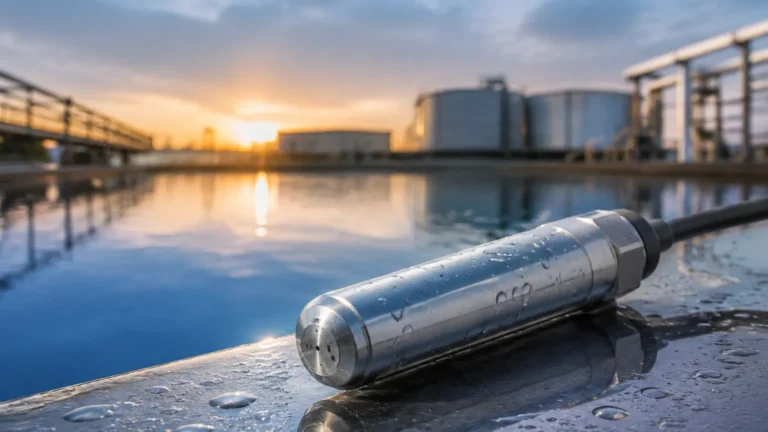
For instance, in a water treatment facility, a Welk ultrasonic level sensor might monitor the height of the water in a settling tank, while an electromagnetic flow meter tracks the discharge rate to the next stage of treatment. Discrepancies between the change in level and the measured flow can indicate leaks, pump inefficiencies, or sensor calibration issues.
Integrating these two data points is essential for automated control loops. If a flow meter detects a sudden surge in outflow while the level meter shows a rapid drop, the system can automatically trigger emergency shut-off valves. For those looking to optimize their entire measurement suite, it is beneficial to Review product options and application support on the Main Page to see how various level technologies complement flow instrumentation.
Installation and Maintenance Best Practices
Proper installation is the single most important factor in ensuring the accuracy of an eh flow meter. Even the most expensive instrument will provide incorrect data if installed poorly.
Straight Pipe Requirements
Most flow meters require a fully developed flow profile. Obstructions like elbows, valves, and reducers create turbulence. A common rule of thumb is the "5D/2D" rule: 5 pipe diameters of straight run upstream and 2 diameters downstream. However, vortex meters often require up to 20D upstream depending on the preceding pipe configuration.
Orientation and Filling
For liquid applications, the pipe must always be full. For this reason, flow meters are often installed in vertical pipe sections with the flow moving upward. This ensures that the sensor is always submerged and prevents the accumulation of air bubbles, which can cause significant errors in electromagnetic and ultrasonic readings.
Grounding
Electromagnetic flow meters are particularly sensitive to electrical noise. Proper grounding is essential to ensure that the small voltage signals generated by the flow are not drowned out by stray currents in the piping system. Grounding rings are often used when the meter is installed in plastic or lined pipes.
Calibration and Verification
Modern eh flow meters often feature advanced self-diagnostics (such as Heartbeat Technology) that allow for in-situ verification without removing the meter from the process line. However, for regulated applications or fiscal metering, periodic wet calibration at a certified laboratory remains a standard requirement.
Common Application Risks and Limitations
Despite their advanced technology, flow meters are subject to environmental and process limitations:
* Entrained Air: In liquid flow measurement, the presence of air bubbles can cause significant over-reading or signal loss, particularly in ultrasonic and magmeters.
* Cavitation: If the pressure drops too low within the meter (often near a control valve), the liquid may vaporize, forming bubbles that collapse violently. This can damage the meter internals and lead to erratic readings.
* Coating and Scaling: In wastewater or chemical applications, the buildup of non-conductive material on the electrodes of a magmeter can insulate the sensor, leading to signal degradation. Regular cleaning or the use of "self-cleaning" electrode designs may be necessary.
* Reynolds Number: Vortex meters require a minimum Reynolds number (typically $> 10,000$ to $20,000$) to generate stable vortices. In low-flow conditions where the flow is laminar rather than turbulent, vortex meters will fail to provide a reading.
Frequently Asked Questions (FAQ)
Q: Can I use an electromagnetic flow meter for deionized water?
A: Generally, no. Deionized water has very low conductivity, often below the $5 \mu S/cm$ threshold required for standard magmeters. In these cases, an ultrasonic or Coriolis meter is a better choice.
Q: What is the difference between mass flow and volumetric flow?
A: Volumetric flow measures the space the fluid occupies (e.g., liters per minute), which can change with temperature and pressure. Mass flow measures the actual amount of matter (e.g., kilograms per minute), which remains constant regardless of environmental changes. Coriolis meters measure mass flow directly.
Q: How do I handle flow measurement in pipes larger than DN 300 (12 inches)?
A: For very large pipe diameters, the cost of inline meters like Coriolis or magmeters becomes prohibitive. Clamp-on ultrasonic flow meters or insertion-style meters are often the most cost-effective solutions for large-scale infrastructure.
Q: Why is my flow meter reading zero when there is clearly flow?
A: This is often due to a "low flow cut-off" setting in the transmitter, designed to ignore small fluctuations or noise when the pump is off. Alternatively, it could indicate a loss of conductivity in magmeters or a signal-to-noise ratio issue in ultrasonic meters.
By carefully considering the relationship between fluid properties and measurement physics, engineers can select an eh flow meter that provides reliable data for years. When paired with robust level measurement solutions from the Main Page, industrial operators can achieve a high degree of process transparency and control.