Cerabar Pmp51b
Cerabar Pmp51b
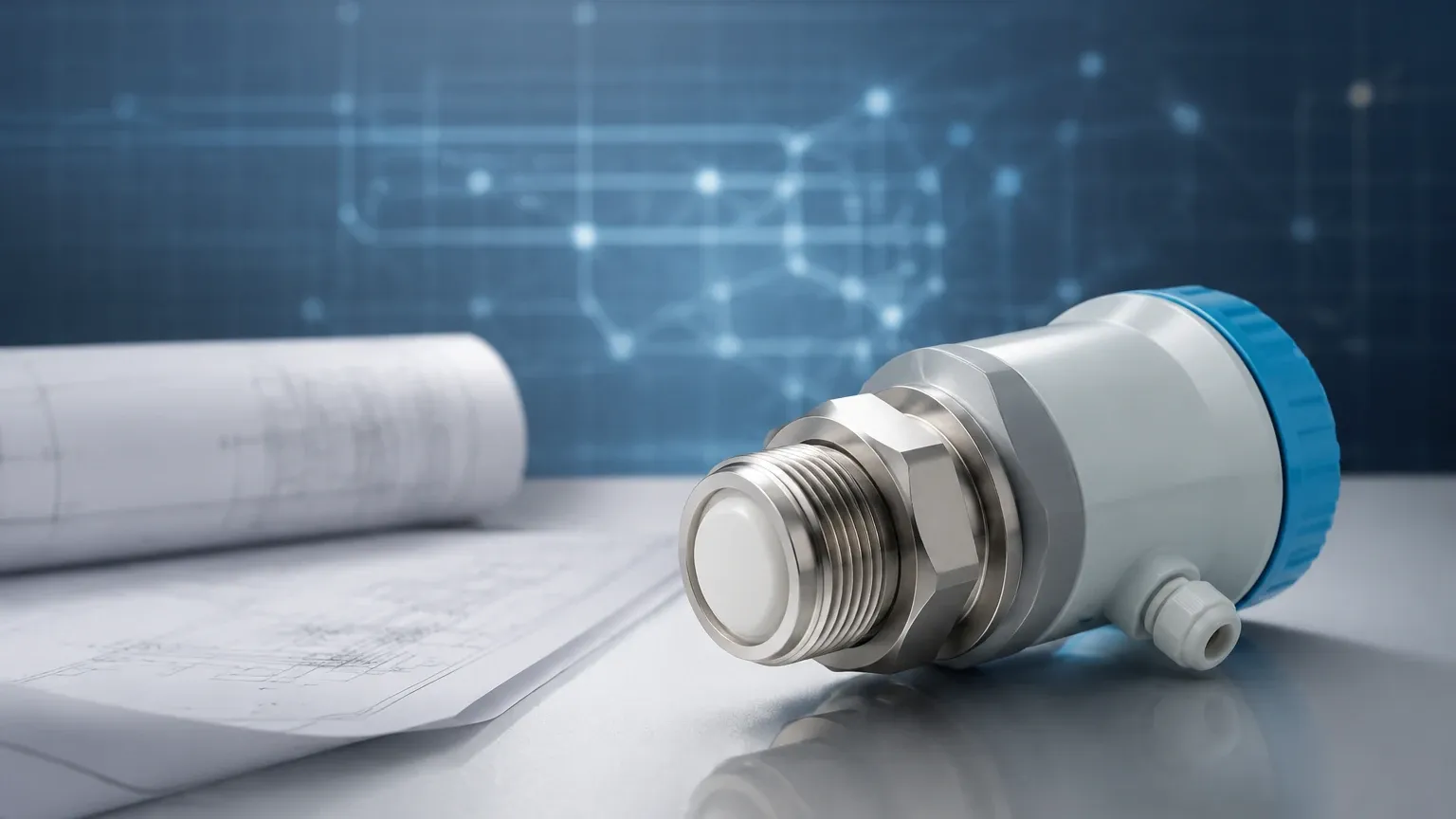
The Cerabar PMP51B represents a significant evolution in digital pressure measurement technology, specifically designed for the process industries. As a hydrostatic level and pressure transmitter, it is engineered to meet the rigorous demands of modern industrial automation, offering high precision, safety integrity, and advanced connectivity. This article provides a comprehensive technical overview of the Cerabar PMP51B, its underlying measurement principles, and practical guidance for its selection and installation in industrial environments.
Understanding Hydrostatic Level Measurement Principles
Before evaluating the specific capabilities of the Cerabar PMP51B, it is essential to understand the physics of hydrostatic level measurement. This method is one of the most reliable and widely used techniques for determining the liquid level in tanks, vessels, and reservoirs.
The Fundamental Equation
Hydrostatic measurement is based on the principle that the pressure at a specific depth in a static liquid is proportional to the height of the liquid column above it. The relationship is defined by the following formula:
P = ρ · g · h
Where:
* P is the hydrostatic pressure (measured in Pascals or bar).
* ρ (rho) is the density of the liquid (kg/m³).
* g is the acceleration due to gravity (approximately 9.81 m/s²).
* h is the height of the liquid column (m).
In a vented (open) tank, the transmitter measures the gauge pressure at the bottom. In pressurized (closed) tanks, a differential pressure approach or a compensation for the top gas pressure is required to isolate the hydrostatic pressure generated by the liquid alone.
The Role of the Metallic Diaphragm
The Cerabar PMP51B utilizes a metallic measuring cell. Unlike ceramic cells, which are dry and use capacitive sensing, the PMP51B typically employs a piezoresistive sensor behind a metal diaphragm (usually 316L stainless steel or Alloy C). When pressure is applied, the diaphragm deflects slightly, transferring the force through a fill fluid (such as silicone oil) to the sensing element. This design is particularly robust against mechanical shocks and is suitable for high-pressure applications where ceramic might be susceptible to cracking.
Key Features and Technical Specifications of the Cerabar PMP51B
The Cerabar PMP51B is part of a new generation of smart transmitters that integrate Industry 4.0 features with traditional process reliability. Its design focuses on reducing human error and simplifying the commissioning process.
Digital Integration and Bluetooth Connectivity
One of the standout features of the PMP51B is its integrated Bluetooth interface. Using a mobile device and the SmartBlue app, engineers can configure the device from a distance of up to 15 meters (approximately 50 feet). This is particularly advantageous for transmitters installed in hard-to-reach locations or hazardous areas, as it eliminates the need for physical access or specialized handheld communicators in many scenarios.
Accuracy and Long-term Stability
Technical precision is a hallmark of the PMP51B. It offers:
* Reference Accuracy: Standard accuracy of ±0.075%, with an ultra-high accuracy option of ±0.055%.
* Long-term Stability: The device maintains its calibrated accuracy with minimal drift, typically less than 0.05% of the URL (Upper Range Limit) per year.
* Turn-down Ratio: It supports high turn-down ratios (up to 100:1), allowing a single model to be calibrated for a wide variety of pressure ranges without losing significant resolution.
Safety and Diagnostics
The PMP51B is developed according to IEC 61508 for use in SIL 2 (Single Device) or SIL 3 (Homogeneous Redundancy) safety systems. It also includes "Heartbeat Technology," which provides continuous self-diagnostics. This allows the device to detect issues like clogged impulse lines or electronics degradation before they lead to process failure.
Selection Criteria for Industrial Applications
Choosing the right configuration for a Cerabar PMP51B requires a thorough analysis of the process conditions. While it is a versatile instrument, certain factors dictate its suitability compared to other level measurement technologies like radar or ultrasonic sensors.
Media Compatibility and Diaphragm Materials
The choice of wetted parts is critical for longevity. While 316L stainless steel is the standard, applications involving corrosive chemicals (such as acids or chlorides) may require Alloy C276. Additionally, for food and beverage or pharmaceutical applications, the PMP51B can be equipped with hygienic process connections and FDA-compliant fill fluids.
Pressure and Temperature Limits
The PMP51B is capable of handling significant process stresses:
* Pressure Ranges: Available from vacuum up to 400 bar (6,000 psi).
* Process Temperatures: Standard configurations handle up to 125°C (257°F). For higher temperatures, the use of a remote seal (diaphragm seal) is necessary to protect the electronics from heat.
Selection Table: PMP51B vs. Alternatives
| Feature | Cerabar PMP51B (Hydrostatic) | Radar (Non-contact) | Ultrasonic (Non-contact) |
| :— | :— | :— | :— |
| Accuracy | High (±0.055%) | Very High (±1mm) | Moderate (±2mm) |
| Foam Influence | None | Minimal (Frequency dependent) | Significant (Signal absorption) |
| Surface Turbulence | None | Minimal | High Impact |
| Installation | Bottom/Side of Tank | Top of Tank | Top of Tank |
| Density Sensitivity | High (Requires constant density) | None | None |
| Cost | Moderate | High | Low to Moderate |
For more specialized industrial requirements, engineers often Review product options and application support to ensure the selected instrument matches the specific gravity and chemical profile of the medium.
Installation and Commissioning Guidelines
Proper installation is paramount to achieving the rated accuracy of the Cerabar PMP51B. Because hydrostatic measurement is sensitive to mounting position and atmospheric conditions, the following guidelines should be observed.
Mounting Position
For liquid level measurement, the transmitter should be mounted as low as possible on the vessel. Ideally, the center of the diaphragm should align with the zero-level point of the tank. If the transmitter is mounted below the zero level, a "zero offset" must be programmed into the device to account for the constant liquid head in the piping between the tank and the sensor.
Impulse Lines and Pressure Compensation
In closed tanks, the PMP51B must compensate for the internal pressure above the liquid. This is typically done using a second pressure transmitter in an electronic differential pressure (ΔP) setup or by using a capillary system. If using impulse lines, they should be sloped at least 1:12 to prevent gas bubbles (in liquid lines) or condensate (in gas lines) from becoming trapped and causing false pressure readings.
Environmental Considerations
While the PMP51B is rated for outdoor use (IP66/IP68), extreme temperature fluctuations can cause the fill fluid in the measuring cell to expand or contract, leading to small measurement errors. In such cases, sunshades or thermal insulation for the transmitter body are recommended.
Limitations and Application Risks
Despite its advanced design, the Cerabar PMP51B has specific limitations that must be addressed during the engineering phase.
1. Density Fluctuations: Since hydrostatic pressure is a product of height and density, any change in the liquid's density (due to temperature changes or mixing of different fluids) will be interpreted as a change in level. If the density is not constant, a secondary temperature sensor and a PLC-based correction algorithm may be required.
2. Hydrogen Permeation: In high-pressure hydrogen applications, hydrogen atoms can diffuse through metal diaphragms, eventually forming bubbles in the fill fluid and causing sensor drift. For these specific cases, gold-plated diaphragms are often required.
3. Vacuum Sensitivity: While the PMP51B can measure vacuum, thin metal diaphragms can be stressed by sudden vacuum shocks. Proper sizing of the measuring range is critical to prevent permanent diaphragm deformation.
Frequently Asked Questions (FAQs)
Q: Can the Cerabar PMP51B be used for steam applications?
A: Yes, but it requires a siphon or a remote seal to ensure the high-temperature steam does not come into direct contact with the sensor diaphragm, which could exceed the 125°C limit.
Q: How does the HistoROM feature benefit maintenance teams?
A: HistoROM is a data management module that stores the device configuration and event logs. If a transmitter needs to be replaced, the HistoROM module can be plugged into the new device, automatically transferring all settings and reducing downtime.
Q: Is the Bluetooth connection secure for industrial plants?
A: Yes, the Bluetooth communication used in the PMP51B employs encrypted protocol layers and password protection, complying with high-level cybersecurity standards for industrial control systems.
Q: What is the difference between the PMP51B and the PMC51B?
A: The primary difference is the sensor cell. The PMP51B uses a metallic (piezoresistive) sensor, while the PMC51B uses a ceramic (capacitive) sensor. Ceramic sensors are often preferred for abrasive media or high vacuum, while metallic sensors like the PMP51B are better for high-pressure ranges and mechanical shock resistance.
Conclusion
The Cerabar PMP51B is a sophisticated tool for modern process control, offering a blend of traditional hydrostatic reliability and contemporary digital features. By understanding the core principles of pressure-based level measurement and adhering to strict installation standards, engineers can ensure high accuracy and safety in their operations. For those seeking to integrate these or similar technologies into their automation systems, exploring the Main Page of professional instrumentation providers can offer further insights into customized solutions for water treatment, chemical processing, and oil and gas applications.