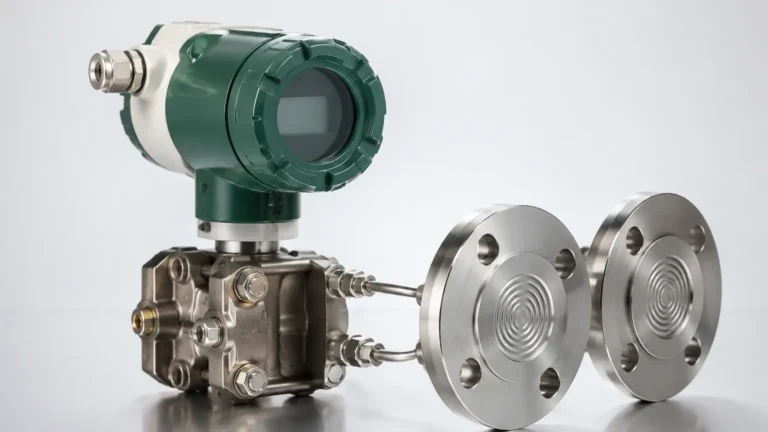
Promag H
Promag H
In the demanding environments of the food, beverage, and life sciences industries, precision measurement is not merely a requirement for efficiency but a cornerstone of safety and regulatory compliance. The Promag H is a specialized electromagnetic flowmeter designed specifically for hygienic applications. It provides a robust solution for measuring the volume flow of conductive liquids in processes where sanitary integrity is paramount. This guide explores the technical principles, selection criteria, and installation best practices for integrating the Promag H into modern industrial automation systems.
Measurement Principle: Electromagnetic Induction
The operation of the Promag H is based on Faraday’s Law of Induction, a fundamental principle of electromagnetism. To understand how this instrument functions, one must look at the interaction between a moving conductive fluid and a magnetic field.
Faraday’s Law in Practice
According to Faraday’s Law, when a conductive medium (such as milk, juice, or pharmaceutical saline) flows through a magnetic field, an electrical voltage is induced. The magnitude of this voltage is directly proportional to the velocity of the fluid. The relationship is expressed by the formula:
E = k · B · D · v
* E: Induced voltage
* k: Instrument constant
* B: Magnetic field strength
* D: Pipe diameter (distance between electrodes)
* v: Average flow velocity
Inside the Promag H sensor, two electromagnetic coils generate a constant magnetic field. As the liquid flows through the sensor, the induced voltage is picked up by two measuring electrodes. Because the magnetic field strength and the pipe diameter are constant, the transmitter can calculate the flow velocity based on the detected voltage. By multiplying this velocity by the cross-sectional area of the pipe, the device determines the instantaneous volume flow rate.
Conductivity Requirements
A critical limitation of this technology is that the medium must be electrically conductive. For most hygienic electromagnetic flowmeters, a minimum conductivity of 5 ¶S/cm (microsiemens per centimeter) is required. For demineralized water or ultra-pure fluids, this threshold may need to be higher depending on the specific transmitter configuration. If the fluid is non-conductive, such as oils or pure alcohols, electromagnetic measurement is not possible, and alternative technologies like Coriolis or ultrasonic meters must be considered.
Technical Specifications and Selection Criteria
Choosing the correct configuration for a Promag H involves balancing process requirements with material compatibility. The hygienic nature of the device means that all wetted parts must resist corrosion and withstand rigorous cleaning cycles.
Material Selection
The liner is the most critical component as it provides the insulation between the fluid and the metal housing. In the Promag H, PFA (Perfluoroalkoxy) is the standard liner material. PFA is preferred in B2B industrial applications because it offers excellent chemical resistance and remains stable at high temperatures, which is essential for Clean-In-Place (CIP) and Steam-In-Place (SIP) processes.
| Component | Standard Material | Options/Notes |
| :— | :— | :— |
| Liner | PFA | Vacuum resistant, high-temperature stability |
| Electrodes | Stainless Steel 1.4435 (316L) | Alloy C22, Tantalum, or Platinum for aggressive media |
| Process Connections | Stainless Steel 1.4404 (316L) | Tri-Clamp, DIN 11851, SMS 1145, Weld neck |
| Housing | Stainless Steel 1.4301 (304) | Designed for wash-down environments |
Pipe Sizes and Flow Ranges
The Promag H is typically available in small to medium diameters, reflecting its use in precision dosing and hygienic processing. Common sizes range from DN 2 to DN 150 (1/12" to 6"). When selecting a size, engineers should aim for a flow velocity between 2 m/s and 3 m/s to ensure optimal accuracy while minimizing pressure drop and electrode fouling.
Installation Guidelines for Sanitary Applications
To maintain the accuracy specified by the manufacturer (often ±0.5% or better), the Promag H must be installed according to specific hydraulic and hygienic guidelines. Incorrect installation is the most common cause of measurement error in electromagnetic flowmeters.
Hydraulic Requirements: Straight Pipe Runs
Flow profiles must be fully developed and symmetrical when they reach the electrodes. Turbulence caused by valves, pumps, or elbows can lead to unstable readings.
* Upstream: A minimum of 5 x DN (nominal diameter) of straight pipe is required before the sensor.
* Downstream: A minimum of 2 x DN of straight pipe is required after the sensor.
If the installation space is extremely limited, some advanced versions of the Promag H feature a "0 x DN" inlet configuration, which uses a refined internal geometry to compensate for disturbed flow profiles, though standard runs remain the preferred engineering practice.
Orientation and Pipe Filling
The sensor must always be completely full of liquid to function. If the pipe is partially empty, the electrodes may lose contact with the fluid, resulting in a "pipe empty" error or erratic data.
1. Vertical Installation: The preferred orientation is a vertical pipe with flow moving upward. This ensures the pipe remains full and allows air bubbles to escape.
2. Horizontal Installation: If the pipe is horizontal, the electrode axis must be horizontal. This prevents air bubbles at the top of the pipe or sediment at the bottom from interfering with the electrical signal.
Grounding and Electrical Connection
Because the induced voltage is often in the millivolt range, electrical noise can easily interfere with the signal. Proper grounding is essential. In hygienic piping (often stainless steel), the fluid is usually in good contact with the pipe. However, if the pipe is plastic or lined, grounding rings or grounding electrodes are necessary to establish a stable reference potential.
Integrating Flow and Level Measurement
In a complete process control loop, flowmeters like the Promag H rarely work in isolation. They are frequently used in conjunction with level measurement instruments to manage tank inventories and batching processes. For example, while a Promag H monitors the flow rate of ingredients into a mixing vessel, a radar level meter or an ultrasonic level sensor provides real-time data on the total volume within the tank.
For engineers designing these systems, sourcing reliable instrumentation is key. Manufacturers like Welk provide a range of complementary technologies, including hydrostatic level transmitters and magnetic level gauges, which work alongside flowmeters to provide a comprehensive view of the process. For more information on coordinating these technologies, you can visit the Main Page to review product options and application support.
Using flow and level data together allows for "mass balance" calculations, which are used to detect leaks or verify the accuracy of the flowmeter. If the level in a tank rises faster than the flowmeter indicates, it may suggest a calibration issue or a secondary, unmonitored inflow.

Maintenance, Limitations, and Troubleshooting
While electromagnetic flowmeters are known for having no moving parts—reducing the need for mechanical maintenance—they are not entirely "set and forget" devices.
CIP/SIP Compatibility
The Promag H is designed to withstand the thermal shock of CIP cycles, where temperatures can reach 140°C to 150°C. However, repeated thermal cycling can eventually stress the PFA liner. Regular visual inspections of the process connections and seals are recommended to ensure no leaks have developed.
Common Troubleshooting Steps
* Fluctuating Readings: Often caused by air bubbles (entrained gas) or proximity to high-power electrical equipment. Check for leaks in the suction side of pumps and ensure the cable shielding is correctly grounded.
* Zero-Point Drift: If the meter shows a flow when the fluid is stationary, it may require a zero-point adjustment. Ensure the pipe is completely full and the fluid is truly still before performing this calibration.
* Insulation Failure: Over time, moisture ingress into the sensor housing can degrade the insulation of the coils. This is typically indicated by a gradual decrease in signal strength or an error code on the transmitter.
Limitations
* Conductivity: As mentioned, non-conductive fluids cannot be measured.
* Solids Content: While the Promag H can handle slurries and liquids with suspended solids, highly abrasive particles can wear down the PFA liner over several years of operation.
* Vacuum Resistance: While PFA liners are generally vacuum-resistant, extreme vacuum conditions at high temperatures can cause the liner to collapse if the device is not specified for those conditions.
Frequently Asked Questions (FAQ)
Q: Can the Promag H measure the flow of deionized water?
A: It depends on the conductivity. Deionized water often has a conductivity below 1 ¶S/cm. If the conductivity is below the meter's threshold (typically 5 ¶S/cm), the Promag H will not be able to provide a reliable measurement.
Q: Is the Promag H suitable for high-pressure applications?
A: The pressure rating is determined by the process connection (e.g., Tri-Clamp or Flange) and the sensor housing. Most hygienic versions are rated up to 16 bar (232 psi) or 40 bar (580 psi), which is sufficient for most food and pharma applications.
Q: How often should the device be calibrated?
A: In regulated industries like pharmaceuticals, annual calibration is standard. In less critical food applications, a verification check using internal diagnostics (like Heartbeat Technology) may allow for extended intervals between full wet calibrations.
Q: Can I install the Promag H near a pump?
A: It is recommended to install the flowmeter on the discharge (pressure) side of the pump, rather than the suction side, to avoid vacuum conditions and cavitation. Ensure the minimum straight pipe run of 5 x DN is maintained between the pump and the sensor.
Conclusion
The Promag H remains a benchmark for hygienic flow measurement due to its lack of internal obstructions, high accuracy, and resistance to aggressive cleaning agents. By understanding the underlying electromagnetic principles and adhering to strict installation guidelines, process engineers can ensure long-term reliability and precision. Whether used for simple flow monitoring or as part of a complex automation strategy involving level and pressure sensors, the Promag H provides the data integrity required for modern B2B industrial standards. For those seeking to integrate these sensors with a broader range of level measurement solutions, exploring the Main Page provides a path toward optimized process control and improved operational efficiency.