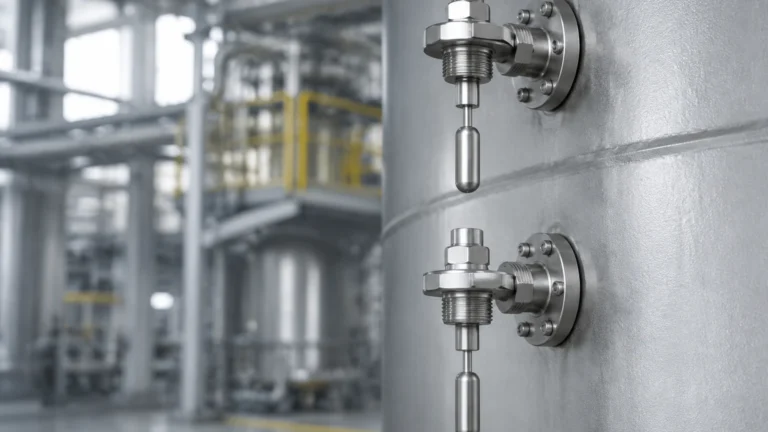
Tdl Gas Analyzer
Tdl Gas Analyzer
In modern industrial process control, the demand for high-speed, accurate, and non-contact gas concentration measurement has led to the widespread adoption of Tunable Diode Laser Absorption Spectroscopy (TDLAS). A tdl gas analyzer utilizes this technology to provide real-time monitoring of specific gas species in complex process environments. Unlike traditional extractive methods that require extensive sample conditioning, TDLAS systems often operate in-situ, offering a direct and rapid response that is essential for safety, environmental compliance, and process optimization.
While industrial manufacturers like Welk specialize in level measurement instruments such as radar and ultrasonic sensors, the integration of gas analysis with level monitoring is becoming increasingly common in chemical storage and reactor vessel management. Understanding the technical foundations and selection criteria of a tdl gas analyzer is critical for engineers tasked with maintaining process integrity.
Measurement Principles of TDLAS
The fundamental principle behind a tdl gas analyzer is the Beer-Lambert Law. This law describes the relationship between the absorption of light and the properties of the material through which the light is traveling. When a laser beam passes through a gas, the molecules of the target gas absorb specific wavelengths of light.
The Beer-Lambert Law
The mathematical expression for this principle is:
$$I = I_0 \cdot e^{-\alpha \cdot L \cdot c}$$
Where:
* I is the intensity of the light after passing through the gas.
* I₀ is the initial intensity of the light source.
* α is the absorption coefficient (specific to the gas species and wavelength).
* L is the optical path length (the distance the light travels through the gas).
* c is the concentration of the target gas.
Wavelength Tuning and Scanning
A tdl gas analyzer uses a semiconductor laser as its light source. The "tunable" aspect refers to the ability to vary the laser's output wavelength by adjusting its temperature or injection current. By rapidly scanning the laser across a specific absorption line of the target gas, the analyzer can distinguish the target gas from other background gases. This high spectral resolution allows the system to avoid cross-interference, a common problem with Non-Dispersive Infrared (NDIR) sensors.
Second Harmonic Detection (2f)
To enhance the signal-to-noise ratio, many TDLAS systems employ Wavelength Modulation Spectroscopy (WMS). By modulating the laser frequency at a high rate and detecting the second harmonic (2f) of the signal, the analyzer can filter out background noise and baseline shifts, enabling the detection of gas concentrations at parts-per-million (ppm) or even parts-per-billion (ppb) levels.
Key Components of a TDL Gas Analyzer
A standard tdl gas analyzer system typically consists of three primary units: the transmitter, the receiver, and the processing electronics.
1. Transmitter Unit: Contains the tunable diode laser, the drive electronics, and the collimating optics that project the laser beam across the process stream.
2. Receiver Unit: Houses a photodetector and focusing lenses. It captures the laser light after it has passed through the process gas and converts the optical signal into an electrical signal.
3. Central Processing Unit (CPU): This unit processes the raw signal from the receiver, applies temperature and pressure compensation algorithms, and outputs the final gas concentration via 4-20mA, Modbus, or other industrial protocols.
In many in-situ configurations, the transmitter and receiver are mounted on opposite sides of a stack or pipe. In "cross-stack" mode, the path length is equal to the diameter of the vessel. For applications where mounting on both sides is not feasible, a retro-reflector probe design can be used, where the laser is reflected back to a detector located in the same housing as the transmitter.
Industrial Applications and Use Cases
The versatility of the tdl gas analyzer makes it suitable for a wide range of demanding industrial sectors.
Combustion Control and Efficiency
In power plants and refineries, monitoring Oxygen (O2) and Carbon Monoxide (CO) in flue gases is vital for combustion optimization. By maintaining the correct air-to-fuel ratio, operators can maximize energy output while minimizing fuel consumption and hazardous emissions. The fast response time of TDLAS allows for dynamic control loops that traditional electrochemical sensors cannot support.
Safety and Explosion Prevention
In chemical storage tanks and reactor vessels, maintaining an inert atmosphere is critical. A tdl gas analyzer can monitor O2 levels in real-time to ensure they remain below the Limiting Oxygen Concentration (LOC). This is particularly relevant when used alongside level measurement instruments, as the headspace gas composition can change rapidly as liquid levels rise or fall. For more information on integrated process monitoring, visit our Main Page.
Environmental Emission Monitoring
Regulations such as the Clean Air Act require the monitoring of pollutants like Ammonia (NH3), Hydrogen Chloride (HCl), and Hydrogen Fluoride (HF). In DeNOx systems (Selective Catalytic Reduction), TDLAS is used to measure "ammonia slip"—the unreacted ammonia that escapes the process—to ensure compliance and protect downstream equipment from ammonium bisulfate formation.
Practical Selection Table for TDL Gas Analyzers
When selecting a tdl gas analyzer, engineers must match the gas species to the appropriate optical configuration. The following table provides a general guideline for common industrial gases.
| Target Gas | Typical Wavelength (nm) | Detection Range | Common Application |
| :— | :— | :— | :— |
| Oxygen (O2) | 760 nm | 0-25% / 0-100% | Combustion, Inerting |
| Carbon Monoxide (CO) | 1560 nm / 2330 nm | 0-1000 ppm / 0-10% | Safety, Process Control |
| Ammonia (NH3) | 1512 nm | 0-10 ppm / 0-100 ppm | SCR/SNCR Optimization |
| Moisture (H2O) | 1392 nm / 1870 nm | 0-100 ppm / 0-10% | Natural Gas Quality |
| Methane (CH4) | 1653 nm | 0-1% / 0-100% | Leak Detection, Biogas |
| Hydrogen Chloride (HCl) | 1742 nm | 0-50 ppm | Incineration Monitoring |
Installation and Engineering Considerations
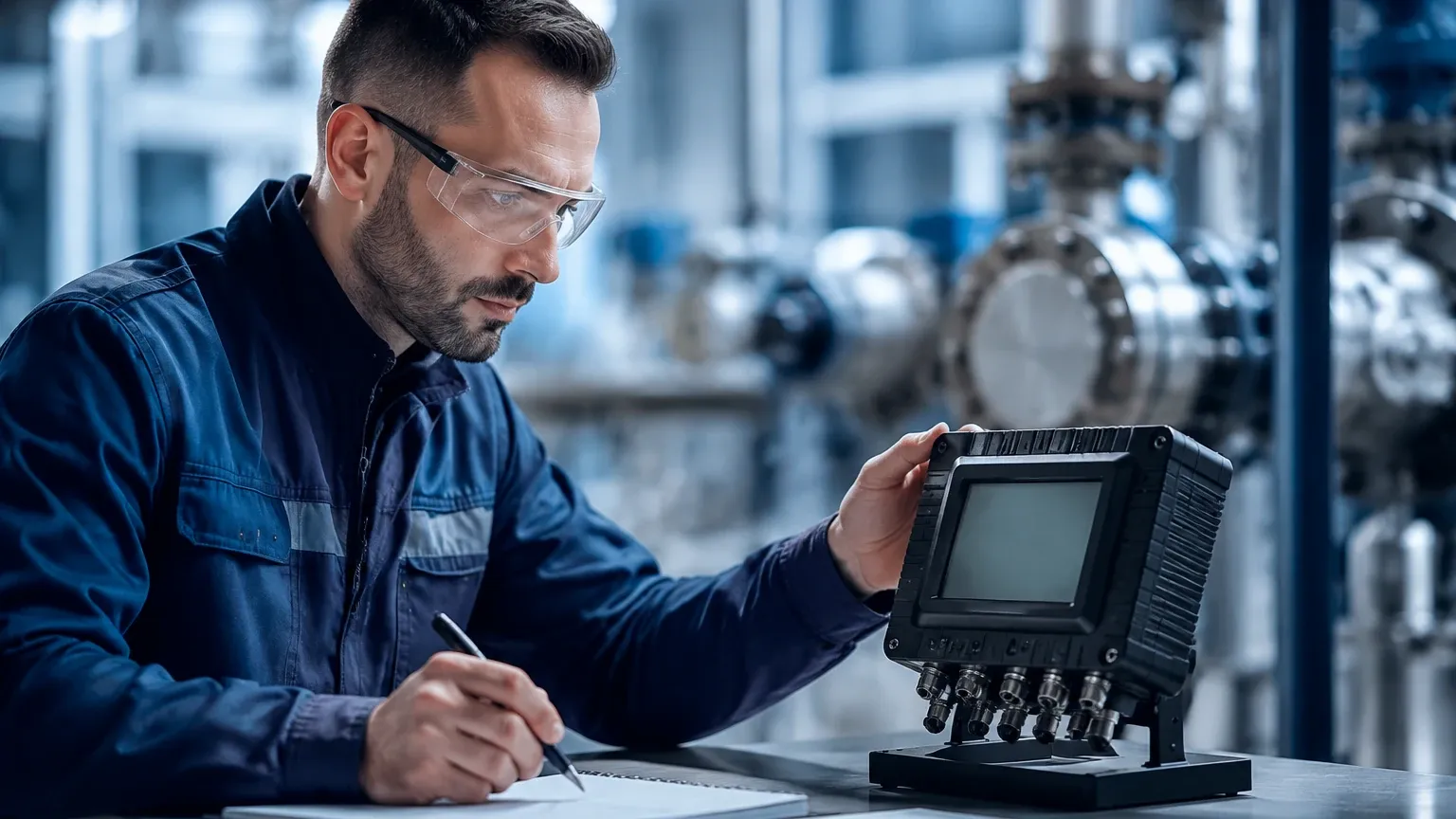
Proper installation is paramount to the long-term reliability of a tdl gas analyzer. Unlike level meters which may involve simple flange mounting, TDLAS systems require precise optical alignment.
Optical Alignment
In cross-stack installations, the transmitter and receiver must be perfectly aligned. Thermal expansion of the stack or mechanical vibration can cause the laser beam to drift off the detector. High-quality mounting flanges with adjustable gimbals are recommended to compensate for these movements.
Purging Systems
To prevent the process gas from fouling the optical windows, a continuous purge of clean, dry air or nitrogen is required. The purge gas creates a protective curtain in front of the lenses. Engineers must account for the "purge length"—the distance the laser travels through the purge gas—as this can affect the path length calculation and the resulting concentration reading.
Temperature and Pressure Compensation
Gas absorption lines are sensitive to changes in temperature and pressure (Doppler and Lorentz broadening). A robust tdl gas analyzer must receive real-time inputs from temperature and pressure transmitters located near the measurement point to apply the necessary corrections to the concentration calculation.
Limitations and Technical Challenges
While highly effective, TDLAS technology has specific limitations that must be addressed during the design phase:
* Particulate Loading: High concentrations of dust or soot can attenuate the laser signal. If the light intensity drops below a certain threshold (typically 90-95% extinction), the analyzer may fail to provide a reading. In such cases, extractive TDLAS or high-power laser variants may be necessary.
* Path Length Requirements: For very low concentrations, a long optical path length is required to achieve sufficient absorption. If the pipe diameter is too small, a folded-path cell or an extractive sample cell might be required.
* Gas Interference: While TDLAS is highly selective, extreme concentrations of background gases with overlapping spectral lines can occasionally cause interference. Selecting the correct absorption line during the manufacturing stage is critical to avoiding this.
Frequently Asked Questions (FAQs)
Q: How often does a tdl gas analyzer need calibration?
A: One of the primary advantages of TDLAS is its stability. Because the measurement is based on the fundamental physical properties of the gas molecules, the system typically exhibits very low drift. Many users perform a calibration check once every 6 to 12 months, although some systems feature internal reference cells that allow for automated daily validation without the need for external span gases.
Q: Can TDLAS measure multiple gases simultaneously?
A: A single laser is typically tuned to a specific absorption line for one gas. However, multi-channel analyzers are available that house multiple lasers within a single transmitter unit, allowing for the concurrent measurement of gases like CO and O2 or NH3 and H2O.
Q: What is the maximum temperature for in-situ TDLAS?
A: Standard in-situ probes and cross-stack systems can often handle process temperatures up to 600°C (1112°F). With specialized cooling jackets and high-temperature window materials, some analyzers can operate in environments exceeding 1200°C, such as directly inside a furnace or kiln.
Q: Does the gas velocity affect the measurement?
A: No, the speed of the gas flow does not directly affect the absorption of light. This makes TDLAS ideal for high-velocity flue gas streams where traditional probes might suffer from mechanical wear or measurement lag.
Conclusion
The tdl gas analyzer represents a significant advancement in industrial instrumentation, providing the speed and reliability required for modern process automation. By leveraging the principles of laser spectroscopy, these devices offer a non-contact solution that reduces maintenance costs and improves safety. When integrated with other critical process instruments, such as the level measurement solutions found on our Main Page, TDLAS technology ensures that operators have a comprehensive understanding of their process environment, from liquid levels to gas phase composition.