Spectra Sensor
Spectra Sensor
In the landscape of industrial process control, the term "spectra sensor" refers to a category of analytical instruments that utilize the electromagnetic spectrum to identify substances and measure concentrations. While traditional level measurement focuses on the physical position of a liquid or solid interface, spectroscopic sensing provides a deeper look into the chemical composition and physical properties of the media within a vessel. For engineers managing complex chemical, oil and gas, or water treatment facilities, understanding how these sensors operate—and how they complement primary level measurement systems—is essential for optimizing process efficiency and safety.
Understanding Spectroscopic Sensing Principles
Before selecting a sensing technology, it is vital to understand the physics governing its operation. Spectroscopic sensors, often referred to as spectra sensors in industrial applications, generally operate on the principle of absorption, emission, or scattering of light across various wavelengths, including ultraviolet (UV), visible (Vis), and infrared (IR).
Tunable Diode Laser Absorption Spectroscopy (TDLAS)
One of the most common forms of high-precision spectra sensing in B2B industrial environments is TDLAS. This method involves a laser source that emits light at a specific frequency corresponding to the absorption line of a target gas molecule (such as moisture, hydrogen sulfide, or carbon dioxide). As the laser beam passes through the process medium, the detector measures the reduction in intensity. The amount of light absorbed is directly proportional to the concentration of the target molecule, according to the Beer-Lambert Law.
Near-Infrared (NIR) Spectroscopy
NIR sensors operate in the 700 nm to 2500 nm range. This technology is frequently used for liquid analysis, allowing operators to monitor the water content in hydrocarbons or the concentration of chemicals in a mixing tank. Unlike a radar level meter that tracks the surface, an NIR spectra sensor analyzes the molecular vibrations within the bulk material.
Relationship to Level Measurement
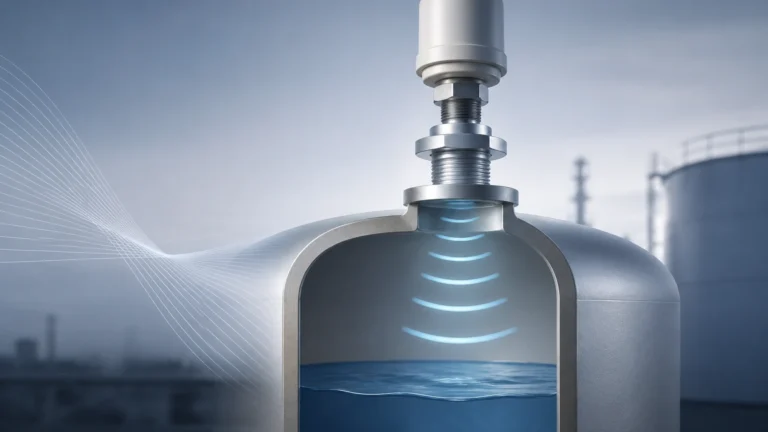
In many integrated systems, a spectra sensor works in tandem with level instruments. For instance, while a radar level meter provides the volume of a liquid in a pressurized tank, a spectroscopic sensor monitors the headspace gas to ensure it remains within safety limits or to detect the presence of contaminants that could affect product quality. For comprehensive system design, engineers often consult the Main Page of instrumentation providers to ensure compatibility between analytical sensors and level transmitters.
Key Applications in Process Industries
Spectra sensors are rarely stand-alone devices; they are integrated into broader automation frameworks. Their application is particularly critical in environments where physical contact with the media is hazardous or where real-time chemical analysis is required without manual sampling.
1. Gas Quality and Safety: In natural gas pipelines and storage, TDLAS-based sensors detect trace amounts of H2O and H2S. This prevents corrosion and ensures the gas meets pipeline specifications.
2. Chemical Concentration Monitoring: In reactors, spectroscopic sensors provide real-time data on the progress of a chemical reaction, allowing for automated dosing of catalysts or reagents.
3. Environmental Compliance: Monitoring stack gases for NOx, SOx, and CO emissions often relies on UV or IR spectroscopy to meet stringent regulatory requirements.
4. Interface Detection: While magnetic level gauges or ultrasonic sensors are standard for interface measurement, spectra sensors can provide secondary verification by identifying the chemical shift between two liquid layers, such as oil and water.
Technical Selection Criteria
Choosing the right spectra sensor requires a detailed analysis of the process environment. Unlike simple level switches, these instruments are highly sensitive to the optical properties of the medium.
| Criteria | Description | Requirement for High Performance |
| :— | :— | :— |
| Spectral Range | The specific wavelengths the sensor can detect. | Must match the absorption peaks of the target substance. |
| Path Length | The distance the light travels through the medium. | Longer paths increase sensitivity for low concentrations. |
| Response Time | How quickly the sensor updates its output. | Typically <1 to 10 seconds for real-time control. |
| Operating Pressure | The pressure limit of the optical window/interface. | Must withstand process pressures (e.g., up to 100 bar or more). |
| Temperature Range | The thermal limits for the electronics and optics. | Often requires cooling or heating to maintain stability. |
| Accuracy | The margin of error in concentration measurement. | Typically ±1% to ±2% of the reading. |
Integration with Level Measurement Technologies
For effective tank management, engineers must distinguish between the roles of level meters and analytical spectra sensors. The following table compares these technologies to assist in system architecture design.
| Feature | Radar/Ultrasonic Level Meters | Spectra Sensors (Analytical) |
| :— | :— | :— |
| Primary Variable | Distance/Level (meters/mm) | Concentration/Composition (ppm/% vol) |
| Measurement Target | Surface interface | Molecular structure |
| Mounting Position | Top-down (usually) | In-line or cross-stack |
| Signal Type | Time-of-flight (Microwave/Sound) | Optical Absorption/Emission |
| Maintenance Focus | Antenna/Transducer cleaning | Optical window clarity/Calibration gas |
When designing a facility, it is common to use products from a professional manufacturer like Welk, which specializes in the level measurement side (radar, ultrasonic, hydrostatic), and pair them with specialized spectroscopic units for a complete process picture. Reviewing product options and application support on the Main Page can help determine the best mechanical fit for these co-located sensors.
Installation and Engineering Considerations
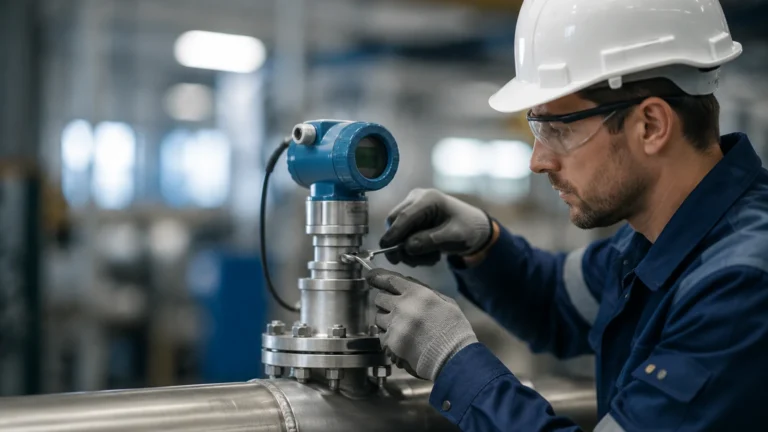
The reliability of a spectra sensor is heavily dependent on its installation. Because these are optical instruments, even minor misalignments or fouling can lead to significant errors.
Optical Path Alignment
For cross-stack or cross-pipe installations, the transmitter and receiver must be perfectly aligned. In large vessels, structural shifting due to thermal expansion can throw the beam out of alignment. Utilizing robust mounting flanges and, in some cases, self-aligning mounts is recommended.
Window Fouling and Purging
The interface between the sensor and the process—the optical window—must remain clean. In applications involving heavy dust, aerosols, or viscous liquids, a constant purge of clean air or nitrogen is often required to prevent build-up on the lens. If the window becomes obscured, the sensor may report a "low signal" error or provide inaccurate concentration data.
Pressure and Temperature Compensation
Spectroscopic measurements are sensitive to the density of the medium. Since gas density changes with pressure and temperature, the spectra sensor system must include integrated compensation. This often involves taking inputs from separate pressure and temperature transmitters and applying correction algorithms in the sensor's electronics.
Limitations and Operational Risks
While powerful, spectra sensors have specific limitations that must be addressed during the engineering phase:
* Cross-Sensitivity: Other molecules in the process might absorb light at similar wavelengths as the target molecule. This "interference" can lead to false-positive readings. Advanced sensors use sophisticated software to "de-convolve" the spectrum and isolate the target signal.
* Particulate Interference: High levels of dust or suspended solids can scatter the light beam, reducing the signal-to-noise ratio. In such cases, filtration or specific wavelength selection is necessary.
* Calibration Drift: While many modern TDLAS sensors are marketed as "calibration-free" due to their use of internal reference cells, most spectra sensors still require periodic verification with a known standard gas or liquid to ensure long-term accuracy.
Frequently Asked Questions (FAQ)
Q: Can a spectra sensor replace a radar level meter?
A: Generally, no. A spectra sensor is designed to measure *what* is in the tank (composition), whereas a radar level meter measures *how much* is in the tank (level/volume). They are complementary technologies.
Q: How often do optical windows need to be cleaned?
A: This depends entirely on the process. In clean gas applications, windows may last years without cleaning. In heavy industrial processes like cement production or crude oil refining, automated cleaning or purging systems are required to maintain operation.
Q: Are spectra sensors safe for hazardous areas?
A: Yes, most industrial spectra sensors are available with ATEX, IECEx, or Class/Division certifications. Since they use light, the sensing point is inherently safe, but the electronic enclosures must meet local explosion-proof or intrinsic safety standards.
Q: What is the typical lifespan of the light source?
A: For TDLAS sensors, the laser diodes typically have a lifespan of 5 to 10 years depending on the operating temperature. LED-based or lamp-based sensors may require more frequent source replacement.
Conclusion
The integration of a spectra sensor into an industrial process provides a level of insight that physical measurement alone cannot offer. By understanding the underlying spectroscopic principles and adhering to strict installation guidelines, engineers can significantly improve process safety and product consistency. When building out a complete instrumentation suite, it is essential to balance these analytical capabilities with reliable level measurement solutions. For those seeking to specify high-quality level transmitters to work alongside their analytical sensors, visiting the Main Page provides access to the necessary technical documentation and product specifications required for a successful implementation.