Burkert Level Switch 8110 Manual
Burkert Level Switch 8110 Manual
In industrial process automation, the reliable detection of liquid levels is critical for preventing tank overfills, protecting pumps from dry running, and ensuring consistent batch processing. The Burkert Type 8110 is a vibrating level switch designed specifically for liquid applications. This guide serves as a practical engineering reference for understanding the operation, installation, and selection criteria associated with this technology, while providing context for how it fits into the broader landscape of industrial Level Switches.
Understanding Vibrating Fork Level Measurement Principles
Before diving into the specifics of a manual or technical datasheet, it is essential to understand the underlying physics of the vibrating fork (also known as a tuning fork) measurement principle. This technology is widely favored in B2B industrial environments because it contains no moving parts that can wear out or jam, unlike traditional float switches.
The Piezoelectric Effect
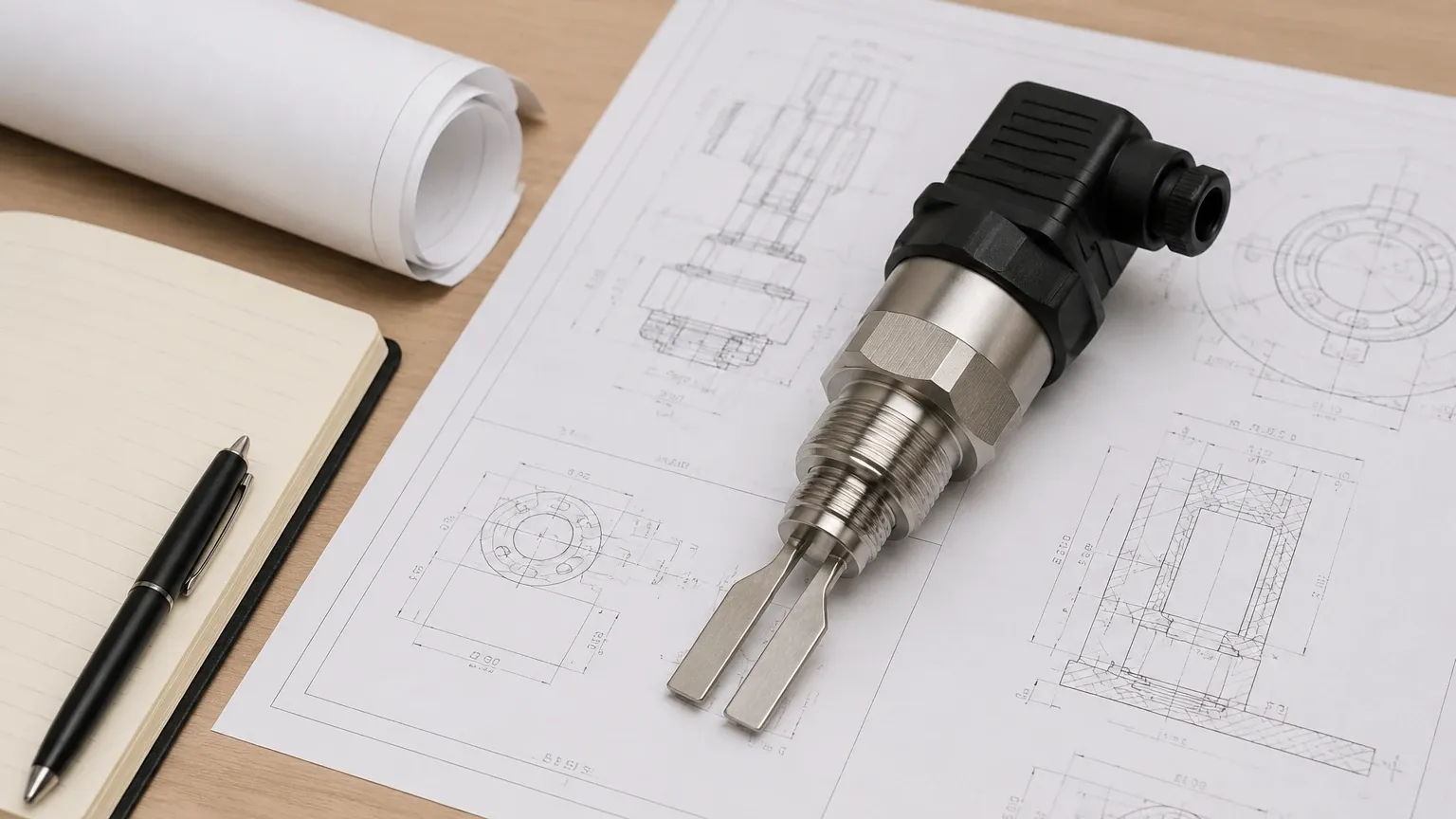
The sensor head of a vibrating level switch consists of two metal tines. Inside the housing, a piezoelectric crystal is energized by an electrical signal, causing the tines to vibrate at their natural resonance frequency in the air. This frequency is typically around 1,200 Hz for many industrial models.
Frequency Shift Detection
When the liquid medium reaches the level of the tines and submerges them, the density of the liquid dampens the vibration, causing a significant shift in the resonance frequency. The integrated electronics monitor this frequency continuously. When the shift passes a specific threshold, the electronics trigger an output signal (such as a transistor or relay) to indicate a change in state. Once the liquid level drops and the tines are again surrounded by air or gas, the vibration returns to its natural frequency, and the switch resets.
Advantages of the Principle
* Independence from Media Properties: Unlike capacitive sensors, vibrating forks are largely unaffected by changes in dielectric constants, conductivity, or pressure.
* Turbulence Resistance: The high-frequency vibration is generally immune to surface turbulence, bubbles, or foam that might cause false readings in ultrasonic or optical sensors.
* Maintenance-Free: The lack of mechanical linkages makes these units ideal for long-term installation in difficult-to-access tanks.
Technical Overview of the Burkert 8110 Series
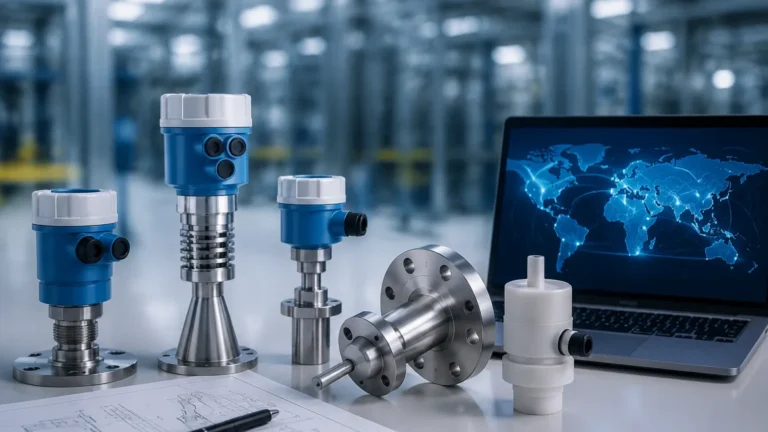
The Burkert 8110 is categorized as a compact vibrating level switch. It is primarily used for point level detection in tanks containing water, oils, or chemicals. It is designed for applications where space is limited and a simple, robust solution is required.
Key Specifications
* Process Temperature: Typically ranges from -40 °C to +150 °C (-40 °F to +302 °F).
* Process Pressure: Suitable for environments from -1 bar up to 64 bar (approx. 928 PSI).
* Material: The wetted parts (the fork and process connection) are usually constructed from 316L stainless steel (1.4404/1.4435), ensuring compatibility with corrosive media.
* Viscosity: Can handle liquids with viscosities up to 10,000 mm²/s.
* Density: Requires a minimum media density, often around 0.7 g/cm³ (though some variants allow for lower densities).
Installation and Mounting Considerations
Correct installation is the most significant factor in ensuring the longevity and accuracy of a level switch. When consulting a burkert level switch 8110 manual, engineers should prioritize the physical orientation of the device relative to the tank's flow and geometry.
Orientation of the Tines
For horizontal mounting, the tines must be oriented so that the liquid can easily drain off them. If the tines are positioned horizontally (one above the other), a liquid film can form between them (the "bridge effect"), leading to a false "full" signal even after the level has dropped. The manual typically recommends that the tines be oriented vertically (side-by-side) so that gravity assists in clearing the sensor.
Avoiding Interference
* Flow Streams: Do not install the switch directly in the path of a heavy filling stream. The kinetic energy of the liquid can cause mechanical stress on the tines or result in erratic switching. If the location is unavoidable, a protective baffle or shield should be installed.
* Nozzle Length: Ensure the tines protrude fully into the tank. If the mounting nozzle is too long, the liquid may become trapped in the nozzle, preventing the fork from vibrating freely in the air once the tank empties.
* Agitators: In tanks with mixers or agitators, the switch should be placed in a zone with minimal mechanical vibration to prevent interference with the sensor's own resonance.
Process Connections
The 8110 typically uses standard threaded connections, such as G 1" or NPT 1". It is vital to use appropriate sealing materials (like PTFE tape or specialized gaskets) that are compatible with the process temperature and chemical composition.
Electrical Connection and Configuration
The electrical setup of the 8110 varies depending on the output version selected (e.g., PNP/NPN transistor or AC/DC relay).
Wiring Basics
1. Power Supply: Most DC versions operate on a 10–35 V DC range.
2. Output Logic: The switch can usually be configured for "Normally Open" (NO) or "Normally Closed" (NC) operation. This is often referred to as High/Low Fail-Safe mode.
* Max Mode (Overfill Protection): The switch is energized when the tines are not covered. If power fails or the tines are covered, the output opens, triggering an alarm.
* Min Mode (Dry Run Protection): The switch is energized when the tines are covered. If the level drops below the tines or power is lost, the output opens.
Connection Types
The device often features an M12 connector or a valve plug (EN 175301-803) for easy integration into existing control systems. Proper IP-rated cabling is necessary to maintain the unit's environmental sealing (typically IP65 to IP67).
Comparative Selection: Choosing the Right Level Switch
While the Burkert 8110 is a specialized tool, engineers must evaluate whether a vibrating fork is the best fit compared to other technologies. Manufacturers like Welk offer a broad range of Level Switches that cater to different industrial needs.
| Technology | Best For | Limitations |
| :— | :— | :— |
| Vibrating Fork (e.g., 8110) | Most liquids, turbulent surfaces, high pressure. | Not for highly viscous/sticky media that cakes. |
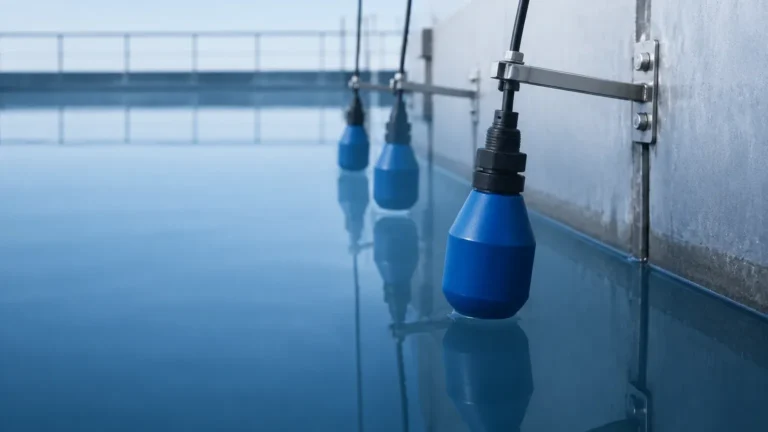
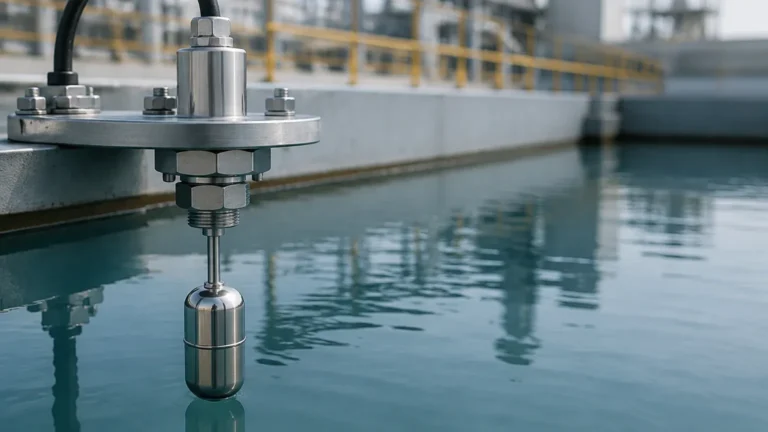
| Float Switch | Simple water tanks, low-cost applications. | Moving parts can jam; sensitive to debris. |
| Capacitive Switch | Powders, granulates, non-conductive liquids. | Sensitive to changes in media dielectric. |
| Ultrasonic Switch | Non-contact requirements, corrosive acids. | Affected by heavy foam and vapor layers. |
| Hydrostatic Pressure | Continuous level measurement in deep tanks. | Requires constant density for accuracy. |
When selecting a switch, consider the "Welk approach": prioritize reliability and cost-effectiveness by matching the sensor material and measurement principle to the specific chemical and physical properties of the fluid.
Troubleshooting and Maintenance Guide
If the level switch fails to trigger or provides false readings, refer to the following troubleshooting steps common to the 8110 and similar vibrating fork sensors.
1. Check for Buildup: If the media is prone to crystallization or is highly viscous, material may build up between the tines. Clean the fork with a soft brush or compatible solvent. Do not bend the tines.
2. Verify Power Supply: Ensure the voltage at the terminals matches the specification in the technical manual. Voltage drops in long cable runs can cause intermittent failure.
3. Inspect for Damage: Mechanical impact (e.g., from a large solid in the liquid) can chip or bend the tines, changing their resonance frequency permanently. If the tines are visibly damaged, the unit must be replaced.
4. Test Output Logic: Use a multimeter to check the continuity of the output while manually submerging the fork in a container of the process liquid. This confirms if the electronics are functioning correctly.
Frequently Asked Questions (FAQs)
Q: Can the Burkert 8110 be used for solids or powders?
A: No. The 8110 is specifically tuned for the density of liquids. For solids or granulates, a vibrating fork designed for bulk materials (which usually has larger, more robust tines) or a rotary paddle switch is required.
Q: Is the device suitable for hygienic applications in the food industry?
A: While the 8110 is made of stainless steel, hygienic applications often require specific certifications (like 3-A or EHEDG) and specialized process connections (like Tri-Clamp). Always verify the specific variant's certifications in the datasheet.
Q: What happens if there is foam on top of the liquid?
A: Vibrating forks are generally very good at ignoring light foam. However, if the foam is extremely dense and "wet," it may cause the switch to trigger. In such cases, adjusting the sensitivity (if available on the model) or using a different technology may be necessary.
Q: How do I handle very high-temperature liquids?
A: For temperatures exceeding 150 °C, a high-temperature version with a temperature adapter (a thermal decoupler between the fork and the electronics) must be used to protect the internal piezoelectric elements.
Conclusion
The Burkert 8110 is a reliable, compact solution for point level detection in a variety of liquid media. By adhering to the guidelines found in the burkert level switch 8110 manual—specifically regarding tine orientation and fail-safe logic—engineers can implement a robust system with minimal maintenance requirements. For diverse industrial applications requiring customized or alternative measurement technologies, exploring a comprehensive range of Level Switches ensures that the specific demands of the process environment are met with precision and safety.