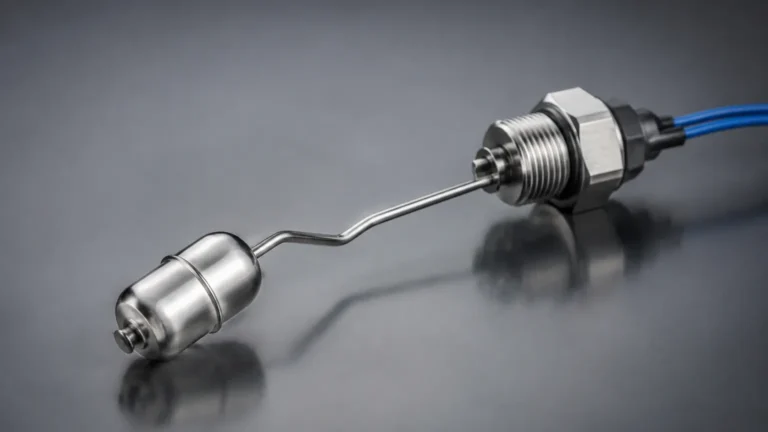
Vibronic Level Switches
Vibronic Level Switches
In industrial process automation, point level detection serves as a critical safeguard for inventory management and equipment protection. Among the various technologies available, vibronic level switches—often referred to as vibrating fork sensors—have become a standard choice for both liquid and bulk solid applications. These instruments provide reliable high-level or low-level alarms, ensuring that tanks do not overfill and pumps do not run dry.
Welk, a professional manufacturer of industrial level measurement instruments, provides a range of Level Switches designed to withstand the rigors of chemical processing, water treatment, and industrial automation. Understanding the underlying physics and selection criteria for vibronic level switches is essential for engineers tasked with designing robust level control systems.
Measurement Principle of Vibronic Technology
The operation of vibronic level switches is based on the principle of a vibrating element, typically shaped like a tuning fork, being driven at its resonance frequency. This frequency is maintained by a piezoelectric crystal assembly located within the sensor housing.
The Piezoelectric Effect
One piezoelectric crystal (the transmitter) is excited by an electrical signal, causing it to vibrate mechanically. This vibration is transferred to the stainless steel fork tines. A second piezoelectric crystal (the receiver) detects these vibrations and converts them back into an electrical signal, creating a feedback loop that maintains the fork at its natural resonant frequency in free air or gas.
Frequency Shift Detection
When the process medium (liquid or solid) comes into contact with the vibrating fork, the frequency of vibration changes.
1. In Liquids: The density of the liquid dampens the vibration, causing a significant drop in the resonant frequency.
2. In Solids: The presence of granular material or powder restricts the mechanical movement of the tines, leading to a frequency shift or an amplitude reduction.
The internal electronics of the switch continuously monitor these changes. Once the frequency shifts beyond a predefined threshold, the electronics trigger a switching output—typically a relay, PNP/NPN transistor, or a 4-20 mA signal—to indicate a change in level state. Because this method relies on physical contact and mechanical resonance rather than electrical properties like conductivity or dielectric constant, vibronic level switches are largely unaffected by changes in the medium's chemical composition.
Advantages of Vibronic Level Switches
Vibronic technology offers several distinct advantages over float switches, capacitive sensors, or ultrasonic point switches:
* Media Independence: They are generally unaffected by the dielectric constant, conductivity, or turbulence of the liquid.
* Maintenance-Free Operation: With no moving parts like hinges or floats, there is minimal mechanical wear.
* Self-Monitoring: Many advanced vibronic sensors can detect damage to the fork tines or the piezoelectric drive, providing a fail-safe signal if the instrument itself fails.
* Compact Design: Small fork dimensions allow for installation in narrow pipes and small vessels.
* Versatility: They can handle high pressures (up to 64 bar or 6.4 MPa) and a wide range of temperatures.
Technical Selection and Application Table
Choosing the right vibronic level switch requires an evaluation of the medium's density and viscosity. Below is a practical selection guide for common industrial scenarios.
| Application Type | Medium Characteristics | Recommended Fork Design | Key Consideration |
| :— | :— | :— | :— |
| Standard Liquids | Water, oils, solvents | Short fork (approx. 40mm) | Ensure density > 0.5 g/cm³ |
| Viscous Liquids | Syrups, heavy oils, resins | Polished fork tines | Limit viscosity to < 10,000 mm²/s |
| Aerated Liquids | Foaming chemical tanks | Standard fork | Vibronic switches ignore most foam layers |
| Fine Powders | Flour, cement, plastic pellets | Long, robust fork tines | Avoid bridge building between tines |
| Hygienic/Food | Milk, beverages, pharma | Tri-clamp, 3-A certified | Surface roughness < 0.8 μm |
| High Temperature | Hot bitumen, steam jackets | Extended neck/Heat sink | Use HT-rated piezoelectric elements |
Installation Considerations and Best Practices
Proper installation is paramount to ensuring the longevity and accuracy of vibronic level switches. While these devices are robust, mechanical interference can lead to false triggers or physical damage.
Mounting Orientation
* Top Mounting: Used for high-level (overfill) detection. The sensor is installed vertically. It is important to ensure the fork is long enough to reach the desired switching point, often requiring extension tubes.
* Side Mounting: Common for both high and low-level detection. The fork should be oriented so that the flat surfaces of the tines are vertical. This allows the liquid to drain easily off the fork and prevents solids from resting on top of the tines, which could cause a false "full" signal.
Avoiding Turbulence and Flow
If the switch is installed near an inlet pipe or an agitator, the mechanical force of the moving fluid can stress the fork tines. In these cases, a protective shield or baffle should be installed to divert the direct flow away from the sensor. However, the shield must be designed to allow the medium to flow freely in and out so that the level detection remains responsive.
The "Dead Zone" and Buildup
In applications involving sticky or crystallizing media, buildup can occur between the fork tines. If the gap between the tines becomes bridged by solid material, the switch will remain in the "covered" state regardless of the actual level. To mitigate this, engineers should select forks with wider tine spacing or use coatings like PFA or ECTFE to reduce adhesion.

Limitations of Vibronic Technology
While highly versatile, vibronic level switches are not universal solutions. Certain process conditions may necessitate alternative technologies:
1. Extreme Viscosity: If a liquid is so viscous that it does not flow off the fork when the level drops, the sensor will indicate a false positive. Generally, 10,000 mm²/s (cSt) is the upper limit for standard models.
2. Heavy Coating: While vibronic switches can handle some buildup, thick, hardening coatings (like fast-setting concrete or certain resins) will eventually dampen the vibration permanently.
3. Very Low Density: For bulk solids, if the material is extremely light (e.g., loose expanded polystyrene), it may not provide enough mechanical resistance to shift the frequency of the fork.
4. Significant Mechanical Vibration: If the tank itself vibrates at a frequency near the resonant frequency of the sensor (typically around 1,000 to 1,400 Hz), it can interfere with the measurement. High-quality sensors like those from Welk utilize frequency-shifting logic to minimize this risk.
Comparison with Other Level Switch Technologies
| Feature | Vibronic (Tuning Fork) | Float Switch | Capacitive Switch |
| :— | :— | :— | :— |
| Moving Parts | None (Micro-vibration only) | Yes (Mechanical float) | None |
| Media Buildup | Moderate resistance | High risk of jamming | High risk of false signals |
| Foam Sensitivity | Low | High (Float sits on foam) | High (Dielectric change) |
| Installation | Any orientation | Vertical/Horizontal | Side/Top |
| Maintenance | Very Low | Moderate | Moderate |
Engineering Checklist for Specification
Before procurement, project engineers should confirm the following data points to ensure the vibronic level switch is fit for purpose:
* Minimum Density: Is the medium density above the sensor's threshold (typically 0.5 to 0.7 g/cm³ for liquids)?
* Process Pressure: Will the operating pressure exceed the rating of the process connection (Standard ratings often include 1.6 MPa, 4.0 MPa, or 6.4 MPa)?
* Wetted Materials: Is 316L stainless steel compatible with the medium, or is a specialized alloy like Hastelloy or a plastic coating required?
* Output Logic: Is a normally open (NO) or normally closed (NC) configuration required for fail-safe operation? For overfill protection, a "normally closed" (de-energize on alarm) logic is standard.
* Hazardous Areas: Does the installation site require ATEX, IECEx, or North American explosion-proof certifications?
Frequently Asked Questions (FAQ)
Q: Can vibronic level switches be used in boiling liquids?
A: Yes, provided the bubbles generated by boiling do not significantly lower the effective density of the liquid below the sensor's minimum threshold. Most industrial vibronic switches are designed to ignore the presence of small bubbles.
Q: How do I test the function of a vibronic switch without filling the tank?
A: Most modern switches include a test magnet or a button on the electronic insert. Touching the magnet to a specific spot on the housing simulates a frequency shift, allowing you to verify the relay or transistor output and the control room logic.
Q: What is the typical lifespan of a vibronic sensor?
A: In non-corrosive and non-abrasive environments, these sensors can last 10 to 15 years or more. The primary wear factor is the piezoelectric crystal, which is rated for millions of cycles.
Q: Can these switches detect the interface between two liquids?
A: Generally, no. Vibronic level switches are point-level devices designed to detect the presence or absence of a medium. While a very sensitive switch might detect the transition from a low-density oil to high-density water, it is not the recommended technology for interface measurement; hydrostatic or guided wave radar is typically preferred for that application.
For more detailed technical specifications and to explore various models tailored to specific industrial needs, you can Review product options and application support from Welk’s engineering team. Selecting the correct vibronic level switch ensures long-term operational safety and process efficiency in even the most demanding environments.