Flygt Level Switches
Flygt Level Switches
In the realm of wastewater management and industrial fluid handling, point level control is a fundamental requirement for the automation of pumps and the prevention of tank overflows. Among the most recognized solutions in this field are Flygt level switches, particularly the ENM-10 series. These devices are engineered to operate in demanding environments where reliability is paramount, such as sewage pumping stations, drainage pits, and chemical processing tanks. This guide provides a technical overview of the measurement principles, selection criteria, and installation best practices for these essential industrial instruments.
Measurement Principles: The Physics of Float Switches
Before selecting a specific model, it is essential to understand the underlying physical principles that govern the operation of float-style level switches. Most Flygt level switches utilize a relatively simple yet highly effective mechanical principle based on buoyancy and gravity.
Buoyancy and Displacement
A level switch typically consists of a hollow, hermetically sealed body that is less dense than the liquid in which it is immersed. According to Archimedes' principle, the buoyant force exerted on the float is equal to the weight of the fluid displaced. As the liquid level rises, the buoyant force eventually overcomes the weight of the float and the attached cable, causing the float to rise and tilt.
The Tilting Mechanism
The internal mechanism of a Flygt level switch usually involves a microswitch and a moving weight, often a steel ball. When the float is hanging vertically (low liquid level), the steel ball rests in a position that holds the microswitch in its "normal" state (either normally open or normally closed). As the liquid level rises and the float tilts beyond a certain angle—typically around 45 degrees—the steel ball rolls to the opposite end of the chamber, actuating the microswitch and changing the electrical state of the circuit.
Mercury-Free Design
Modern industrial standards have largely moved away from mercury-wetted contacts due to environmental concerns. Current Flygt level switches utilize high-quality microswitches that provide clean electrical switching without the use of hazardous materials, making them suitable for a wider range of applications, including those with strict environmental regulations.
Key Features of Flygt Level Switches
The most common variant, the ENM-10, is designed with specific material properties to withstand the rigors of wastewater and industrial chemicals. Key characteristics include:
* Chemical Resistance: The outer casing is typically constructed from polypropylene (PP), a thermoplastic polymer known for its excellent resistance to a wide range of acids, alkalis, and organic solvents.
* Cable Durability: The cable is often the most vulnerable part of a level switch. Flygt utilizes specialized jacket materials such as PVC, Nitrile/PVC, or Chlorinated Polyethylene (CPE) to ensure long-term flexibility and resistance to oils and fats commonly found in sewage.
* Hermetic Sealing: The housing is molded and sealed to prevent any moisture ingress, which is critical for preventing short circuits in submerged applications.
* Simplicity: With no complex electronics within the float itself, these switches are less prone to failure from electromagnetic interference (EMI) or power surges compared to active electronic sensors.
Technical Selection Criteria and Practical Table
Selecting the correct level switch requires an analysis of the fluid properties and the physical constraints of the tank or pit. The following table outlines the primary considerations for standard industrial applications.
Selection Table: Flygt Level Switch Specifications
| Parameter | Requirement | Engineering Consideration |
| :— | :— | :— |
| Liquid Density | 0.95 to 1.10 g/cm³ | Standard floats may not tilt correctly in very light oils or heavy sludges. |
| Temperature Range | 0°C to 60°C (32°F to 140°F) | High-temperature versions may be required for industrial process water. |
| Maximum Depth | Up to 20 meters (approx. 65 feet) | Ensure the cable length is sufficient for the total depth of the wet well. |
| Switching Voltage | 12V to 250V AC/DC | Must match the input requirements of the PLC or pump controller. |
| Contact Rating | 8A (Resistive), 3A (Inductive) | High-power pumps should be controlled via a relay or contactor. |
| Enclosure Class | IP68 | Must be rated for continuous immersion. |
| Housing Material | Polypropylene | Verify compatibility with specific chemical concentrations in the tank. |
| Cable Material | PVC or Nitrile Rubber | Nitrile is preferred for environments with high concentrations of oils or fats. |
Installation Best Practices for Reliable Operation
Even the most robust level switch will fail if installed incorrectly. Proper positioning and securing of the cable are critical to ensuring the switch operates at the intended levels and does not become entangled with other equipment.
1. Determining the Pivot Point
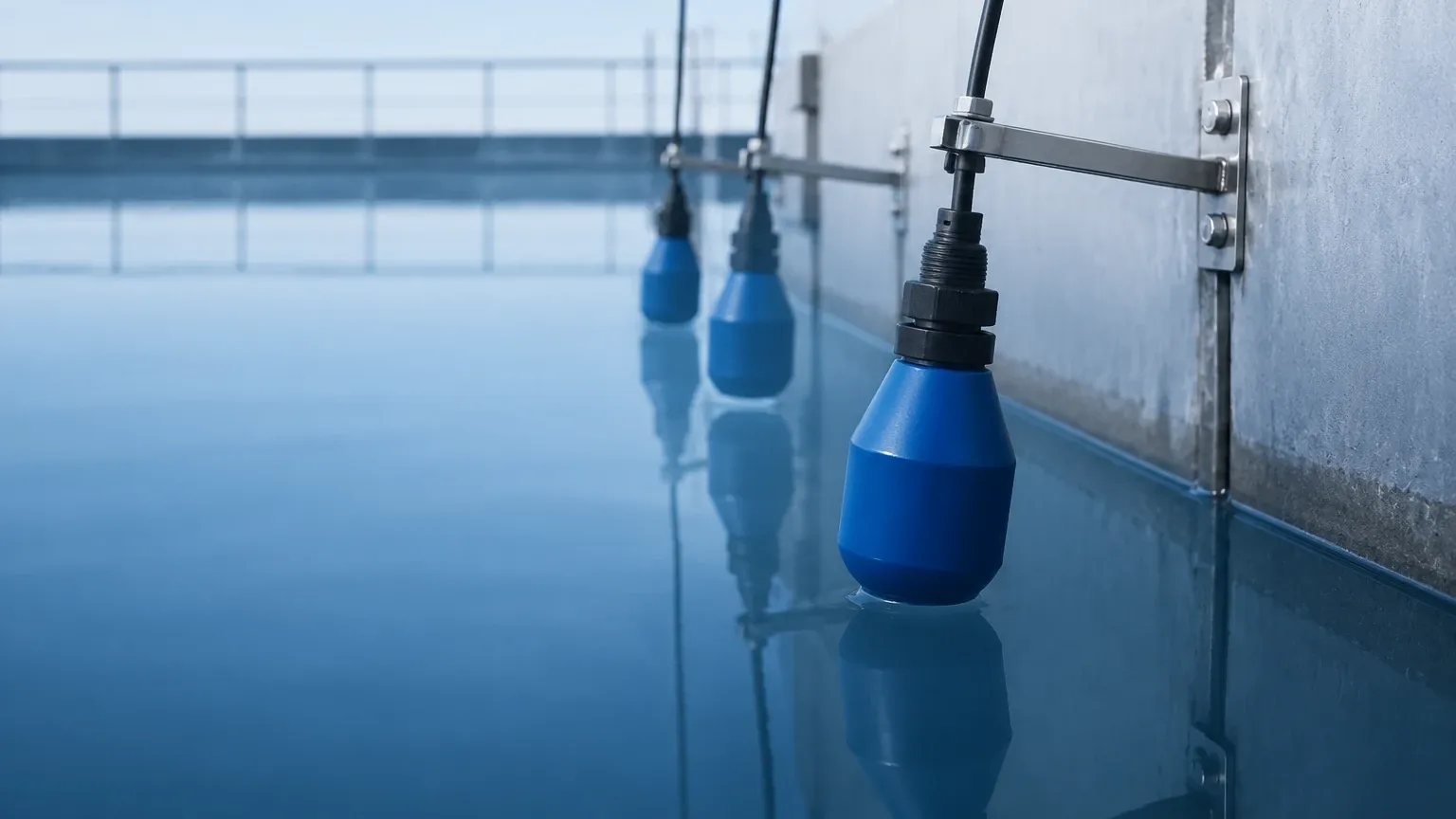
The cable must be anchored at a specific height, which serves as the pivot point. The distance between the anchor point and the float (the "free lead") determines the switching differential. A longer free lead creates a larger gap between the "on" and "off" points, while a shorter lead provides more precise, narrow-band control.
2. Using Cable Weights
In many applications, the cable is suspended from a bracket at the top of the tank. To prevent the float from drifting due to turbulence or pump intake currents, a cable weight (counterweight) is often attached to the cable a few centimeters above the float. This ensures the float remains in the desired vertical column of water.
3. Avoiding Entanglement
In wet wells containing multiple pumps, discharge pipes, and ladders, entanglement is a common cause of failure. Switches should be installed away from the direct flow of incoming water and at a sufficient distance from walls and other submerged structures. In highly turbulent tanks, the use of a stilling well (a perforated pipe) can protect the float from excessive movement.
4. Electrical Connections
Ensure that all cable entries into junction boxes are properly sealed with cord grips (glands) to prevent moisture from traveling down the inside of the cable jacket—a phenomenon known as "wicking." All wiring should comply with local electrical codes, particularly in hazardous areas where intrinsically safe barriers may be required.
Maintenance and Troubleshooting Strategies
While Flygt level switches are designed for low maintenance, periodic inspections can prevent unexpected system downtime. In wastewater applications, the primary threat to operation is the accumulation of "fat, oil, and grease" (FOG) or fibrous materials.
* Visual Inspection: Regularly check the float for buildup. A heavy coating of grease can change the buoyancy of the float, preventing it from tilting or causing it to stay tilted even when the level drops.
* Cable Integrity: Inspect the cable jacket for signs of cracking, swelling, or abrasion. If the jacket is compromised, the switch must be replaced immediately to prevent water from reaching the electrical contacts.
* Manual Testing: Periodically lift the float manually to ensure the pump or alarm triggers as expected. This confirms that both the mechanical tilt and the electrical circuit are functioning correctly.
* Cleaning: Use a mild detergent or a low-pressure water spray to remove debris. Avoid using sharp tools that could puncture the polypropylene housing.
Selecting the Right Level Switches for Industrial Applications
While float switches like the Flygt ENM-10 are excellent for general wastewater and simple pump control, certain industrial processes may require different technologies. For example, in highly corrosive environments, extremely high temperatures, or applications involving granular solids, other types of Level Switches may be more appropriate.
As a professional manufacturer, Welk provides a broad spectrum of level measurement solutions, including radar, ultrasonic, and hydrostatic transmitters. When a simple point-level float switch is insufficient—perhaps due to high agitation or the need for continuous level monitoring—engineers often turn to technologies such as:
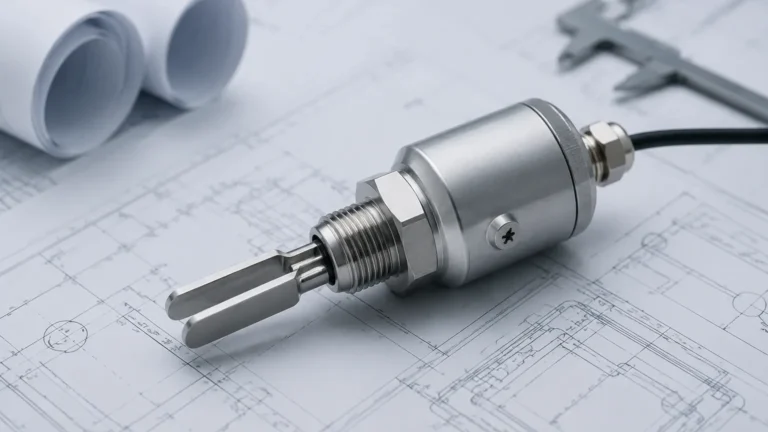
1. Tuning Fork Level Switches: Ideal for powders and liquids where high reliability is needed regardless of dielectric properties.
2. Capacitance Level Switches: Suitable for detecting the interface between two different liquids or for use in high-pressure vessels.
3. Ultrasonic Sensors: Provide non-contact measurement, which is advantageous when the medium is extremely aggressive or prone to coating mechanical parts.
For most standard sump and sewage applications, however, the mechanical simplicity of a high-quality float switch remains the most cost-effective and reliable choice. By understanding the specific gravity of the liquid and the chemical environment, engineers can ensure they select a switch that will provide years of trouble-free service.
Frequently Asked Questions (FAQ)
Can Flygt level switches be used in potable water?
While the polypropylene housing is generally safe, it is important to verify that the specific model and cable material (such as certain PVC formulations) meet local health and safety certifications for drinking water (e.g., NSF/ANSI 61).
What happens if the liquid density is lower than 0.95 g/cm³?
If the liquid is significantly lighter than water (like some light oils or fuels), the float may not have enough buoyancy to tilt the internal mechanism. In these cases, a specialized float designed for low-density fluids or a different technology, like an ultrasonic or tuning fork switch, should be used.
How many switches are needed for a standard duplex pump station?
Typically, four switches are used: one for "All Off," one for "Lead Pump On," one for "Lag Pump On," and one for "High Level Alarm." This configuration provides redundancy and ensures the load is shared between the pumps.
Are these switches suitable for hazardous (Ex) zones?
Flygt level switches can often be used in hazardous areas if they are connected to an intrinsically safe (IS) barrier. Always check the specific ATEX or IECEx rating of the device and the requirements of the installation site before proceeding.
What is the typical lifespan of a level switch?
In a well-maintained environment with clean water, a switch can last over ten years. In harsh sewage applications with high turbulence and grease, the lifespan may be shorter, typically ranging from three to seven years, depending on the frequency of cleaning and inspection.
By adhering to these engineering guidelines and understanding the limitations of float-based technology, operators can maintain high levels of system uptime and protect critical infrastructure from the risks of level control failure.