Gems Level Switches
Gems Level Switches
In the landscape of industrial automation and process control, the ability to detect the presence or absence of liquid at a specific point is critical for safety, efficiency, and inventory management. Level switches serve as the primary binary sensors in these systems, providing a simple "on/off" signal when a substance reaches a predetermined height. Among the most recognized names in this sector are Gems level switches, which have set industry standards for reliability and versatility. This guide provides a comprehensive technical overview of level switch technologies, selection criteria, and practical application insights for engineering professionals.
Understanding the Core Principles of Level Switches
Before selecting a specific model, it is essential to understand the physics behind how these devices operate. Level switches are generally categorized by their sensing technology, each suited to different media and environmental conditions.
Float-Type Level Switches
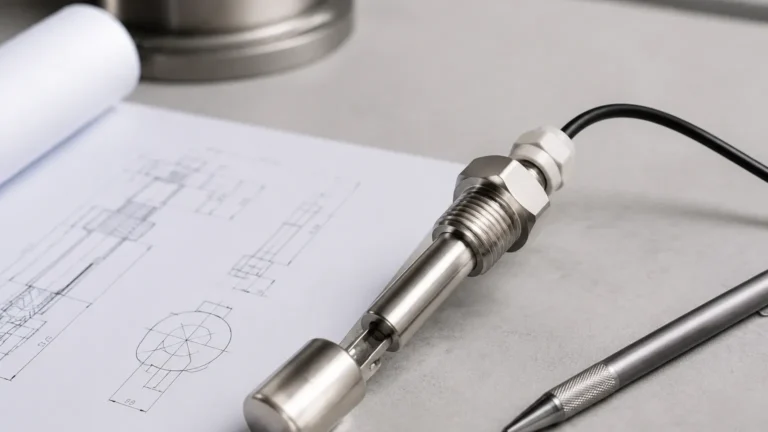
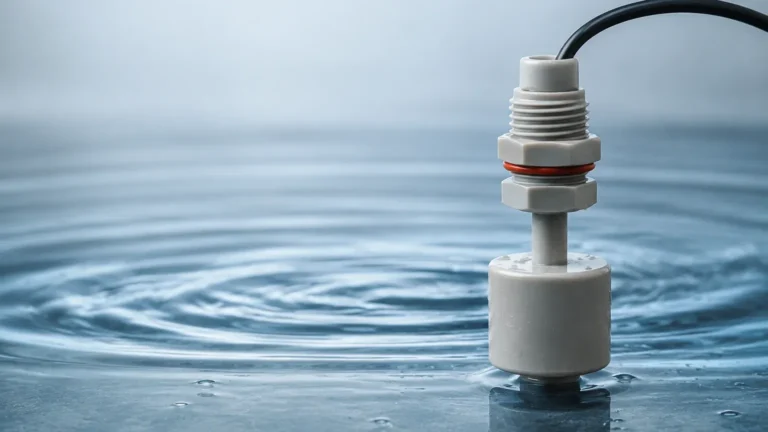
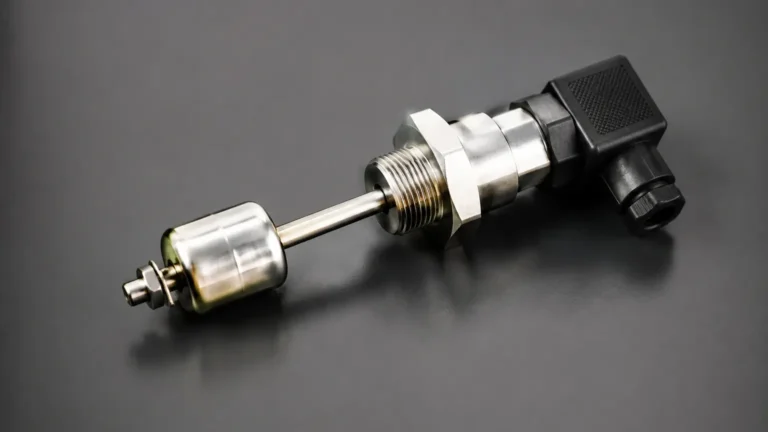
Float switches are the most common mechanical level detection devices. They operate on the principle of buoyancy. A float containing an internal magnet moves up and down a stationary stem as the liquid level changes. Inside the stem, a hermetically sealed reed switch is positioned. When the magnet in the float aligns with the reed switch, the circuit either closes (Normally Open) or opens (Normally Closed).
This technology is highly valued for its simplicity and independence from electrical properties like conductivity or dielectric constants. However, because it involves moving parts, it is susceptible to mechanical wear and can be affected by high-viscosity liquids or fluids containing debris.
Ultrasonic Level Switches
Ultrasonic switches use high-frequency sound waves to detect the presence of a medium. A piezoelectric crystal in the sensor head emits an ultrasonic pulse. If liquid is present in the gap of the sensor, the sound wave is transmitted to a receiver; if the gap is filled with air or gas, the signal is attenuated. This non-contact or gap-sensing method is ideal for sticky or ultrapure liquids where mechanical floats might fail or contaminate the process.
Optical Level Switches
Optical sensors utilize an infrared LED and a phototransistor. When the sensor tip is in the air, the infrared light is reflected within a prism back to the receiver. When liquid covers the prism, the light is refracted into the fluid, causing the receiver to detect a change in light intensity. These are extremely compact and have no moving parts, making them excellent for leak detection and small-tank applications.
Capacitive and Conductive Switches
Capacitive switches detect a change in the dielectric constant between the sensor probe and the tank wall. Conductive switches, on the other hand, rely on the electrical conductivity of the liquid itself to complete a circuit between two electrodes. These are often used in wastewater and chemical processing but require the media to meet specific electrical thresholds.
Technical Specifications and Design of Gems Level Switches
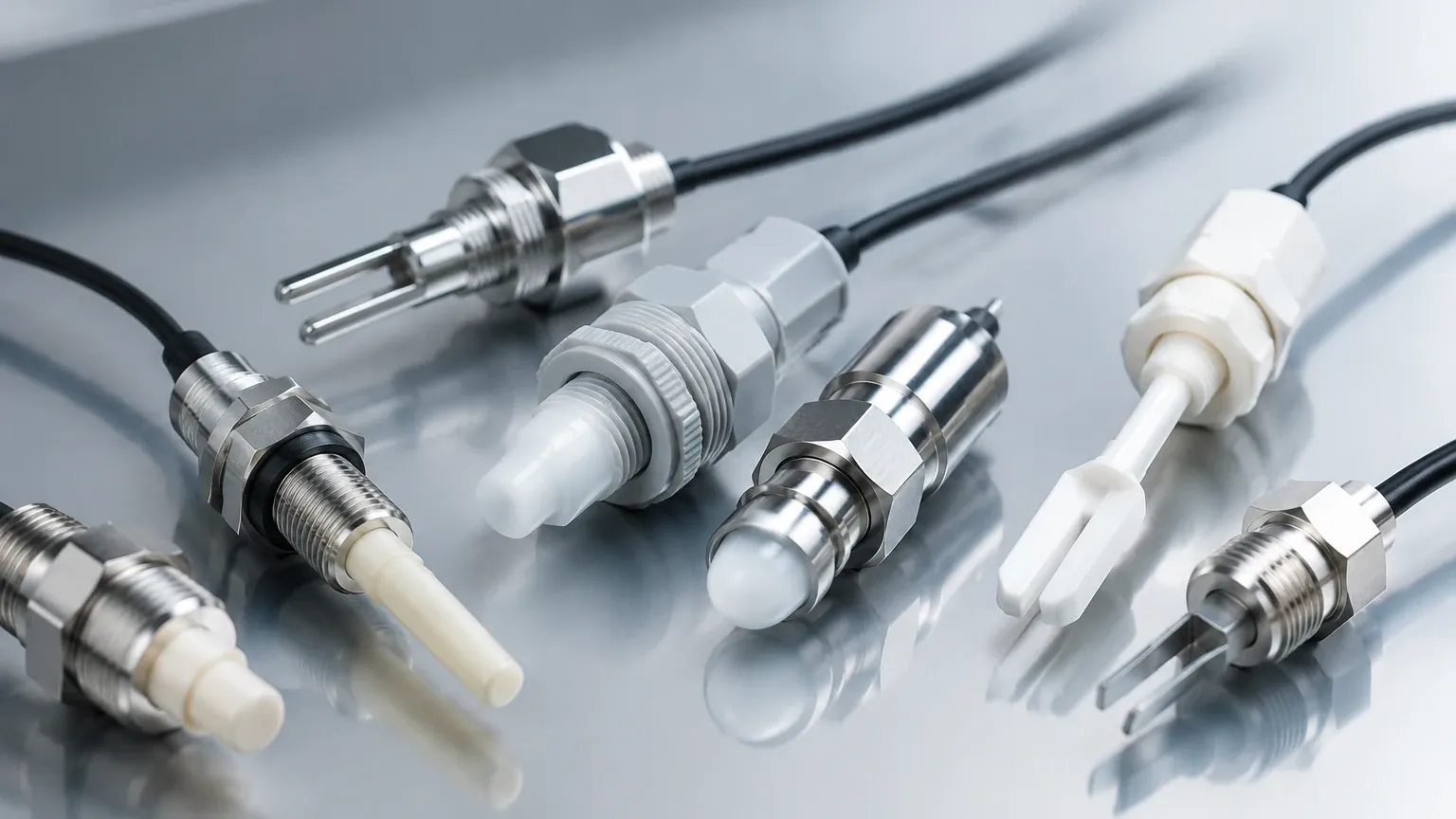
Level Switches from the Gems line are engineered to meet diverse industrial requirements, ranging from medical equipment to heavy-duty hydraulic systems. Their design philosophy focuses on modularity and material compatibility.
Material Selection
The choice of material is the first line of defense against chemical corrosion and mechanical failure. Standard materials include:
* Stainless Steel (316L): Preferred for high-pressure (up to 50 bar / 725 psi) and high-temperature (up to 150°C) environments, as well as food-grade applications.
* Buna-N: A nitrile rubber often used for oil and fuel applications due to its excellent resistance to petroleum-based fluids.
* Polypropylene and PVDF: Used for acidic or alkaline environments where metallic components would corrode.
Single-Point vs. Multi-Point Detection
Gems level switches are available in single-point configurations for high/low alarms or multi-point configurations. Multi-point switches allow a single entry point into a tank to monitor multiple levels (e.g., low-level alarm, pump start, pump stop, and high-level alarm). This reduces the number of tank penetrations, lowering the risk of leaks and simplifying installation.
Selection Criteria for Industrial Applications
Choosing the correct level switch requires a systematic evaluation of the process environment. Engineers should consult the following table for a baseline comparison of technologies:
| Technology | Media Type | Max Pressure (Typical) | Best Use Case |
| :— | :— | :— | :— |
| Float (Stainless) | Water, Oils, Chemicals | 50 bar | High-pressure tanks, general purpose |
| Float (Plastic) | Dilute Acids, Water | 3 bar | Low-cost OEM, chemical storage |
| Optical | Clear or Translucent Liquids | 70 bar | Leak detection, medical equipment |
| Ultrasonic | Viscous or Sticky Fluids | 7 bar | Glues, resins, wastewater |
| Conductive | Conductive Liquids (Water-based) | 15 bar | Boiler level control, sump pumps |
Key Evaluation Factors
1. Media Density (Specific Gravity): For float-based Gems level switches, the float must be less dense than the liquid. A float designed for water (SG 1.0) may not float in light hydrocarbons (SG 0.7).
2. Viscosity: High-viscosity fluids can cause "drag" on mechanical floats, leading to delayed switching or sticking. In these cases, ultrasonic or optical switches are preferred.
3. Operating Temperature and Pressure: Ensure the switch housing and seals can withstand the maximum process excursions. Standard plastic switches often fail above 80°C.
4. Mounting Orientation: Switches can be top-mounted (vertical), side-mounted (horizontal), or bottom-mounted. Vertical switches are generally more reliable for multi-point detection, while horizontal switches are easier to install in shallow tanks.
Installation Best Practices and Common Risks
Correct installation is as important as selecting the right hardware. Failure to follow engineering guidelines can lead to false triggers or premature sensor failure.
Turbulence and Slosh
In tanks with agitators or high-flow inlets, liquid turbulence can cause a float to bounce, leading to "chatter" in the electrical signal. To mitigate this, engineers should use slosh shields—cylindrical housings that surround the float to dampen surface movement. Alternatively, a time-delay relay can be integrated into the control circuit to ignore brief state changes.
Magnetic Interference
Since many level switches rely on internal magnets and reed switches, they must be kept away from strong external magnetic fields, such as those generated by large motors or transformers. Furthermore, if the liquid contains ferrous particles (e.g., iron filings in a machining coolant tank), these particles can adhere to the float magnet, eventually weighing it down and causing failure.
Wiring and Contact Protection
Reed switches are sensitive to high current inrushes. When switching inductive loads like motors or solenoid valves, it is critical to use an interface relay. Connecting a heavy load directly to a small level switch will likely weld the reed contacts together, resulting in a permanent "on" state.
Maintenance and Troubleshooting Guidelines
While many Gems level switches are designed to be maintenance-free, periodic inspection is recommended in critical applications.
* Visual Inspection: For float switches, check for signs of "pitting" or buildup on the stem. In hard water applications, calcium deposits can seize the float.
* Continuity Testing: Use a multimeter to verify the switch state. Manually move the float (if possible) and observe the resistance change. A healthy reed switch should show near-zero ohms when closed and infinite resistance when open.
* Cleaning: For optical sensors, the prism tip must be kept clean. Film buildup from oils or proteins can cause the light to refract incorrectly, leading to false "liquid present" signals.
Limitations and Practical Constraints
No single technology is a universal solution. It is important to recognize the factual boundaries of level switches:
* Coating and Scaling: If a medium leaves a thick coating (like dried paint or heavy grease), almost all point-level technologies will struggle. Capacitive sensors with "active shield" technology or manual cleaning cycles are required.
* Interface Detection: Standard level switches detect the top surface of a liquid. If you need to detect the interface between two immiscible liquids (e.g., oil on water), a specifically weighted float with a specific gravity between the two liquids is necessary.
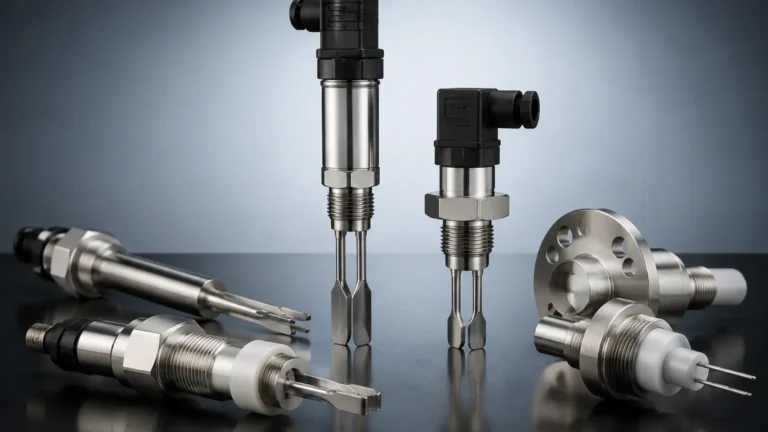
* Solid Media: The switches discussed here are primarily for liquids. For powders or grains, rotary paddle switches or vibrating fork sensors are the industry standard.
Frequently Asked Questions (FAQs)
Q: Can I change a level switch from Normally Open (NO) to Normally Closed (NC)?
A: For many vertical Gems level switches, this can be done by removing the retaining clip, flipping the float 180 degrees, and reinstalling it. However, this depends on the specific model design.
Q: What is the difference between a level switch and a level transmitter?
A: A level switch provides a discrete signal (on/off) at a specific point. A level transmitter provides a continuous signal (e.g., 4-20mA or 0-10V) representing the exact level throughout the entire range of the tank.
Q: How do I handle foaming in a tank?
A: Foam can be problematic for optical and ultrasonic sensors. Float switches are generally the best choice for foam-prone environments because the float will typically sink through the foam and react only to the liquid surface.
Q: Are these switches suitable for hazardous areas?
A: Yes, but you must select models with appropriate certifications (e.g., ATEX, IECEx, or UL Class I, Div 1) and use them in conjunction with an intrinsically safe barrier.
By understanding these technical nuances, engineers can ensure that their level control systems remain accurate and reliable over long operational lifecycles. For more detailed technical data and model-specific comparisons, professionals should evaluate the full range of available Level Switches to match their specific process requirements.