Level Switch Coolant
Level Switch Coolant
In industrial thermal management, the reliability of a cooling system is directly tied to the precision of its fluid monitoring components. A level switch coolant application serves as a critical fail-safe, ensuring that heat exchangers, engines, and industrial chillers maintain the necessary volume of fluid to prevent catastrophic overheating. Whether in a data center’s liquid cooling loop or a heavy-duty diesel generator’s radiator, the choice of level sensing technology determines the longevity and safety of the entire system.
Selecting the appropriate instrumentation requires an understanding of how different Level Switches interact with the chemical and physical properties of industrial coolants, which are typically mixtures of water, ethylene or propylene glycol, and various corrosion inhibitors.
Measurement Principles for Coolant Level Sensing
Before selecting a level switch coolant solution, engineers must evaluate the underlying physical principle used to detect the presence or absence of the fluid. Industrial coolants present unique challenges, such as varying dielectric constants and the potential for foam or film buildup.
Float-Based (Mechanical) Sensing
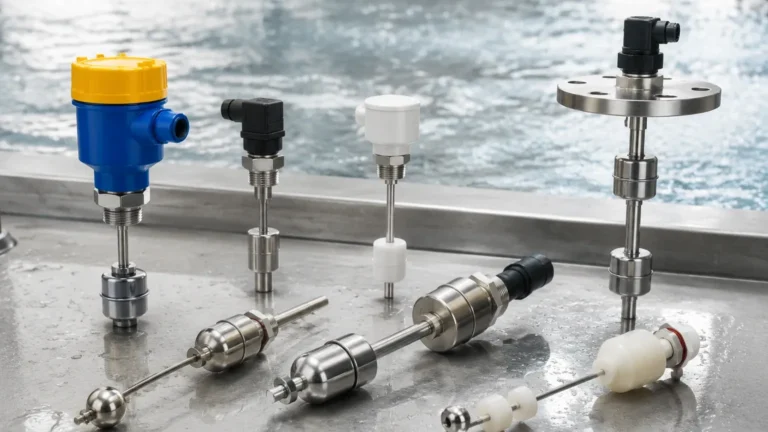
Float switches operate on the principle of buoyancy. A float containing a permanent magnet moves vertically along a stem in response to the liquid level. When the float reaches a predetermined point, the magnetic field actuates a hermetically sealed reed switch within the stem. This is a "passive" technology that does not require external power to operate the switch itself, making it a robust choice for simple high or low-level alarms.
Capacitive (Dielectric) Sensing
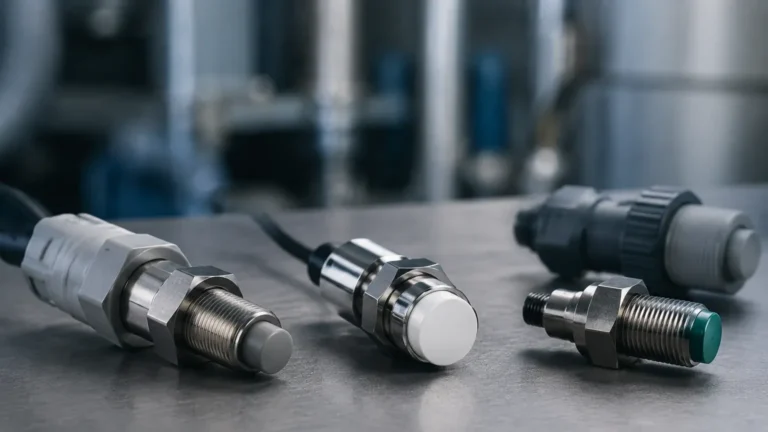
Capacitive sensors treat the coolant and the tank wall (or a second probe) as plates of a capacitor. Because industrial coolants (water/glycol mixes) have a much higher dielectric constant ($ε_r ≈ 50–80$) than air ($ε_r ≈ 1$), the sensor detects a significant change in capacitance when the probe is submerged. This technology is solid-state, meaning there are no moving parts to wear out or jam due to sediment.
Optical Sensing
Optical level switches utilize an infrared LED and a light receiver housed within a glass or plastic prism. When the sensor tip is in the air, the infrared light reflects internally within the prism back to the receiver. When submerged in coolant, the liquid’s refractive index allows the light to escape into the fluid, breaking the internal reflection and triggering the switch. These are exceptionally compact and ideal for tight spaces in OEM machinery.
Ultrasonic (Gap) Sensing
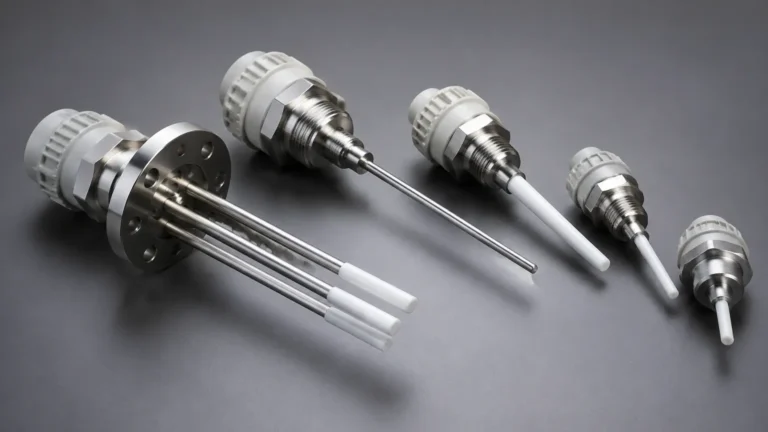
Ultrasonic point level switches use a pair of piezoelectric crystals separated by a small gap. One crystal emits a high-frequency sound wave. If the gap is filled with air, the sound does not reach the receiver. When coolant fills the gap, the sound wave is transmitted through the liquid, completing the circuit. This method is highly resistant to changes in density or viscosity.
Key Selection Criteria for a Level Switch Coolant
Choosing a level switch for coolant requires more than just matching thread sizes. The following factors must be confirmed to ensure long-term operational stability:
1. Chemical Compatibility
Coolants are chemically active. Ethylene glycol and the organic acid technology (OAT) inhibitors found in modern long-life coolants can degrade certain plastics and elastomers. For housing and seals, 316L stainless steel, Polysulfone (PSU), or Trogan are common choices. Ensure that O-rings are made of EPDM or Viton (FKM), as standard Nitrile (NBR) may swell or harden over time when exposed to hot glycol.
2. Temperature and Pressure Ratings
Industrial cooling loops often operate under pressure to raise the boiling point of the fluid. A standard level switch coolant application might see temperatures ranging from -40°C (-40°F) during winter shutdowns to 125°C (257°F) during peak engine operation. The sensor must be rated for the maximum system pressure, often exceeding 3 bar (43.5 psi) in pressurized radiators.
3. Viscosity and Coating
As coolants age or undergo thermal cycling, they can become more viscous or leave a thin, sticky film on surfaces. Mechanical float switches may stick if the film becomes too thick. In such cases, non-mechanical technologies like capacitive or ultrasonic sensors are preferred, as they can often be calibrated to ignore thin films.
Technology Comparison Table
| Technology | Best Application | Advantages | Limitations |
| :— | :— | :— | :— |
| Magnetic Float | General storage tanks, non-critical alarms | Low cost, no power required, simple installation | Moving parts can stick; sensitive to debris |
| Capacitive | High-vibration environments, small tanks | No moving parts, adjustable sensitivity | Requires power; sensitive to changes in glycol concentration |
| Optical | OEM equipment, clean coolants | Very small footprint, fast response | Sensitive to coating/scaling on the prism |
| Ultrasonic | Critical process loops, high-viscosity fluids | Extremely reliable, ignores bubbles/foam | Higher cost; requires power |
| Thermal | Low-flow detection in cooling lines | Detects both level and flow | Slower response time than optical or capacitive |
Installation Considerations and Best Practices
Proper placement of the level switch is as important as the technology itself. Poor installation can lead to false positives (nuisance alarms) or, worse, a failure to detect a low-coolant state.
Orientation and Positioning
* Side Mounting: Common for low-level alarms. Ensure the switch is positioned slightly above the minimum safe liquid line to account for sloshing.
* Top Mounting: Ideal for deep tanks where a long-stem float or capacitive probe can monitor multiple levels.
* Avoiding Turbulence: Do not install the switch directly under a return line or near an agitator. The resulting turbulence or aeration can cause the switch to oscillate. If turbulence is unavoidable, use a stilling well (a perforated pipe surrounding the sensor).
Electrical Integration
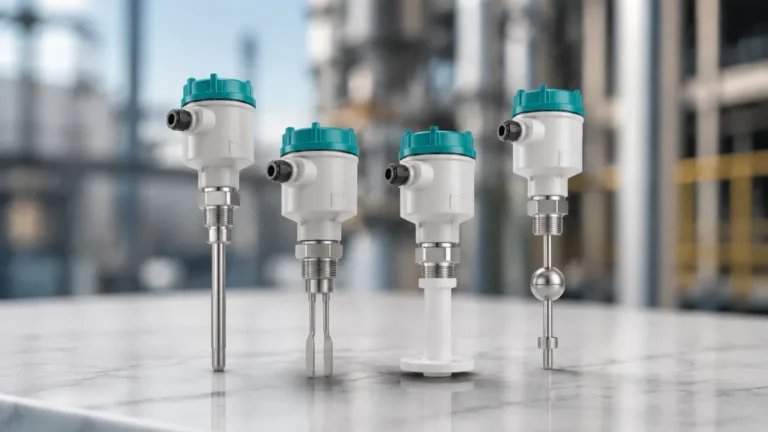
Most industrial Level Switches offer various output options, including NPN/PNP transistors for PLC integration or SPDT/SPST relay contacts for direct load switching. In coolant applications, it is standard practice to use "Normally Closed" (NC) logic for low-level alarms. This ensures that if a wire is cut or power is lost, the system fails into an alarm state, protecting the equipment.
Dealing with Sloshing
In mobile applications (such as heavy machinery or transport refrigeration), the coolant level will fluctuate as the vehicle moves. To prevent the alarm from flickering, select a switch with a built-in time delay (e.g., 5–10 seconds) or program a debounce timer into the receiving PLC.

Limitations and Common Risks
While modern level switches are highly reliable, engineers should be aware of specific risks inherent to coolant systems:
1. Electrolytic Corrosion: If the level switch uses metal probes and the coolant becomes acidic due to age, galvanic corrosion can occur. Regular coolant testing and the use of high-grade stainless steel sensors mitigate this risk.
2. Scaling and Calcification: In systems using hard water to mix coolant, calcium deposits can form on sensor faces. Optical sensors are particularly vulnerable to this, as the scale can block the light path, leading to a permanent "liquid present" signal.
3. Foaming: High-speed pumps can introduce air into the coolant, creating foam. Some capacitive sensors may struggle to distinguish between dense foam and the actual liquid level. Ultrasonic gap switches are generally the most resistant to foam interference.
4. Air Pockets: When refilling a cooling system, air can become trapped in the sensor housing (especially in side-mounted NPT ports). Ensure the sensor is tilted slightly or has a bleed path to prevent air-locking.
Maintenance and Troubleshooting
A level switch coolant system should be inspected during routine cooling system maintenance.
* Functional Test: Manually trigger the switch (by moving the float or immersing the probe in a sample of the coolant) to verify the control panel receives the signal.
* Cleaning: For optical and capacitive sensors, wipe the sensing face to remove any film or oxidation.
* Check Seals: Inspect the mounting threads and gaskets for signs of weeping or crystallization, which indicates a slow leak.
Frequently Asked Questions (FAQ)
Q: Can I use a water level switch for a 50/50 glycol coolant mix?
A: Generally, yes, but with caveats. If it is a float switch, ensure the float's density is lower than the coolant (coolant is denser than water, so a water float will work). If it is capacitive, the sensor may need recalibration because the dielectric constant of glycol is lower than that of pure water.
Q: How do I prevent the switch from triggering every time the machine vibrates?
A: Use a solid-state technology like capacitive or ultrasonic sensing, which has no moving parts to rattle. Additionally, ensure the electrical output has a time delay to filter out momentary level changes caused by vibration.
Q: What is the best material for a level switch in a radiator?
A: 316L stainless steel is the gold standard for durability. For lighter-duty applications, glass-reinforced nylon or polysulfone is acceptable, provided the temperature does not exceed the material's limits.
Q: Why is my optical level switch giving a false low-level alarm?
A: This is often caused by a coating on the prism. If the coolant has left a reflective or opaque residue on the sensor tip, the light cannot refract properly. Cleaning the tip or switching to a capacitive sensor usually resolves this.
Summary for Project Engineering
Selecting a level switch coolant solution is a balance of environmental constraints and fluid characteristics. For high-volume OEM applications where space is at a premium, optical sensors offer the best footprint. For heavy industrial processes where reliability is paramount and the fluid may be dirty, ultrasonic or capacitive switches provide the necessary robustness.
Before finalizing a specification, confirm the maximum operating temperature, the specific chemical composition of the coolant, and the electrical requirements of the control system. For a comprehensive range of industrial sensing technologies, engineers can Review product options and application support to find the exact match for their thermal management needs.