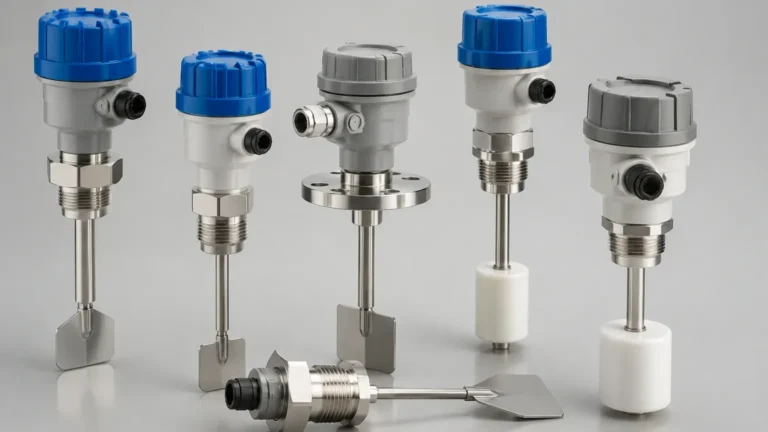
Level Switch Kya Hai
Level Switch Kya Hai
In the field of industrial automation and process control, the question of "level switch kya hai" (what is a level switch) refers to the fundamental understanding of point-level detection devices. A level switch is an electromechanical or electronic sensor designed to detect the presence or absence of a substance—liquid, powder, or granulated solid—at a specific height within a container, tank, or silo. Unlike continuous level transmitters that provide a constant reading of the volume (0% to 100%), a level switch operates as an "on/off" device, triggering an electrical signal when the material reaches a predetermined level.
These devices are critical for preventing tank overflows (high-level alarms) and protecting pumps from running dry (low-level alarms). For professionals in water treatment, chemical processing, and industrial automation, selecting the correct level switch is essential for operational safety and efficiency.
Understanding the Operating Principles
Before selecting a device, it is vital to understand the physics behind how different Level Switches interact with the process media. Each technology utilizes a different physical property to determine the presence of material.
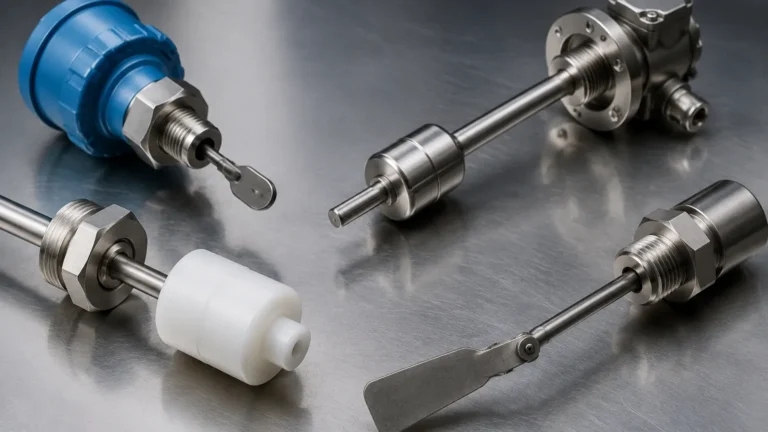
1. Float Level Switches (Buoyancy Principle)
Float switches are among the most common and cost-effective technologies. They rely on the principle of buoyancy. A float containing a magnet moves up and down with the liquid level. When the float reaches a certain point, the internal magnet actuates a hermetically sealed reed switch located in the stem.
* Application: Best for clean, non-coating liquids like water or light oils.
* Limitation: Not suitable for high-viscosity fluids or liquids with suspended solids that can jam the moving parts.
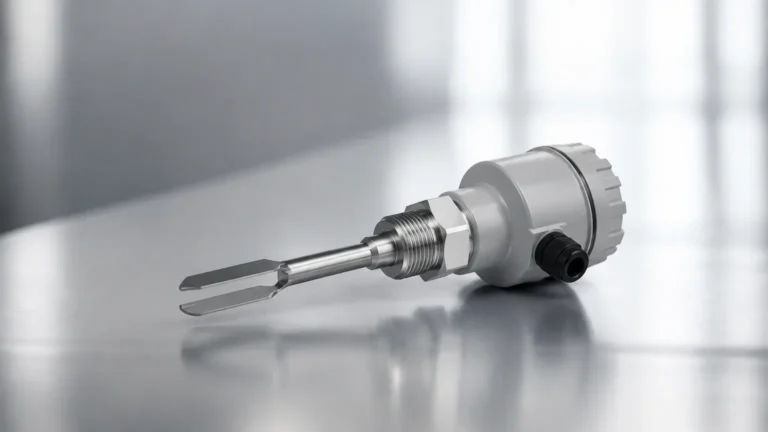
2. Vibrating Tuning Fork Switches (Frequency Principle)
The sensing element consists of two tines (a fork) that are vibrated at their natural resonant frequency by a piezoelectric crystal. When the tines are immersed in a liquid or solid, the frequency of vibration changes. This shift is detected by the internal electronics and converted into a switching signal.
* Application: Highly versatile; works with almost all liquids and many powders. It is unaffected by flow, turbulence, bubbles, or foam.
* Limitation: Extremely high-viscosity materials may "bridge" the tines, causing false readings.
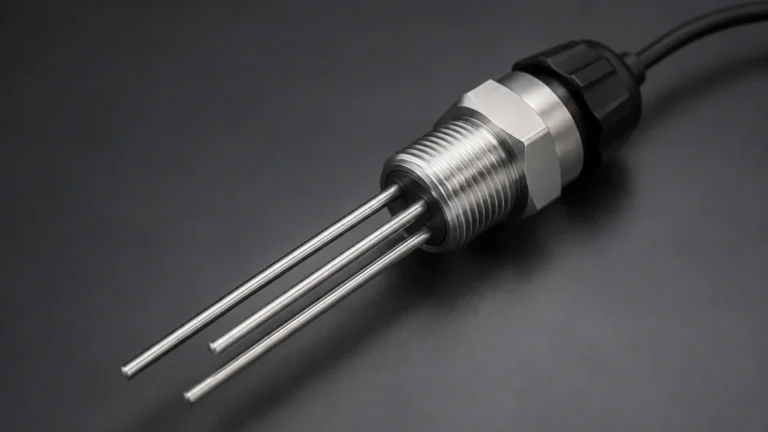
3. Capacitance Level Switches (Dielectric Principle)
These switches measure the change in electrical capacitance between the sensor probe and the tank wall (or a reference electrode). Every material has a dielectric constant. When the air surrounding the probe is replaced by the process material, the capacitance increases, triggering the switch.
* Application: Excellent for aggressive chemicals, slurries, and solids. They can be calibrated to ignore coating or build-up on the probe.
* Limitation: Requires recalibration if the dielectric constant of the material changes significantly.
4. Rotary Paddle Switches (Mechanical Resistance)
Specifically designed for bulk solids, a small motor slowly rotates a paddle. When the solid material reaches the paddle, it creates mechanical resistance, causing the motor to stall or pivot, which then trips a microswitch.
* Application: Silos containing grain, sand, plastic pellets, or cement.
* Limitation: Mechanical wear on the motor and paddle over time.
5. Ultrasonic Level Switches (Acoustic Principle)
These devices use a pair of ultrasonic transducers separated by a gap. When the gap is filled with liquid, ultrasonic waves travel across it. When the gap is filled with air, the waves are attenuated.
* Application: Non-contact detection for highly corrosive or ultrapure liquids.
* Limitation: Not suitable for aerated liquids or applications with high pressure/vacuum that affects sound travel.
Technical Selection Criteria
Choosing the right level switch requires an evaluation of the process environment. The following table provides a comparison of common technologies based on typical industrial requirements.
| Technology | Media Type | Max Temp (Typical) | Max Pressure (Typical) | Maintenance Level |
| :— | :— | :— | :— | :— |
| Float | Clean Liquids | 120°C | 20 bar | Low to Moderate |
| Tuning Fork | Liquids/Solids | 150°C | 40 bar | Very Low |
| Capacitance | Liquids/Slurries/Solids | 250°C+ | 100 bar | Moderate |
| Rotary Paddle | Bulk Solids | 80°C | Atmospheric | Moderate |
| Optical | Clear Liquids | 100°C | 25 bar | Low |
Key Evaluation Factors
1. Media Characteristics: Is the material corrosive, viscous, or prone to foaming? For example, a tuning fork switch handles foam better than an ultrasonic switch.
2. Process Conditions: High-temperature applications (above 150°C) often require capacitance probes with specialized insulation.
3. Output Requirements: Do you need a Relay (SPDT/DPDT), Transistor (PNP/NPN), or a Two-wire (8/16mA) output?
4. Hygienic Requirements: In food and beverage or pharmaceutical sectors, switches must have polished surfaces and tri-clamp connections to prevent bacterial growth.
Installation and Engineering Considerations
Proper installation is as critical as technology selection. Incorrect placement can lead to false alarms or premature sensor failure.
Mounting Orientation
* Top Mounting: Standard for low-level detection or when side access is restricted. Long probe lengths may be required.
* Side Mounting: Common for high-level alarms. It allows for easy access and maintenance without emptying the tank.
Turbulence and Agitation
In tanks with mixers or high-velocity inflow, the mechanical force of the liquid can damage float stems or tuning forks. In such cases, a stilling well (a pipe surrounding the sensor) should be installed to provide a calm area for measurement.
Nozzle Length
For tuning fork and ultrasonic switches, the sensing element must extend beyond the mounting nozzle and into the tank. If the tines are trapped inside a narrow nozzle, material build-up can occur, leading to a "stuck" high-level signal.
Electrical Wiring
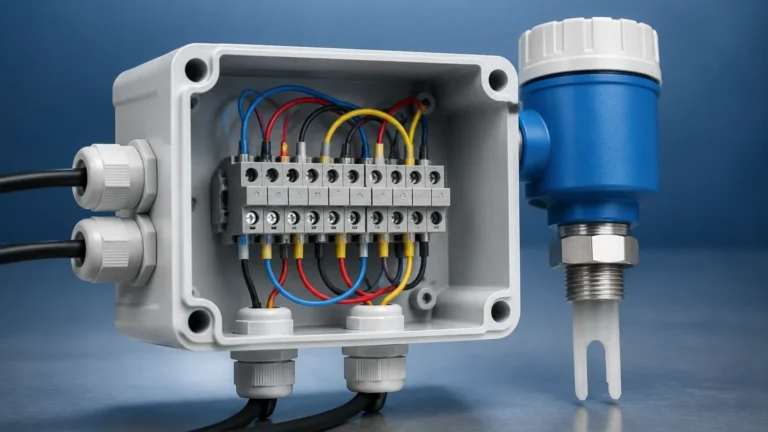
Always use shielded cables in environments with high electromagnetic interference (EMI). Ensure the cable entry points are sealed with appropriate glands to maintain the IP (Ingress Protection) rating of the housing, typically IP65 or IP67 for industrial environments.

Limitations and Common Risks
While level switches are robust, they are not universal solutions. Engineers should be aware of the following risks:
* Material Buoyancy Changes: Float switches calibrated for water (density 1.0 g/cm³) may fail to float in light oils or hydrocarbons (density 0.7 g/cm³).
* Coating and Scaling: In wastewater or chemical mixing, material can harden on the sensor. While capacitance and tuning fork switches offer some coating rejection, heavy build-up will eventually cause failure.
* Point vs. Continuous: A level switch cannot tell you if a tank is 40% or 60% full. If process optimization requires real-time volume data, a radar or ultrasonic level transmitter is required instead.
* Mechanical Fatigue: Rotary paddles and float switches have moving parts. In high-cycle applications, these parts will eventually wear out, necessitating a preventative maintenance schedule.
Frequently Asked Questions (FAQ)
Q: Level switch kya hai and how is it different from a level transmitter?
A: A level switch is a point-level detector that provides a binary signal (on/off) at a specific height. A level transmitter provides a continuous signal (e.g., 4-20mA) representing the exact level of the material throughout the entire height of the tank.
Q: Can a level switch be used for both high and low alarms?
A: Yes, but usually not with a single point-level switch. You would typically install one switch at the top of the tank for a high alarm and another at the bottom for a low alarm. Some specialized multi-point float switches can handle both in a single assembly.
Q: Which level switch is best for cement silos?
A: Rotary paddle switches or heavy-duty vibrating rod switches are the industry standard for cement and other heavy bulk solids due to their mechanical robustness.
Q: Do level switches require regular calibration?
A: Most modern tuning fork and float switches are "plug-and-play" and do not require calibration. Capacitance switches, however, must be calibrated to the specific dielectric constant of the media during commissioning.
Conclusion
Understanding "level switch kya hai" is the first step toward implementing a reliable industrial control system. By matching the physical principle of the switch—whether it be buoyancy, vibration, or capacitance—to the specific properties of the process media, engineers can significantly reduce downtime and prevent environmental hazards. When selecting a device, always prioritize the chemical compatibility of the wetted parts and the specific pressure/temperature limits of your application. For professional-grade hardware and customized OEM solutions, exploring the technical specifications of modern Level Switches is recommended to ensure long-term operational stability.