Level Switch Make
Level Switch Make
In industrial process control, the reliability of a point-level detection system is often determined by the specific engineering standards and manufacturing quality of the device. Identifying the right level switch make involves more than just selecting a brand; it requires an understanding of the underlying measurement principles, material compatibility, and the manufacturer’s ability to meet rigorous industrial demands. Whether for overfill protection, pump control, or dry-run prevention, the "make" of a switch defines its longevity and accuracy in harsh environments.
This guide examines the technical foundations of various level switch technologies, provides a framework for evaluating a level switch make, and offers practical selection and installation advice for engineering professionals.
Core Principles of Level Switch Technology
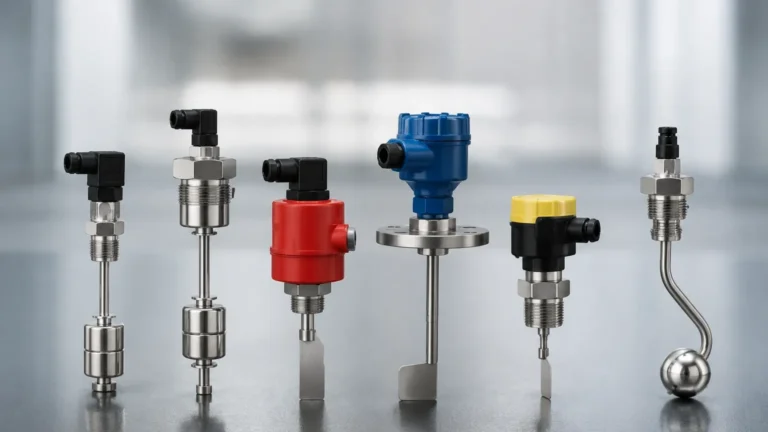
Before evaluating a specific level switch make, it is essential to understand the physical principles that govern these devices. Level switches are sensors with an electrical contact output at a specific liquid, powder, or bulk solid level. Unlike continuous level transmitters, they provide discrete "on/off" signals.
1. Float Level Switches (Buoyancy Principle)
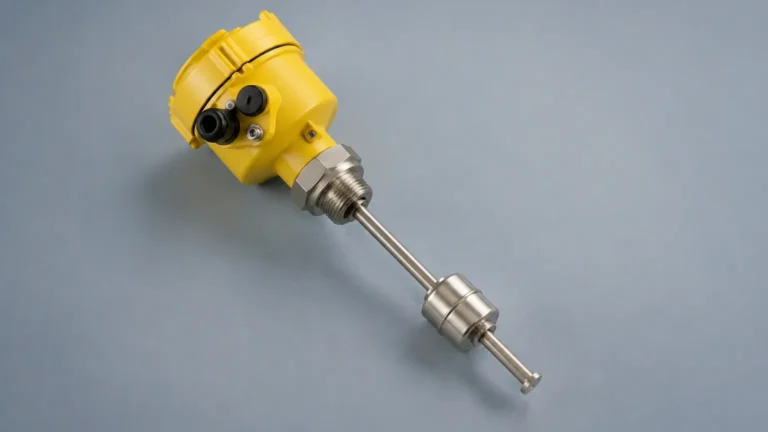
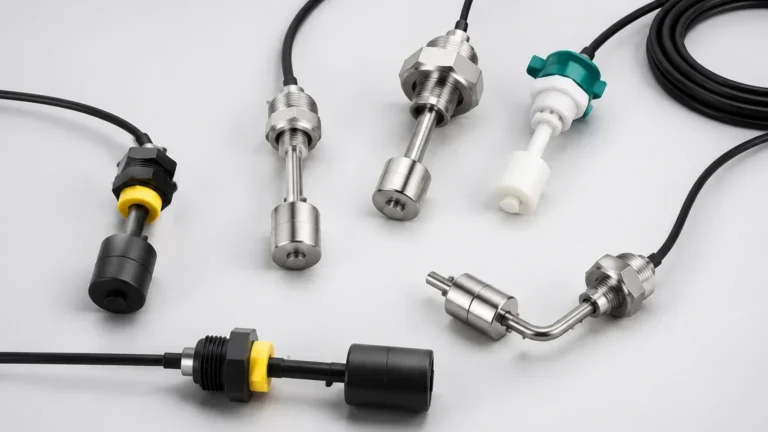
Float switches operate based on Archimedes' principle. A float, containing a permanent magnet, moves with the liquid level. When the float reaches a predetermined point, the magnet actuates a reed switch or a microswitch located within the stem or housing. This is one of the most common technologies due to its simplicity and low cost.
2. Vibrating Tuning Fork Switches (Frequency Shift)
These switches feature a fork-shaped sensing element that vibrates at its natural resonant frequency in the air. When the fork is submerged in a liquid or covered by solids, the frequency changes or the vibration is damped. An electronic circuit detects this shift and triggers the switch output. This technology is highly resistant to changes in pressure, temperature, and dielectric constants.
3. Capacitance Level Switches (Dielectric Change)
Capacitive sensors treat the probe and the tank wall (or a reference probe) as two plates of a capacitor. As the material level rises and surrounds the probe, the capacitance increases because the dielectric constant of the material is higher than that of air. This change is converted into a switching signal. These are ideal for both liquids and solids but can be sensitive to material buildup.
4. Rotary Paddle Switches (Mechanical Resistance)
Used primarily for bulk solids, a small motor drives a rotating paddle. When the material reaches the paddle, it creates mechanical resistance, causing the motor to stall or pivot, which then actuates a limit switch. When the material level drops, a spring returns the motor to its original position, and the paddle begins rotating again.
5. Ultrasonic Level Switches (Acoustic Gap)
These switches use a pair of piezoelectric crystals separated by a gap. One crystal transmits an ultrasonic signal, and the other receives it. When the gap is filled with liquid, the signal transmits efficiently; when the gap contains air or gas, the signal is attenuated. This "gap technology" is excellent for clean liquids.
Evaluating a Level Switch Make for Industrial Applications
When engineers specify a level switch make, they are looking for a combination of precision engineering and robust construction. A high-quality manufacturer like Welk focuses on several key performance indicators that distinguish industrial-grade equipment from commercial-grade alternatives.
Material Integrity
The chemical compatibility of the wetted parts is the first line of defense. A reputable level switch make will offer a variety of materials, including 316L stainless steel, Hastelloy, Monel, or plastics like PTFE and PVDF for corrosive environments. The housing should also be rated for the environment, typically IP65 or higher for outdoor or wash-down areas.
Precision and Repeatability
In safety-critical applications, such as high-level alarms, the switch must trigger at the exact same point every time. High-end Level Switches are designed with minimal hysteresis and high repeatability, ensuring that the process remains within safe operational boundaries.
Certifications and Standards
A professional level switch make must comply with international standards. This includes ATEX/IECEx for explosive atmospheres, SIL (Safety Integrity Level) ratings for functional safety, and food-grade certifications (FDA/3A) for sanitary applications. These certifications provide independent verification of the device's reliability.
Selection Criteria and Comparison Table
Choosing the correct technology depends on the media properties, process conditions, and the specific requirements of the installation. The following table provides a comparison to assist in the selection process.
| Technology | Suitable Media | Pressure Range | Temperature Range | Key Advantage |
| :— | :— | :— | :— | :— |
| Float | Clean Liquids | Up to 40 bar | -40°C to 200°C | Simple, No power required |
| Tuning Fork | Liquids/Solids | Up to 64 bar | -50°C to 150°C | High reliability, No calibration |
| Capacitance | Liquids/Solids | Up to 100 bar | -100°C to 250°C | Handles high temp/pressure |
| Rotary Paddle | Bulk Solids | Atmospheric | -20°C to 80°C | Robust for heavy solids |
| Ultrasonic | Clean Liquids | Up to 20 bar | -40°C to 100°C | No moving parts, compact |
Practical Installation Considerations
The performance of even the best level switch make can be compromised by poor installation. Engineers should consider the following factors during the design and commissioning phases:
1. Mounting Orientation: Some switches, like rotary paddles, are best mounted horizontally from the side of a silo. Others, like float switches, may be mounted vertically from the top. Ensure the orientation matches the manufacturer's specifications to prevent mechanical stress or false triggering.
2. Turbulence and Agitation: In tanks with mixers or high-velocity inflows, the physical force of the liquid can damage delicate probes or cause "chatter" in float switches. In such cases, a stilling well or a technology with no moving parts, like a tuning fork, is preferred.
3. Nozzle Length: For side-mounted switches, the nozzle length must be short enough to ensure the sensing element (e.g., the tuning fork or paddle) extends fully into the vessel. If the sensing element is trapped inside the nozzle, material may build up and cause a permanent "high level" indication.
4. Wiring and Power: Ensure the electrical supply matches the switch requirements (AC vs. DC). Use shielded cables in environments with high electromagnetic interference (EMI) to prevent false signals.
5. Grounding: For capacitive switches, proper grounding of the vessel is mandatory. If the tank is non-metallic (e.g., plastic or fiberglass), a ground reference rod or a dual-probe switch must be used.
Limitations and Common Risks
While industrial level switches are robust, every technology has its limitations. Understanding these risks is part of a successful level switch make evaluation.
* Coating and Buildup: Capacitive and tuning fork switches can be affected by viscous materials that coat the probe. While some high-end makes include "active shield" technology to ignore coating, heavy buildup can eventually lead to failure.
* Specific Gravity Changes: Float switches are dependent on the density of the liquid. If the process involves different liquids with varying specific gravities, a float designed for a heavy liquid may not float in a lighter one.
* Entrained Air and Foam: Ultrasonic gap switches and some optical switches may struggle with heavy foam or aerated liquids, as the air bubbles interfere with the signal transmission.
* Mechanical Wear: Rotary paddles and mechanical float switches have moving parts that will eventually wear out, especially in abrasive media. Regular maintenance intervals are required for these types.
Frequently Asked Questions (FAQ)
How do I choose between a tuning fork and a float switch?
A tuning fork switch is generally more reliable for applications with turbulence, varying liquid densities, or where moving parts are a concern. A float switch is a more economical choice for clean, stable liquids where power might not be readily available.
Can a level switch make be used for both liquids and solids?
It depends on the technology. Tuning fork and capacitance switches are often available in versions for both liquids and solids. However, the physical design (e.g., fork size or probe length) is usually optimized for one or the other. Rotary paddles are strictly for solids.
What is the importance of a "fail-safe" mode?
A fail-safe mode ensures that if the power fails or the sensor is damaged, the switch defaults to a state that protects the system (e.g., indicating a "full" tank to prevent overfill). This is a critical feature to confirm when selecting a level switch make for safety-critical loops.
Does the tank material affect the level switch?
The tank material primarily affects capacitive switches, which require a conductive reference. For most other technologies, the tank material is irrelevant as long as the mounting connection (flange or thread) is compatible.
How often should a level switch be calibrated?
Most modern level switches, such as tuning forks and ultrasonic gap switches, are factory-calibrated and require no field adjustment. Capacitive switches may require calibration upon installation to account for the specific dielectric constant of the media and the vessel geometry.
Conclusion
Selecting a level switch make is a strategic decision that impacts the safety and efficiency of industrial operations. By understanding the physical principles of measurement—from buoyancy to vibration—and matching them to the specific constraints of the application, engineers can ensure reliable point-level detection. Manufacturers like Welk provide the technical expertise and robust hardware necessary to meet these challenges across diverse industries, from water treatment to chemical processing. Always prioritize material compatibility, environmental ratings, and the specific physical properties of your media to ensure the long-term success of your level control system.