Level Switch Nrs 1-50
Level Switch Nrs 1-50
In the realm of industrial steam and hot water generation, safety and precision are paramount. The level switch nrs 1-50 is a specialized component designed specifically for low-water level limiting. This device serves as a critical safety barrier, ensuring that boilers do not operate under dangerously low water conditions, which could lead to catastrophic equipment failure or explosions. As a key part of modern boiler protection systems, understanding its technical operation, integration, and selection criteria is essential for plant engineers and maintenance professionals.
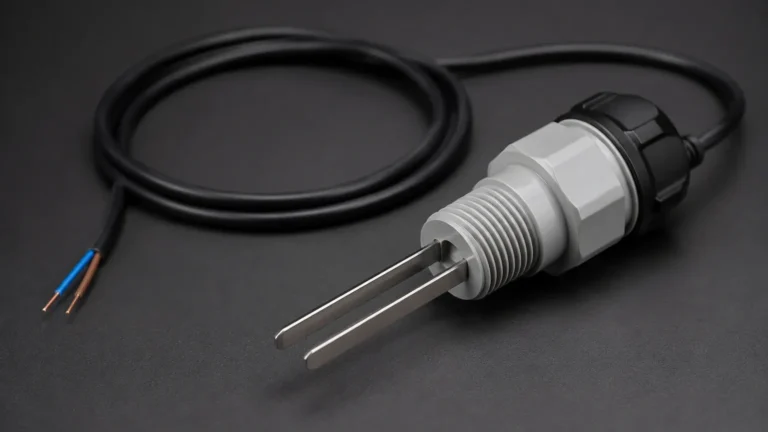
Industrial Level Switches come in various forms, but the NRS 1-50 is typically categorized as a conductive level controller. It is often paired with level electrodes to provide a fail-safe mechanism that complies with international safety standards, such as EN 12952 and EN 12953 for water-tube and shell boilers.
Measurement Principles of Conductive Level Switches
Before diving into the specifics of the level switch nrs 1-50, it is important to understand the underlying conductivity principle that governs its operation. Conductive level measurement is one of the most reliable methods for detecting liquid levels in conductive media, such as water or steam condensate.
The Conductivity Logic
The system operates by using the liquid itself as a conductor. A low-voltage alternating current (AC) is applied to a level electrode. When the liquid level rises and touches the electrode, an electrical circuit is completed between the electrode and the vessel wall (or a reference electrode). The level switch detects this change in resistance.
For a low-level limiter like the NRS 1-50, the logic is typically "fail-safe." This means the relay is energized when the water level is above the minimum threshold. If the water level drops below the electrode tip, the circuit is broken, the relay de-energizes, and the burner or heat source is immediately shut down. This design ensures that if the power fails or a wire is cut, the system defaults to a safe (off) state.
Sensitivity and Media Requirements
The effectiveness of this principle depends on the electrical conductivity of the medium. In boiler applications, the water must have a minimum conductivity—typically measured in microsiemens per centimeter (µS/cm)—to ensure the switch can distinguish between the presence of liquid and the presence of steam or foam.
Technical Specifications and Features of Level Switch NRS 1-50
The level switch nrs 1-50 is engineered for high-reliability environments. While specific manufacturers may have slight variations, the standard technical profile for this class of device includes the following:
* Input Voltage: Usually 24V DC or 115V/230V AC (50/60 Hz).
* Response Time: Typically less than 2 seconds to ensure rapid shutdown during a low-water event.
* Output: Potential-free changeover contacts for integration with burner control circuits and alarm systems.
* Sensitivity Range: Adjustable or fixed sensitivity, often optimized for water with conductivity as low as 0.5 µS/cm or higher.
* Safety Integrity Level (SIL): Many NRS 1-50 units are rated for SIL 2 or SIL 3, indicating a high level of functional safety.
One of the defining features of this switch is its self-monitoring capability. The device periodically checks its own internal circuitry and the integrity of the connection to the electrode. If an internal fault is detected, the switch will trigger a lockout, requiring a manual reset after the fault is cleared.
Selection Criteria for Industrial Level Switches
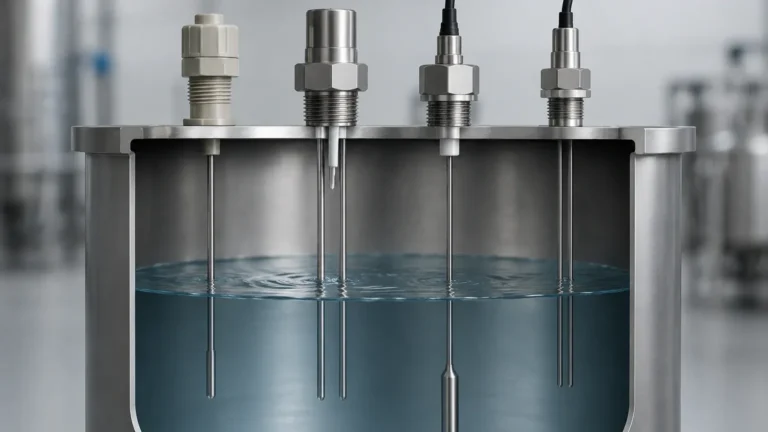
When specifying a level switch for a process application, engineers must look beyond the basic model number. The following table provides a comparison of common level switch technologies used in similar industrial environments to help determine if a conductive solution like the NRS 1-50 is the optimal choice.
| Technology | Typical Application | Advantages | Limitations |
| :— | :— | :— | :— |
| Conductive (NRS 1-50) | Boiler low-water limiting | No moving parts, extremely reliable, fail-safe design. | Requires conductive media; sensitive to electrode coating. |
| Float Switches | General tank level control | Simple, low cost, works with non-conductive liquids. | Moving parts can jam; susceptible to turbulence. |
| Ultrasonic | Non-contact chemical storage | No contact with media; handles corrosive fluids well. | Affected by foam, heavy steam, and high pressure. |
| Capacitance | High-temperature silos/tanks | Versatile for liquids and solids; handles high pressure. | Requires calibration; affected by changes in dielectric constant. |
| Radar (Guided Wave) | High-pressure steam drums | Highly accurate; unaffected by density or conductivity. | Higher initial cost; requires complex setup. |
Installation and Commissioning Guidelines
Correct installation of the level switch nrs 1-50 and its associated electrodes is vital for safety. Failure to follow manufacturer guidelines can result in "nuisance tripping" or, more dangerously, a failure to trip during a low-water event.
Electrode Positioning
The electrode must be installed vertically or at a slight angle as specified by the boiler manufacturer. The length of the electrode determines the exact low-water cut-off point. It is critical that the electrode tip is positioned at the "Lowest Permissible Water Level" (LW) defined by the boiler's design specifications.
Wiring and Shielding
To prevent electromagnetic interference from surrounding high-voltage equipment (such as pumps or fans), the signal cable between the electrode and the NRS 1-50 switch should be shielded. The cable length is often restricted (typically to 100 meters or 328 feet) to prevent excessive capacitance from affecting the resistance measurement.
Grounding
Reliable operation depends on a solid ground connection. The boiler shell usually acts as the ground reference. If the boiler is lined or made of non-conductive material, a separate reference electrode must be installed to complete the circuit.
Operational Limitations and Constraints
While the level switch nrs 1-50 is a robust industrial tool, it has specific limitations that must be managed:
1. Conductivity Changes: In systems using ultra-pure water or demineralized water, the conductivity might drop below the threshold required for the switch to operate. In such cases, high-sensitivity electrodes are required.
2. Scaling and Fouling: Over time, minerals in the boiler water can form a scale on the electrode. This scale acts as an insulator, potentially preventing the switch from detecting the water level. Regular inspection and cleaning of the electrodes are mandatory.
3. Foaming: Heavy foaming on the water surface can create a conductive path that tricks the switch into "thinking" the water level is higher than it actually is. Proper water treatment and blowdown procedures are necessary to prevent this.
Maintenance and Safety Testing
Because the level switch nrs 1-50 is a safety device, it cannot be "set and forgotten." Most industrial regulations require periodic testing of the low-water alarm system.
* Weekly Testing: Operators should perform a functional test by manually lowering the water level (if the process allows) or using the test button on the NRS 1-50 housing to ensure the burner shuts down.
* Annual Inspection: The electrode should be removed and inspected for signs of corrosion, scaling, or insulation breakdown. The internal relays of the NRS 1-50 should also be checked for wear.
Frequently Asked Questions (FAQ)
Q: Can the NRS 1-50 be used for high-level alarms?
A: While the conductivity principle can be used for high levels, the NRS 1-50 is specifically designed and certified as a low-level limiter. For high-level applications, a different model in the NRS series (such as those designed for high-water limiting) should be used to ensure the logic and safety certifications match the application.
Q: What happens if the power to the NRS 1-50 fails?
A: The device is designed to be fail-safe. If power is lost, the internal relay will drop out, opening the circuit to the burner and causing a safety shutdown.
Q: Is it possible to bypass the NRS 1-50 during maintenance?
A: Bypassing a safety-critical level switch is strictly prohibited in most jurisdictions while the boiler is in operation. Any maintenance requiring a bypass should only be done when the boiler is properly decommissioned and in a safe state.
Q: How does the NRS 1-50 handle turbulence in the boiler drum?
A: The switch typically includes a built-in time delay (often adjustable). This prevents the burner from cutting out due to momentary surges or waves in the water level, ensuring stable operation while maintaining safety.
Conclusion
The level switch nrs 1-50 remains a cornerstone of industrial boiler safety. By leveraging the conductivity principle, it provides a reliable, no-moving-parts solution to the critical problem of low-water detection. For engineers and facility managers, selecting the right Level Switches involves a careful balance of understanding the media properties, adhering to safety regulations, and ensuring a rigorous maintenance schedule. When installed and maintained correctly, these devices provide years of dependable service, protecting both personnel and expensive industrial assets.