Level Switch Nc
Level Switch Nc
In the landscape of industrial automation and process control, the reliability of point-level detection is paramount. Among the various configurations available to engineers, the level switch nc (Normally Closed) configuration stands as a fundamental component for ensuring system safety and operational continuity. Understanding how these devices function, their underlying measurement principles, and the logic behind their selection is essential for any technical professional involved in fluid management or tank monitoring.
Level switches are discrete sensors designed to detect the presence or absence of a substance—typically a liquid or a granular solid—at a specific height within a vessel. Unlike continuous level transmitters that provide a constant stream of data (such as 4-20mA or RS485 signals), a level switch operates on a binary basis: it is either "on" or "off." The "NC" designation refers to the electrical state of the switch when it is in its de-energized or "rest" state, which is typically defined by the absence of the target material at the sensing point.
Understanding the Fundamentals of Level Switches
Before diving into the specifics of the level switch nc configuration, it is necessary to understand the role of Level Switches in a broader control loop. These devices act as the primary line of defense against tank overfills, dry-run conditions for pumps, and leak detection. They are integrated into Programmable Logic Controllers (PLCs) or simple relay circuits to trigger alarms, shut down equipment, or open valves.
In industrial environments, the choice of a level switch is dictated by the physical properties of the medium, the environmental conditions (temperature and pressure), and the required electrical output. Whether the application involves aggressive chemicals in a processing plant or potable water in a municipal treatment facility, the switch must provide a repeatable and unambiguous signal.
Defining the Level Switch NC Configuration
The term "Normally Closed" (NC) describes the state of the electrical circuit when the switch is not being actuated by the process material. In the context of a level switch, this usually means that when the tank level is below the sensor (the "dry" state), the internal contacts are closed, allowing current to flow through the circuit.
When the liquid level rises and reaches the sensing element, the switch is actuated, and the contacts open, breaking the circuit. This transition from a closed state to an open state is what the control system interprets as a "High Level" event. Conversely, for low-level applications, the logic may be inverted depending on whether the goal is to detect the presence or the loss of material.
NC vs. NO (Normally Open)
* Normally Closed (NC): The circuit is complete in the rest state. It opens when the level reaches the trigger point.
* Normally Open (NO): The circuit is broken in the rest state. It closes when the level reaches the trigger point.
Selecting a level switch nc is often a decision based on "fail-safe" engineering. If a wire is accidentally cut or a power failure occurs, an NC circuit will open. If the system is programmed to treat an open circuit as an alarm condition, the failure of the sensor or the wiring will trigger a safety response, preventing a potentially catastrophic undetected overfill.
Common Measurement Principles for NC Level Switches
Different technologies are employed to achieve the switching action. The choice of technology depends on the viscosity, conductivity, and corrosiveness of the liquid.
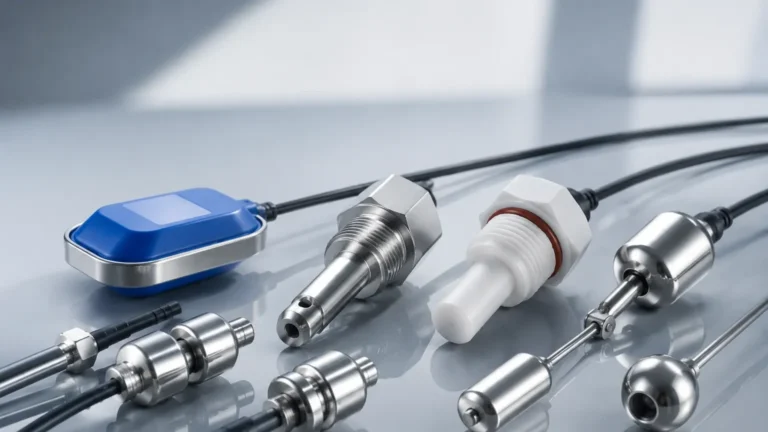
1. Magnetic Float Switches
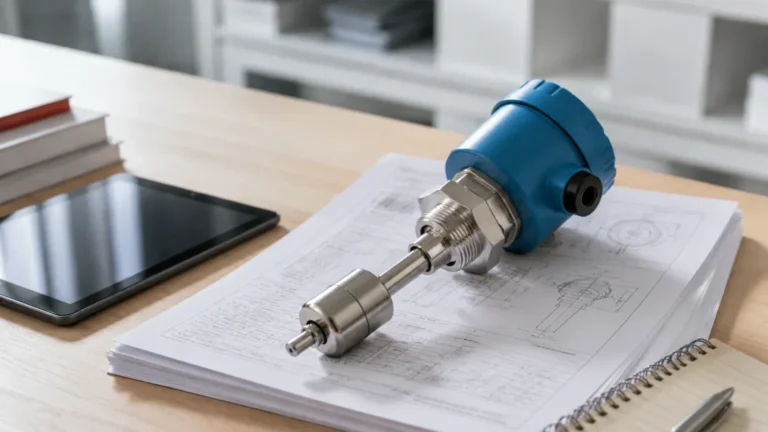
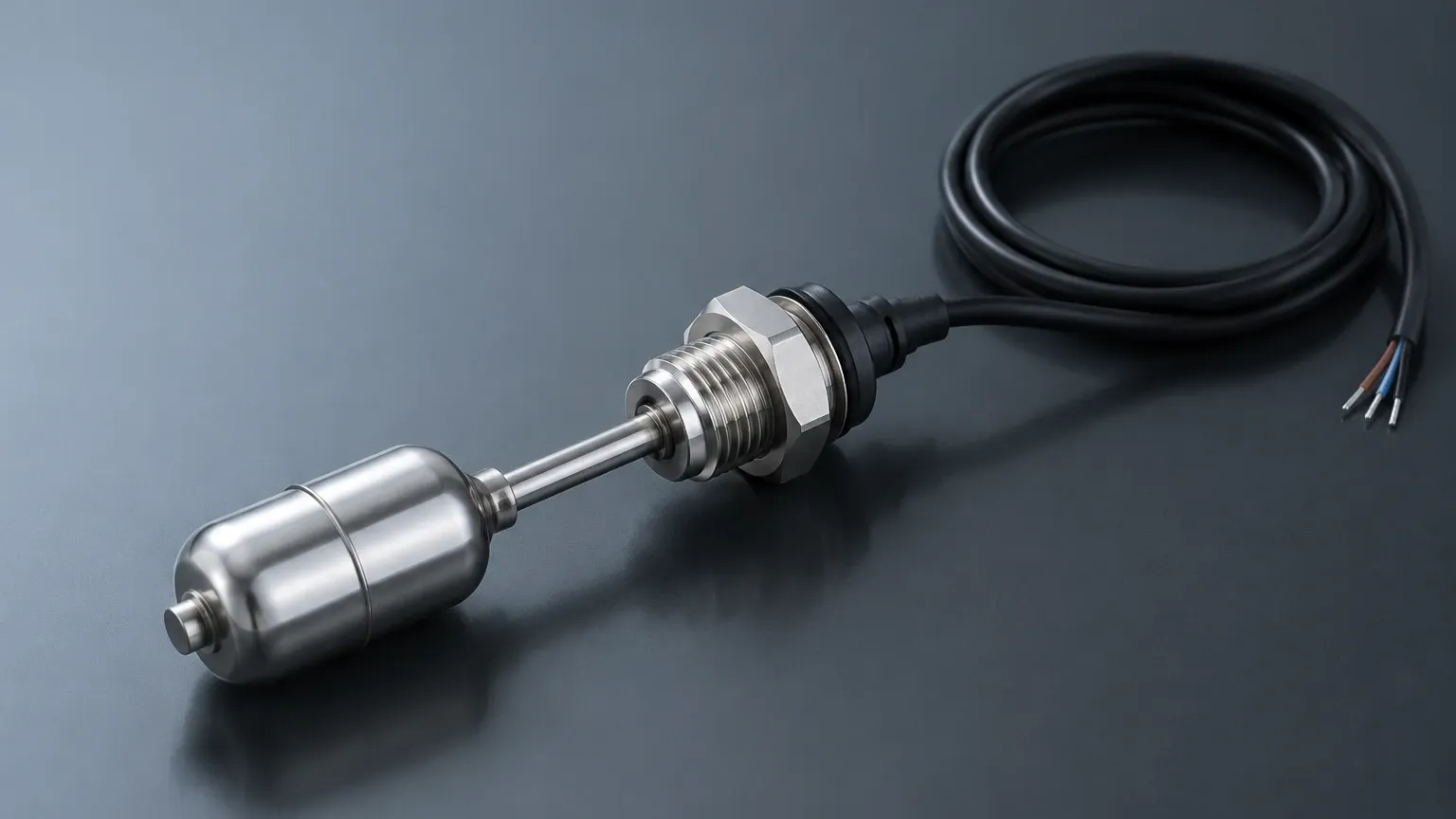
This is one of the most common and cost-effective methods. A float containing an internal magnet moves up and down a stem. Inside the stem is a hermetically sealed reed switch. In a level switch nc setup, the reed switch is positioned such that the magnet keeps the circuit closed when the float is at the bottom of the stem. As the liquid rises and lifts the float, the magnet moves away from (or toward) the reed switch, causing the contacts to open.
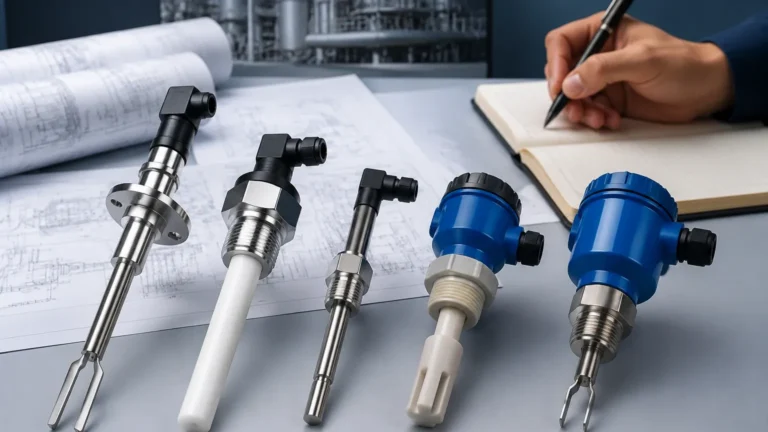
2. Tuning Fork (Vibrating) Switches
The sensing element consists of two tines that vibrate at their natural resonant frequency in air. When the tines are submerged in a liquid, the frequency changes due to the increased density of the medium. An internal electronic circuit detects this frequency shift. For an NC configuration, the electronics are set to provide a closed output signal when the fork is vibrating freely in the air and an open signal when the vibration is dampened by the liquid.
3. Capacitive Level Switches
Capacitance switches measure the change in electrical capacitance between the sensor probe and the tank wall (or a reference electrode). Since liquids have a higher dielectric constant than air, the capacitance increases when the probe is covered. The internal circuitry then toggles the switch state. These are ideal for non-conductive liquids and can often be adjusted to ignore buildup on the probe.
4. Conductive Level Switches
Used primarily for conductive liquids like water or acids, these switches use a low-voltage electrode. When the liquid touches the electrode, it completes a circuit to the tank wall or a ground electrode. While inherently an "open" circuit until the liquid arrives, the control relay can be configured to provide an NC output to the PLC for safety logic.
Fail-Safe Logic and Safety Considerations
The primary reason for specifying a level switch nc in industrial design is the implementation of fail-safe logic. In safety-critical applications, such as preventing a chemical tank from overflowing, the system must account for the possibility of the sensor itself failing.
If you use a Normally Open (NO) switch for high-level detection, the circuit only closes when the alarm is reached. If the wire connecting the sensor to the controller is severed, the circuit remains open. The controller will never receive the signal that the tank is full, leading to an overflow.
By using a level switch nc, the controller expects a continuous signal. If the tank overflows, the switch opens, and the signal stops. If the wire breaks, the signal also stops. In both cases, the controller sees an "open" circuit and can immediately initiate an emergency stop or close the inlet valve. This "de-energize to trip" philosophy is a cornerstone of industrial functional safety.
Selection Criteria for Level Switch NC Applications
When selecting a level switch, engineers must evaluate several technical parameters to ensure long-term reliability. The following table provides a general comparison of common switch types used in NC configurations.
| Switch Type | Media Compatibility | Max Pressure | Max Temperature | Best Use Case |
| :— | :— | :— | :— | :— |
| Magnetic Float | Clean, low-viscosity liquids | Up to 40 bar | Up to 150°C | General water/oil tanks |
| Tuning Fork | Liquids, slurries, powders | Up to 64 bar | -50°C to 150°C | Overfill protection, pump protection |
| Capacitive | Non-conductive, corrosive | Up to 25 bar | Up to 200°C | Chemical processing, food/beverage |
| Conductive | Conductive liquids only | Up to 10 bar | Up to 100°C | Wastewater, boiler water level |
Key Evaluation Factors:
1. Specific Gravity: For float switches, the float must be lighter than the liquid. Most standard floats require a specific gravity (SG) of at least 0.7.
2. Viscosity: High-viscosity liquids can cause floats to stick or dampen tuning forks excessively. Capacitive or hydrostatic methods may be preferred here.
3. Chemical Compatibility: The wetted parts (316 Stainless Steel, PP, PVC, or PTFE) must be resistant to the process medium.
4. Electrical Load: Ensure the switch contacts can handle the voltage and current of the load, or use an intermediate relay.
Installation Guidelines for Optimal Performance
Correct installation is as critical as selecting the right technology. For a level switch nc to function reliably, consider the following engineering practices:
* Avoid Turbulence: Do not install the switch directly in the path of the tank's inlet flow. Turbulence can cause "chatter" (rapid switching), which can damage relays and cause false alarms. Use a stilling well if turbulence is unavoidable.
* Orientation: Most float switches are designed for either vertical or horizontal mounting. Ensure the orientation matches the model specifications to prevent mechanical binding.
* Wiring and Conduits: Use proper cable glands to prevent moisture from entering the housing. In NC circuits, ensure that terminal connections are tight, as a loose connection will be interpreted by the system as a high-level alarm.
* Switch Point Adjustment: For vertical float switches, the switch point is often fixed. For capacitive or ultrasonic switches, the sensitivity or "dead band" may need to be calibrated during commissioning to account for the specific dielectric properties of the fluid.
Limitations and Maintenance Requirements
While level switches are robust, they are not without limitations. Mechanical switches, such as floats, are susceptible to mechanical wear over millions of cycles. Furthermore, they can fail if the liquid contains solids that cause the float to jam.
Common Risks Include:
* Scaling and Buildup: In wastewater or lime slurry applications, material can build up on the sensing element. For a level switch nc, heavy buildup might prevent a float from dropping or a tuning fork from vibrating, leading to a failure to signal a "dry" state.
* Contact Pitting: Switching inductive loads (like large solenoid valves) directly can cause arcing and pitting on the internal contacts. Always use a surge suppressor or a dedicated control relay.
* Environmental Sealing: In outdoor or wash-down environments, the ingress of moisture into the switch housing is a common cause of failure.
Maintenance should include periodic "wet tests" where the level is manually raised to ensure the switch opens as expected. For NC circuits, verifying the integrity of the wiring should be part of the annual safety inspection.
Frequently Asked Questions (FAQ)
Q: Can I change a level switch from NC to NO in the field?
A: It depends on the design. Many magnetic float switches allow you to invert the float on the stem to change the logic. Electronic switches (like tuning forks or capacitive sensors) often have a DIP switch or a wiring configuration (PNP vs. NPN) that allows you to select the output logic.
Q: What is the difference between a dry contact and a solid-state NC switch?
A: A dry contact is a mechanical relay or reed switch with no voltage of its own. A solid-state switch (like a transistor output) uses electronic components to break the circuit. Solid-state switches have no moving parts and last longer but usually have stricter voltage and polarity requirements.
Q: Why is my level switch nc showing an alarm even when the tank is empty?
A: This is usually due to a "fail-safe" trigger. Check for a broken wire, a loose terminal, or a blown fuse in the loop. Because it is an NC circuit, any break in the electrical path will be interpreted as an alarm.
Q: Does temperature affect the NC state?
A: Extreme temperatures can affect the magnetic strength in float switches or cause thermal expansion that might slightly shift the switch point. Always ensure the switch is rated for the maximum process temperature of your application.
For engineers and facility managers, the level switch nc remains a vital tool for process safety. By understanding the relationship between the physical state of the medium and the electrical state of the circuit, you can design systems that are not only efficient but also inherently protected against common failure modes. For more detailed specifications on various sensor types, you can explore the technical data available for Level Switches to find the right fit for your specific industrial environment.