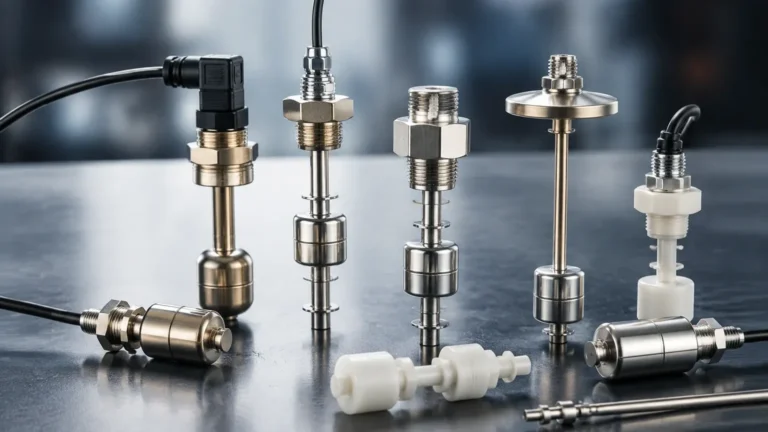
Level Switch Rod Type
Level Switch Rod Type
In the landscape of industrial automation, point level detection remains a fundamental requirement for process safety, inventory management, and operational efficiency. Among the various geometries available for point level sensors, the level switch rod type is perhaps the most versatile and widely utilized configuration. Unlike flexible cable probes, which are designed for deep silos and high-tensile loads, rod-type switches utilize a rigid probe to detect the presence or absence of material at a specific elevation within a vessel.
Selecting the correct rod-type level switch requires a deep understanding of the underlying measurement principles, the physical properties of the media, and the mechanical constraints of the installation site. This guide provides a technical overview of rod-type level switching technologies, engineering selection criteria, and best practices for industrial implementation.
Measurement Principles of Rod-Type Switches
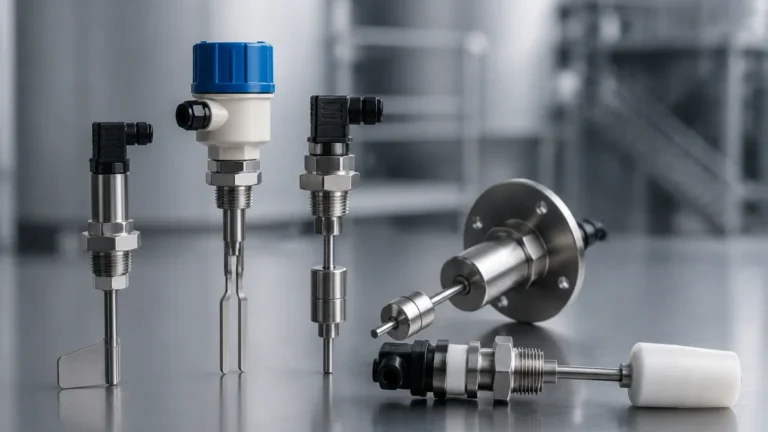
Before selecting a specific instrument, it is essential to understand how different technologies utilize a rigid rod to interface with the process media. The "rod" serves as the primary sensing element, but the physical phenomenon it monitors varies significantly between models.
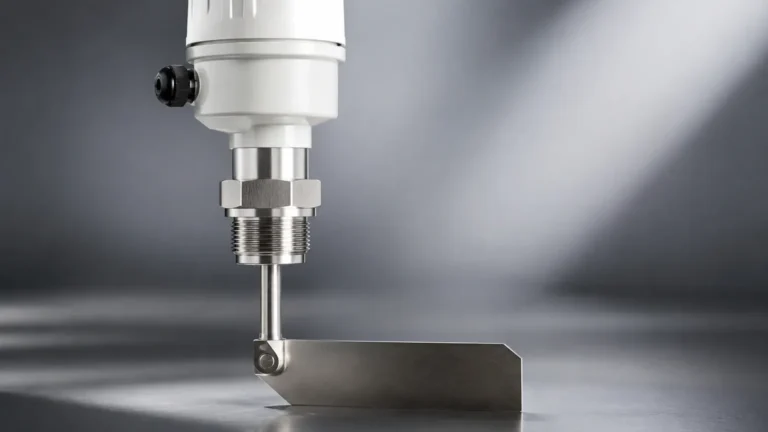
Vibrating Rod Principle
A vibrating rod level switch (often referred to as a monoprobe) operates using piezoelectric crystals that excite the rod at its natural resonance frequency. When the rod is surrounded by air or gas, it vibrates freely. As the rising media (liquid or solid) covers the rod, the vibration is damped or the frequency shifts. The internal electronics detect this change in amplitude or frequency and trigger a relay output. This technology is highly robust because the single-rod design is less prone to material bridging compared to tuning fork designs.
Capacitance and Admittance Principle
In a capacitance-based level switch rod type, the rod acts as one electrode of a capacitor, while the vessel wall (if metallic) acts as the second electrode. The material between them serves as the dielectric. As the level rises and covers the rod, the dielectric constant changes, leading to a measurable change in capacitance. Advanced RF Admittance switches build on this by using a "guard" section on the rod to ignore the effects of material buildup or coating, ensuring the switch only triggers when a true level change occurs.
Conductivity Principle
Conductivity switches are used exclusively for conductive liquids. The rod probe extends into the tank, and a low-voltage AC signal is applied. When the liquid reaches the rod, a circuit is completed between the rod and the tank wall (or a reference rod). This is a simple, cost-effective method for water-based applications, though it is unsuitable for non-conductive oils or dry solids.
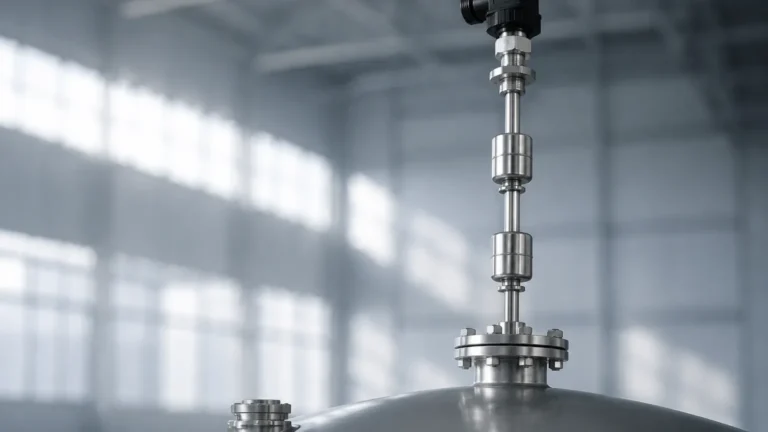
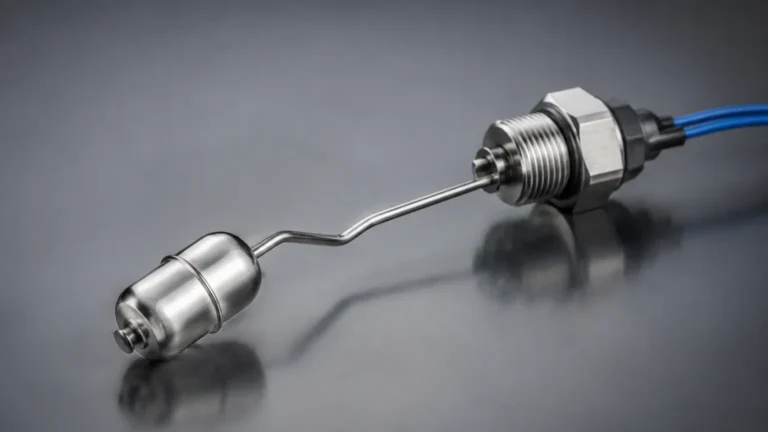
Magnetic Float Principle
In this mechanical-electrical hybrid, a hollow float containing a permanent magnet slides up and down a rigid rod (stem). Inside the rod are hermetically sealed reed switches. As the float rises with the liquid level, the magnetic field closes the reed switch at a predetermined height. This is a reliable method for clean liquids but is sensitive to particulates that might jam the float.
Key Types of Rod-Type Level Switches
Industrial applications demand different rod configurations based on the physical state of the media and the environmental conditions. Understanding these variations is critical for long-term reliability.
1. Vibrating Single Rod Switches
These are the preferred choice for granular solids and powders. Because they feature a single, smooth rod, they are less likely to experience "clogging" between tines, which can occur with vibrating forks. They are frequently used in plastic pellets, grain silos, and cement production.
2. RF Admittance/Capacitance Rods
These are highly versatile and can be used for both liquids and solids. For corrosive environments, the rod is often fully insulated with materials like PTFE (Polytetrafluoroethylene) or PFA. The rigid rod construction allows for precise horizontal mounting in small tanks where a cable probe would be impractical.
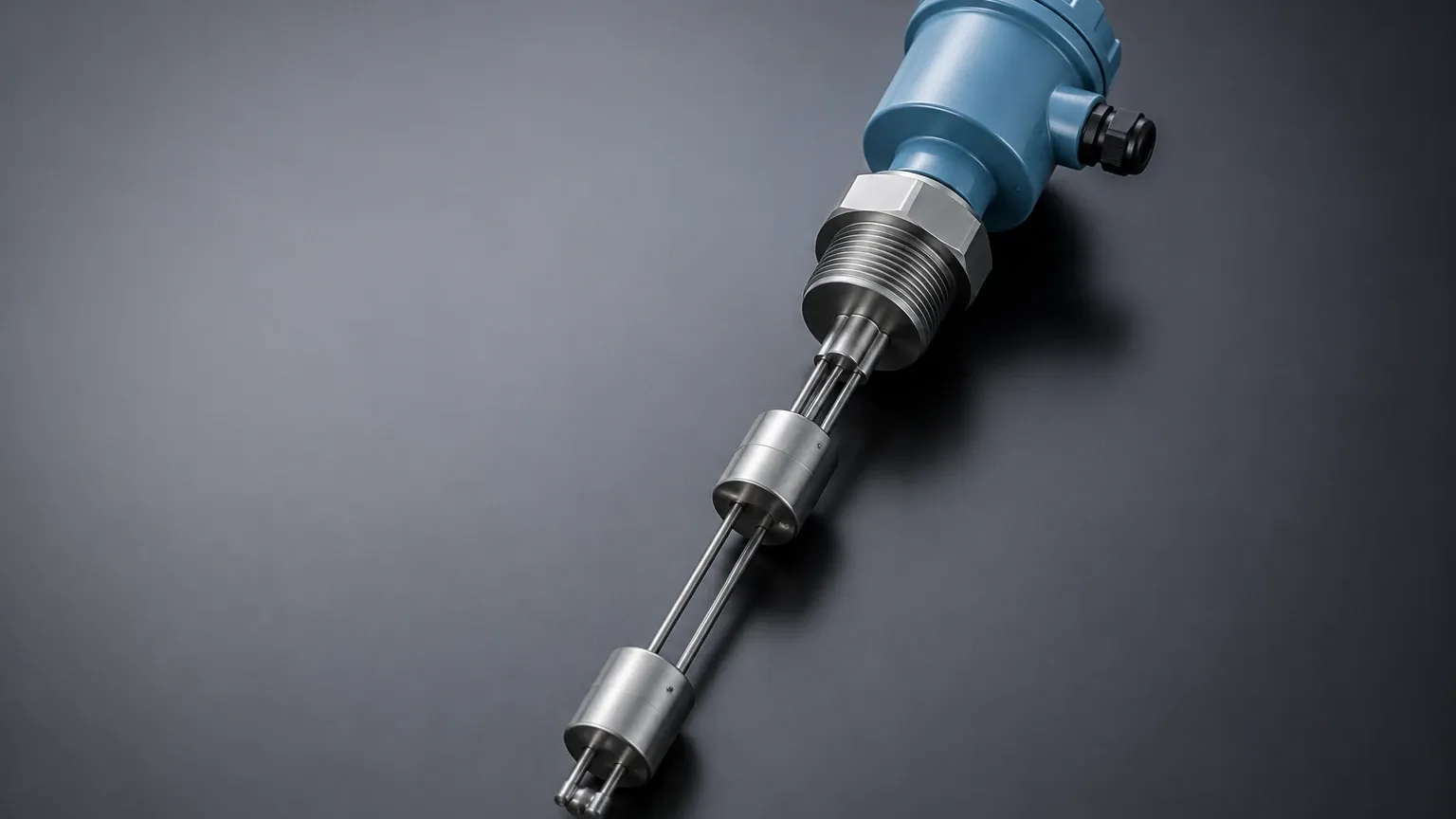
3. Conductive Multi-Rod Probes
In many water treatment applications, a single flange may host multiple rods of different lengths. This allows for multiple switching points (e.g., High-High, High, Low, and Low-Low) using a single process connection. The rods are typically made of Stainless Steel 316L for durability.
Engineering Selection Criteria
When specifying Level Switches for a project, engineers must evaluate several parameters to ensure the rod-type geometry is appropriate for the task.
Media Characteristics
* State: Is the media a liquid, a slurry, or a bulk solid? Vibrating rods excel in solids, while magnetic floats are restricted to clean liquids.
* Dielectric Constant (εr): For capacitance switches, the media must have a dielectric constant significantly different from air (εr = 1). Most liquids have an εr > 1.5, making them suitable.
* Density: Vibrating switches have a minimum density requirement (e.g., 20 g/L for solids or 0.5 g/cm³ for liquids). If the material is too light, it may not provide enough damping to trigger the sensor.
* Viscosity and Coating: If the media is sticky (e.g., molasses or heavy crude), a rod with an RF Admittance "guard" or a vibrating rod with a polished surface is necessary to prevent false positives.
Process Conditions
* Temperature: Standard rods handle up to 80°C, but high-temperature versions with thermal extensions can withstand up to 250°C or higher.
* Pressure: The process connection (flange or thread) and the rod seal must be rated for the maximum vessel pressure, often ranging from atmospheric to 40 bar.
* Chemical Compatibility: The wetted parts (usually SS304, SS316, or Hastelloy) must be compatible with the process fluid to prevent corrosion and premature failure.
Selection Table: Rod-Type Technology Comparison
| Technology | Best For | Max Temp (Typical) | Pros | Cons |
| :— | :— | :— | :— | :— |
| Vibrating Rod | Powders, Granules | 150°C | No calibration needed; resists bridging | Not for very low-density foam |
| Capacitance | Liquids, Slurries | 250°C+ | No moving parts; high temp/pressure | Requires calibration; sensitive to εr |
| Conductivity | Water, Acids | 100°C | Low cost; simple logic | Only for conductive liquids |
| Magnetic Float | Clean Liquids | 120°C | Simple; no power required (passive) | Moving parts; prone to scaling |
Installation Considerations for Rod-Type Switches
Correct installation is as important as technology selection. A poorly placed level switch rod type will yield inconsistent results or suffer mechanical damage.
1. Orientation: Rod-type switches can be mounted vertically (from the top) or horizontally (from the side). For horizontal mounting, the rod should be angled slightly downward (approx. 20°) to allow liquid or material to drain off, preventing buildup.
2. Nozzle Length: The active sensing part of the rod must extend past the mounting nozzle and into the vessel. If the rod remains inside a narrow nozzle, material can become trapped, causing the switch to stay in the "covered" state.
3. Material Flow: In silos, the rod should not be placed directly in the path of the falling material during filling. The impact force of heavy solids can bend or break the rod. If placement in the flow path is unavoidable, a protective baffle should be installed above the rod.
4. Clearance: Ensure there is enough external clearance to thread the rod into the vessel. For long rods (over 1 meter), vertical installation from the top is usually required due to the weight and leverage on the process connection.
5. Grounding: For capacitance and conductivity switches, proper grounding to the metal tank wall is mandatory. In plastic or lined tanks, a reference ground rod or a concentric shield must be used.
Limitations and Risks
While the level switch rod type is a robust solution, it is not without limitations:
* Mechanical Stress: Long rods are susceptible to bending if used in high-viscosity liquids with heavy agitation. In such cases, a reinforced rod or a different measurement principle (like non-contact radar) may be required.
* Vessel Size: In very small pipes or vessels, the rod may be too close to the opposite wall, causing interference in capacitance-based models.
* Rod Length Limits: Rigid rods are generally limited to lengths of 3 to 4 meters (approx. 10 to 13 feet). Beyond this length, the weight and shipping logistics make flexible cable probes a more practical choice.
* Build-up: While certain technologies handle coating better than others, extreme buildup of conductive material on a non-conductive rod can still lead to bridging and false switching.
Maintenance and Troubleshooting
Rod-type switches are generally low-maintenance, especially those with no moving parts. However, periodic checks are recommended:
* Visual Inspection: Check for signs of corrosion, pitting, or physical deformation of the rod.
* Cleaning: In coating-prone applications, the rod should be cleaned periodically to ensure the sensing surface is in direct contact with the media.
* Seal Integrity: Inspect the process connection for leaks, particularly in pressurized or vacuum systems.
* Electronic Self-Test: Many modern vibrating rod switches include a self-test button or a diagnostic LED that indicates the health of the piezoelectric crystals and internal circuitry.
Frequently Asked Questions (FAQs)
Q: Can a rod-type level switch be used for interface detection?
A: Yes, specifically capacitance-based rod switches. They can be calibrated to detect the interface between two immiscible liquids (e.g., oil and water) by sensing the change in the dielectric constant at the boundary layer.
Q: What is the maximum length for a rod-type probe?
A: Most manufacturers provide rigid rods up to 3 meters. For applications requiring deeper insertion, cable-type probes are used, though they are only suitable for top-down vertical mounting.
Q: Are rod-type switches suitable for hygienic applications?
A: Yes. Hygienic versions feature polished stainless steel rods (Ra < 0.8 µm) and specialized process connections like Tri-Clamp or Varivent, ensuring no bacteria can grow in threads or crevices.
Q: How do I handle material bridging on a vibrating rod?
A: The single-rod design is naturally resistant to bridging. However, if bridging occurs, ensure the switch is mounted away from the vessel walls and that the rod is not positioned in a stagnant "dead zone" of the silo.
Conclusion
The level switch rod type remains a cornerstone of industrial level control due to its mechanical simplicity and the variety of sensing technologies it can host. Whether utilizing vibration, capacitance, or conductivity, the rigid rod provides a stable and repeatable reference point for critical process limits. By carefully matching the rod material, length, and sensing principle to the specific demands of the media, engineers can ensure high system availability and safety. For those evaluating specific hardware for their facility, it is advisable to Review product options and application support to find the configuration that best meets the pressure, temperature, and chemical requirements of the process.