Level Switch 2140
Level Switch 2140
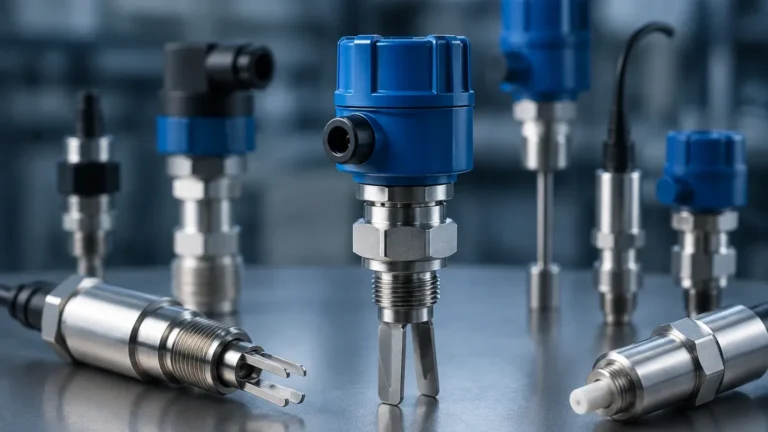
In the landscape of industrial automation, point level detection serves as a critical fail-safe and process control mechanism. Among the various technologies available, the vibrating fork level switch has emerged as a preferred solution for liquid applications due to its reliability and minimal maintenance requirements. The Level Switch 2140 represents a specific class of high-performance vibrating fork sensors designed to meet the rigorous demands of the chemical, oil and gas, and water treatment industries. This article provides a comprehensive engineering reference for the 2140 series, detailing its operational principles, selection criteria, and installation best practices.
Understanding the Vibrating Fork Principle
Before evaluating the specific features of the level switch 2140, it is essential to understand the underlying physics of vibrating fork technology. This method, often referred to as "tuning fork" level detection, relies on the change in resonant frequency when a vibrating element moves from a gas phase to a liquid phase.
Frequency Shift Mechanics
The sensor consists of two tines (the fork) that are driven to vibrate at their natural resonant frequency by a piezoelectric crystal assembly located within the instrument housing. When the tines are in air or gas, they vibrate freely at a high frequency (typically around 1000 Hz to 1400 Hz, depending on the design).
As the liquid level rises and submerges the tines, the density of the surrounding medium increases significantly compared to air. This increased mass loading causes the vibration frequency to drop. An internal electronic circuit monitors this frequency shift. Once the frequency crosses a predefined threshold, the electronics trigger an output state change—switching from "uncovered" to "covered."
Advantages of the Principle
Unlike float switches, vibrating forks have no moving parts that can jam or wear out. Unlike ultrasonic or radar point switches, they are largely unaffected by turbulence, foam, bubbles, or varying dielectric constants. This makes the vibrating fork principle one of the most robust methods for Level Switches in complex process environments.
Key Features of the Level Switch 2140
The level switch 2140 is engineered for versatility and safety. It is frequently utilized as a high-level alarm to prevent tank overfills or as a low-level alarm to protect pumps from running dry.
Enhanced Diagnostics
Modern iterations of the 2140 series often include advanced internal diagnostics. These systems monitor the health of the piezoelectric crystals and the integrity of the fork tines. If the tines become severely corroded or if the internal electronics detect a component failure, the switch can signal a fault state, ensuring that a hardware failure is not mistaken for a safe level condition.
Media Independence
The 2140 is designed to operate effectively regardless of the liquid's physical properties, such as conductivity, density (down to approximately 500 kg/m³), or viscosity. This makes it a "plug-and-play" solution for facilities that handle multiple types of fluids in the same vessel.
Material Integrity
To withstand corrosive industrial environments, the wetted parts are typically constructed from 316L Stainless Steel (1.4404) or exotic alloys like Hastelloy for aggressive chemical applications. The housing is often available in aluminum or stainless steel with various IP ratings (IP66/67/68) to suit outdoor or wash-down environments.
Technical Evaluation and Selection Criteria
Selecting the correct configuration for a level switch 2140 requires a detailed analysis of the process conditions. Engineers must confirm that the instrument's mechanical and electronic specifications align with the vessel's operational parameters.
Selection Table: Common Configurations
| Feature | Standard Liquid Application | High Temperature / Pressure | Hygienic / Food Grade |
| :— | :— | :— | :— |
| Wetted Material | 316L Stainless Steel | Alloy C-276 (Hastelloy) | Polished 316L (Ra < 0.8µm) |
| Process Temp. | -40°C to 150°C | -90°C to 260°C | -40°C to 150°C |
| Max Pressure | 100 bar (1450 psi) | 160 bar (2320 psi) | 40 bar (580 psi) |
| Output Type | PNP/NPN, Relay, or 8/16mA | Direct Load, Relay, or NAMUR | PNP/NPN or Relay |
| Process Conn. | 3/4" or 1" NPT/BSP | Flanged (ANSI/DIN) | Tri-Clamp or DIN 11851 |
Electronic Output Options
The 2140 series offers various output stages to integrate with different control systems:
1. Direct Load Switching: Allows the switch to be wired in series with a load (like a contactor or solenoid valve).
2. PNP/NPN Electronics: Standard three-wire DC connection for PLC inputs.
3. Relay Output (DPDT): Provides dry contacts for high-power switching or signaling to multiple systems.
4. NAMUR: For use in intrinsically safe circuits in hazardous areas.
Installation and Mounting Guidelines
Correct installation is paramount to ensure the longevity and accuracy of the level switch 2140. While the device is robust, improper orientation can lead to false readings or physical damage.
Orientation and Position
* Top Mounting: The switch is installed vertically from the top of the tank. This is ideal for high-level alarms. The length of the fork extension must be specified to reach the desired switching point.
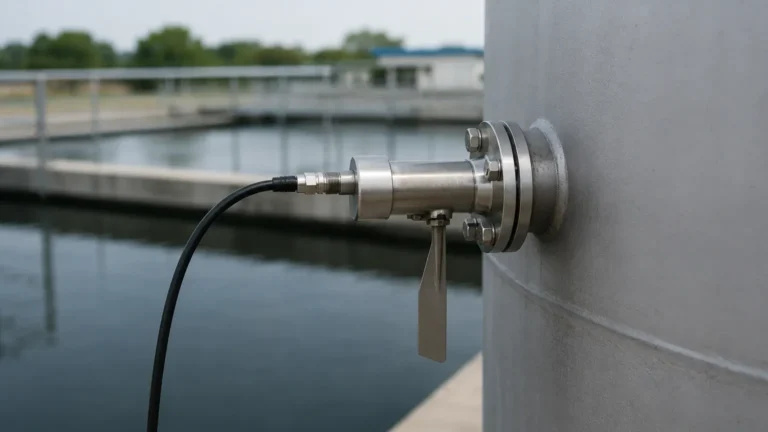
* Side Mounting: The switch is installed horizontally through the tank wall. This is common for both high and low-level detection.
* Tine Orientation: In side-mounted applications, the tines should be oriented such that the flat surfaces are vertical. This allows liquid to drain easily from the tines and prevents the build-up of solids or viscous films between the forks, which could cause a "bridge" and a false covered signal.
Avoiding Turbulence and Build-up
If the tank features an agitator or a high-velocity fill stream, the level switch 2140 should be positioned away from these areas to prevent mechanical stress on the tines. If placement near an inlet is unavoidable, a baffle plate should be installed to protect the fork from direct impact.
Nozzle Length
Ensure that the fork tines protrude fully into the vessel. If the mounting nozzle is too long, a "dead zone" may be created where liquid or sludge can become trapped, preventing the tines from vibrating freely or preventing them from sensing the true level change when the tank empties.

Limitations and Operational Risks
While the level switch 2140 is highly versatile, certain conditions can challenge its performance. Engineers should be aware of these limitations during the design phase.
1. Extreme Viscosity: While it handles most liquids, extremely viscous fluids (typically > 10,000 cP) may cling to the tines. If the liquid does not drain away when the level drops, the switch may remain in the "covered" state (the "syrup effect").
2. Aerated Liquids: If a liquid is heavily aerated or has a density lower than the switch's minimum rating (usually 500 kg/m³), the frequency shift may not be sufficient to trigger the electronics.
3. Solid Coating: While the vibration provides a degree of self-cleaning, heavy crystalline build-up or hard-setting coatings can eventually dampen the vibration to the point of failure.
4. Granular Solids: The 2140 is primarily a liquid level switch. For powders or granular solids, a different fork geometry or a rotary paddle switch is generally required, as solids do not behave like liquids in terms of frequency damping.
Maintenance and Troubleshooting
The level switch 2140 is designed for "fit and forget" operation, but periodic checks are recommended in critical safety loops.
* Visual Inspection: During scheduled shutdowns, inspect the tines for signs of corrosion or physical wear.
* Proof Testing: For SIL-rated applications, the switch should be manually tested by raising the liquid level or using a magnetic test point (if equipped) to verify that the output state changes correctly.
* False Alarms: If the switch triggers without liquid presence, check for material bridging between the tines or excessive vibration from nearby machinery that might be interfering with the fork’s natural frequency.
Frequently Asked Questions (FAQ)
Q: Can the level switch 2140 be used in hazardous areas?
A: Yes, most 2140 models are available with ATEX, IECEx, or FM certifications for use in Zone 0, 1, or 2 environments, typically utilizing NAMUR or intrinsically safe wiring methods.
Q: Does the switch require calibration for different liquids?
A: No. One of the primary benefits of the 2140 is that it does not require calibration. It is designed to detect the density difference between gas and liquid automatically.
Q: What is the typical response time?
A: The response time is usually less than 1 second for the "covered" signal and approximately 1 to 2 seconds for the "uncovered" signal, though some models allow for adjustable delay settings to prevent false switching due to splashing.
Q: Can it be used for interface detection (e.g., oil on water)?
A: Standard vibrating forks are generally not suitable for interface detection because both liquids will dampen the vibration. However, specialized versions with adjustable sensitivity can sometimes distinguish between two liquids of significantly different densities.
Conclusion
The level switch 2140 stands as a benchmark for point level detection in the industrial sector. By leveraging the physical reliability of the vibrating fork principle, it provides a solution that is independent of most fluid properties and environmental variables. When selected with the correct materials and installed according to engineering best practices, it ensures high levels of process safety and operational efficiency. For those seeking to integrate these devices into a broader automation strategy, exploring the full range of Level Switches is the first step toward achieving a robust and maintenance-free level control system.