Level Switch Side Mounted
Level Switch Side Mounted
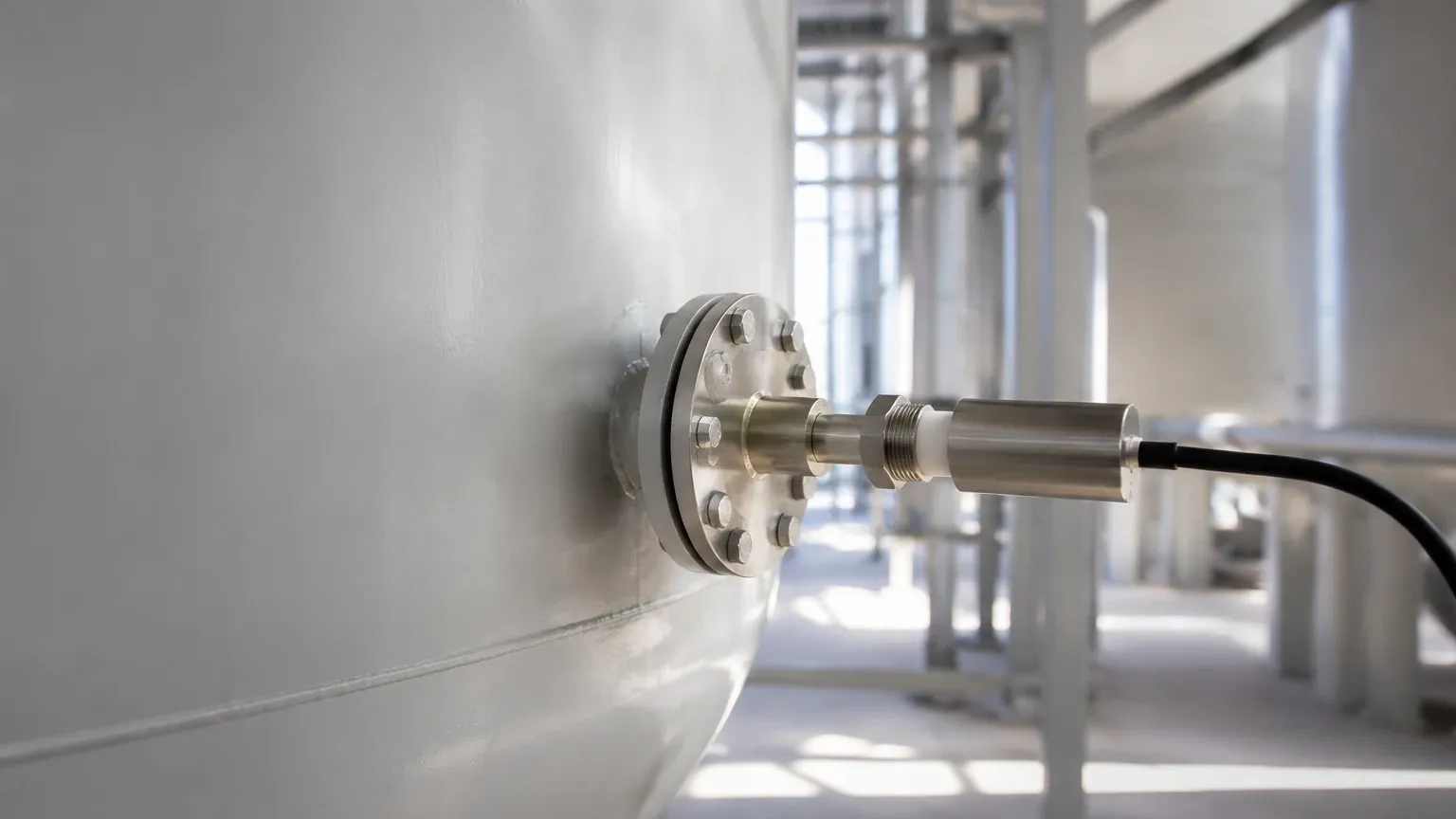
In industrial process control, point-level detection is a fundamental requirement for preventing tank overfills, protecting pumps from dry running, and managing automated filling cycles. While top-mounted sensors are common, many applications—due to overhead obstructions, agitators, or pressurized vessel designs—require a level switch side mounted through the tank wall. This configuration provides direct access to the specific height where a control action must occur, offering high reliability and simplified maintenance for critical process boundaries.
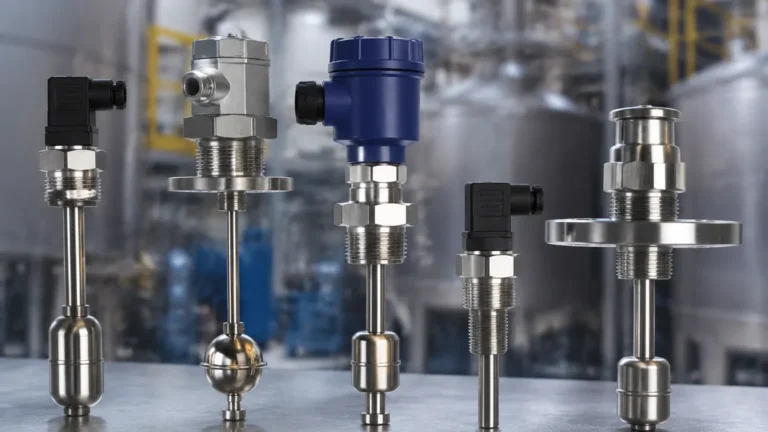
As a professional manufacturer of industrial level measurement instruments, Welk provides a range of Level Switches designed for side-entry installation. Choosing the correct technology requires an understanding of the physical principles at play, the characteristics of the liquid, and the mechanical constraints of the vessel.
Measurement Principles for Side-Mounted Switches
Side-mounted level switches operate on several distinct physical principles. Understanding these is the first step in selecting the right instrument for a specific industrial environment.
1. Magnetic Float Principle
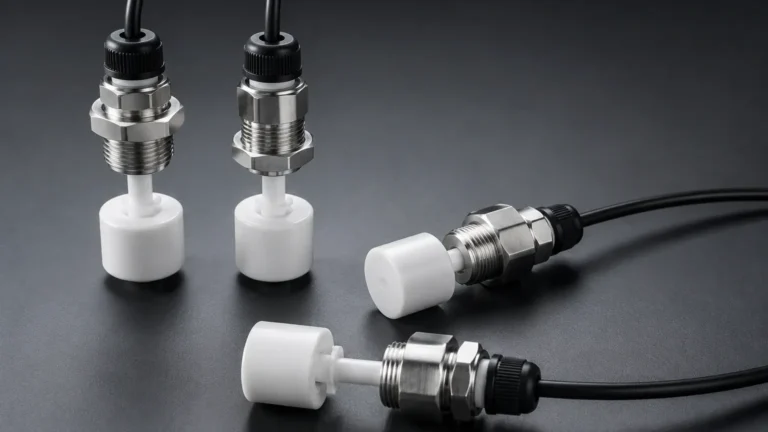
The most traditional side-mounted design utilizes a horizontal float arm. A float containing a permanent magnet is attached to a pivoted arm. As the liquid level rises or falls, the float moves through an arc. When the float reaches a predetermined position, the internal magnet actuates a hermetically sealed reed switch or a microswitch located inside the housing. Because the switch mechanism is physically isolated from the process fluid, this method is highly reliable for clean liquids.
2. Vibrating Tuning Fork Principle
Vibrating level switches use piezoelectric crystals to energize a metal tuning fork at its natural resonant frequency in air. When the fork is immersed in a liquid, the frequency shifts or the vibration is dampened. The internal electronics detect this change and convert it into an ON/OFF signal. This technology is preferred for its lack of moving parts and its relative immunity to changes in fluid properties like pressure, temperature, and density.
3. Capacitance Principle
Capacitance switches treat the probe and the tank wall (or a reference electrode) as two plates of a capacitor. The dielectric constant of the air is different from that of the liquid. As the liquid covers the side-mounted probe, the capacitance increases. Once the measured value crosses a set threshold, the switch changes state. This is effective for both liquids and some solids, though it requires calibration based on the dielectric properties of the medium.
4. Optoelectronic Principle
Less common but highly accurate for small vessels, optoelectronic switches use an infrared LED and a light receiver. Inside a prism tip, the light is reflected back to the receiver when in air. When liquid covers the tip, the light is refracted into the fluid, and the receiver detects the loss of signal. This is ideal for leak detection or high-precision point measurement in clean fluids.
Comparison of Side-Mounted Technologies
Selecting the appropriate level switch side mounted for your facility depends on the specific challenges of the media, such as viscosity, corrosiveness, and the presence of solids.
| Technology | Best Suited For | Key Advantages | Primary Limitations |
| :— | :— | :— | :— |
| Magnetic Float | Clean liquids, water, oils | No power required (passive), low cost, robust | Susceptible to scaling and mechanical jamming |
| Vibrating Fork | General purpose, turbulent liquids, foam | No moving parts, high reliability, no calibration | Not suitable for very high-viscosity fluids or heavy coating |
| Capacitance | Corrosive chemicals, non-conductive fluids | Can be coated with PTFE, handles high temps | Requires calibration, sensitive to dielectric changes |
| Optoelectronic | Compact spaces, pharmaceutical, laboratory | Extremely small footprint, fast response | Sensitive to bubbles and heavy staining of the prism |
Technical Selection Criteria
When specifying a level switch for side-wall installation, engineers must confirm several parameters to ensure long-term performance and safety.
Fluid Density and Specific Gravity
For float-based switches, the float must be less dense than the liquid it is measuring. Welk typically offers floats designed for a specific gravity (SG) of 0.7 or higher. If the liquid is a light hydrocarbon with an SG of 0.5, a specialized high-buoyancy float is required.
Process Pressure and Temperature
Standard side-mounted switches are often rated for pressures up to 2.0 MPa (approx. 290 psi), but heavy-duty industrial versions can handle up to 4.0 MPa or higher. Similarly, temperature ratings must be checked. While standard electronics might be rated to 80°C, high-temperature versions with cooling fins or remote electronics can operate in environments exceeding 200°C.
Material Compatibility
The wetted parts—the components in direct contact with the liquid—must resist corrosion. Common materials include:
* Stainless Steel (304 or 316L): The standard for water, food grade, and general chemical applications.
* PP/PVC/PVDF: Plastics used for highly corrosive acids where stainless steel would fail.
* PTFE Coating: Used to prevent sticking and provide additional chemical resistance.
Installation Considerations for Side-Mounted Switches
Proper installation is critical to prevent false triggering and mechanical failure. Unlike top-mounted sensors that can be adjusted by changing the rod length, a side-mounted switch is fixed at a specific height.
1. Nozzle Length and Diameter: If the switch is installed in a standoff pipe or nozzle, ensure the sensing element (the float or the fork) extends sufficiently into the tank. If a tuning fork is recessed too far into a narrow nozzle, liquid may become trapped (the "bridge" effect), causing the switch to remain in the "wet" state even after the tank level drops.
2. Orientation: Most side-mounted float switches must be installed horizontally with the "TOP" mark facing upwards to allow the pivot mechanism to function under gravity. Vibrating forks can often be rotated, but the flat surfaces of the forks should be oriented vertically so that liquid can easily drain off them.
3. Turbulence and Agitators: If the tank has an internal agitator or high-velocity inflow, the switch should be located away from these areas. If this is not possible, a protective baffle should be installed to prevent mechanical damage to the float arm or fork.
4. Wiring and Conduits: Always install the cable entry pointing downwards to prevent moisture from entering the housing via the conduit. Use a drip loop in the wiring for outdoor installations.
Limitations and Operational Risks
While highly effective, side-mounted level switches have specific limitations that must be managed:
* Mechanical Wear: Float-based switches have moving parts and a pivot point. Over millions of cycles, or in the presence of abrasive grit, these components can wear out. Regular inspection is recommended in heavy-industrial applications.
* Build-up and Scaling: In wastewater or lime slurry applications, material can build up on the switch. A vibrating fork can usually shed some buildup, but a heavy layer will eventually dampen the vibration and cause a false signal. In these cases, a flush-mounted capacitance switch or a non-contact radar may be a better alternative.
* Tank Access: Installation and maintenance require access to the side of the tank. If the tank is insulated, the insulation must be cut and resealed around the switch mounting. Furthermore, the tank must often be drained to below the mounting point to remove the switch for service, unless a secondary isolation valve or a thermowell-style mounting is used.
Frequently Asked Questions (FAQs)
Q: Can a side-mounted level switch be used for solids?
A: Yes, but technology choice is restricted. Vibrating forks (specifically designed for solids) and rotary paddle switches are commonly side-mounted in silos to detect the presence of powders or grains. Standard liquid float switches will not work for solids.
Q: How do I test a side-mounted switch without filling the tank?
A: Many Welk magnetic float switches include a manual testing lever on the exterior of the housing. This allows operators to manually lift the float arm to simulate a high-level condition and verify that the control circuit and alarms are functioning correctly.
Q: What is the difference between NPT and Flanged mounting for side switches?
A: NPT (National Pipe Thread) is a threaded connection suitable for smaller, lower-pressure applications and is generally easier to install. Flanged connections (such as ANSI or DIN standards) are used for larger switches, higher pressures, and applications where a robust, leak-proof seal is mandatory for safety.
Q: Can I use a side-mounted switch in a tank with a liner?
A: It is difficult. Side-mounting requires cutting through the tank wall and the liner. Ensuring a leak-proof seal between the switch flange and the liner is a complex engineering task. Top-mounted ultrasonic or radar sensors are usually preferred for lined tanks.
Conclusion
A level switch side mounted is a reliable and cost-effective solution for point-level monitoring in a wide variety of industrial sectors, from water treatment to oil and gas. By selecting the correct measurement principle—whether it be the mechanical simplicity of a float or the solid-state reliability of a vibrating fork—and adhering to strict installation guidelines, facilities can ensure high levels of process safety and automation efficiency. For specific application engineering support or to explore customized OEM/ODM options, reviewing the technical specifications of modern Level Switches is the recommended next step for project managers and engineers.