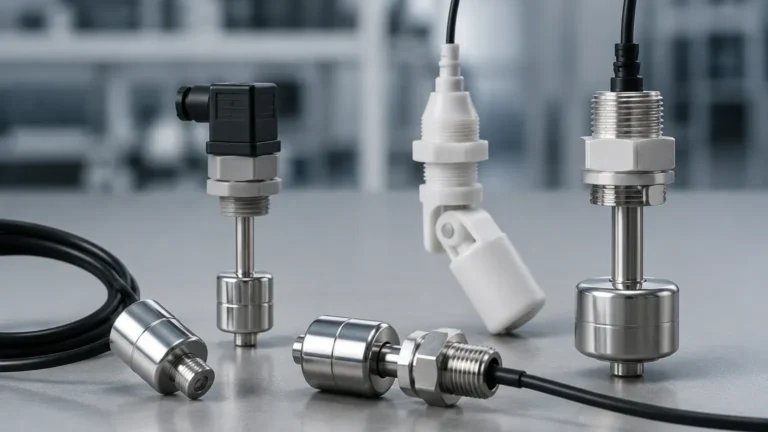
Level Switch 24v
Level Switch 24v
In the landscape of industrial automation and process control, the level switch 24v has become the de facto standard for point-level detection. As modern control systems transition toward low-voltage DC architectures for increased safety and compatibility with Programmable Logic Controllers (PLCs), understanding the nuances of 24V DC level instrumentation is essential for plant engineers and system integrators. This guide explores the underlying measurement principles, selection criteria, and technical considerations for implementing 24V level switches in industrial environments.
Measurement Principles of Level Switches
Before selecting a specific power configuration, it is vital to understand how different sensing technologies interact with the process media. Level switches do not provide continuous measurement; instead, they act as high- or low-level alarms, triggering a state change when the media reaches a specific point.
Float and Displacement Principles
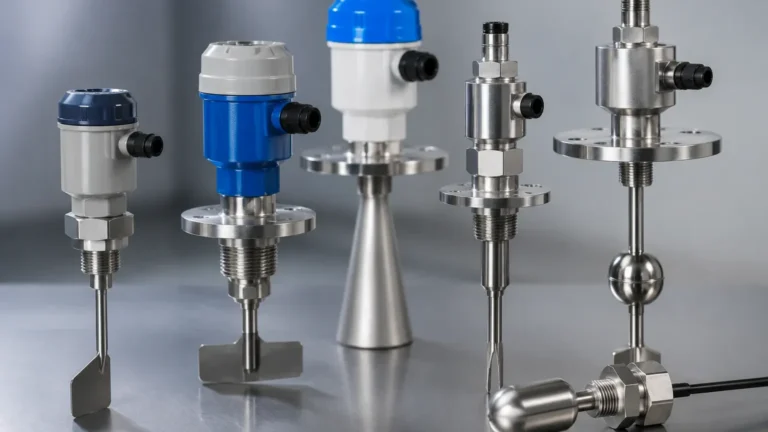
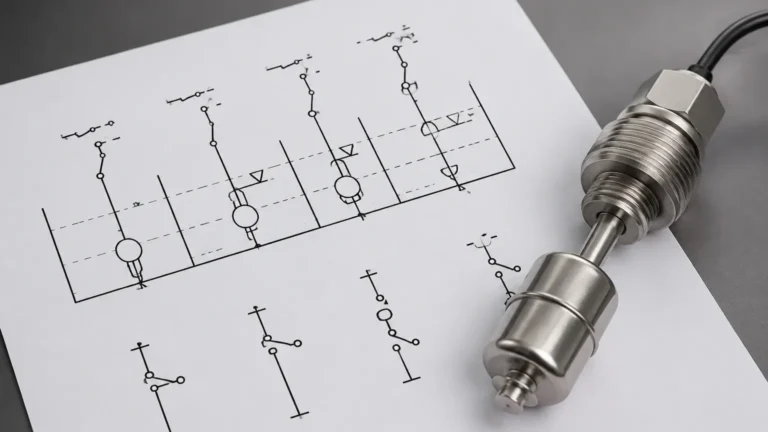
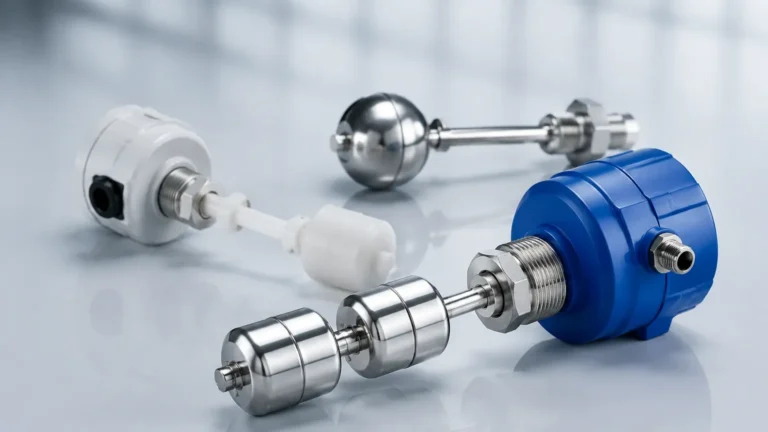
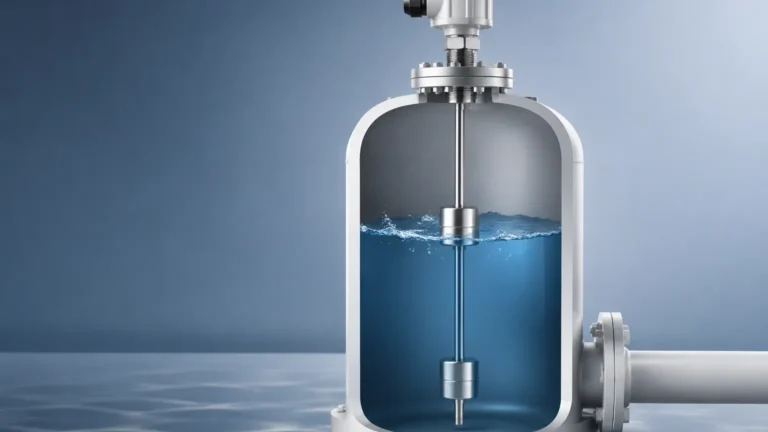
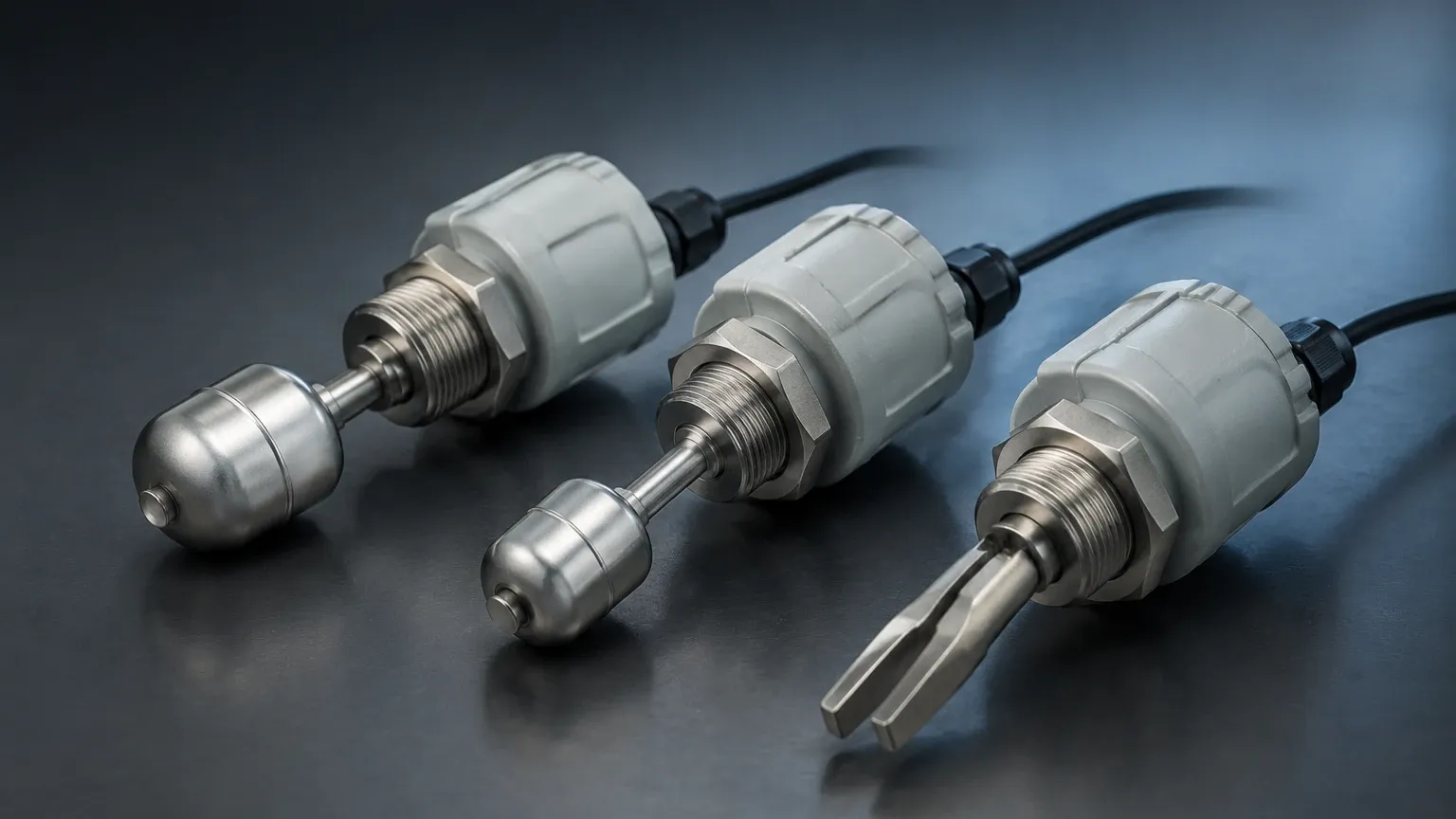
Float-based level switches operate on the principle of buoyancy. A magnetic float moves with the liquid level along a stem, eventually actuating a reed switch or a microswitch. In 24V DC systems, these are often preferred for their simplicity and low power consumption. However, they are generally limited to clean, non-coating liquids.
Vibrating Tuning Fork (Vibronic)
This technology utilizes a tuning fork that is piezoelectrically energized to vibrate at its natural resonance frequency in the air. When the fork is submerged in a liquid or solid, the frequency shifts. The electronic circuit detects this shift and converts it into a switching signal. This method is highly reliable for 24V applications because it is largely unaffected by turbulence, foam, or bubbles.
Capacitive Sensing
Capacitive level switches treat the sensor probe and the tank wall as two plates of a capacitor. As the media rises and displaces air, the dielectric constant changes, altering the total capacitance. This technology is versatile but requires calibration to the specific dielectric constant of the media. Modern 24V versions often feature active shield technology to ignore material build-up on the probe.
Ultrasonic Gap Switches
These sensors consist of two piezoelectric crystals separated by a small gap. One crystal transmits an ultrasonic signal, and the other receives it. When the gap is filled with liquid, the signal strength increases, triggering the switch. These are ideal for 24V DC circuits in chemical processing where non-contact or minimal-contact sensing is required within the gap.
The Role of 24V DC in Modern Automation
The shift toward 24V DC as the primary power source for Level Switches is driven by several technical advantages in the B2B sector:
1. Safety and Compliance: 24V DC falls under the Safety Extra-Low Voltage (SELV) category, significantly reducing the risk of electrical shock for maintenance personnel compared to 110V or 230V AC systems.
2. PLC Compatibility: Most modern PLCs and Distributed Control Systems (DCS) utilize 24V DC logic. Using a level switch 24v eliminates the need for interposing relays or voltage converters, simplifying the control cabinet design.
3. Standardization: Standardizing on 24V allows for uniform wiring, power supplies, and backup battery systems across the entire facility.
Technical Selection Criteria
When specifying a level switch 24v, engineers must look beyond the voltage. The following table provides a comparison of common technologies used in 24V configurations.
Selection Table: Technology Comparison
| Technology | Suitable Media | Max Pressure (Typical) | Max Temperature | Typical Output Type |
| :— | :— | :— | :— | :— |
| Float | Clean Liquids | 40 bar | 150°C | Reed/SPDT |
| Tuning Fork | Liquids/Powders | 64 bar | 150°C | PNP/NPN/Relay |
| Capacitance | Liquids/Solids | 100 bar | 200°C | PNP/NPN |
| Optical | Clear Liquids | 50 bar | 125°C | Open Collector |
| Hydrostatic | Water/Oil | 20 bar | 80°C | 4-20mA (Switching) |
Electrical Output Considerations
For 24V DC switches, the output type is as critical as the power supply.
* PNP (Sourcing): The switch connects the output to the positive rail (+24V) when activated. This is the standard in European machinery and most modern PLCs.
* NPN (Sinking): The switch connects the output to the negative rail (0V/GND). This is more common in older systems or specific Asian-market electronics.
* Relay Contact: Provides a dry contact (SPDT). While versatile, relays have a shorter mechanical lifespan than solid-state PNP/NPN outputs.
Installation and Wiring Guidelines
Proper installation ensures the longevity of the instrument and the accuracy of the signal. For 24V DC level switches, specific attention must be paid to voltage drop and signal interference.
Mechanical Mounting
* Avoid Dead Zones: Ensure the sensing element is not placed in a "dead zone" where liquid may trap (e.g., inside a narrow nozzle) or where the media cannot reach the sensor due to air pockets.
* Orientation: Vibrating forks should be oriented so that the tines are vertical (if side-mounted) to allow media to drain off easily, preventing false triggers from coating.
* Turbulence: If the switch is installed near an inlet or an agitator, use a stilling well or a baffle to protect the sensor from mechanical stress and erratic switching.
Electrical Wiring for 24V Systems
* Cable Shielding: Even though 24V DC is low voltage, it can be susceptible to Electromagnetic Interference (EMI) from high-power motor drives. Use shielded twisted-pair cables, grounding the shield at the control cabinet end only.
* Voltage Drop: In large-scale facilities, the distance between the power supply and the sensor can be significant. For a 24V system, ensure the wire gauge is sufficient to maintain at least 18V-20V at the sensor terminals under load.
* Polarity Protection: Ensure the level switch 24v model selected includes integrated reverse polarity protection to prevent damage during commissioning.
Application-Specific Considerations
Water and Wastewater
In water treatment, 24V hydrostatic or float switches are common. However, for sludge or aerated water, tuning fork switches are preferred because they ignore the density changes caused by air bubbles. Welk provides specialized coatings for these sensors to resist corrosion in acidic or alkaline environments.
Chemical and Petrochemical
In these hazardous environments, 24V switches are often used in conjunction with Intrinsically Safe (IS) barriers. The low power requirement of a 24V DC switch makes it easier to meet ATEX or IECEx requirements for Zone 0 or Zone 1 installations.
Food and Beverage
Hygiene is the priority. Capacitive or tuning fork switches with tri-clamp fittings and 316L stainless steel construction are standard. The 24V power supply is often integrated into IP69K-rated housings to withstand high-pressure washdowns.
Limitations of 24V Level Switches
While highly versatile, 24V DC systems have limitations:
* Distance: Unlike 4-20mA loops or high-voltage AC switches, simple 24V digital signals may degrade over very long distances (exceeding 300-500 meters) without repeaters.
* Switching Capacity: 24V solid-state outputs (PNP/NPN) typically handle low currents (100mA to 500mA). They cannot directly drive large pumps or heavy motors; they must trigger a contactor or a PLC input.
* Power Supply Stability: 24V DC instruments can be sensitive to voltage spikes or significant "noise" on the power line caused by large inductive loads on the same circuit.
Maintenance and Troubleshooting
1. Visual Inspection: Regularly check for material build-up on the sensing element, especially with viscous liquids or powders.
2. Loop Testing: Most 24V switches include an LED indicator. Verify that the LED state matches the PLC input state during a manual test (e.g., lifting a float or touching a tuning fork).
3. Insulation Resistance: Periodically check the insulation resistance of the cabling to ensure moisture has not entered the junction box, which can cause intermittent 24V leakage and false signals.
Frequently Asked Questions (FAQ)
Q: Can I use a 24V AC power supply for a level switch 24v?
A: No, unless the switch is specifically rated as "Universal Voltage" or "AC/DC." Most 24V level switches are designed for DC only. Applying AC to a DC-only unit will likely destroy the internal electronics.
Q: What is the difference between a 2-wire and a 3-wire 24V switch?
A: A 2-wire switch is wired in series with the load (like a traditional light switch) and has a small residual current even when "off." A 3-wire switch has dedicated power wires (+ and -) and a separate output wire, providing a cleaner signal and no residual current to the load.
Q: How do I choose between a PNP and NPN level switch?
A: This depends entirely on your controller (PLC). Check the PLC manual: if the input card is "Sinking," you need a PNP (Sourcing) switch. If the input card is "Sourcing," you need an NPN (Sinking) switch.
Q: Are 24V level switches suitable for high-temperature steam applications?
A: The voltage does not determine the temperature rating; the sensor construction does. However, the electronics in a 24V switch are often integrated into the head. For high-temperature applications, use a remote-mounted electronic housing or a sensor with a thermal dissipator (cooling neck).
By carefully matching the physical measurement principle with the electrical requirements of the 24V DC architecture, engineers can ensure reliable, long-term performance in even the most demanding industrial applications. For more detailed specifications on various technologies, you can review the full range of Level Switches offered for modern process automation.