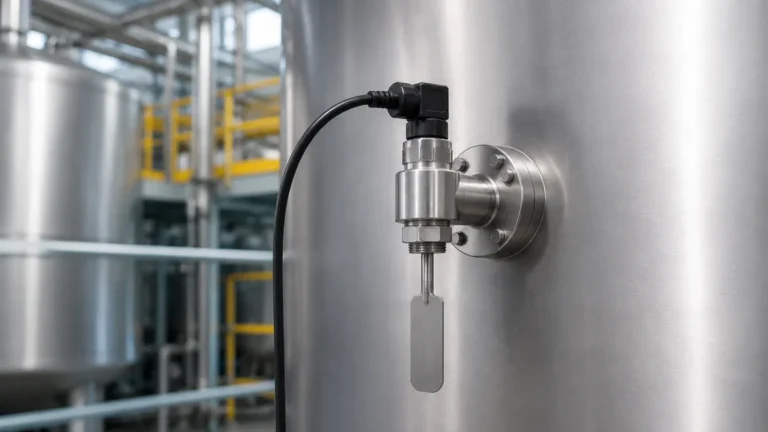
Level Switch Uqk-652 C
Level Switch Uqk-652 C
In the landscape of industrial process control, maintaining precise liquid levels is fundamental to both operational efficiency and plant safety. Among the diverse array of point-level detection technologies, magnetic float-operated devices remain a cornerstone due to their reliability and simplicity. The level switch uqk-652 c represents a specific, robust iteration of this technology, widely utilized in marine, petrochemical, and general industrial applications.
As a critical component within the broader category of Level Switches, the UQK-652 C is engineered to provide high or low-level alarms and control pump or valve operations. This article provides a comprehensive technical overview of the measurement principles, selection criteria, installation requirements, and operational limitations of this specific model, serving as a practical reference for engineers and procurement specialists.
Measurement Principle of the UQK-652 C
The level switch uqk-652 c operates on the principle of buoyancy combined with magnetic coupling. Unlike direct-acting mechanical switches that may require a physical seal around a moving shaft—which can be a point of failure—the UQK-652 C utilizes a non-contact magnetic transmission system.
The Buoyancy Effect
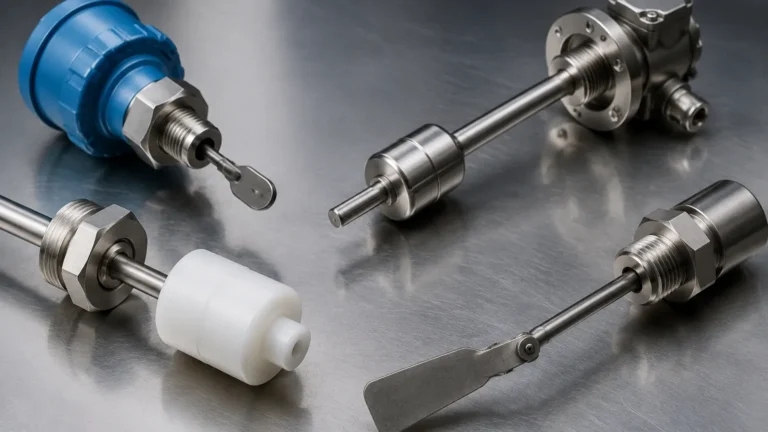
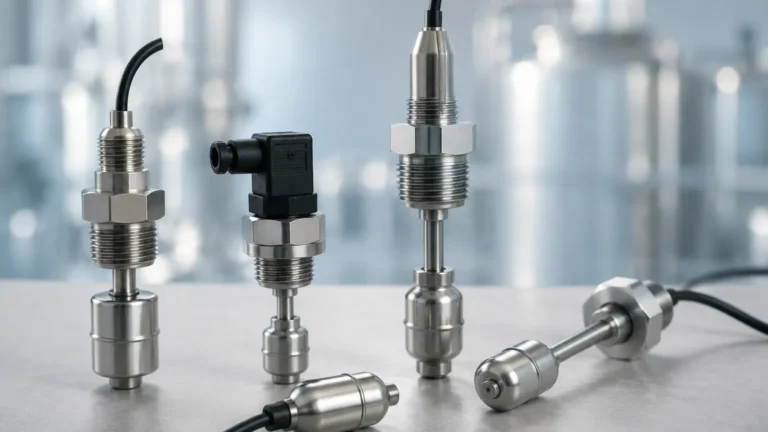
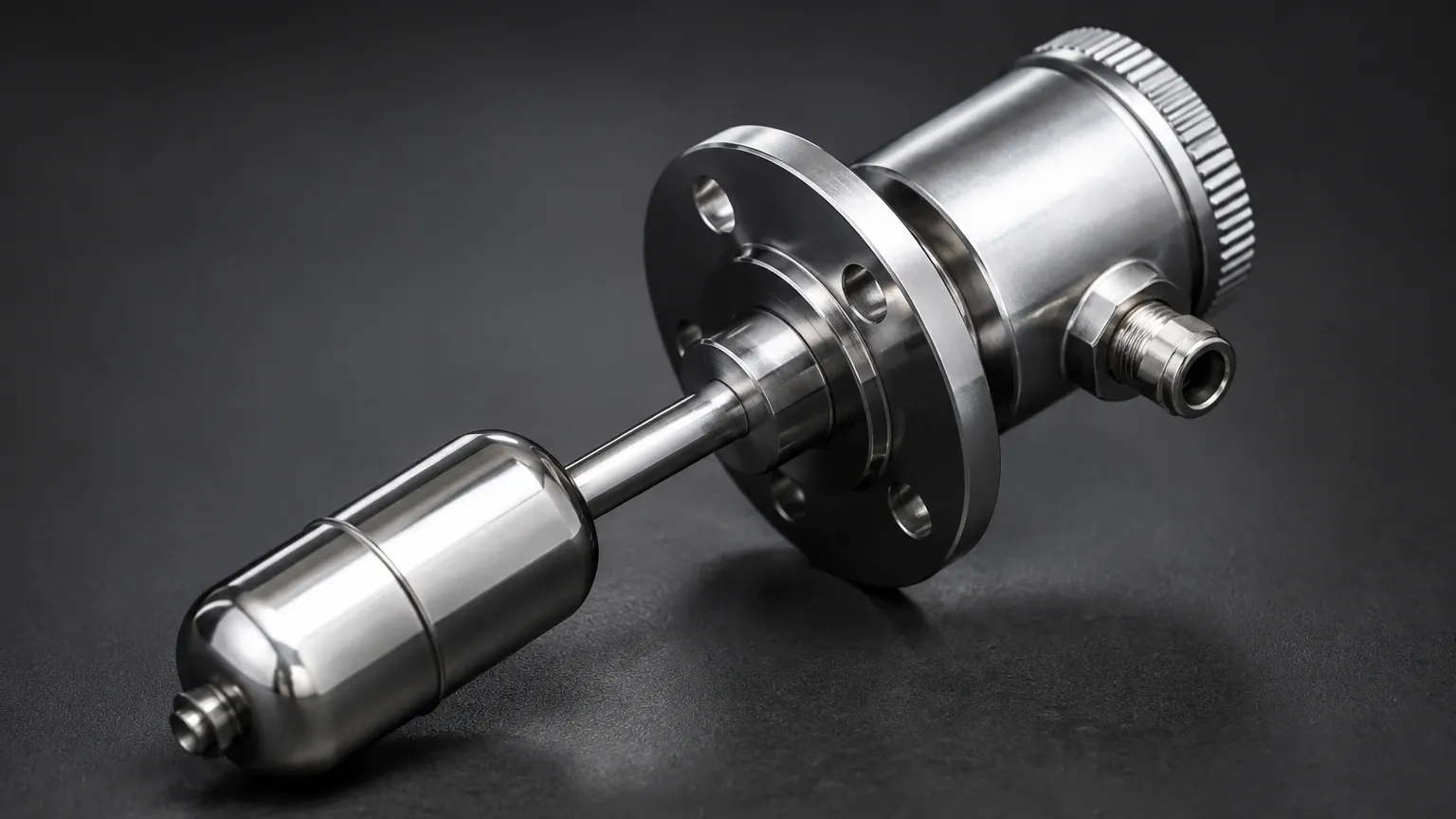
The primary sensing element is a hollow float, typically constructed from stainless steel (e.g., SS304 or SS316L). As the liquid level in the vessel rises or falls, the float moves accordingly. The float is attached to a lever arm or a vertical guide rod, depending on the specific mounting configuration.
Magnetic Coupling and Actuation
Inside the float mechanism, a high-strength permanent magnet is embedded. As the float reaches a predetermined switching point, the magnetic field passes through the non-magnetic housing wall (usually a stainless steel tube or flange assembly). This magnetic field interacts with a secondary magnetic component or a reed switch located within the isolated terminal enclosure.
In the case of the UQK-652 C, the movement of the external float magnet repels or attracts an internal magnet connected to a microswitch. This "magnetic snap-action" ensures that the electrical contacts transition quickly and decisively, minimizing arcing and extending the life of the switch. Because the process fluid is completely isolated from the electrical housing by a solid metal wall, the risk of leakage into the electronics is virtually eliminated.
Technical Specifications and Selection Criteria
Selecting the correct level switch uqk-652 c requires a detailed understanding of the process environment. The "C" designation often refers to specific mounting or material variations tailored for marine environments or high-pressure applications.
Key Evaluation Parameters
When evaluating this model for a project, engineers must confirm the following specifications:
| Parameter | Standard Specification (Typical) | Notes |
| :— | :— | :— |
| Medium Density | ≥ 0.7 g/cm³ (700 kg/m³) | The float must be lighter than the liquid. |
| Operating Pressure | 1.0 MPa to 4.0 MPa | Higher pressure ratings available for specialized versions. |
| Operating Temperature | -20°C to +150°C | High-temperature variants can reach 350°C. |
| Switching Differential | 8 mm to 25 mm | The distance between the "on" and "off" points. |
| Contact Capacity | AC 220V 1.5A / DC 24V 2A | Standard SPDT (Single Pole Double Throw) output. |
| Wetted Materials | SS304, SS316, or Titanium | Must be compatible with the process fluid. |
| Protection Class | IP65 / IP66 | Essential for outdoor or marine deck installations. |
Material Compatibility
For corrosive environments, such as seawater or chemical processing, the level switch uqk-652 c is often specified with SS316L wetted parts. If the medium is highly acidic or alkaline, specialized coatings or alternative alloys may be required to prevent pitting and stress corrosion cracking.
Installation and Mounting Best Practices
Proper installation is paramount to the longevity and accuracy of any level switch. The UQK-652 C is typically a side-mounted device, meaning it is installed through the wall of a tank or a bypass chamber.
Mechanical Installation
1. Orientation: The switch must be mounted horizontally. If the device is tilted, the lever arm may bind, or the buoyancy calculations may be offset, leading to inaccurate switching points.
2. Flange Alignment: Ensure the mounting flange matches the tank nozzle. Standard UQK models often use JIS, ANSI, or DIN flange standards. Use a gasket compatible with the process temperature and chemical composition.
3. Float Clearance: Verify that there is sufficient internal clearance for the float to move through its full arc. Internal tank structures like baffles, ladders, or heating coils must not obstruct the float.
4. Turbulence Mitigation: In tanks with heavy agitation or high-velocity inflow, the float can bounce, causing "chatter" in the electrical output. In such cases, the switch should be installed in a stilling well or a bypass pipe (external chamber).
Electrical Wiring
The UQK-652 C typically features an SPDT contact arrangement. This allows the user to wire the device as "Normally Open" (NO) or "Normally Closed" (NC) depending on the logic required (e.g., pump-up vs. pump-down control).
* Grounding: Always connect the internal and external grounding terminals to prevent static buildup and ensure safety.
* Cable Entry: Use appropriate cable glands to maintain the IP rating. For marine or hazardous areas, explosion-proof glands and armored cables may be mandatory.
Limitations and Application Constraints
While the level switch uqk-652 c is a highly reliable instrument, it is not a universal solution. Engineers should be aware of the following limitations:
* Viscous Liquids: Highly viscous fluids can impede the movement of the float or cause it to stick to the tank wall. Generally, this technology is best suited for clean, low-viscosity liquids.
* Solid Content/Scaling: If the liquid contains suspended solids or tends to crystallize, debris can accumulate on the float or the pivot point of the lever. This increases the weight of the float and can eventually lead to mechanical failure.
* Magnetic Interference: Since the device relies on magnetic coupling, it should not be installed in close proximity to strong external electromagnetic fields or on tanks made of ferromagnetic materials that have not been properly compensated for.
* Mechanical Wear: As a mechanical device with moving parts, the pivot points and the microswitch have a finite cycle life. For high-cycle applications (e.g., frequent cycling every few seconds), a non-contact technology like ultrasonic or radar might be more appropriate.
Comparative Analysis: UQK-652 C vs. Modern Alternatives
In modern industrial automation, the choice between traditional mechanical Level Switches and electronic sensors is often driven by the specific needs of the application.
UQK-652 C vs. Ultrasonic Sensors
Ultrasonic sensors offer non-contact measurement, which is ideal for corrosive or dirty liquids. However, they can be affected by foam, steam, or heavy dust. The UQK-652 C is unaffected by surface conditions like foam or vapor, making it superior for closed pressure vessels where internal atmosphere conditions are volatile.
UQK-652 C vs. Radar Level Meters
Radar (both guided wave and non-contact) provides high-precision continuous level measurement. While radar is more versatile, it is also significantly more expensive. For simple point-level detection (high/low alarms), the UQK-652 C provides a cost-effective, "set-and-forget" solution that does not require complex calibration or software configuration.
UQK-652 C vs. Capacitance Switches
Capacitance switches are excellent for solids and liquids but require calibration based on the dielectric constant of the material. The UQK-652 C is purely buoyancy-based, meaning it will function correctly regardless of changes in the liquid's dielectric properties, provided the density remains above the minimum threshold.
Maintenance and Troubleshooting
A regular maintenance schedule ensures the level switch uqk-652 c remains operational for decades.
1. Periodic Testing: Use the manual test lever (if equipped) to actuate the switch and verify that the control system receives the signal. This should be done during scheduled shutdowns.
2. Cleaning: If the medium is prone to scaling, remove the switch annually to clean the float and check the pivot arm for free movement.
3. Seal Inspection: Check the enclosure gasket for signs of aging or moisture ingress. Replace gaskets if they show signs of compression set or cracking.
Common Troubleshooting Steps
* Switch fails to actuate: Check for float obstruction or a punctured float (filled with liquid). Verify the liquid density has not dropped below the design specification.
* False Alarms: Check for excessive vibration or turbulence. Ensure the microswitch is not damaged by electrical overloads.
* Intermittent Signal: Inspect terminal connections for corrosion or looseness, especially in marine environments.
Frequently Asked Questions (FAQs)
Q: Can the level switch uqk-652 c be used for food and beverage applications?
A: Yes, provided it is ordered with food-grade stainless steel (SS316L) and polished wetted parts. However, ensure the design meets the specific sanitary standards (like 3-A or EHEDG) required for your region.
Q: What is the maximum pressure the UQK-652 C can handle?
A: Standard models are usually rated for 1.0 MPa (10 bar). Specialized high-pressure versions can be manufactured to withstand up to 4.0 MPa (40 bar) or higher, depending on the flange and float wall thickness.
Q: How do I adjust the switching point?
A: On the UQK-652 C, the switching point is generally fixed by the mounting position of the flange. Small adjustments can sometimes be made by modifying the lever arm length, but this must be done by the manufacturer to ensure the buoyancy balance is maintained.
Q: Is the UQK-652 C suitable for hazardous areas?
A: Many versions of the UQK-652 series are available with explosion-proof (Ex d) or intrinsically safe (Ex i) certifications. Always verify the nameplate markings for ATEX, IECEx, or local equivalent certifications before installing in a hazardous zone.
Conclusion
The level switch uqk-652 c remains a vital tool for industrial level control, offering a blend of mechanical simplicity and magnetic reliability. By understanding its buoyancy-based operating principle and adhering to strict installation and maintenance guidelines, engineers can ensure long-term performance in even the most demanding environments. For applications requiring robust point-level detection without the complexity of digital transmitters, this model continues to be a preferred choice across the global maritime and process industries.