Level Switch vs Level Transmitter
Level Switch vs Level Transmitter
In industrial process automation, accurately monitoring the volume of liquids or solids within a vessel is critical for safety, efficiency, and inventory management. When designing a level control system, engineers frequently encounter the choice between a level switch and a level transmitter. While both instruments measure the presence or quantity of a medium, they operate on fundamentally different principles and serve distinct roles in a control loop.
Understanding the nuances of level switch vs level transmitter selection requires an analysis of measurement physics, output requirements, and the specific demands of the application environment. This guide explores the technical characteristics, advantages, and limitations of both technologies to assist in making an informed engineering decision.
Measurement Principles: Level Switches
A level switch is a point-level detection device. Its primary function is to determine whether the material in a tank has reached a specific, predetermined height. When the medium makes contact with (or comes within range of) the sensor, the device triggers a state change—typically a relay or a digital signal—to indicate an "on" or "off" condition.
Common Technologies for Level Switches
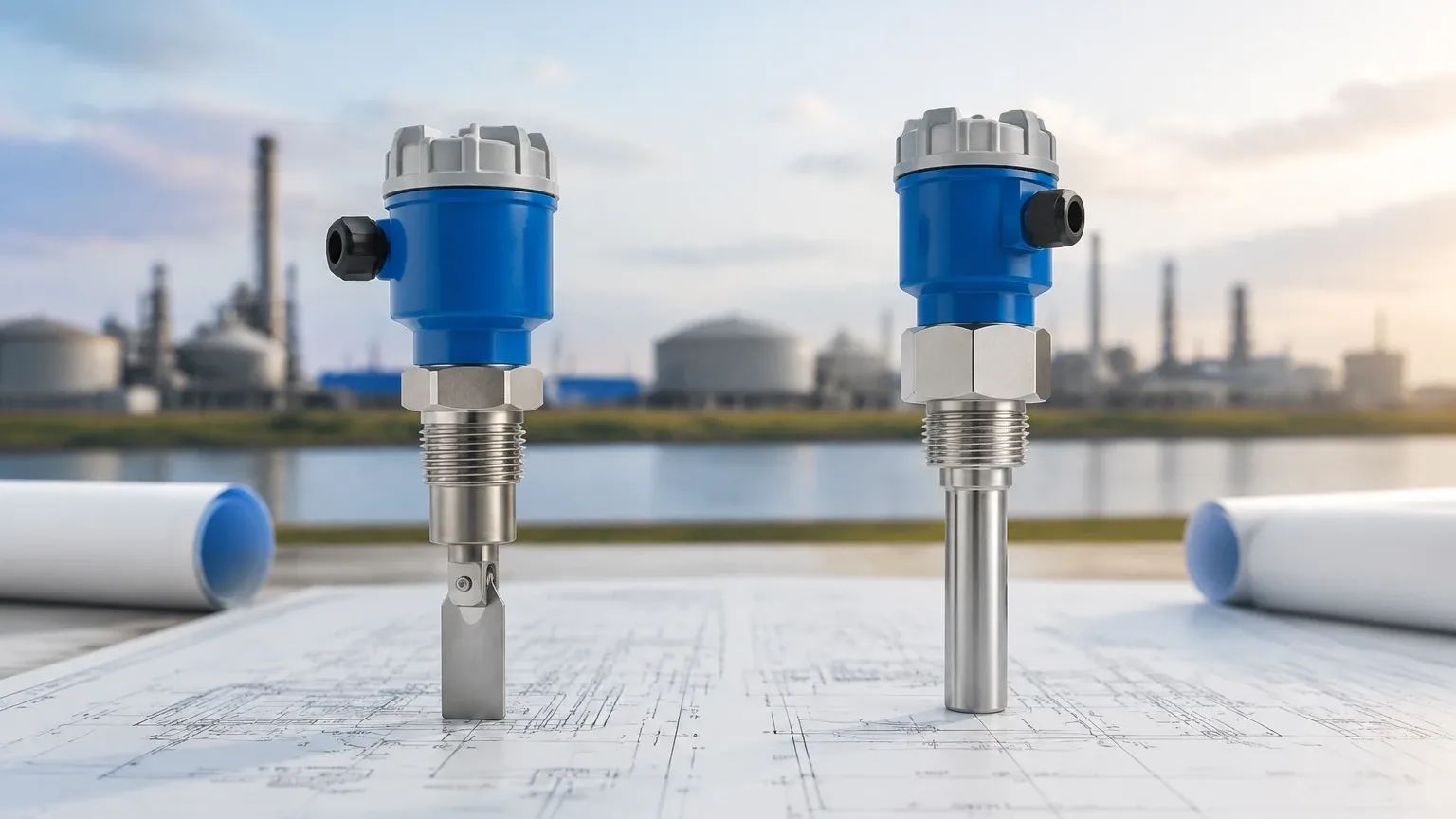
1. Vibrating Fork (Tuning Fork): These Level Switches utilize a piezoelectric crystal to vibrate a metal fork at its natural frequency. When the fork is submerged in a liquid or solid, the frequency changes. The electronics detect this shift and trigger the switch. They are highly reliable for foam detection and are largely unaffected by flow or turbulence.
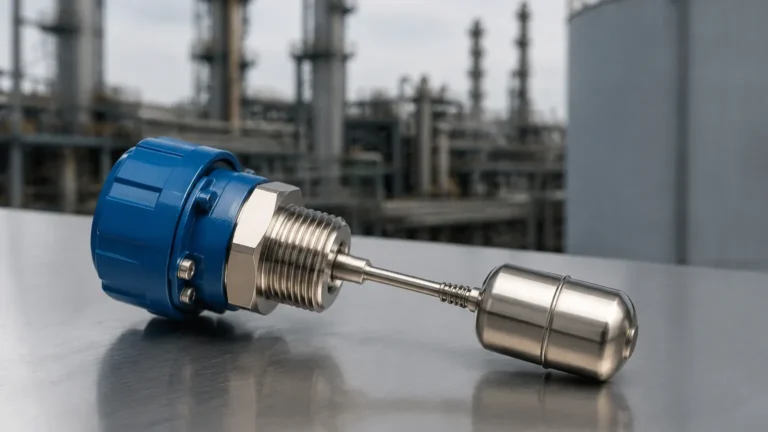
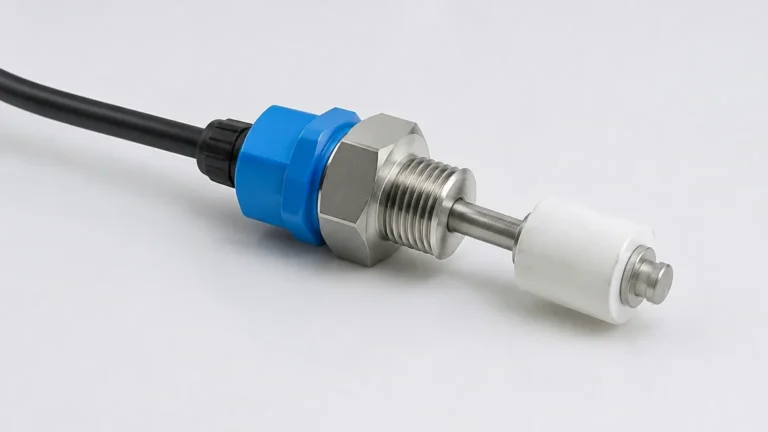
2. Float Switches: Operating on the principle of buoyancy, a float containing a magnet moves along a stem as the liquid level rises or falls. The magnet actuates a reed switch inside the stem. These are cost-effective but are limited to clean, non-coating liquids.
3. Capacitive Switches: These measure the change in capacitance between the sensor probe and the vessel wall (or a reference electrode). As the medium covers the probe, the dielectric constant changes, signaling the presence of the material. They are effective for both liquids and solids but may require calibration for different materials.
4. Conductivity Switches: Used for conductive liquids, these sensors use a low voltage applied between electrodes. When the liquid touches the electrodes, a circuit is completed.
Measurement Principles: Level Transmitters
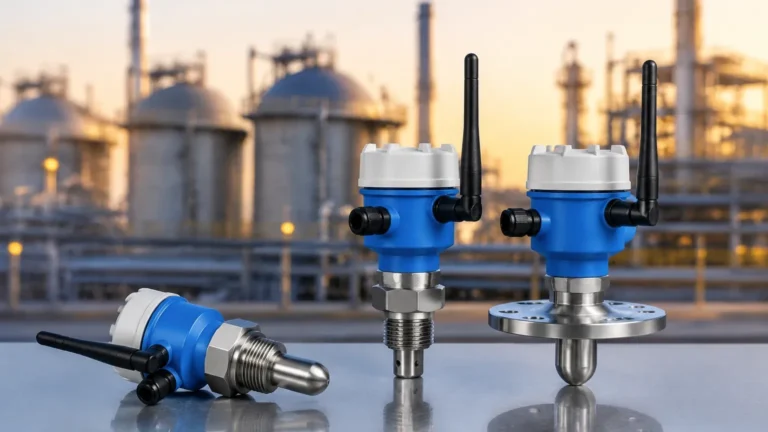
Unlike a switch, a level transmitter provides continuous measurement. It tracks the level of the medium throughout the entire height of the vessel (or a defined span) and provides a proportional output signal, such as 4-20 mA, 0-10 V, or digital protocols like HART, Modbus, or Profibus.
Common Technologies for Level Transmitters
1. Radar (Non-contact and Guided Wave): Radar transmitters emit electromagnetic pulses. Non-contact radar sends waves through the air, while Guided Wave Radar (GWR) directs pulses along a probe. The time-of-flight between emission and reflection is used to calculate the distance. Radar is highly accurate and performs well under high pressure and temperature.
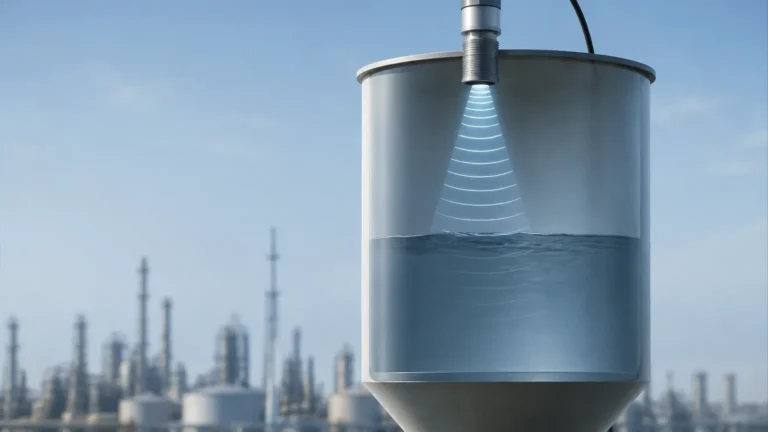
2. Ultrasonic: These devices emit high-frequency sound waves. The time taken for the echo to return from the surface of the medium determines the level. Ultrasonic transmitters are ideal for non-contact measurement in atmospheric tanks but can be affected by heavy dust, foam, or vacuum conditions.
3. Hydrostatic Pressure: This method measures the pressure exerted by a liquid column. Since pressure is proportional to the height of the liquid (P = ρgh), the transmitter converts the pressure reading into a level value. This is a common choice for deep wells and vented tanks.
4. Magnetic Level Transmitters: Often paired with a magnetic level gauge, a transmitter detects the position of a magnetic float inside a bypass chamber, providing a continuous signal to the control room.
Key Differences: Level Switch vs Level Transmitter
The fundamental distinction lies in the "Point vs. Continuous" nature of the data provided.
Data Granularity
A level switch provides a binary output (High/Low). It tells the system: "The tank is full" or "The tank is empty." It cannot provide information on the status of the tank when the level is at 50% if the switch is mounted at the 90% mark.
A level transmitter provides a constant stream of data. It allows the operator to see exactly how much material is in the tank at any given moment (e.g., 15.4 meters or 62% capacity).
Control Logic and Safety
Level switches are often used as redundant safety devices. For example, even if a tank has a continuous radar transmitter, a high-level switch is frequently installed as an independent "High-High" alarm to prevent overfills in the event of a transmitter failure. This is a core tenet of Functional Safety (SIL) in industrial plants.
Cost and Complexity
Generally, level switches are less expensive and easier to set up than transmitters. Transmitters require more sophisticated electronics and often involve more complex commissioning, such as mapping out tank obstructions or calibrating for specific gravity and dielectric constants.
Practical Selection Table
| Feature | Level Switch | Level Transmitter |
| :— | :— | :— |
| Measurement Type | Point (Discrete) | Continuous (Analog/Digital) |
| Typical Output | Relay, PNP/NPN, Transistor | 4-20 mA, 0-10V, HART, Modbus |
| Primary Function | Alarms, Pump Start/Stop, Overfill Protection | Inventory Management, Process Control, Trend Analysis |
| Cost | Lower | Higher |
| Complexity | Simple (Plug and Play) | Moderate to High (Requires Configuration) |
| Redundancy Role | Primary for Safety Interlocks | Primary for Process Monitoring |
| Maintenance | Low (depends on technology) | Periodic Calibration may be required |
When to Choose a Level Switch
Choose a level switch when the only information required is whether a specific threshold has been crossed. Common applications include:
* Overfill Prevention: Shutting off a fill pump when a tank reaches 95% capacity.
* Dry Run Protection: Preventing a pump from operating when a pipe or tank is empty to avoid mechanical damage.
* Leak Detection: Detecting the presence of liquid in a secondary containment bund.
* Simple Batching: Filling a vessel until it reaches a fixed point and then stopping the process.
When to Choose a Level Transmitter
A level transmitter is necessary when the process requires active monitoring or precise control of the volume. Common applications include:
* Inventory Management: Monitoring raw material levels in silos or fuel tanks to schedule deliveries.
* Proportional Control: Adjusting an inflow valve based on the exact level to maintain a steady state in a buffer tank.
* Complex Process Vessels: Where the rate of change in level is used to calculate flow rates or reaction times.
* Remote Monitoring: Providing data to a centralized SCADA or PLC system for site-wide visualization.
Installation Considerations
Successful deployment of either device depends heavily on proper installation. Engineers should consider the following:
1. Mounting Location: Avoid installing sensors directly in the path of the filling stream. Turbulence and the falling material can cause false triggers in switches or signal noise in transmitters.
2. Nozzles and Obstructions: For non-contact transmitters (Radar/Ultrasonic), ensure the "beam angle" is clear of internal structures like ladders, agitators, or heating coils. If obstructions are unavoidable, use transmitters with "false echo suppression" capabilities.
3. Dead Zones (Blocking Distance): Transmitters have a minimum distance near the sensor (the dead zone) where they cannot measure accurately. Ensure the sensor is mounted high enough that the maximum liquid level does not enter this zone.
4. Vessel Material: For capacitive switches or radar transmitters, the material of the vessel (metal vs. plastic) affects the grounding and signal reflection. Metal tanks usually act as a ground plane, while plastic tanks may require a reference electrode or specific mounting adjustments.
5. Environmental Factors: In outdoor installations, consider the impact of ambient temperature and solar heating. Use sunshades where necessary to protect the electronics. For hydrostatic sensors, ensure the vent tube in the cable is protected from moisture to allow for atmospheric pressure compensation.
Limitations and Risks
Each technology has inherent limitations that can lead to measurement errors if ignored:
* Coating and Buildup: In applications involving viscous liquids or slurries, material can build up on the sensor. Vibrating forks and certain capacitive switches are designed to ignore coating, but float switches will eventually stick and fail.
* Vapor and Steam: High concentrations of steam or heavy vapors can attenuate ultrasonic signals, leading to a loss of echo. In these environments, radar or hydrostatic transmitters are preferred.
* Surface Turbulence: Rapidly agitating liquids can cause erratic readings. For switches, a time-delay relay can prevent "chattering." For transmitters, software damping or the use of a stilling well (a pipe that stabilizes the surface) may be required.
* Specific Gravity Changes: Hydrostatic transmitters rely on a constant liquid density. If the temperature changes significantly or the medium is swapped for a different liquid, the level reading will become inaccurate unless the system is recalibrated.
Frequently Asked Questions (FAQs)
Q: Can a level transmitter be used as a level switch?
A: Yes. Most modern transmitters allow users to program "switch points" or alarms within the PLC or even via internal relays in the transmitter itself. However, for critical safety applications (like high-high overfill), a dedicated mechanical or independent electronic level switch is often required by safety regulations to ensure redundancy.
Q: Is a level switch more reliable than a transmitter?
A: Not necessarily. Reliability depends on the technology and the environment. However, because switches are simpler devices with fewer electronic components, they often have a higher Mean Time Between Failures (MTBF) in basic applications.
Q: What is the best technology for solids?
A: For point-level detection of solids, vibrating rods or rotating paddles are common. For continuous measurement, 80 GHz high-frequency radar is currently the industry standard due to its ability to penetrate dust and reflect off uneven surfaces.
Q: How do I choose between a 2-wire and 4-wire transmitter?
A: 2-wire transmitters are loop-powered (the same two wires carry the power and the 4-20 mA signal), which simplifies wiring. 4-wire transmitters have separate power and signal wires, which is often necessary for power-intensive devices like certain types of heated radar or high-power ultrasonic units.
Conclusion
The choice between a level switch and a level transmitter is determined by the functional requirements of the process. If the goal is simple alarm notification or basic pump control, Level Switches offer a cost-effective and robust solution. If the application demands detailed inventory data, precise process control, or trend analysis, a level transmitter is the appropriate investment. In many industrial settings, the most effective strategy is a hybrid approach: using transmitters for primary control and switches for independent safety backups.