Level Switch No Nc
Level Switch No Nc
In industrial automation and process control, the ability to detect the presence or absence of a liquid or solid at a specific point is fundamental to safety and efficiency. This function is performed by point level sensors, commonly known as level switches. One of the most critical decisions an engineer or technician must make when specifying these devices is the contact configuration: Normally Open (NO) or Normally Closed (NC). Understanding the nuances of a level switch no nc setup is essential for designing fail-safe systems that prevent tank overflows, protect pumps from dry running, and ensure consistent batch processing.
Fundamental Principles of Level Switches
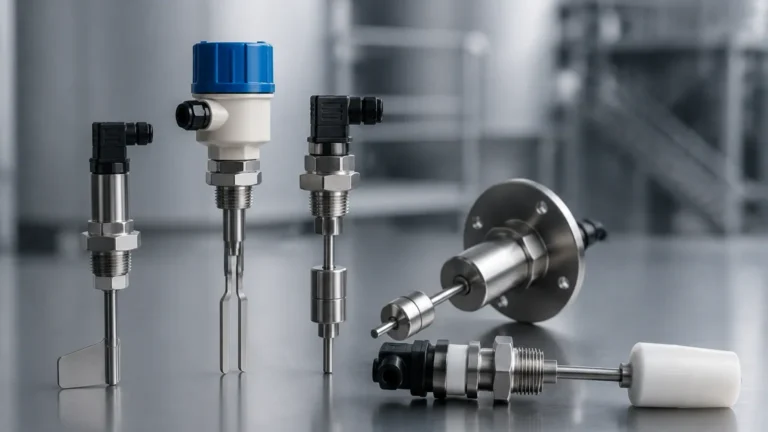
Before diving into the electrical configurations, it is necessary to understand how different Level Switches interact with the process media. Each technology employs a distinct physical principle to actuate the internal switch.
Float Level Switches
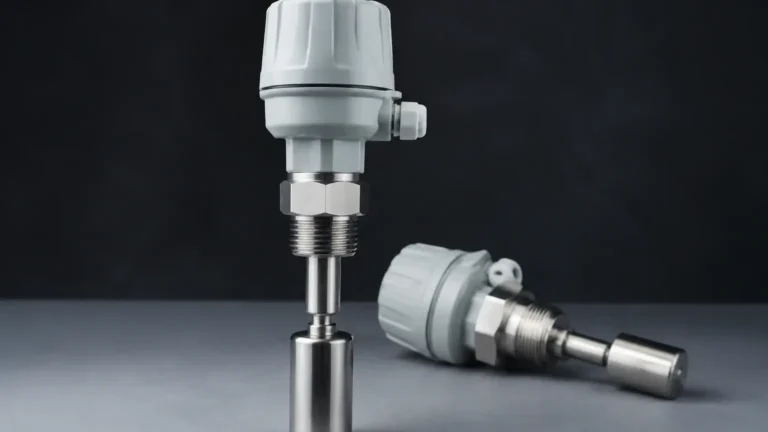
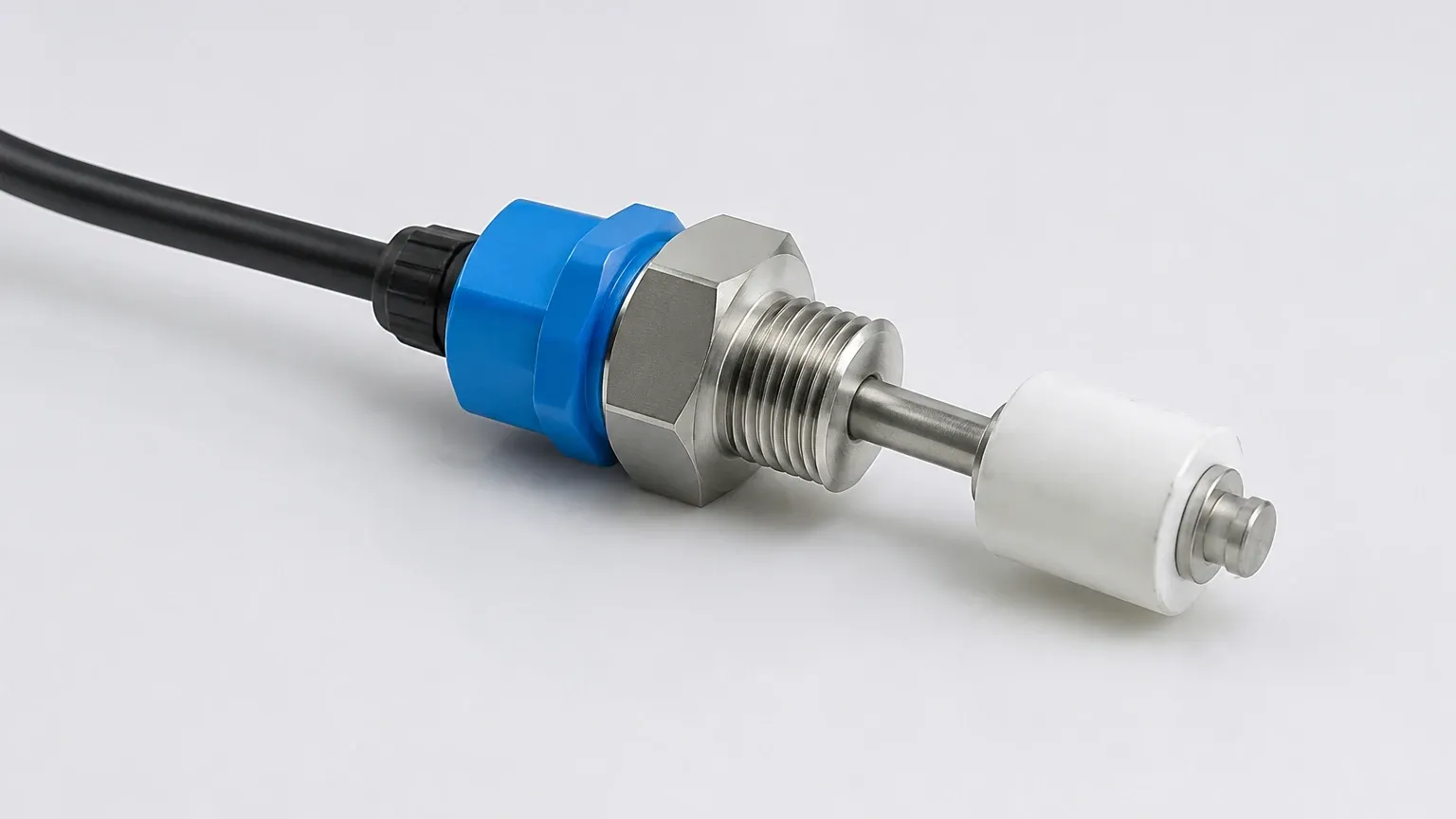
Float switches are among the most common and cost-effective technologies. They rely on buoyancy. A float, containing a permanent magnet, moves with the liquid level along a stem. Inside the stem, a reed switch is hermetically sealed. When the float’s magnet aligns with the reed switch, the contact state changes. These are often used in water treatment and simple oil storage tanks.
Tuning Fork (Vibrating) Level Switches
These switches utilize a piezoelectric crystal to vibrate a metal fork at its natural resonant frequency in the air. When the fork is submerged in a liquid or covered by solids, the frequency changes or the vibration is dampened. An electronic circuit detects this shift and changes the output state. They are highly reliable for viscous liquids and powders because they are less affected by turbulence or bubbles.
Capacitive Level Switches
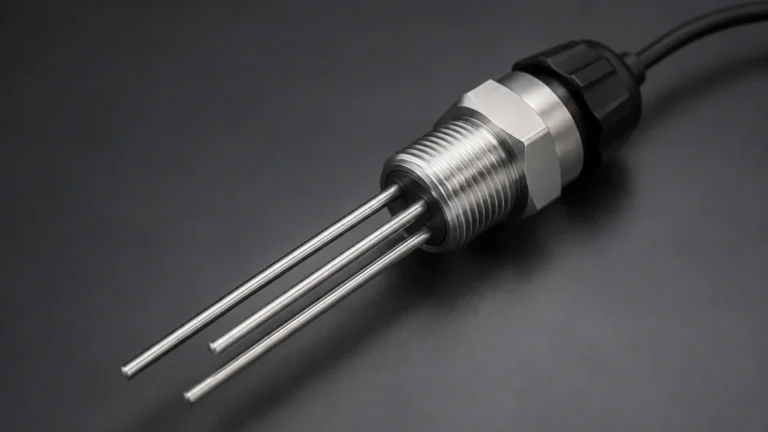
Capacitive switches work by measuring the change in electrical capacitance between a probe and the tank wall (or a reference probe). As the medium displaces air around the probe, the dielectric constant changes, altering the capacitance. This technology is versatile but requires calibration to the specific dielectric constant of the material being measured.
Ultrasonic Gap Switches
These consist of two sensors separated by a small gap. An ultrasonic signal is transmitted across the gap. When the gap is filled with liquid, the signal propagates efficiently; when filled with air or gas, the signal is attenuated. This change triggers the switch output.
Understanding Level Switch NO NC Configurations
The terms "Normally Open" and "Normally Closed" refer to the state of the electrical circuit when the switch is in its "rest" or "shelf" position—typically defined as the state when the switch is not being actuated by the process medium.
Normally Open (NO)
In a Normally Open configuration, the electrical circuit is broken (disconnected) when the switch is in its normal state. No current flows through the circuit. When the level reaches the actuation point (e.g., the float rises or the tuning fork is submerged), the switch closes, completing the circuit and allowing current to flow to a controller, alarm, or pump.
Normally Closed (NC)
In a Normally Closed configuration, the electrical circuit is complete (connected) when the switch is in its normal state. Current flows through the circuit continuously. When the level reaches the actuation point, the switch opens, breaking the circuit and stopping the flow of current.
The Importance of Fail-Safe Logic
Choosing between a level switch no nc configuration is rarely about the electrical preference of the PLC; it is about safety. In industrial environments, a "fail-safe" design ensures that if a component fails—such as a power loss or a broken wire—the system defaults to the safest possible state.
* High-Level Alarm (Overfill Protection): For high-level detection, a Normally Closed (NC) configuration is typically used. In this setup, the circuit is closed when the tank is not full. If a wire breaks or power is lost, the circuit opens, which the control system interprets as a "High Level" condition, immediately stopping the fill pump. If a Normally Open (NO) switch were used, a broken wire would prevent the alarm from ever triggering, potentially leading to a catastrophic overflow.
* Low-Level Alarm (Dry Run Protection): For protecting a pump from running dry, a Normally Closed (NC) configuration is also common. The circuit remains closed as long as there is enough liquid. If the level drops too low or the sensor fails, the circuit opens, and the pump is deactivated.
Wiring and Switch Logic: SPDT and DPDT
Many modern level switches are equipped with Single Pole Double Throw (SPDT) or Double Pole Double Throw (DPDT) contacts. These provide the user with both an NO and an NC terminal in a single device.
1. Common (COM): The terminal where the incoming power or signal is connected.
2. Normally Open (NO) Terminal: Connected to COM only when the switch is actuated.
3. Normally Closed (NC) Terminal: Connected to COM when the switch is at rest; disconnected when actuated.
This flexibility allows engineers to decide the logic at the time of installation by simply choosing which terminal to wire into the control loop.
Practical Selection Table for Level Switches
When selecting a level switch and deciding on its NO/NC configuration, consider the following technical parameters:
| Technology | Suitable Media | Max Pressure (Typical) | Max Temp (Typical) | NO/NC Versatility |
| :— | :— | :— | :— | :— |
| Float Switch | Clean liquids, water, oils | 10–40 bar (145–580 psi) | Up to 200°C | High (Often reversible floats) |
| Tuning Fork | Liquids, slurries, powders | 40–64 bar (580–928 psi) | -50°C to 150°C | High (Via wiring/electronics) |
| Capacitive | Bulk solids, non-conductive liquids | 25 bar (362 psi) | Up to 250°C | Adjustable via internal logic |
| Conductivity | Conductive liquids (water-based) | 10 bar (145 psi) | Up to 100°C | Dependent on controller logic |
| Ultrasonic Gap | Clean or aerated liquids | 20 bar (290 psi) | Up to 120°C | High (Electronic output) |
Installation Considerations
The physical installation of a level switch no nc device significantly impacts its reliability and the accuracy of the NO/NC state changes.
Mounting Orientation
* Top Mounting: Common for float and ultrasonic switches. Ensure the stem length is accurate for the desired trip point. For float switches, ensure there is enough clearance for the float to move freely without hitting the tank wall or internal baffles.
* Side Mounting: Ideal for tuning forks and capacitive probes. The switch should be installed at the exact height where the alarm or control action is required. For solids, a protective shield may be needed above the probe to prevent damage from falling material.
Environmental Factors
* Turbulence: In tanks with agitators or high-velocity inflows, turbulence can cause "chatter" (rapid opening and closing of the switch). Using a stilling well—a vertical pipe that surrounds the sensor—can stabilize the liquid surface around the switch.
* Coating and Build-up: For sticky or viscous media, tuning forks or capacitive switches with "active shield" technology are preferred. Standard float switches can become stuck if material builds up on the stem, effectively locking the switch in either the NO or NC state regardless of the actual level.
Electrical Safety
In hazardous areas (Ex zones), level switches must be used in conjunction with intrinsically safe barriers. The NO/NC contacts carry very low energy to prevent ignition. Always verify that the switch’s electrical ratings (Voltage and Current) match the load of the PLC input or relay it is driving.
Limitations of Point Level Switches
While level switches are indispensable, they have inherent limitations compared to continuous level measurement technologies (like radar or ultrasonic transmitters):
1. Single Point Data: A switch only tells you if the level is above or below a specific point. It cannot provide the percentage of volume remaining in a tank.
2. Mechanical Wear: Technologies with moving parts, such as float switches, are subject to mechanical fatigue over millions of cycles. In high-cycle applications, solid-state switches like tuning forks are more durable.
3. Calibration Requirements: Some electronic switches (capacitive) require recalibration if the process medium changes, as the dielectric properties may differ significantly.
Frequently Asked Questions (FAQs)
Q: Can I change a Normally Open float switch to Normally Closed?
A: In many designs, yes. Most small plastic float switches allow you to remove a retaining clip, flip the float 180 degrees, and replace the clip. This reverses the magnet's orientation relative to the reed switch, effectively changing NO to NC.
Q: What is the difference between a switch and a transmitter?
A: A level switch provides a discrete (on/off) signal at a specific point. A level transmitter provides a continuous signal (e.g., 4-20mA or Modbus) representing the entire level range of the tank.
Q: Why does my switch "chatter" when the tank is nearly full?
A: This is usually caused by surface ripples or waves. You can solve this by using a controller with a time-delay function (ignoring state changes shorter than 2-3 seconds) or by installing a stilling well.
Q: How do I test the NO/NC state of a switch without liquid?
A: Use a multimeter set to the continuity or resistance (Ohms) setting. For an NO switch, the meter should show an open circuit (OL) until you manually actuate the switch (e.g., lift the float), at which point it should show near-zero resistance.
Conclusion
Selecting the correct level switch no nc configuration is a cornerstone of industrial process safety. By understanding the underlying measurement principles—whether buoyancy, vibration, or capacitance—and applying fail-safe logic to the electrical wiring, engineers can build robust systems that protect equipment and personnel. Always consult the specific technical documentation for your Welk instrument to confirm terminal assignments and maximum operating parameters before installation. Proper selection and periodic maintenance ensure that these critical components perform reliably in the most demanding industrial environments.