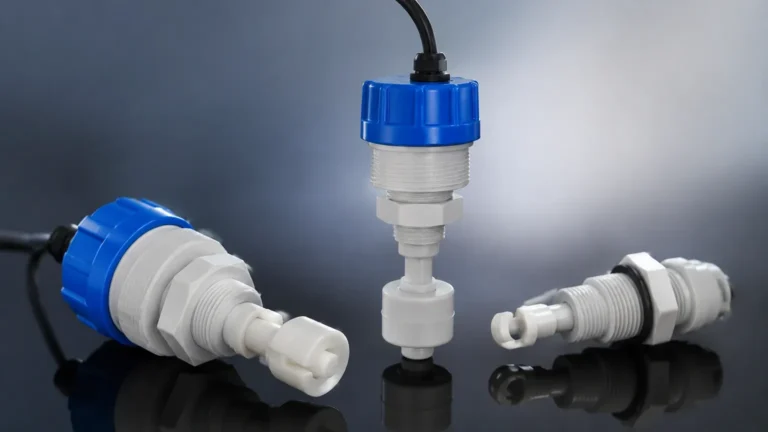
Level Sensor Q7
Level Sensor Q7
In the landscape of industrial automation and process control, point-level detection remains a critical requirement for safety, efficiency, and inventory management. The level sensor q7 represents a specific class of compact, high-performance sensors designed for localized detection of liquids and solids. Often utilized in space-constrained environments where traditional large-scale instrumentation is impractical, these sensors provide reliable switching signals to prevent tank overfills or dry-run conditions in pumps.
Understanding the technical nuances of the level sensor q7 requires an exploration of capacitive sensing technology, material compatibility, and the broader integration of Level Switches within a facility’s control architecture. This guide provides a comprehensive technical overview for engineers and procurement specialists looking to implement point-level solutions in demanding industrial applications.
Measurement Principles of Compact Level Sensors
Before selecting a specific sensor model, it is essential to understand the underlying physics that allow a level sensor q7 to distinguish between the presence and absence of a medium. Most sensors in this category operate on the principle of capacitive sensing.
Capacitive Sensing Theory
A capacitive level sensor functions like an open capacitor. The sensor's active face acts as one plate, while the surrounding environment (or the tank wall) acts as the second plate. When the medium (liquid or solid) enters the sensing field, it changes the dielectric constant within that space.
Every material has a specific dielectric constant ($ε$). Air has a dielectric constant of approximately 1, while water is significantly higher at around 80. When a medium with a higher dielectric constant than air approaches the sensor face, the capacitance increases. The internal electronics of the sensor detect this shift and, once it crosses a pre-defined threshold, trigger a solid-state switch (PNP or NPN output).
Sensitivity and Media Compensation
One of the primary challenges in point-level detection is the buildup of residue or film on the sensor face. High-quality level sensor q7 units often feature compensation circuits. These circuits are designed to ignore thin layers of moisture or dust, only triggering when a significant mass of the target material is present. This is particularly vital in chemical processing or food and beverage applications where viscous liquids may leave a coating on the probe.
Technical Specifications and Evaluation Criteria
When evaluating a level sensor q7 for a specific project, technical parameters must be matched against the process environment. These sensors are characterized by their rectangular or compact cylindrical housings, often measuring less than 20mm in thickness, making them ideal for mounting on bypass pipes or small dosing tanks.
Key Performance Indicators (KPIs)
1. Sensing Distance: For non-contact detection through a non-metallic container wall (like plastic or glass), the sensing distance typically ranges from 1mm to 15mm.
2. Hysteresis: This refers to the difference between the switch-on point and the switch-off point. A well-calibrated hysteresis prevents "chattering" of the output signal when the liquid surface is turbulent.
3. Response Time: In high-speed filling lines, a response time of less than 10ms is often required to ensure accurate fill levels.
4. Operating Temperature: Most industrial-grade compact sensors are rated for -25°C to +70°C (-13°F to 158°F), though specialized high-temperature versions exist.
Material Construction
The housing material must be compatible with the ambient environment. Common materials include:
* PBT (Polybutylene Terephthalate): Excellent chemical resistance and mechanical strength.
* Stainless Steel (316L): Required for hygienic applications or highly corrosive atmospheres.
* PEEK: Used in high-temperature or aggressive chemical environments.
Comparison with Other Level Switches
While the level sensor q7 is an excellent choice for compact point-level detection, it is important to compare it with other technologies available in the Welk portfolio to ensure the best fit for the application.
| Technology | Best For | Advantages | Limitations |
| :— | :— | :— | :— |
| Capacitive (Q7) | Small tanks, non-metallic walls | Compact, no moving parts, low cost | Sensitive to high-dielectric changes |
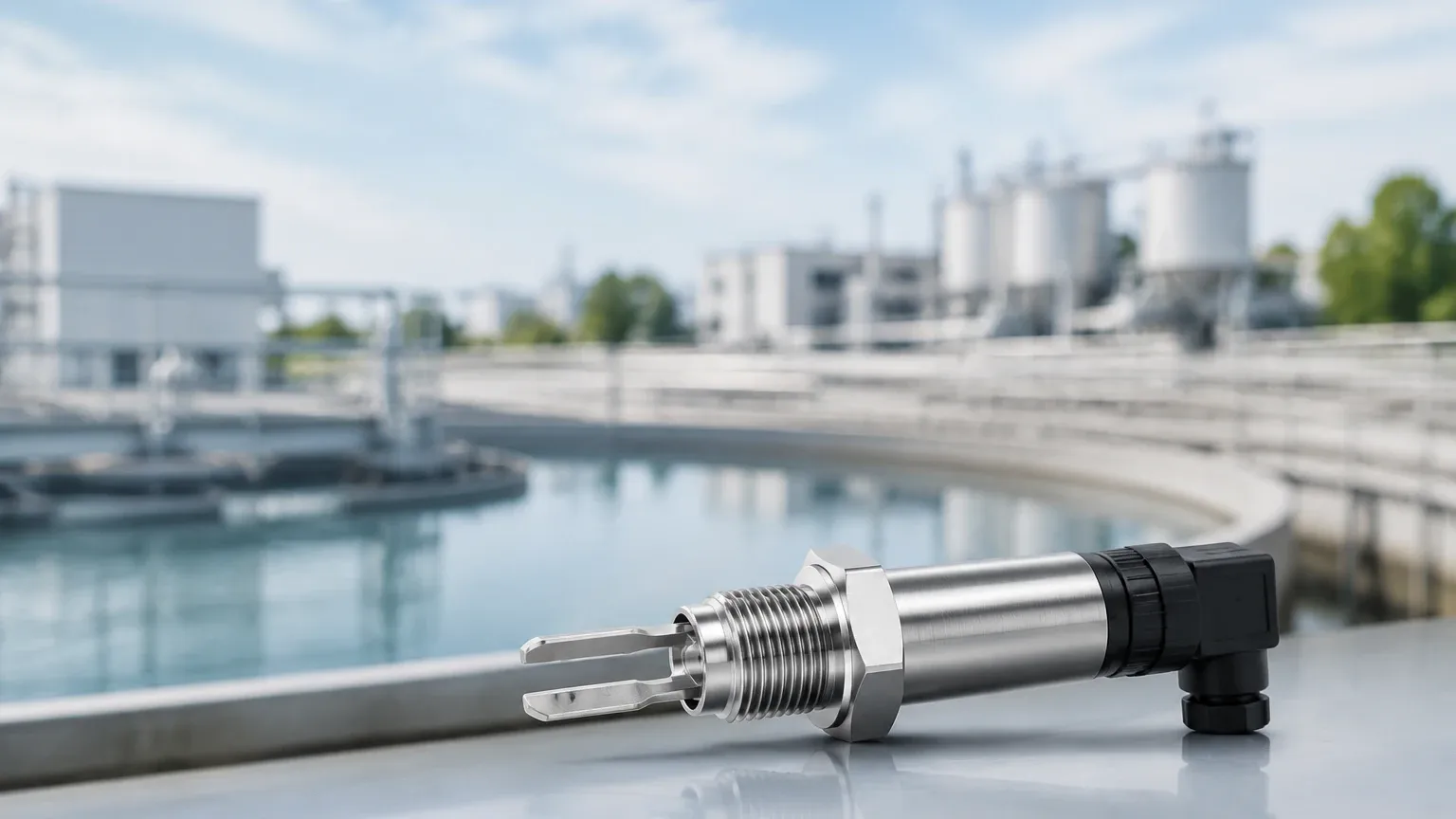
| Vibrating Fork | General liquids, powders | Highly reliable, unaffected by foam | Larger footprint than Q7 sensors |
| Float Switches | Water treatment, oils | Simple, no power required for switch | Moving parts can jam; prone to scaling |
| Ultrasonic Switch | Non-contact detection | No contact with media | Affected by heavy steam or dust |
| Optical Sensors | Clear liquids | Extremely small, high precision | Fails if the sensor face is coated |
For a broader range of industrial solutions, engineers often integrate these compact sensors alongside heavy-duty Level Switches to provide redundant layers of protection in critical systems.
Installation and Mounting Considerations
Proper installation of a level sensor q7 is as important as the sensor's internal technology. Incorrect mounting can lead to false triggers or failure to detect the medium.
Mounting Through Tank Walls
If the tank wall is non-metallic (e.g., Polypropylene, PVC, or Glass) and has a thickness of less than 10mm (0.4 inches), the level sensor q7 can often detect the liquid through the wall. This is a significant advantage as it eliminates the need for drilling holes and prevents potential leak points.
* Flush Mounting: Ensure the sensor face is in direct contact with the outer wall of the tank.
* Air Gaps: Even a small air gap between the sensor and the wall can significantly reduce the effective sensing range.
Direct Contact Mounting
For metallic tanks or thicker walls, the sensor must be mounted through a threaded boss or a flange. In these cases, the chemical compatibility of the sensor face with the process media is the primary concern.
Electrical Connection and Wiring
Most level sensor q7 models utilize a standard M8 or M12 connector or a fixed PVC/PUR cable.
* 3-Wire DC: Includes positive, negative, and a switched output (PNP or NPN).
* 4-Wire DC: Often includes both Normally Open (NO) and Normally Closed (NC) outputs, allowing for self-monitoring of the sensor's power state.
Application Engineering: Where to Use the Level Sensor Q7
1. Semiconductor and Electronics Manufacturing
In the production of silicon wafers, various aggressive chemicals and ultra-pure water are used in small quantities. The compact form factor of the Q7 sensor allows it to be placed in the tight confines of wet benches and chemical delivery modules.
2. Laboratory and Medical Equipment
Automated analyzers and dialysis machines require precise level monitoring in small reagent bottles. The non-contact capabilities of capacitive sensors ensure that there is no risk of cross-contamination between the sensor and the fluids.
3. Leak Detection in Double-Walled Tanks
By placing a level sensor q7 in the interstitial space of a double-walled tank, operators can receive an immediate alert if the inner primary tank develops a leak. This is a standard requirement for environmental compliance in oil and gas storage.
4. Packaging and Bottling
In high-speed bottling lines, these sensors are used to detect the presence of liquid within a bottle before the capping process. Their fast response time ensures that the line can move at maximum velocity without missing a detection cycle.
Limitations and Operational Risks
While versatile, the level sensor q7 is not a universal solution. Engineers must be aware of the following limitations:
* Conductive Coatings: If a liquid is highly conductive and leaves a thick, dried film on the sensor face, the sensor may stay in the "active" state even after the tank is empty. In such cases, a vibrating fork or a sensor with active film compensation is preferred.
* Dielectric Variability: If the process involves switching between different liquids with vastly different dielectric constants (e.g., switching from oil to water), the sensor may require recalibration.
* Pressure Constraints: Compact sensors are typically not designed for high-pressure vessels. Most are rated for atmospheric pressure or very low-pressure environments (up to 2-3 bar).
Maintenance and Troubleshooting
Capacitive level sensors are generally low-maintenance due to the absence of moving parts. However, a routine inspection schedule should be implemented.
1. Visual Inspection: Check for cracks in the housing or damage to the cable jacket, especially in wash-down environments.
2. Cleaning: If the sensor is used in a contact application with sticky media, the face should be cleaned periodically with a compatible solvent to prevent false triggers.
3. Signal Verification: Use a multimeter to verify that the output state changes correctly when the medium is present versus when it is absent.
Common Troubleshooting Steps
* Sensor always ON: Check for buildup on the sensor face or a metallic object within the sensing range. If detecting through a wall, the wall may be too thick or too conductive.
* Sensor does not trigger: Verify the power supply (typically 10-30V DC). Ensure the medium has a high enough dielectric constant for the current sensitivity setting.
* Intermittent signals: This is often caused by electromagnetic interference (EMI) from nearby motors or VFDs. Ensure the sensor cable is shielded and grounded correctly.
Conclusion
The level sensor q7 is a vital tool for modern industrial processes, offering a blend of compactness and reliable point-level detection. By understanding the dielectric properties of the target media and following rigorous installation standards, facilities can significantly improve their process reliability. For applications requiring different form factors, higher pressure ratings, or different measurement principles, exploring the full range of Level Switches is recommended to find the optimal balance of performance and cost.
Frequently Asked Questions (FAQs)
Q: Can a level sensor q7 detect granulated solids like plastic pellets?
A: Yes, capacitive sensors are excellent for detecting dry solids, provided the material has a dielectric constant higher than air. For low-density materials, the sensitivity may need to be adjusted to its maximum setting.
Q: Is it possible to use these sensors in explosive atmospheres?
A: Standard Q7 sensors are generally not rated for hazardous areas. For such environments, you must select a sensor with ATEX or IECEx certification, which often involves using an intrinsically safe barrier.
Q: How does the wall thickness of a plastic tank affect the sensor?
A: As the wall thickness increases, the sensor's ability to "see" through it decreases. Generally, walls thicker than 12mm (0.5 inches) make non-contact detection difficult for standard capacitive sensors.
Q: Can the sensor distinguish between foam and liquid?
A: This depends on the sensitivity setting. Most capacitive sensors can be tuned to ignore low-density foam and only trigger when the actual liquid level reaches the sensor face.
Q: What is the typical lifespan of a level sensor q7?
A: Since there are no moving parts to wear out, these sensors can last for over 10 years in stable environments. Lifespan is primarily limited by extreme temperature cycling or chemical degradation of the housing material.