Level Switch vs Transmitter
Level Switch vs Transmitter
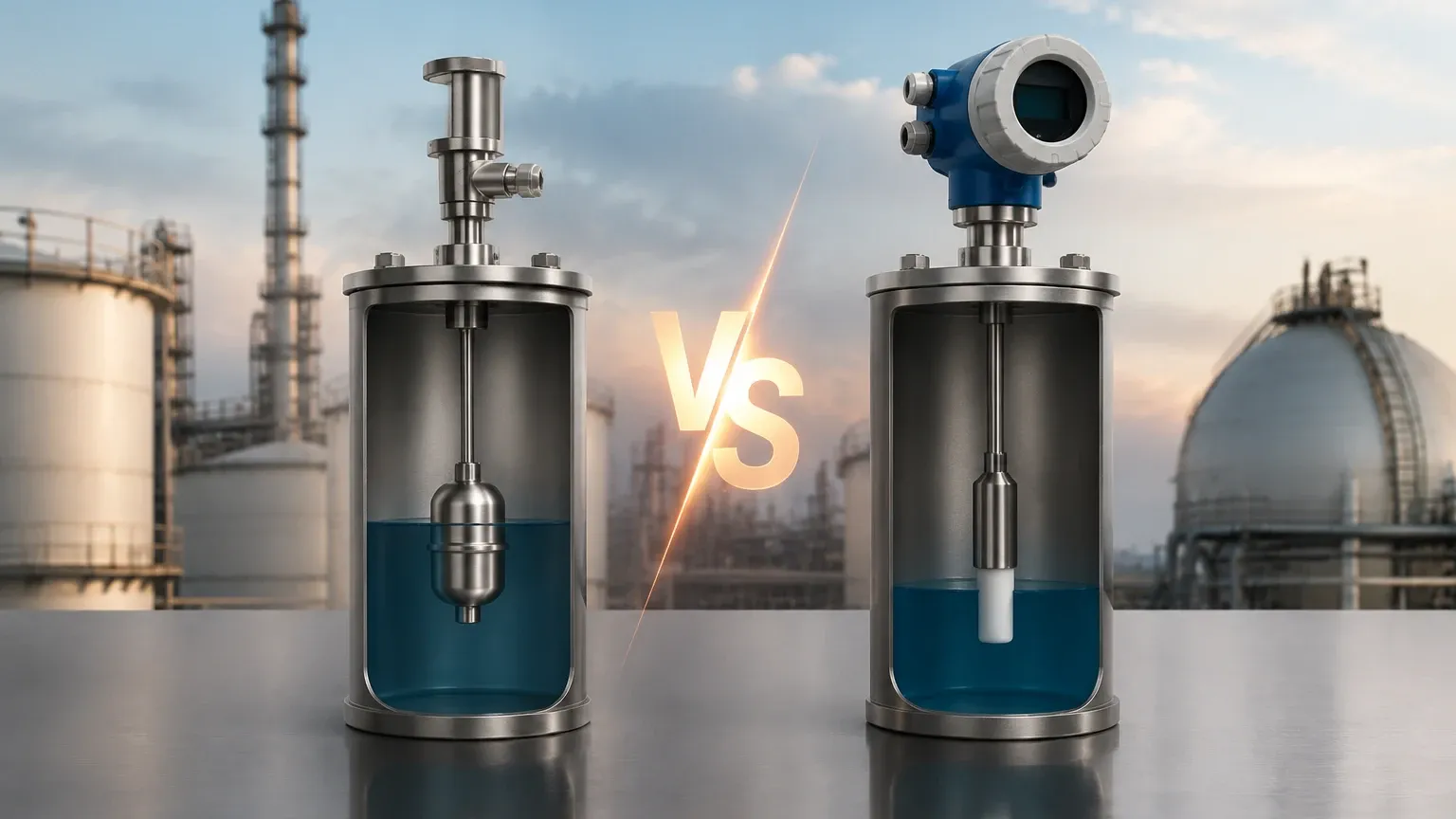
In the field of industrial automation and process control, accurately monitoring the contents of a tank or vessel is critical for safety, efficiency, and inventory management. When designing a level measurement system, engineers frequently encounter the fundamental choice of level switch vs transmitter. While both instruments are used to monitor the presence or volume of liquids and solids, they operate on different principles and serve distinct roles within a control loop.
Understanding the technical nuances between these two technologies is essential for optimizing process uptime and ensuring environmental compliance. This guide examines the measurement principles, selection criteria, and practical application of each to assist in informed decision-making.
Understanding the Measurement Principles
Before comparing the two, it is necessary to define how each device interacts with the process medium. The primary distinction lies in whether the measurement is "point-level" or "continuous."
Level Switches: Point-Level Detection
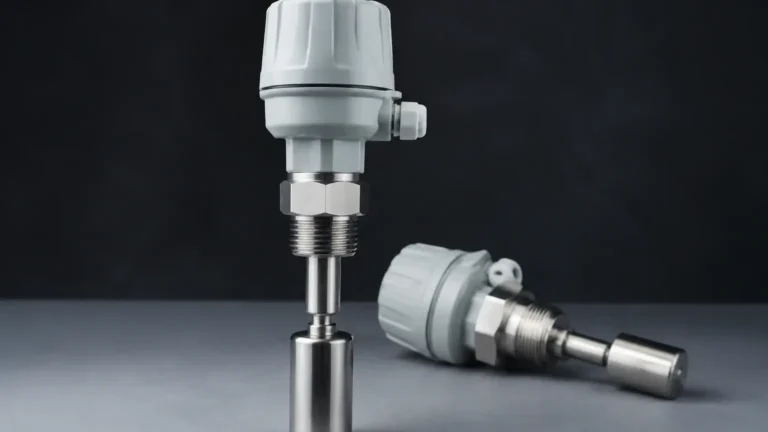
Level Switches are designed to detect the presence or absence of a material at a specific, predetermined height. They provide a binary output—typically a relay contact or a transistor switch—that indicates whether the level has reached the sensor's position.
Common technologies used in switches include:
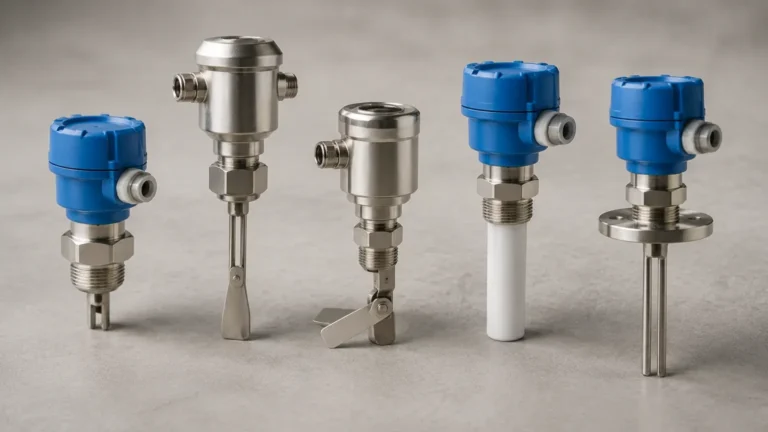
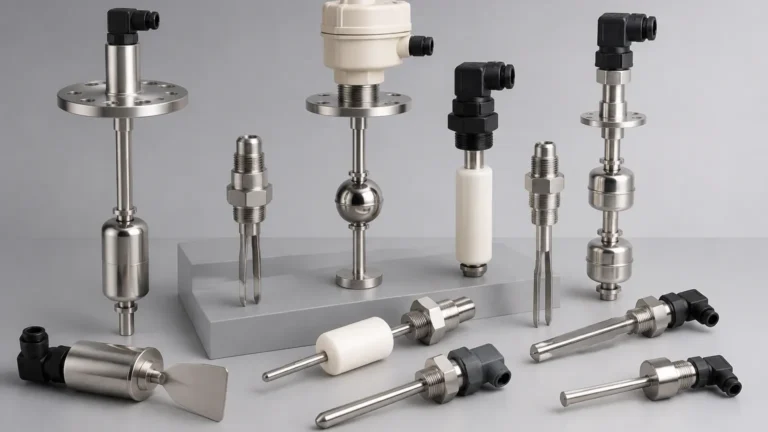
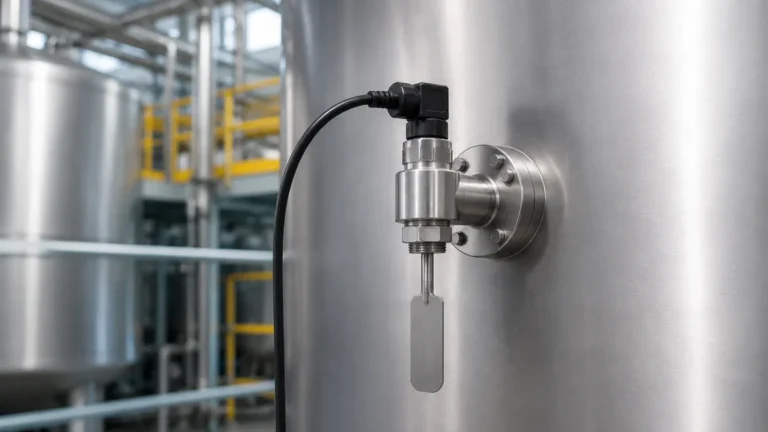
* Vibrating Tuning Fork: A piezoelectric crystal excites a fork at its natural frequency. When the fork is submerged in a medium, the frequency shifts, triggering the switch. This is highly effective for both liquids and granular solids.
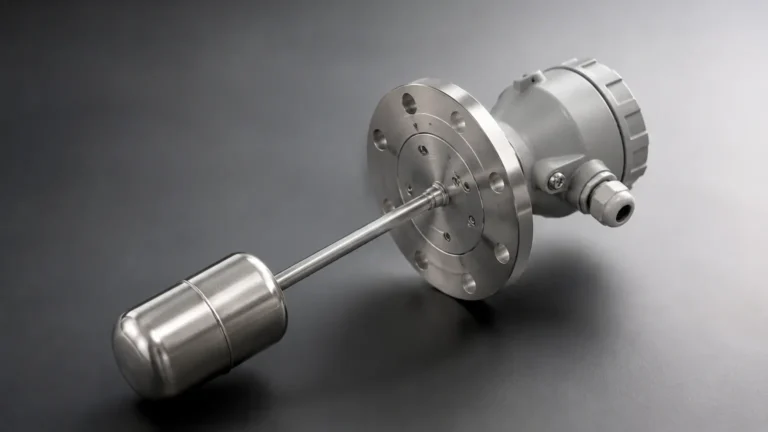
* Float Switches: These utilize buoyancy. A float containing a magnet moves with the liquid level, actuating a reed switch inside a stationary stem when it reaches a specific point.
* Capacitance Switches: These measure the change in electrical capacitance between the sensor probe and the tank wall. When the medium covers the probe, the dielectric constant changes, signaling a level hit.
* Ultrasonic Gap Switches: These use a pair of ultrasonic crystals separated by a small gap. When liquid fills the gap, the ultrasonic signal is transmitted from one crystal to the other, completing the circuit.
Level Transmitters: Continuous Measurement
Level transmitters provide a continuous signal that represents the actual level across a defined range (e.g., from 0 meters to 10 meters). This allows for real-time monitoring of the exact volume or height of the contents.
Common technologies for transmitters include:
* Radar (Non-Contact): These emit high-frequency microwave pulses. The time it takes for the pulse to reflect off the surface and return to the sensor (Time of Flight) is used to calculate the distance. This technology is independent of density and pressure changes.
* Ultrasonic (Non-Contact): Similar to radar but uses sound waves. It is cost-effective for water treatment but can be affected by air temperature, foam, and heavy vapors.
* Hydrostatic Pressure: These sensors are mounted at the bottom of a tank and measure the pressure exerted by the liquid column above them. Since pressure is proportional to height and density, the level can be calculated precisely.
* Guided Wave Radar (GWR): A probe guides the microwave pulse directly to the surface. This is ideal for low-dielectric liquids or applications with heavy turbulence.
Level Switch vs Transmitter: Key Differences
When evaluating a level switch vs transmitter, the decision usually hinges on the required data granularity and the intended control action.
1. Data Output and Control Logic
A level switch provides a "Yes/No" answer. It is used for discrete control actions, such as stopping a pump when a tank is full (high-level alarm) or starting a pump when it is empty (low-level alarm).
In contrast, a level transmitter provides a continuous data stream, typically via a 4-20mA loop, HART, or Modbus protocol. This allows a PLC (Programmable Logic Controller) or DCS (Distributed Control System) to perform complex calculations, such as flow rate monitoring, trend analysis, and proportional-integral-derivative (PID) control.
2. Complexity and Integration
Switches are generally simpler to install and wire. They often function as standalone safety devices. Transmitters require more sophisticated calibration (setting the 4mA and 20mA points) and integration into a control network. However, modern smart transmitters from manufacturers like Welk offer user-friendly interfaces that simplify this setup.
3. Cost Considerations
Generally, a single level switch is less expensive than a continuous level transmitter. However, if a process requires monitoring at multiple points (e.g., 25%, 50%, 75%, and 95%), installing four switches may become more expensive and mechanically complex than installing one continuous transmitter.
Selection Criteria Table
The following table provides a quick reference for engineers choosing between these technologies.
| Feature | Level Switch | Level Transmitter |
| :— | :— | :— |
| Measurement Type | Point-level (Discrete) | Continuous (Linear) |
| Output Signal | Relay, PNP/NPN, or Reed | 4-20mA, HART, RS485, Profibus |
| Primary Function | Overfill prevention, dry-run protection | Inventory management, process control |
| Calibration | Minimal to none | Required (Range setting) |
| Cost | Lower per unit | Higher per unit |
| Redundancy | Often used as a secondary safety backup | Primary measurement source |
| Media Compatibility | Highly versatile (solids/liquids) | Technology-dependent (dielectric/density) |
Practical Application Scenarios
When to Choose a Level Switch
* Pump Protection: To prevent a pump from running dry, a tuning fork or float switch is installed at the bottom of the suction vessel. If the level drops below the switch, the pump is immediately de-energized.
* High-Level Alarms (HLA): In chemical storage, a level switch acts as an independent safety layer. Even if the primary transmitter fails, the switch provides a hard-wired signal to close an inlet valve, preventing a spill.
* Small Vessels: In compact equipment where continuous monitoring is unnecessary, a switch provides a cost-effective solution.
When to Choose a Level Transmitter
* Inventory Management: In oil and gas or food and beverage industries, knowing the exact volume of raw materials is essential for supply chain planning. A radar or hydrostatic transmitter provides this data 24/7.
* Variable Process Control: If a process requires maintaining a specific level despite varying inflow and outflow rates, a transmitter is required to provide the feedback signal for a PID controller.
* Remote Monitoring: For tanks located in remote areas, a transmitter combined with a wireless gateway allows operators to view levels from a central control room without physical inspections.
Installation Considerations and Limitations
Proper installation is vital for both instrument types to ensure long-term reliability.
Installation Best Practices
1. No-Go Zones: For non-contact transmitters (ultrasonic/radar), ensure the signal path is clear of internal tank obstructions like ladders, agitators, or heating coils.
2. Mounting Orientation: Level switches must be oriented correctly relative to the flow. For example, a paddle switch in a solids silo should be shielded from the direct impact of falling material.
3. Dead Zones: Ultrasonic transmitters have a "blocking distance" or dead zone (typically 0.2m to 0.5m) near the sensor face where measurement is impossible. Ensure the tank design accounts for this.
4. Pressure and Temperature: Always verify that the wetted parts (316L stainless steel, PTFE, etc.) and the housing can withstand the process temperature and pressure. Hydrostatic transmitters are particularly sensitive to changes in headspace pressure unless a differential pressure (DP) setup is used.
Common Limitations
* Foam: Heavy foam can absorb ultrasonic signals and cause false readings in radar sensors if the dielectric constant is low. In these cases, a guided wave radar or a mechanical float switch may be more reliable.
* Build-up: In sticky or viscous fluids, material can accumulate on the sensor. Vibrating tuning forks are generally better at shedding build-up than capacitive probes.
* Turbulence: Rapidly moving liquid surfaces can cause "signal bounce" in non-contact transmitters. Using a stilling well or a transmitter with advanced signal processing software (like those provided by Welk) can mitigate this issue.
Frequently Asked Questions (FAQ)
Q: Can I use a level transmitter as a level switch?
A: Yes. Most modern transmitters have built-in relays or can trigger alarms via the control system when the level reaches a specific percentage. However, for critical safety applications (SIL-rated), a separate, dedicated level switch is often required for redundancy.
Q: What is the maintenance requirement for these devices?
A: Level switches, especially non-mechanical types like tuning forks, require very little maintenance. Transmitters may require periodic calibration checks or cleaning of the sensor face if the medium is prone to scaling or coating.
Q: How do I choose between ultrasonic and radar transmitters?
A: Ultrasonic is excellent for water and wastewater applications at atmospheric pressure. Radar is superior for high-pressure, high-temperature, or vacuum conditions, and is unaffected by vapors or dust.
Conclusion
The choice between a level switch vs transmitter is not a matter of which technology is "better," but which is appropriate for the specific engineering objective. For simple point detection and safety interlocking, Level Switches offer a robust and economical solution. For comprehensive process visibility and automated inventory control, a level transmitter is the necessary choice.
In many industrial environments, the most effective strategy is a hybrid approach: using a continuous transmitter for primary control and a point-level switch as a redundant high-high alarm to ensure maximum process safety. Before finalizing your selection, always confirm the chemical compatibility, pressure ratings, and electrical requirements of your specific application with a qualified instrument manufacturer like Welk.