Mobrey Level Switches
Mobrey Level Switches
In the landscape of industrial process control, point level detection remains a critical safety and operational requirement. Among the various technologies available, Mobrey level switches have established a decades-long reputation for reliability, particularly in demanding environments like power generation, oil and gas, and heavy manufacturing. These instruments are primarily recognized for their unique magnetic snap-action design, which differentiates them from conventional mechanical or electronic switches.
Understanding the engineering behind these devices is essential for selecting the correct model for high-level alarms, low-level cutouts, or pump control applications. This guide explores the measurement principles, selection criteria, and installation best practices for mobrey level switches to ensure long-term performance in industrial settings.
Measurement Principles: The Magnetic Snap-Action Mechanism
The core functional advantage of the Mobrey design is the absence of springs in the switching mechanism. Most mechanical level switches rely on springs to return the switch to its original state, but springs are prone to fatigue, corrosion, and loss of tension over time.
How the Magnetic Coupling Works
Mobrey level switches operate on a principle of magnetic repulsion. The assembly consists of two main components: the "wet-side" float and the "dry-side" switch mechanism.
1. The Float Arm: A float is attached to an arm that contains a permanent magnet. As the liquid level rises or falls, the float moves, pivoting the arm and bringing its magnet closer to the switch housing.
2. The Switch Head: Inside the dry-side housing, a second magnet is mounted on a pivot linked to the electrical contacts.
3. The Repulsion Effect: The two magnets are oriented with like poles facing each other. As the float magnet moves toward the switch magnet, the repulsive force increases. Once the float magnet passes a specific point, the switch magnet is pushed away instantaneously.
This "snap-action" ensures that the electrical contacts change state rapidly and decisively, which prevents "arcing" or "fluttering" that can occur in systems where the level fluctuates slowly or is subject to minor turbulence. Because the coupling is magnetic, there is no physical link (such as a bellows or seal) between the process fluid and the switch internals, significantly reducing the risk of leaks.
Key Features and Construction Materials
When evaluating Level Switches for industrial use, material compatibility is the first line of defense against premature failure. Mobrey switches are typically constructed to withstand high-pressure and high-temperature environments.
* Wetted Parts: Standard models often utilize 316 stainless steel for the float and arm, providing excellent resistance to corrosion in water treatment and chemical applications. For more aggressive media, materials like Monel or Hastelloy may be specified.
* Enclosures: The switch head (the dry side) is usually housed in aluminum bronze or stainless steel. These housings are often rated for hazardous areas (ATEX/IECEx) and are designed to be weatherproof (IP66/IP67).
* Switching Options: Users can typically choose between Single Pole Double Throw (SPDT) or Double Pole Double Throw (DPDT) configurations, allowing for the simultaneous control of an alarm and a secondary function, such as a pump shutdown.
Types of Mobrey Level Switches and Applications
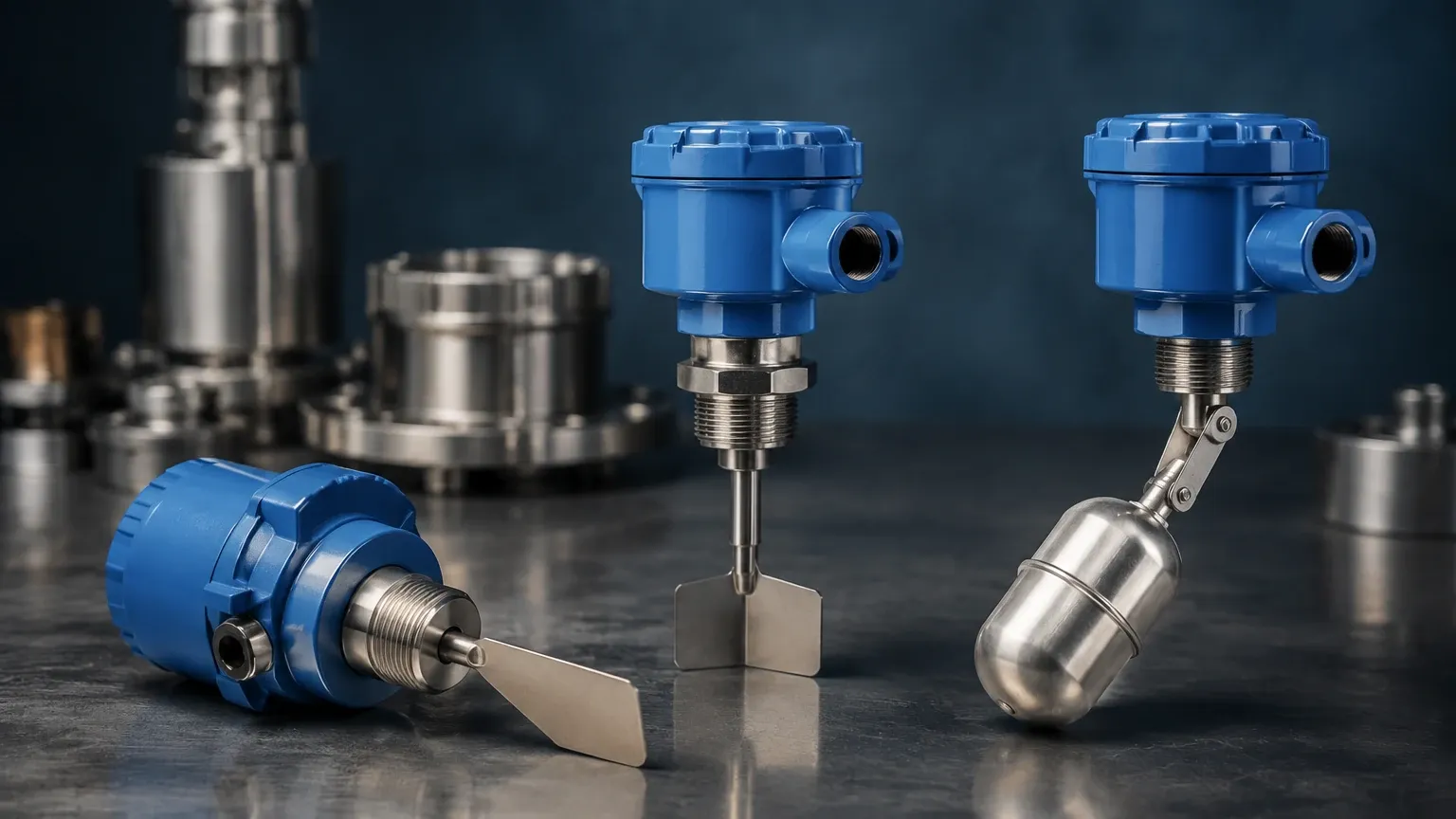
Mobrey offers several configurations tailored to specific process conditions. The most common are horizontal side-mounted switches, but vertical and submersible options also exist.
1. General Purpose (S01 Series)
These are the workhorses of the industry, designed for general liquid level detection in tanks and pressure vessels. They are commonly used for high and low-level alarms in water tanks or fuel oil storage.
2. High-Pressure and High-Temperature (S36/S179 Series)
In steam raising plants or high-pressure separators, standard switches may fail due to the extreme physical stress. These specialized models are built with heavier-duty floats and reinforced housings to handle pressures exceeding 150 bar (2175 PSI) and temperatures up to 400°C (752°F).
3. Submersible and Marine Versions
Designed for bilge tanks or ballast tanks on ships, these switches are built to withstand vibration and can be fully submerged if necessary. They often feature specialized marine certifications (e.g., Lloyd's Register).
Practical Selection Table
Choosing the right switch requires balancing process parameters with physical installation constraints. The following table provides a general comparison of common configurations.
| Feature | General Purpose (S01) | High Pressure (S36) | Marine/Submersible |
| :— | :— | :— | :— |
| Max Pressure | 18.3 bar (265 PSI) | 150 bar (2175 PSI) | 10 bar (145 PSI) |
| Max Temperature | 250°C (482°F) | 400°C (752°F) | 150°C (302°F) |
| Min. Specific Gravity | 0.65 | 0.60 | 0.75 |
| Wetted Material | 316 Stainless Steel | 316L / Monel | Aluminum Bronze / SS |
| Mounting Type | Flanged (92mm PCD) | Flanged / Screwed | Flanged / Submerged |
Installation Considerations
Correct installation is paramount for the reliability of mobrey level switches. Because these are mechanical-magnetic devices, their orientation and the physical environment around the float must be carefully managed.
Orientation and Positioning
Most Mobrey switches are designed for horizontal mounting through the side of a tank. It is vital to ensure the switch is perfectly level. If the switch is tilted, the pivot point of the float arm may experience friction, or the magnetic coupling may not align correctly, leading to inconsistent switching points.
The "Null Zone"
Every float switch has a small amount of differential (the distance between the "trip" point and the "reset" point). Engineers must account for this when setting alarm thresholds to prevent the switch from constantly toggling if the liquid surface is turbulent.
External Chambers
In applications where the liquid inside the main vessel is highly turbulent (e.g., near an agitator or an inlet pipe), it is best practice to install the switch in an external "stilling well" or bypass chamber. This provides a stable liquid column for the float to operate in, protecting the mechanism from mechanical shock and ensuring accurate detection.
Wiring and Safety
When wiring the switch head, ensure that the cable glands are correctly tightened to maintain the IP rating. If the switch is used in a safety-critical application (such as a Boiler Low Water Cutout), it should be wired into a fail-safe circuit where a loss of power or a broken wire triggers the alarm state.
Limitations and Common Risks
While mobrey level switches are highly robust, they are not universal solutions. Certain process conditions can interfere with their operation:
* Magnetic Particles: Because the switch operates via magnets, the presence of ferromagnetic particles (iron filings, magnetite) in the process fluid can be problematic. These particles can accumulate on the float magnet, eventually weighing it down or jamming the pivot.
* High Viscosity and Coating: Liquids that are extremely viscous or prone to crystallization can coat the float and arm. If the coating becomes thick enough, it can increase the weight of the float or cause it to stick to the side of the nozzle.
* Specific Gravity Requirements: Every float is designed for a minimum liquid density (Specific Gravity). If the liquid is too light (e.g., certain liquefied gases), the float will not provide enough buoyancy to overcome the magnetic repulsion force, and the switch will fail to trip.
Maintenance and Troubleshooting
One of the reasons for the longevity of mobrey level switches is their ease of maintenance. A properly installed switch can operate for decades with minimal intervention.
1. Manual Testing: Many Mobrey switch heads feature a manual check lever. This allows operators to mechanically move the switch magnet to test the electrical circuit without having to raise the liquid level in the tank.
2. Visual Inspection: During plant shutdowns, the float and arm should be inspected for signs of pitting, corrosion, or buildup. The pivot pin should move freely without excessive play.
3. Seal Integrity: Check the gasket between the switch head and the process connection. Even though the magnetic coupling prevents process leaks into the switch head, an external seal failure can lead to environmental leaks.
Frequently Asked Questions (FAQ)
Q: Can Mobrey switches be used in hazardous areas?
A: Yes, most models are available with ATEX, IECEx, or CSA certifications for use in Zone 0, 1, or 2 environments. Ensure the housing material and cable glands match the area classification.
Q: What is the minimum specific gravity these switches can handle?
A: Standard floats typically require a minimum specific gravity of 0.65. However, specialized high-buoyancy floats are available for lighter liquids down to approximately 0.50.
Q: How do I handle turbulence without a bypass chamber?
A: If a chamber is not feasible, some models allow for a "slosh shield" or an extended internal pipe that acts as a stilling well. Alternatively, an electronic time-delay relay can be added to the control circuit to ignore brief state changes caused by waves.
Q: Are these switches suitable for sanitary food and beverage applications?
A: While 316 stainless steel is used, the standard pivot and arm design may have crevices that are difficult to clean in-place (CIP). For high-purity food applications, a hygienic-designed level sensor or a switch with a polished, crevice-free float is usually preferred.
Conclusion
Mobrey level switches remain a cornerstone of industrial level control due to their simple, springless magnetic design. By eliminating the most common failure points of mechanical switches, they provide a dependable solution for high-stakes applications where electronic sensors might be overkill or prone to interference. When selecting a switch, always verify the process temperature, pressure, and liquid density against the manufacturer’s specifications to ensure the device performs as intended.
For those seeking a comprehensive range of industrial Level Switches and expert guidance on application engineering, consulting with specialized manufacturers can help identify the most cost-effective and reliable technology for your specific process requirements.