Level Sensor Liquid Nitrogen
Level Sensor Liquid Nitrogen
Liquid nitrogen (LN2) is a critical utility in modern industry, utilized extensively in medical cryopreservation, semiconductor manufacturing, food flash-freezing, and metal treatment. Stored at temperatures as low as -196°C (-320°F), liquid nitrogen presents unique challenges for instrumentation. Selecting a level sensor liquid nitrogen requires a deep understanding of cryogenic physics, as the fluid is constantly in a state of near-boiling, and the extreme temperature gradients can cause standard industrial sensors to fail.
This guide examines the engineering principles, selection criteria, and installation best practices for monitoring liquid nitrogen levels in dewars, bulk storage tanks, and phase separators.
Understanding Cryogenic Level Measurement Principles
To accurately measure the level of liquid nitrogen, instrumentation must account for its low dielectric constant, low density, and the inevitable presence of boil-off gas. Several measurement principles are commonly employed, each with specific advantages depending on whether the application requires continuous monitoring or point-level detection.
Capacitance Measurement
Capacitance sensors are among the most common solutions for LN2. This technology relies on the difference in dielectric constant between the liquid phase ($ε ≈ 1.43$) and the gaseous phase ($ε ≈ 1.0$) of nitrogen. A probe, acting as one electrode, is inserted into the tank. As the liquid level rises, it displaces the gas, changing the total capacitance of the system. This change is converted into a linear 4-20mA or digital signal.
Differential Pressure (DP)
Differential pressure transmitters measure the hydrostatic head pressure exerted by the liquid column. Because LN2 is stored in pressurized, vacuum-insulated vessels, the sensor must measure the pressure at the bottom of the tank and subtract the head pressure (gas pressure) at the top. The resulting value is proportional to the liquid height. However, because LN2 density changes with pressure and temperature, DP systems often require compensation for high-accuracy requirements.
Radar (Non-Contact)
Frequency Modulated Continuous Wave (FMCW) radar is an increasingly popular choice for bulk storage. Radar waves penetrate the heavy fog often found above LN2 and reflect off the liquid surface. Since radar is non-contact, the electronic components are isolated from the extreme cold, though the antenna must be designed to withstand cryogenic cycles without cracking.
Point Level Detection
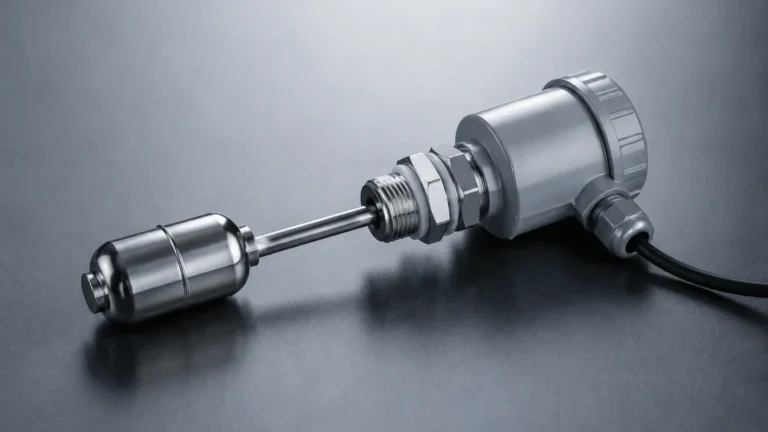
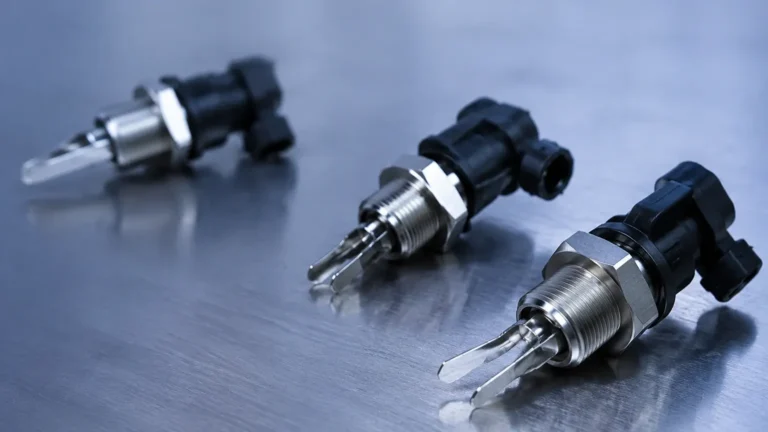
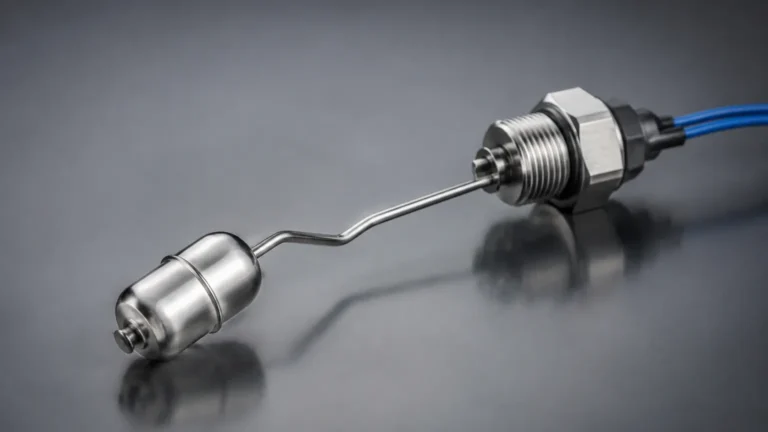
For overfill protection and low-level alarms, Level Switches are essential. These devices provide a discrete signal when the liquid reaches a specific height. In cryogenic service, vibrating fork switches or optical sensors are frequently used. The vibrating fork detects the change in frequency when submerged in the denser liquid, while optical sensors detect the change in the refractive index at the sensor tip.
The Role of Level Switches in Liquid Nitrogen Management
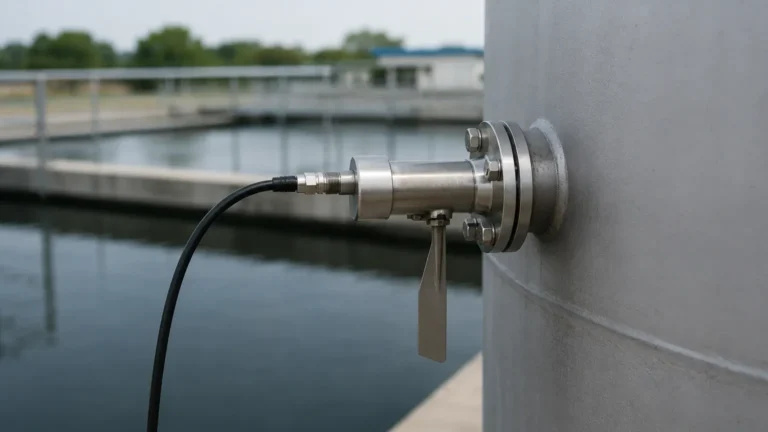
In liquid nitrogen systems, point-level detection serves as the primary safety layer. While continuous level sensors provide data for inventory management, level switches are used to trigger automated valves or emergency shutdowns.
In a typical LN2 application, level switches are deployed for:
1. Overfill Prevention: Preventing liquid nitrogen from entering the vent lines of a dewar, which could lead to structural damage or hazardous gas release.
2. Pump Protection: Ensuring that cryogenic pumps do not run dry, which would cause rapid seal wear and potential mechanical failure due to lack of lubrication and cooling.
3. Phase Separator Control: Maintaining a constant liquid level in phase separators to ensure that only high-quality, saturated liquid is delivered to the end-use point.
When selecting Level Switches for LN2, it is vital to ensure the materials of construction—typically 316L stainless steel—are rated for cryogenic temperatures to prevent embrittlement.
Technical Selection Criteria for Liquid Nitrogen Sensors
Choosing the correct level sensor liquid nitrogen involves evaluating the vessel type, the required accuracy, and the environmental conditions. Engineers should consider the following factors:
Vessel Geometry and Pressure
Small laboratory dewars often lack the space for complex DP plumbing, making capacitance probes or small-form-factor level switches more appropriate. In contrast, large bulk tanks (5,000 to 50,000 liters / 1,320 to 13,200 gallons) typically utilize DP transmitters due to their reliability in high-pressure environments.
Dielectric Constant
Because nitrogen has a very low dielectric constant, capacitance sensors must be highly sensitive. If the sensor is not properly calibrated for LN2, it may fail to distinguish between the liquid and the dense cold gas sitting just above the surface.
Accuracy vs. Cost
For basic inventory tracking, a DP transmitter with ±1% to ±2% accuracy is usually sufficient. However, for scientific applications or custody transfer, high-precision capacitance probes or radar systems with accuracies of ±2mm (0.08 inches) may be required.
Comparison Table: Level Measurement Technologies for LN2
| Technology | Accuracy | Ideal Application | Pros | Cons |
| :— | :— | :— | :— | :— |
| Capacitance | High (±0.5%) | Small Dewars / Labs | No moving parts; very precise. | Sensitive to moisture/icing. |
| Differential Pressure | Moderate (±1-2%) | Bulk Storage Tanks | Industry standard; robust. | Requires complex piping; density dependent. |
| Radar (FMCW) | Very High (±2mm) | Large Storage | Non-contact; unaffected by density. | Higher initial cost; requires clear vapor space. |
| Vibrating Fork | Point Only | High/Low Alarms | Extremely reliable for safety. | Not for continuous measurement. |
| Optical Switch | Point Only | OEM Equipment | Compact; fast response. | Sensitive to coating/bubbles. |
Installation and Maintenance in Cryogenic Environments
Proper installation is the most significant factor in the longevity of a level sensor liquid nitrogen. Cryogenic liquids expand rapidly when they transition to gas (a ratio of approximately 1:694 for nitrogen), which can create dangerous pressure build-ups in trapped sections of piping.
1. Thermal Isolation
Electronics must be kept at ambient temperatures. For DP transmitters, this is achieved through "extended legs" or impulse lines that allow the liquid to vaporize before reaching the sensor. For capacitance probes, the head of the sensor should be mounted away from the cold vessel wall using a thermal standoff.
2. Moisture Prevention
Icing is the primary cause of sensor failure. If ambient air enters the sensor housing or the top of a capacitance probe, moisture will condense and freeze. This ice can short out electrical contacts or physically damage the sensor. Using hermetically sealed connectors and nitrogen-purged housings is recommended.
3. Vacuum Integrity
Most LN2 vessels are vacuum-jacketed. Any sensor installation that penetrates the vacuum jacket must be performed with specialized cryogenic flanges (such as Johnston couplings) to ensure the vacuum is not compromised, which would lead to massive heat leak and rapid LN2 loss.
4. Calibration
Calibration should always be performed at cryogenic temperatures. A sensor that is accurate at 20°C (68°F) will often exhibit significant zero-shift and span errors when exposed to -196°C (-320°F) due to the thermal contraction of the probe materials.
Limitations and Operational Risks
While modern sensors are highly capable, there are inherent limitations to consider:
* Boiling and Turbulence: LN2 is often in a state of "nucleate boiling." This creates bubbles that can interfere with ultrasonic signals and cause "noise" in capacitance readings. Damping algorithms in the transmitter software are often necessary to provide a stable reading.
* Gas Pockets: In DP systems, if gas becomes trapped in the liquid-side impulse line, the sensor will read a lower-than-actual level. Periodic bleeding of the lines or the use of capillary seals may be required.
* Material Fatigue: Repeated thermal cycling from ambient to cryogenic temperatures can cause micro-cracks in welds and seals. Regular visual inspections for frosting—which indicates a leak or insulation failure—are mandatory.
Frequently Asked Questions
Q: Can I use a standard water level sensor for liquid nitrogen?
No. Standard sensors are not rated for cryogenic temperatures. The materials will become brittle and shatter, and the electronics will fail immediately. Only sensors explicitly rated for cryogenic service should be used.
Q: How does the density of liquid nitrogen affect measurement?
Liquid nitrogen density changes based on its saturation pressure. For example, at 1 bar (14.5 psi), the density is approximately 808 kg/m³, but this changes as pressure increases. DP sensors must be calibrated for the specific operating pressure of the tank to remain accurate.
Q: Why is radar preferred over ultrasonic for LN2?
Ultrasonic sensors rely on the speed of sound, which changes significantly with the temperature and composition of the gas layer. Since the gas layer above LN2 is a mix of very cold nitrogen and potentially some air, the speed of sound is unpredictable. Radar uses electromagnetic waves, which are unaffected by gas temperature or density.
Q: What is the best way to prevent overfilling?
The most reliable method is to use a redundant system: a continuous level sensor for monitoring and a dedicated, independent Level Switch for high-level alarm and valve shutoff.
By selecting the appropriate technology and following strict cryogenic installation standards, facility managers can ensure the safe and efficient handling of liquid nitrogen, minimizing product loss and protecting critical equipment.