Level Switch Tank
Level Switch Tank
In industrial process control, the integration of a level switch tank system is a fundamental requirement for safety, inventory management, and automation. Unlike continuous level transmitters that provide a constant stream of data regarding the exact volume or height of a medium, a level switch is designed for point level detection. It acts as a sentinel, triggering an electrical signal when the material reaches a specific predetermined height.
For engineers and plant operators, selecting the correct Level Switches for a tank involves understanding the physical properties of the stored medium, the mechanical constraints of the vessel, and the specific operational risks, such as overfill or pump cavitation.
Measurement Principles of Tank Level Switches
Before selecting a device for a level switch tank application, it is essential to understand the underlying physical principles that govern different sensing technologies. Each method has distinct advantages depending on the fluid's viscosity, conductivity, and dielectric constant.
Float and Buoyancy Principles
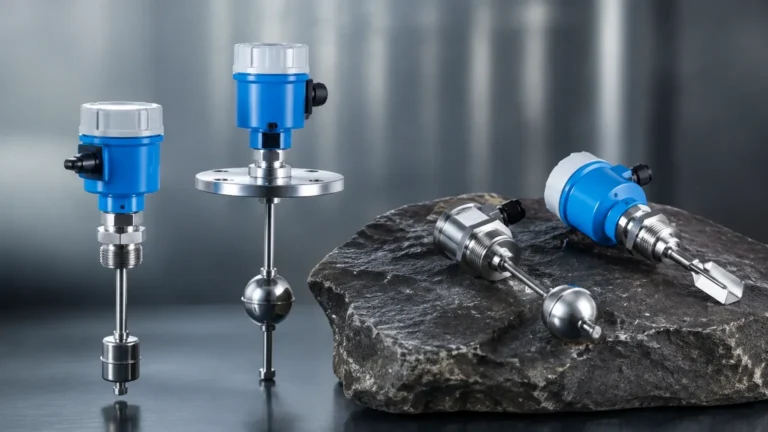
Float switches operate on the principle of buoyancy. A float containing a magnet moves with the liquid level along a stem. When the float reaches a reed switch embedded in the stem, the magnetic field causes the switch to open or close. This is a purely mechanical-electrical interaction, making it highly reliable for clean liquids. However, it is susceptible to mechanical jamming if the liquid contains debris or high viscosity.
Vibrating (Tuning Fork) Principle
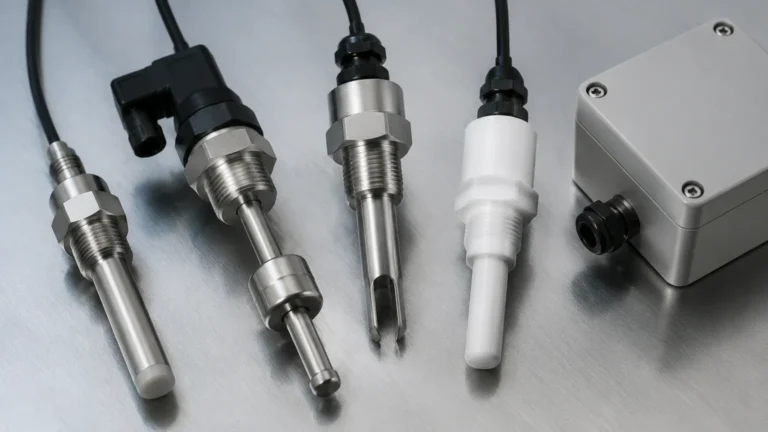
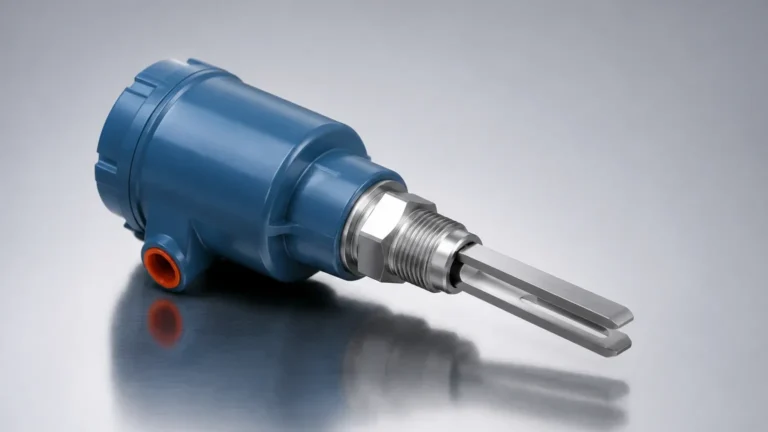
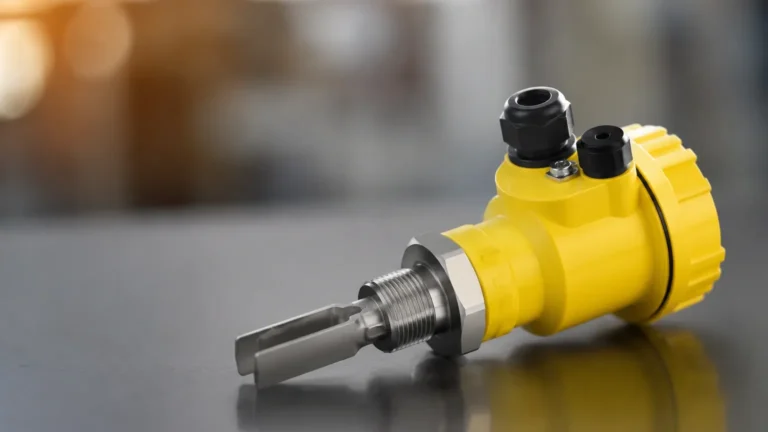
Vibrating level switches utilize a fork-shaped sensor that is vibrated at its natural resonant frequency by piezoelectric crystals. When the fork is immersed in a liquid or solid, the frequency of vibration changes. The internal electronics detect this shift and trigger the switch output. This technology is highly versatile because it is largely unaffected by the chemical properties, flow, turbulence, or bubbles within the tank.
Capacitance Principle
Capacitance switches treat the sensor probe and the tank wall (or a reference probe) as two plates of a capacitor. The medium in the tank acts as the dielectric material. As the level rises and covers the probe, the capacitance increases because the dielectric constant of the medium is typically higher than that of air. This change is converted into a switching signal. Capacitance switches are excellent for both liquids and granulated solids, though they require calibration based on the specific material.
Hydrostatic Pressure Principle
While often used for continuous measurement, hydrostatic switches detect the pressure exerted by the liquid column above the sensor. When the pressure reaches a set point—corresponding to a specific height—the switch is activated. These are commonly used in deep tanks or reservoirs where top-mounting is impractical.
Selection Criteria for Level Switch Tank Applications
Choosing the right instrument requires a systematic evaluation of the process environment. The following table provides a general guide for technology selection based on common tank conditions.
| Technology | Best Suited For | Limitations | Typical Application |
| :— | :— | :— | :— |
| Float Switch | Clean, non-coating liquids | Subject to mechanical wear; not for slurries | Water storage, fuel tanks |
| Tuning Fork | Most liquids, powders, and slurries | High-viscosity materials may cause "clogging" | Chemical processing, food & beverage |
| Capacitance | Solids, liquids, and interfaces | Requires calibration; sensitive to buildup | Grain silos, chemical tanks |
| Conductivity | Conductive liquids (water-based) | Cannot be used with oils or non-conductive fluids | Wastewater treatment |
| Optical | Clean, low-viscosity liquids | Sensitive to coating and heavy foam | Laboratory tanks, leak detection |
Chemical Compatibility
The materials of construction (wetted parts) must be compatible with the tank contents. Stainless steel (316L) is the standard for most industrial applications, but for highly corrosive acids or bases, plastic coatings like PTFE (Polytetrafluoroethylene) or PVDF (Polyvinylidene fluoride) are necessary to prevent premature failure of the level switch tank assembly.
Temperature and Pressure
Standard level switches are often rated for temperatures up to 80°C (176°F) and pressures up to 10 bar (145 psi). For high-pressure boilers or cryogenic storage, specialized high-temperature alloys and hermetically sealed housings are required. Always verify that the process pressure does not exceed the structural limits of the float or the seal integrity of the probe.
Installation Considerations for Level Switch Tanks
The physical placement of a level switch within a tank significantly impacts its accuracy and lifespan. Improper installation is the leading cause of false alarms and sensor damage.
Mounting Positions
* Top Mounting: Ideal for high-level alarms (overfill protection). Probes can be extended via rods or cables to reach the desired switching point. This is preferred in tanks where side-wall access is restricted.
* Side Mounting: Commonly used for both high and low-level detection. The switch is installed through a nozzle in the tank wall. This allows for precise point detection but requires the tank to be emptied or isolated for maintenance.
* Bottom Mounting: Primarily used for low-level or dry-run protection for pumps. However, this position is prone to sediment buildup, which can interfere with the sensor.
Avoiding Interference
1. Inlet Streams: Never install a level switch directly under the tank's fill pipe. The falling liquid can cause mechanical damage or trigger false "high" signals due to splashing.
2. Agitators and Mixers: In tanks with internal mixers, the switch must be positioned away from the vortex and protected by a stilling well if high turbulence is present. Stilling wells are vertical pipes that shield the sensor from lateral forces while allowing the liquid level to equalize inside the pipe.
3. Nozzle Length: For side-mounted switches, ensure the nozzle length does not create a "dead zone" where material can accumulate and prevent the sensor from resetting. This is particularly critical for tuning fork and capacitance switches.

Practical Engineering Limitations
While level switches are robust, they are not universal solutions. Engineers must account for the following limitations:
* Build-up and Coating: In applications involving sticky resins or wastewater, material can accumulate on the sensor. This may cause a "hang-up," where the switch remains in the active state even after the level has dropped. Tuning fork switches with "active shield" technology or capacitance switches with coating rejection are better suited for these environments.
* Foam and Bubbles: Many level switches struggle to distinguish between the liquid surface and a thick layer of foam. If foam is present, ultrasonic or tuning fork switches are generally more reliable than float-based systems, which may float on the foam rather than the liquid.
* Turbulence: Rapidly fluctuating levels can cause the switch to "chatter" (rapidly open and close). This can be mitigated by using electronics with a built-in time delay (typically 1 to 30 seconds) to ensure the level has truly reached the set point.
Maintenance and Troubleshooting
A level switch tank system should be part of a regular preventative maintenance schedule. For float switches, this involves checking for scale buildup or mechanical wear on the pivot points. For electronic switches, periodic testing of the output relay is essential.
Common Troubleshooting Steps:
* False Alarms: Check for moisture in the housing or terminal box. Ensure the cable glands are properly sealed.
* Switch Fails to Trigger: Verify the power supply and check if the medium's density or dielectric constant has changed beyond the sensor's calibrated range.
* Intermittent Signals: Often caused by electromagnetic interference (EMI). Ensure that signal cables are shielded and separated from high-voltage power lines.
Frequently Asked Questions (FAQ)
Q: Can a level switch be used for continuous level monitoring?
No. A level switch only provides a binary signal (on/off) at a specific point. For continuous monitoring, a radar, ultrasonic, or hydrostatic level transmitter is required.
Q: What is the difference between a "normally open" (NO) and "normally closed" (NC) switch?
This refers to the state of the electrical contact when the switch is not activated. For high-level alarms, an NC contact is often used for "fail-safe" operation; if the power fails or a wire breaks, the system triggers an alarm.
Q: How do I handle a level switch tank with high-viscosity liquids?
Avoid float switches. Use a vibrating tuning fork switch or a heavy-duty displacer switch. Ensure the mounting nozzle is wide enough to prevent the liquid from bridging across the sensor.
Q: Are level switches suitable for hazardous (Ex) zones?
Yes, but they must be rated for the specific zone (e.g., ATEX or IECEx). This usually involves using intrinsically safe (IS) barriers or explosion-proof housings to prevent the switch from becoming an ignition source.
By understanding these technical nuances, engineers can ensure that their level switch tank configurations provide the necessary reliability for industrial automation. For specific product configurations and technical support, consulting with a manufacturer like Welk allows for the customization of sensors to meet unique tank geometries and process requirements.