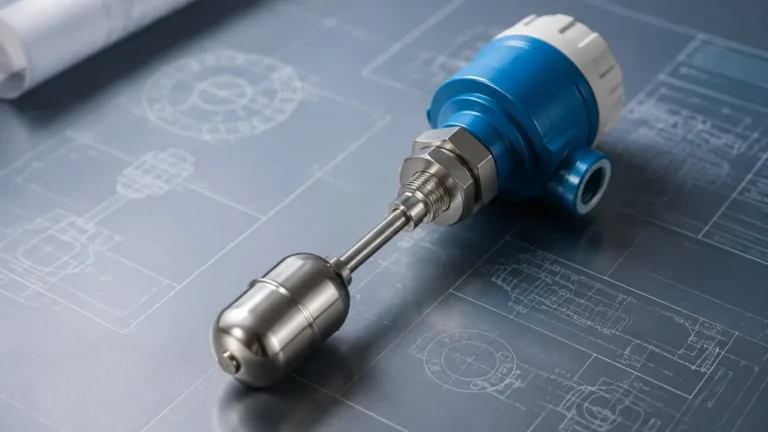
Sor Level Switch 1510
Sor Level Switch 1510
In industrial process control, point-level detection serves as a critical safety and operational layer. Among the various technologies available, float-operated mechanisms remain a cornerstone for liquid level monitoring due to their mechanical simplicity and reliability. The SOR level switch 1510 is a widely recognized model within this category, specifically designed for side-mounting on tanks and pressure vessels. This article provides a detailed engineering overview of the 1510 series, its underlying measurement principles, selection criteria, and practical installation guidance for process engineers.
Fundamental Principles of Float-Operated Level Switches
Before evaluating specific models like the SOR 1510, it is essential to understand the physics of float-based measurement. These devices operate on the principle of buoyancy, as defined by Archimedes' Principle: any object, wholly or partially immersed in a fluid, is buoyed up by a force equal to the weight of the fluid displaced by the object.
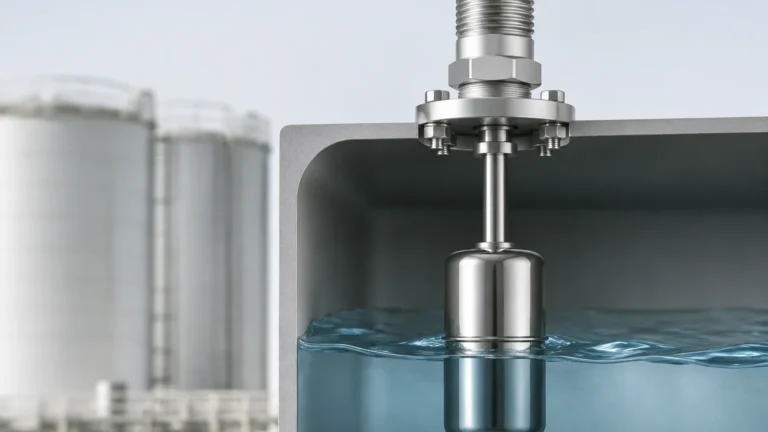
In a typical Level Switches configuration, a float is attached to a lever arm or a slide mechanism. As the liquid level rises to the set point, the float moves upward. This movement is transmitted through a pressure boundary to actuate an electrical switch.
The SOR 1510 specifically utilizes a magnetic coupling mechanism. A magnet is attached to the float arm inside the pressure-retaining housing. As the float rises or falls, the magnet moves closer to or further from a secondary magnet or a reed switch located outside the process fluid. This design ensures that the electrical components are completely isolated from the process media, which is vital for high-pressure or corrosive applications.
Key Features and Engineering Specifications of the SOR 1510
The SOR level switch 1510 is engineered for rugged environments, often found in the oil and gas, petrochemical, and power generation sectors. It is primarily used as a high-level or low-level alarm to prevent tank overflows or pump cavitation.
Material Construction
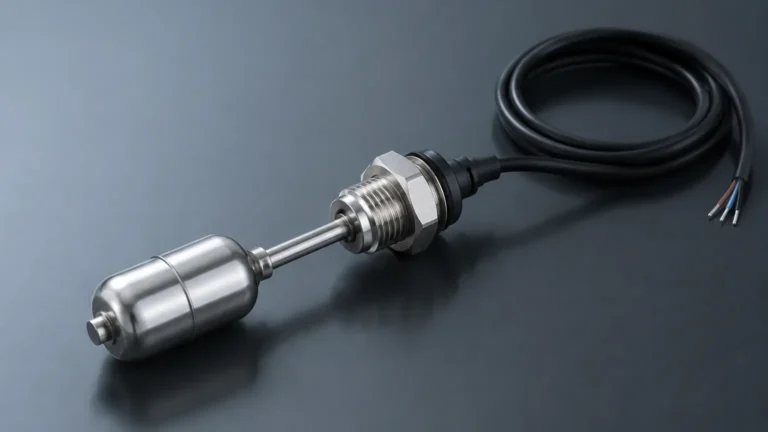
Standard models typically utilize 316/316L stainless steel for wetted parts, providing excellent resistance to corrosion. For more aggressive chemical environments, specialized alloys such as Monel or Hastelloy may be specified. The housing for the switching mechanism is usually constructed from aluminum or stainless steel, with explosion-proof ratings (ATEX, IECEx, or CSA) for hazardous areas.
Pressure and Temperature Ratings
One of the defining characteristics of the 1510 series is its ability to withstand extreme process conditions.
- Pressure: Depending on the flange rating and float material, these switches can operate in environments exceeding 138 bar (2000 psi).
- Temperature: Standard configurations often handle temperatures from -40°C to 204°C (-40°F to 400°F). With the addition of cooling fins or specialized seals, some variants can extend beyond these ranges.
Switch Types
The 1510 usually offers Single Pole Double Throw (SPDT) or Double Pole Double Throw (DPDT) microswitches. These allow for versatile wiring configurations, such as triggering an audible alarm while simultaneously shutting down a supply pump.
Practical Selection Criteria for Industrial Level Switches
When specifying a level switch for a new project or replacement, engineers must look beyond the model number. The following table compares float-operated switches like the SOR 1510 with other common technologies used in industrial automation.
Comparison of Level Switching Technologies
| Technology | Best Use Case | Advantages | Limitations |
| :— | :— | :— | :— |
| Float (e.g., SOR 1510) | High-pressure vessels, basic liquid alarms | No power required for sensing, highly reliable, low cost | Moving parts can jam; sensitive to density changes |
| Vibrating Fork | General purpose, powders, liquids | No moving parts, compact, unaffected by turbulence | Can be affected by heavy coating or buildup |
| Ultrasonic Gap | Clean liquids, non-contact requirements | Very accurate, no moving parts | Sensitive to foam and heavy vapors |
| Capacitance | Corrosive liquids, interface detection | Can handle high temperatures, no moving parts | Requires calibration; sensitive to changes in dielectric constant |
Critical Evaluation Factors
1. Specific Gravity: The float must be lighter than the liquid it is intended to measure. Most SOR 1510 floats are designed for liquids with a specific gravity (SG) of 0.5 or higher. If the liquid is too light (e.g., certain liquefied gases), the float will not rise.
2. Process Media: Is the fluid viscous, or does it contain suspended solids? Float switches are best suited for clean, non-coating liquids. If the fluid is prone to crystallization, the mechanical pivot point may seize.
3. Mounting Requirements: The 1510 is a side-mounted unit. Ensure there is sufficient clearance inside the tank for the float's arc of travel.
Installation Considerations and Best Practices
Proper installation is paramount to the longevity and accuracy of the SOR level switch 1510. Failure to follow engineering best practices often leads to premature mechanical wear or false triggering.
Orientation and Clearance
The switch must be mounted horizontally. The float arm requires a specific "swing" radius. During installation, verify that internal baffles, ladders, or agitators do not interfere with the float's movement. If the tank has significant internal turbulence, a stilling well (a vertical pipe that surrounds the float) should be installed to dampen the liquid's surface movement.
Connection Types
The 1510 typically features a 1.5-inch or 2-inch NPT threaded connection, or a flanged connection. When using threaded connections, ensure the use of compatible thread sealant (like PTFE tape or pipe dope) that is resistant to the process chemical. For flanged versions, ensure the gasket material matches the pressure and temperature requirements of the application.
Wiring and Conduit
To prevent moisture ingress into the switch housing, always use a conduit seal or a "drip loop." Moisture is a leading cause of electrical failure in outdoor level switch installations. Ensure all wiring complies with local electrical codes, especially in classified hazardous locations.
Limitations and Operational Constraints
While the SOR level switch 1510 is a robust instrument, it is not a universal solution. Engineers should be aware of the following constraints:
* Mechanical Wear: Because it relies on moving parts (the float and pivot), it is subject to mechanical wear over millions of cycles. In applications with constant rapid cycling, a non-contact technology like radar or ultrasonic may be more appropriate.
* Coating and Scaling: If the process fluid leaves a heavy residue or scale, the weight of the float can change, or the pivot can become stuck. Regular inspection is required in these environments.
* Turbulence and Surge: Rapid changes in level or heavy splashing can cause "chatter" in the switch contacts. This can be mitigated by using a time-delay relay in the control circuit or a physical stilling well.
Maintenance and Troubleshooting for Float Switches
A proactive maintenance schedule ensures the reliability of safety-critical level switches. For the SOR 1510, the following steps are recommended:
1. Visual Inspection: Check the housing for signs of corrosion or moisture ingress. Ensure the conduit entries are tight.
2. Mechanical Test: If the process allows, manually lift the float (using a test lever if equipped) to ensure the switch actuates and de-actuates freely.
3. Cleaning: For applications involving oils or chemicals that leave residue, remove the switch periodically to clean the float and pivot point.
4. Contact Resistance: Use a multimeter to check the resistance across the switch contacts. High resistance may indicate pitted or oxidized contacts, necessitating a switch element replacement.
Frequently Asked Questions (FAQs)
Q: Can the SOR 1510 be used for interface detection (e.g., oil on water)?
A: Yes, but it requires a float weighted specifically for the interface. The float must be heavy enough to sink through the upper liquid (oil) but light enough to float on the lower liquid (water).
Q: What is the difference between a reed switch and a microswitch in these units?
A: Reed switches are hermetically sealed and operated by a magnet, making them ideal for low-power signals and corrosive atmospheres. Microswitches (snap-action) are better suited for higher current loads and provide more tactile feedback during testing.
Q: How do I handle high-vibration environments?
A: In high-vibration areas, the mechanical switch mechanism may trigger falsely. It is advisable to use vibration-resistant mounting or switch to a solid-state level sensor if the vibration cannot be dampened.
Q: Is the SOR 1510 field-reversible?
A: Many models in this series allow the user to change the action from "Normally Open" to "Normally Closed" by either flipping the switch element or rotating the entire housing 180 degrees, depending on the specific configuration. Always consult the manufacturer's manual before making such adjustments.
For engineers seeking reliable point-level control, the SOR level switch 1510 offers a time-tested solution for demanding industrial environments. By understanding the buoyancy principles and adhering to strict installation guidelines, facilities can ensure long-term operational safety and process efficiency. For more information on various technologies and to find the right fit for your application, you can explore a wide range of Level Switches tailored for diverse industrial needs.