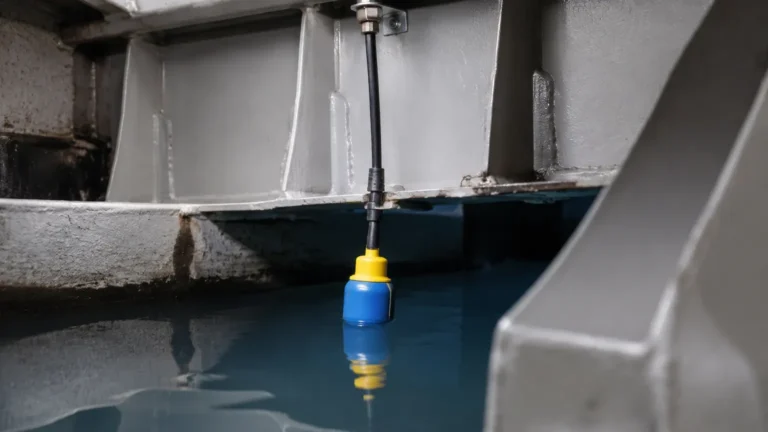
Level Switch 4 Wire
Level Switch 4 Wire
In industrial automation and process control, the method by which an instrument communicates its status to a control system is as critical as the measurement technology itself. A level switch 4 wire configuration represents a robust and versatile wiring standard used across various sensing technologies, including vibrating forks, ultrasonic sensors, and capacitance probes. Unlike 2-wire sensors that must draw operating current through the signaling loop, a 4-wire device separates the power supply from the output signal, offering distinct advantages in terms of electrical isolation and signal integrity.
Reliable Level Switches are essential for preventing tank overfills, protecting pumps from dry running, and managing inventory in complex industrial environments. Understanding the nuances of the 4-wire setup is vital for engineers and technicians tasked with integrating these devices into PLC (Programmable Logic Controller) or DCS (Distributed Control System) architectures.
Understanding the 4-Wire Configuration in Level Measurement
The term "4-wire" refers to the electrical interface of the instrument. In this setup, two wires are dedicated to providing the operating power (typically 24V DC or 110/230V AC), while the remaining two wires provide the output signal. This signal is most commonly a "dry contact" or potential-free relay contact.
Galvanic Isolation
One of the primary reasons for selecting a level switch 4 wire configuration is galvanic isolation. Because the power circuit is physically and electrically separated from the output circuit, there is no electrical path between the power source and the control system input. This prevents ground loops and protects sensitive PLC input cards from voltage spikes or electrical noise originating from the power supply side.
Power Independence
In a 2-wire (loop-powered) system, the sensor must operate on a very low current (typically under 4mA) to avoid triggering a false "active" state. This limits the processing power available to the sensor's electronics. A 4-wire switch, however, can draw as much current as needed from its dedicated power lines. This allows for more powerful microprocessors, faster response times, and the use of energy-intensive technologies like high-power ultrasonic transducers or heated thermal dispersion probes.
Measurement Principles of Common 4-Wire Level Switches
Before selecting a specific wiring configuration, it is essential to understand the underlying measurement principle of the device. The 4-wire interface is found across several different technology types:
Vibrating Fork (Tuning Fork)
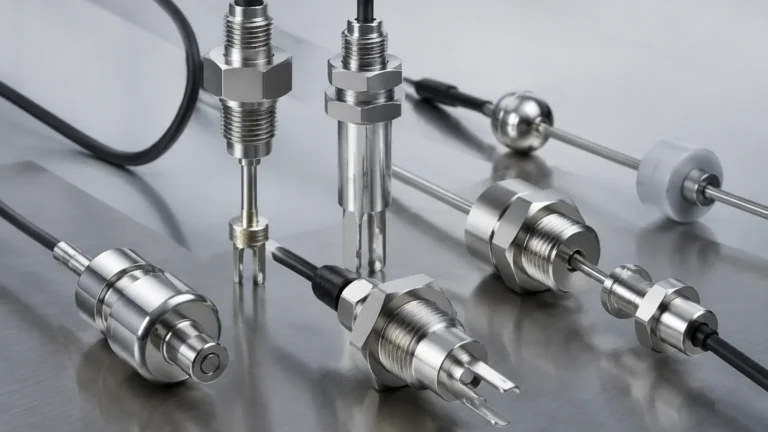
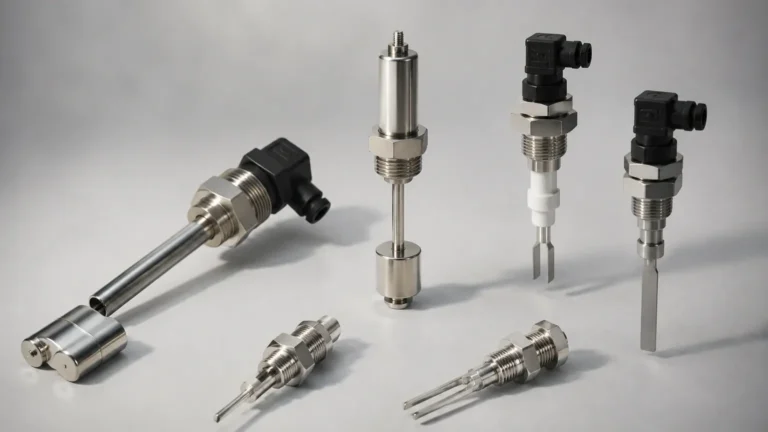
Vibrating fork level switches utilize a piezoelectric crystal to vibrate a metal fork at its natural resonance frequency (typically around 1,200 Hz to 1,400 Hz). When the fork is immersed in a liquid or solid medium, the frequency of vibration shifts. The internal electronics detect this frequency change and toggle the output. In a 4-wire version, the electronics are powered independently, allowing the internal relay to switch higher currents (often up to 5A at 250V AC) than a 2-wire electronic switch could handle.
Ultrasonic Point Level
Ultrasonic level switches use high-frequency sound waves. A transducer emits a pulse that travels through a gap in the sensor head. If liquid is present in the gap, the sound wave is transmitted to a receiver; if air is present, the wave is attenuated. The 4-wire configuration is common here because the ultrasonic pulse generation requires a stable, dedicated power source to maintain accuracy in turbulent or aerated liquids.
Capacitance Level Switches
These sensors measure the change in electrical capacitance between the probe and the tank wall (or a reference electrode). When the process material covers the probe, the dielectric constant changes, increasing the measured capacitance. 4-wire capacitance switches are often used in high-temperature or high-pressure applications where the electronics need to be robust and isolated from the switching load.
Key Benefits of Using a 4-Wire Level Switch
Choosing a 4-wire configuration over 2-wire or 3-wire alternatives offers several practical benefits in an industrial setting:
1. Versatile Output Options: Most 4-wire switches utilize a Single Pole Double Throw (SPDT) or Double Pole Double Throw (DPDT) relay. This allows the user to choose between Normally Open (NO) and Normally Closed (NC) configurations easily.
2. Higher Load Capacity: Because the output is a mechanical or solid-state relay isolated from the power supply, it can often switch larger loads, such as small solenoid valves or motor starters, without the need for an interposing relay.
3. Compatibility with Different Voltages: It is possible to power the level switch with 24V DC while using the output contacts to switch a 230V AC alarm circuit. This flexibility is a hallmark of the 4-wire design.
4. Simplified Troubleshooting: Technicians can verify the power supply to the unit independently of the signal loop. If the unit has power but the relay isn't toggling, the fault is clearly localized to the sensor or the relay itself.
Technical Selection Criteria for Industrial Applications
When specifying a level switch 4 wire, engineers must evaluate several factors beyond just the wiring. The following table provides a comparison of common technologies used in 4-wire configurations:
| Feature | Vibrating Fork | Ultrasonic (Point) | Capacitance |
| :— | :— | :— | :— |
| Primary Media | Liquids, Powders | Clean Liquids | Liquids, Solids, Slurries |
| Viscosity Limit | Up to 10,000 cP | Low to Medium | High (with coating rejection) |
| Pressure Range | Up to 64 bar | Up to 40 bar | Up to 100+ bar |
| Temp Range | -50°C to +150°C | -40°C to +90°C | -100°C to +250°C |
| Maintenance | Low (Self-cleaning) | Medium (Clean gap) | Low (if no buildup) |
| Key Limitation | Coating/Buildup | Aerated liquids | Dielectric sensitivity |
Material Compatibility
Ensure the wetted parts (e.g., 316L Stainless Steel, PFA, or Hastelloy) are compatible with the process media. For corrosive chemical applications, a 4-wire switch with a plastic-coated probe may be required.
Process Conditions
Consider the maximum operating pressure and temperature. Vibrating forks are highly resilient to temperature fluctuations, whereas ultrasonic sensors may be limited by the speed of sound changes in different gas layers above the liquid.
Installation and Wiring Best Practices
Correct installation is paramount for the longevity and reliability of a level switch 4 wire system. Follow these engineering guidelines:
Wiring Procedures
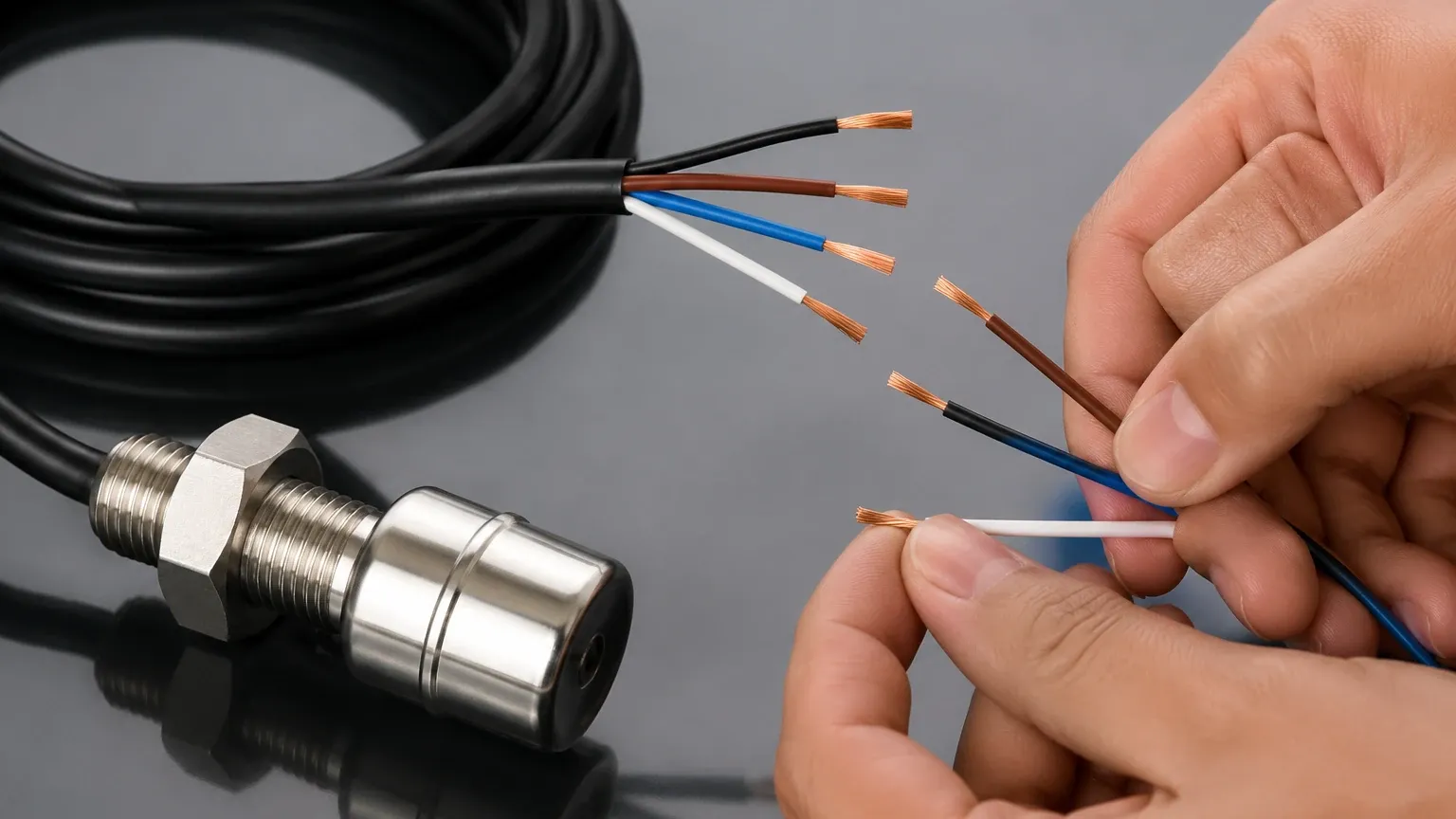
1. Identify Terminals: Always refer to the manufacturer's schematic, usually located inside the housing cover. Typically, terminals 1 and 2 are for power, while 3 and 4 (and sometimes 5 for SPDT) are for the relay contacts.
2. Cable Selection: Use shielded twisted pair cables for the power supply if the environment is electrically noisy. For the relay output, ensure the wire gauge is sufficient for the load being switched.
3. Conduit Entry: Use certified cable glands or conduit seals to maintain the NEMA or IP rating (e.g., IP66/67). Always install a "drip loop" to prevent moisture from following the cable into the housing.
Mechanical Mounting
* Avoid the Inflow: Do not mount the switch directly in the path of the falling material or liquid inflow, as this can cause false triggering or mechanical damage.
* Orientation: For vibrating forks, ensure the tines are oriented so that liquid can drain off easily. In horizontal installations, the tines should be vertical (side-by-side) rather than stacked one above the other.
* No-Go Zones: For ultrasonic switches, ensure there are no structural supports or pipes within the "view" of the sensor gap that could cause reflections.
Limitations and Critical Considerations
While the 4-wire configuration is highly reliable, it is not without limitations:
* Increased Installation Cost: Running four wires instead of two increases the cost of cabling and labor. In large facilities with hundreds of points, this can be significant.
* Physical Space: 4-wire instruments often have larger housings to accommodate the internal relay and the additional terminal blocks. This may be a constraint in compact skid-mounted equipment.
* Power Requirement: Unlike 2-wire sensors that can be powered directly by a PLC's analog input card, 4-wire sensors require a separate power distribution network (e.g., a 24V DC bus bar and fusing).
* Relay Wear: Mechanical relays in 4-wire switches have a finite life cycle (typically 100,000 to 1,000,000 operations). In applications with high-frequency switching, a solid-state output (3-wire PNP/NPN) might be more appropriate.
Comparison of 4-Wire Level Switch Technologies
In practical engineering, the choice of technology often depends on the specific behavior of the medium.
Vibrating forks are the "workhorse" of the industry for 4-wire applications. They are unaffected by foam, bubbles, or changes in dielectric constant. However, they can struggle with extremely viscous liquids that "bridge" the tines.
Ultrasonic switches are excellent for clean liquids where non-contact or gap-based sensing is preferred. They are less effective in highly carbonated liquids or where heavy foam is present, as the foam absorbs the ultrasonic signal.
Capacitance switches are preferred for high-temperature solids or where the material might coat the probe. Modern 4-wire capacitance switches include "active shield" technology to ignore material buildup on the probe, which is a common failure mode in 2-wire versions.
Frequently Asked Questions (FAQ)
Q: Can I use a 4-wire level switch in a 2-wire circuit?
A: Generally, no. A 4-wire switch requires a dedicated power source to operate its internal electronics. It cannot be powered solely by the leakage current of a 2-wire signaling loop.
Q: What is the difference between a 4-wire switch and a 3-wire switch?
A: A 3-wire switch (usually PNP or NPN) shares a common ground between the power supply and the signal. A 4-wire switch provides a fully isolated (dry) contact, meaning the output circuit is completely independent of the power circuit.
Q: How do I test a 4-wire level switch?
A: First, verify the supply voltage at the power terminals using a multimeter. Then, manually trigger the sensor (e.g., by immersing the fork in water or touching the probe) and check for continuity across the output terminals. You should hear the internal relay "click."
Q: Are 4-wire switches suitable for hazardous areas?
A: Yes, but they must be specifically rated (e.g., ATEX, IECEx, or Class/Div). Note that 4-wire switches are often housed in explosion-proof (Ex d) enclosures because they cannot easily be made intrinsically safe (Ex i) due to their higher power consumption.
By carefully selecting the measurement principle and adhering to proper wiring standards, a level switch 4 wire provides a dependable solution for the most demanding industrial level control tasks. Whether managing water treatment facilities or chemical processing plants, these devices ensure that process boundaries are maintained with precision and electrical safety.