Vibrating Fork Level Switches
Vibrating Fork Level Switches
In the landscape of industrial automation, point level detection serves as a critical fail-safe for process safety and inventory management. Among the various technologies available, vibrating fork level switches—often referred to as tuning fork switches—have emerged as a preferred solution for both liquid and solid applications due to their high reliability and minimal maintenance requirements. These instruments provide discrete output signals when a material reaches a specific height, making them indispensable for overfill protection, high-level alarms, and pump dry-run prevention.
As a professional manufacturer of industrial level measurement instruments, Welk provides high-performance Level Switches designed to withstand the rigors of chemical processing, water treatment, and oil and gas operations. This guide explores the engineering principles, selection criteria, and installation best practices for vibrating fork technology.
Understanding the Measurement Principle
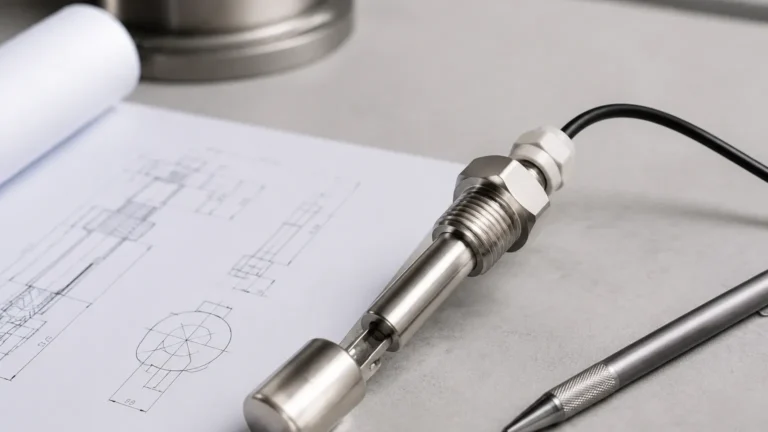
The operation of vibrating fork level switches is based on the principle of frequency shift. The sensor consists of a symmetric two-pronged fork that is driven into mechanical vibration by an internal piezoelectric crystal. This crystal converts electrical energy into mechanical movement, causing the fork to vibrate at its natural resonance frequency in free air.
The Frequency Shift Mechanism
When the fork is not in contact with the process medium (liquid or solid), it vibrates at its high natural frequency (typically between 100 Hz and 1200 Hz depending on the fork design). As the medium rises and covers the tines of the fork, the increased mass and damping effect of the material cause the vibration frequency to drop significantly.
A second piezoelectric crystal (the receiver) detects this change in frequency. The internal electronics process this shift and trigger a relay or electronic switch (such as a PNP/NPN transistor or a 4-20mA loop signal) to indicate the presence of the material. Once the level drops and the fork is no longer submerged, the frequency returns to its natural state, and the switch resets.
Key Advantages of the Principle
* Independent of Media Properties: Unlike capacitive switches, vibrating forks are largely unaffected by changes in the dielectric constant, conductivity, or moisture content of the medium.
* No Calibration Required: Most vibrating fork level switches are "plug-and-play," requiring no field calibration for different materials, provided the density of the medium meets the minimum threshold of the sensor.
* Immunity to Turbulence: The high-frequency vibration is generally unaffected by surface foam, bubbles, or turbulence in liquid tanks.
Application Scopes: Liquids vs. Solids
While the underlying principle remains the same, the mechanical design of vibrating fork level switches varies depending on whether they are intended for liquid or bulk solid applications.
Liquid Applications
In liquid environments, the forks are typically smaller and more streamlined. They are used extensively for:
* Overfill Protection: Acting as a redundant high-level alarm in chemical storage tanks.
* Leak Detection: Installed in double-walled tanks or sumps.
* Pump Control: Preventing pumps from running dry in water treatment facilities.
For liquids, the sensor must be able to detect materials with densities as low as 0.5 g/cm³ (500 kg/m³). In high-viscosity fluids, the vibration may be dampened too much, so it is vital to ensure the viscosity does not exceed the manufacturer's limit (typically up to 10,000 mm²/s).
Solid Applications
For bulk solids, such as powders, granules, and grains, the forks are usually larger and more robust to handle the mechanical impact and weight of the material. Common applications include:
* Silo Level Monitoring: Detecting high or low levels in flour, cement, or plastic pellet silos.
* Chute Blockage Detection: Monitoring conveyor transfer points for material buildup.
In solids, the minimum density requirement is often higher, typically starting at 0.01 g/cm³ (10 kg/m³) for very light powders, though standard industrial models usually require at least 0.1 g/cm³.
Technical Selection Criteria
Selecting the correct vibrating fork level switch requires a detailed understanding of the process conditions. Engineers should evaluate the following parameters:
| Parameter | Consideration | Typical Range/Value |
| :— | :— | :— |
| Medium Density | Minimum density required to trigger the frequency shift. | 0.5 to 2.5 g/cm³ (Liquids); >0.01 g/cm³ (Solids) |
| Viscosity | High viscosity can cause "false full" readings if material clings to the fork. | Up to 10,000 mm²/s (cSt) |
| Process Temperature | Standard vs. High-temperature versions. | -40°C to 150°C (-40°F to 302°F); Specials up to 250°C |
| Process Pressure | The mechanical strength of the fork and seal. | Vacuum to 64 bar (928 PSI) |
| Wetted Materials | Chemical compatibility with the medium. | 316L Stainless Steel, PFA Coating, Hastelloy |
| Output Type | Integration with the control system (PLC/DCS). | Relay (DPDT), PNP/NPN, 2-wire AC/DC, NAMUR |
Comparison with Other Point Level Technologies
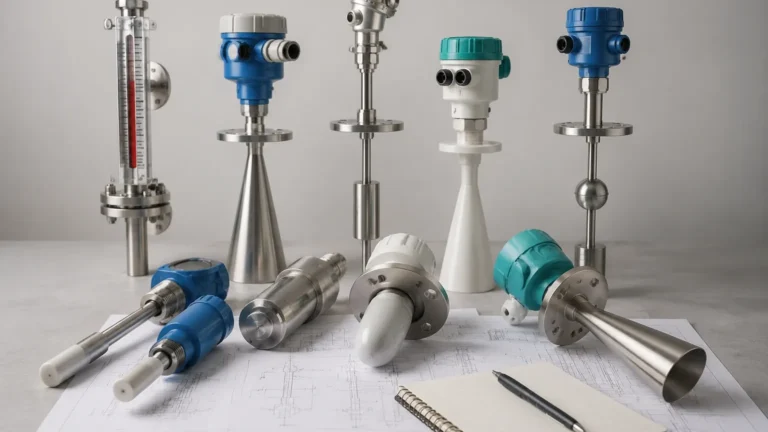
To understand where vibrating fork level switches fit in a project, it is helpful to compare them against other common Level Switches technologies.
| Technology | Best For | Limitations |
| :— | :— | :— |
| Vibrating Fork | General purpose liquids/solids, overfill protection. | Can be affected by heavy coating or extremely high viscosity. |
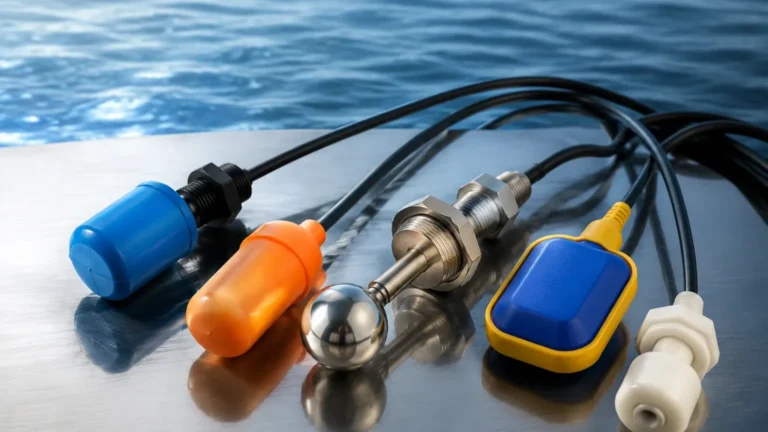
| Float Switch | Simple water/oil tanks, low cost. | Moving parts can jam; sensitive to turbulence and debris. |
| Capacitance | Interface detection, high-temperature solids. | Requires calibration; sensitive to dielectric changes. |
| Rotary Paddle | Heavy bulk solids, sand, gravel. | Mechanical wear on motor; not suitable for liquids. |
| Ultrasonic Gap | Clean liquids, non-contact requirements. | Affected by foam and heavy vapor layers. |

Installation Considerations and Best Practices
Correct installation is paramount to ensuring the long-term reliability of a vibrating fork level switch. Failure to follow orientation and placement guidelines often leads to premature failure or false alarms.
1. Orientation and Mounting
* Side Mounting: This is the most common position for high or low-level detection. The fork should be oriented so that the flat surfaces of the tines are vertical. This allows the material to flow easily through the tines rather than building up on top of them.
* Top Mounting: Used for high-level alarms. The fork is suspended on an extension rod or cable to the desired switching point. Ensure the extension is rigid enough to prevent swaying in agitated tanks.
2. Avoiding Flow Streams
Do not install the switch directly in the path of the filling stream. The mechanical force of falling material can damage the fork or cause intermittent false signals. If the switch must be near an inlet, install a protective baffle or shield above the fork.
3. Turbulence and Agitation
In tanks with agitators, the switch should be positioned to minimize the impact of lateral forces. If significant turbulence is present, a shorter fork length is generally preferred to reduce the mechanical moment on the process connection.
4. Build-up and Coating
While vibrating forks have a degree of "self-cleaning" due to the vibration, heavy coatings or sticky materials can eventually dampen the vibration enough to cause a permanent "covered" signal. In these cases, choosing a fork with a polished finish or a PFA coating can help mitigate material adhesion.
Maintenance and Troubleshooting
Vibrating fork level switches are largely maintenance-free because they have no moving parts subject to mechanical wear. However, periodic inspections are recommended in critical safety applications.
* Visual Inspection: Check for physical damage to the tines or signs of corrosion. Even minor pitting can change the resonance frequency over time.
* Cleaning: If the medium is prone to scaling or crystallization, the forks should be cleaned periodically using a soft brush or appropriate solvent. Avoid using abrasive tools that could scratch the stainless steel surface.
* Functional Test: Most modern switches include a magnetic test point or a local test button. Placing a magnet against the designated spot on the housing simulates a "covered" state, allowing operators to verify the loop and alarm logic without filling the tank.
Common Troubleshooting Steps
* False Alarm (Signal shows covered when empty): Check for material buildup between the tines. Ensure the density setting (if adjustable) is correct for the medium.
* No Signal (Signal shows empty when covered): Verify that the medium density is above the minimum threshold. Check for a failed piezoelectric crystal or a loss of power to the unit.
* Intermittent Switching: Often caused by heavy foam or air pockets in the liquid. Adjusting the switching delay (hysteresis) in the electronics can often smooth out these signals.
Conclusion: Selecting the Right Solution
Vibrating fork level switches represent a versatile and robust choice for modern industrial processes. Their ability to operate independently of many fluid properties makes them a "set-and-forget" solution for many engineering teams. However, success depends on matching the fork geometry and material to the specific density and chemical profile of the process.
When specifying these instruments, always confirm the following with your technical partner:
1. Minimum and Maximum Density: Ensure the fork is tuned for your specific medium.
2. Chemical Compatibility: Verify that 316L or specialized alloys are suitable for the process fluid.
3. Safety Certifications: For hazardous areas, ensure the switch carries the necessary ATEX, IECEx, or SIL2 ratings.
Welk continues to provide advanced Level Switches and measurement solutions tailored to global industrial standards. By understanding the mechanical and electronic requirements of vibrating fork technology, process engineers can enhance plant safety and operational efficiency across a wide range of applications.
Frequently Asked Questions (FAQ)
Q: Can vibrating fork level switches be used in vacuum applications?
A: Yes, most high-quality vibrating forks are designed to operate in vacuum conditions, provided the process connection and seals are rated for the specific vacuum level.
Q: How does foam affect the performance of a vibrating fork?
A: In most cases, the fork will ignore light surface foam and only trigger when the actual liquid level reaches the tines. However, very dense, saturated foam may cause a trigger depending on the sensitivity settings of the device.
Q: Is there a maximum length for extension rods?
A: For top-mounted liquid applications, extension rods can typically reach up to 3 or 4 meters (approx. 10 to 13 feet). For longer distances, cable-extended versions are used for solids, though these are less common for liquids due to stability issues.
Q: What is the typical response time?
A: The response time is usually very fast, often less than 500 milliseconds for the covered signal and approximately 1 second for the uncovered signal, though many units allow for a programmable delay to prevent chatter.