Level 5 Switch Games
Level 5 Switch Games
In the landscape of industrial automation and process control, the term "Level 5 Switch Games" represents the sophisticated interplay of logic, redundancy, and enterprise-level integration required for high-stakes fluid management. While the phrase might occasionally appear in consumer contexts, for the professional engineer, it signifies the highest tier of the automation pyramid—where point-level data from physical sensors transitions into strategic business intelligence.
Managing complex tank farms or high-pressure chemical reactors requires more than just a simple on/off trigger. It involves a strategic "game" of boolean logic, safety interlocks, and predictive maintenance. To successfully implement these systems, one must first understand the fundamental measurement principles of Level Switches and how they serve as the foundational data points for Level 5 enterprise resource planning (ERP) and cloud-based monitoring.
Core Measurement Principles of Industrial Level Switches
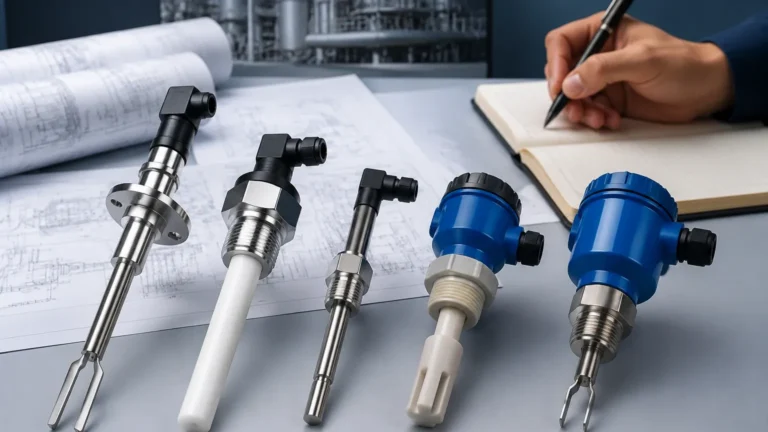
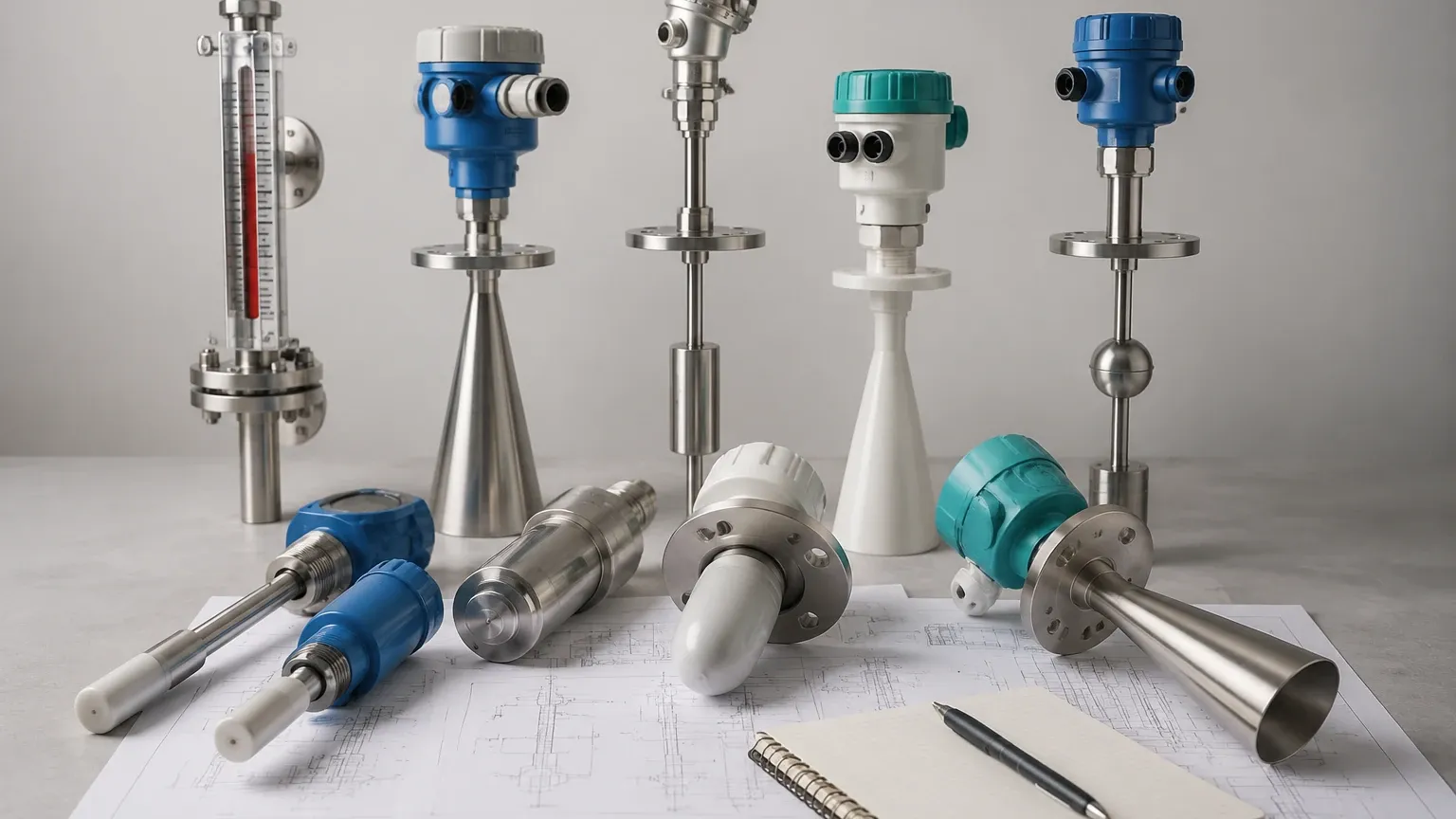
Before designing a complex logic sequence, engineers must select the appropriate sensing technology based on the physical properties of the medium. Welk provides a variety of instruments that utilize different physical phenomena to detect the presence or absence of material.
1. Vibrating Fork (Tuning Fork) Technology
Vibrating fork switches operate on the principle of frequency shift. A piezoelectric crystal excites a tuning fork to its natural resonant frequency in free air (typically around 1,200 Hz to 1,400 Hz). When the fork is submerged in a liquid or covered by a solid, the frequency changes or the amplitude of the vibration is dampened. This change is detected by the internal electronics and converted into a switching signal.
* Best for: Liquids with varying density, powders, and granulates.
* Advantages: High reliability, no moving parts, and resistance to foam and turbulence.
2. Float and Magnetic Level Switches
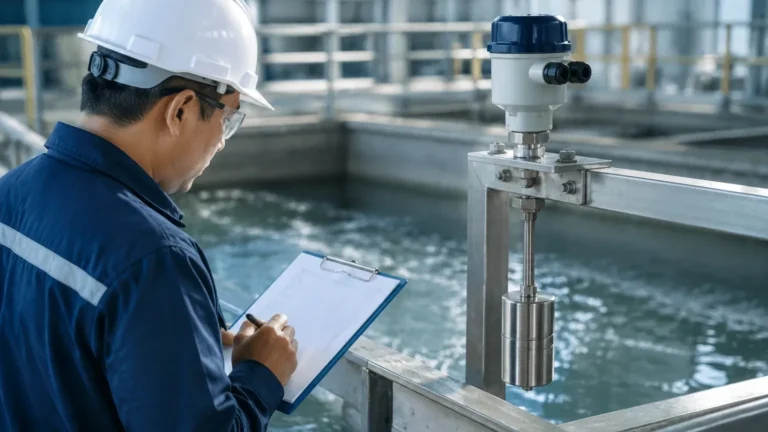
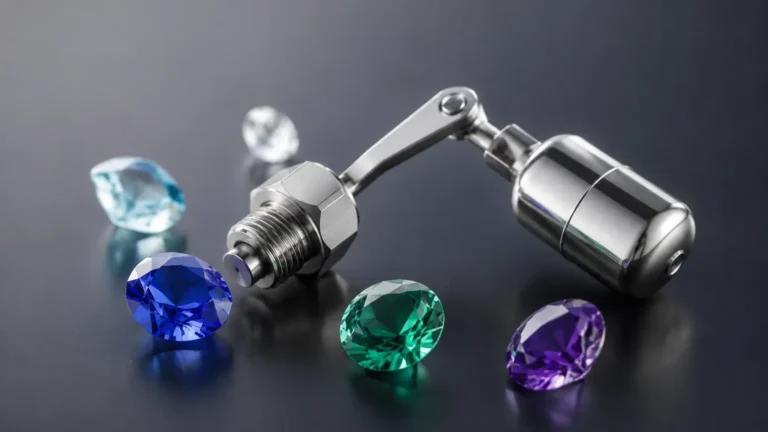
These switches rely on buoyancy. A float containing a permanent magnet moves up and down a guide tube as the liquid level changes. Inside the tube, a reed switch or a series of switches are positioned at specific setpoints. When the magnet aligns with the reed switch, the circuit closes (or opens).
* Best for: Clean liquids and simple water treatment applications.
* Advantages: Low cost, simple installation, and no power required for the sensing element itself.
3. Capacitive Level Sensing
Capacitive switches measure the change in electrical capacitance between a probe and the vessel wall (or a reference probe). As the medium rises, it replaces air (which has a low dielectric constant) with the process material (which typically has a higher dielectric constant), thereby increasing the capacitance.
* Best for: Corrosive chemicals, high-temperature liquids, and interface detection.
* Advantages: Robust design with no moving parts; can be used in high-pressure environments up to 100 bar.
4. Ultrasonic and Radar Switches
These are non-contact technologies that use Time-of-Flight (ToF) principles. An ultrasonic switch emits sound waves, while a radar switch emits electromagnetic pulses. The device measures the time it takes for the signal to bounce off the surface and return. While often used for continuous measurement, they are frequently configured as high-level or low-level switches in "Level 5" integrated systems.
The Logic of Level 5 Switch Games: Integrating Complex Sequences
In advanced industrial environments, a single switch is rarely used in isolation. The "games" of logic involve configuring multiple devices to ensure safety and process efficiency. This is often referred to as the logic layer that feeds into Level 5 of the Purdue Model (the Enterprise level).
Redundancy and Voting Logic
In critical applications, such as preventing the overflow of toxic chemicals, engineers use a "2oo3" (Two Out of Three) voting logic. Three separate level switches are installed at the high-high (HH) level. The system only triggers an emergency shutdown if at least two of the three switches agree that the level has been reached. This prevents a single sensor failure from causing a costly and unnecessary plant shutdown.
Pump Control and Hysteresis
Level switches are the primary drivers for pump automation. A typical "game" of logic involves a "Low" switch to start a pump and a "High" switch to stop it. This creates a deadband (hysteresis) that prevents the pump from "short-cycling," which would otherwise lead to premature motor failure. In Level 5 integrated systems, these cycles are logged and analyzed to predict when a pump might require maintenance based on its run-time and frequency of operation.
Selection Matrix for Process Industries
Choosing the right switch is the first step in winning the "game" of process reliability. The following table provides a general guideline for technology selection based on common industrial parameters.
| Technology | Media Type | Temp. Range | Pressure Range | Key Limitation |
| :— | :— | :— | :— | :— |
| Vibrating Fork | Liquids/Solids | -50°C to 250°C | Up to 64 bar | Heavy coating can cause false trips |
| Magnetic Float | Clean Liquids | -40°C to 150°C | Up to 40 bar | Moving parts can jam in dirty media |
| Capacitance | Liquids/Slurries | -100°C to 400°C | Up to 100 bar | Requires stable dielectric constant |
| Ultrasonic | Liquids | -40°C to 80°C | Up to 3 bar | Sensitive to heavy foam and vapor |
| Radar (Point) | Liquids/Solids | -40°C to 200°C | Up to 40 bar | Higher initial investment cost |
Installation and Engineering Best Practices
Even the most advanced Level Switches will fail if installed incorrectly. For Level 5 systems to function with high-integrity data, the following engineering guidelines must be followed:
1. Avoid Inflow Streams: Never install a level switch directly under a fill pipe. The turbulence and falling material will cause erratic switching and mechanical fatigue on the probe.
2. Nozzle Length Considerations: For ultrasonic and radar switches, ensure the nozzle is short enough that it doesn't interfere with the signal's beam angle. For vibrating forks, the tines must extend fully into the vessel beyond the nozzle neck.
3. Orientation: Vibrating forks should be installed with the tines oriented vertically (side-by-side) rather than one above the other to prevent material from bridging between the tines.
4. Wiring and Grounding: In high-complexity "Level 5" architectures, electromagnetic interference (EMI) can cause false signals. Use shielded cables and ensure the instrument is properly grounded to the vessel if the vessel is metallic.
5. Stillwells: In tanks with heavy agitation or surface waves, installing the switch inside a stillwell (a vertical pipe) can provide a stable surface for more accurate detection.
Common Risks and Challenges in High-Complexity Environments
When scaling up to enterprise-level monitoring (Level 5), certain risks become more pronounced:
* Data Latency: In a distributed system, the time it takes for a switch signal to reach the ERP system can be critical. For safety-critical applications, the switch must be hard-wired to the local Emergency Shutdown System (ESD) rather than relying on a cloud-based trigger.
* Build-up and Coating: In the chemical industry, materials often coat the sensor. While vibrating forks are somewhat resistant, significant build-up can change the resonant frequency. Regular "proof testing" is required to ensure the switch still operates within its calibrated parameters.
* Media Changes: If a plant switches from processing oil to a water-based chemical, capacitive and ultrasonic sensors may need recalibration due to changes in dielectric constants or sound velocity.
Maintenance and Troubleshooting
To maintain the integrity of a Level 5 integrated system, a proactive maintenance schedule is essential.
* Visual Inspection: Check for signs of corrosion on the housing and process connection. Ensure the cable glands are tight to prevent moisture ingress.
* Functional Testing (Proof Test): Periodically raise the liquid level or manually move the float to verify that the switch triggers the correct logic sequence in the control room.
* Cleaning: For technologies like capacitance or tuning forks, remove any accumulated material that could cause "bridging" or false positives.
Frequently Asked Questions (FAQ)
Q: Can level switches be used in hazardous (Ex) areas?
A: Yes, most industrial level switches from manufacturers like Welk are available with ATEX, IECEx, or UL certifications for use in explosive atmospheres. These typically use intrinsically safe (IS) circuits or flameproof (Ex d) enclosures.
Q: What is the difference between a level switch and a level transmitter?
A: A level switch provides a discrete (on/off) output at a specific point. A level transmitter provides a continuous (4-20mA, HART, or Modbus) signal representing the exact level throughout the entire range of the tank.
Q: How do I handle foam in a tank?
A: Vibrating fork switches are generally the best choice for foamy liquids, as they detect the density of the liquid and are usually unaffected by the lighter density of the foam. Ultrasonic sensors, conversely, often struggle with foam as it absorbs the sound waves.
Q: What is the significance of the "Level 5" in the context of these switches?
A: While "Level 5" is a term often used in gaming, in industrial engineering, it refers to the Enterprise Level of the automation hierarchy. Level switches provide the raw data that allows Level 5 systems to manage global inventory, optimize supply chains, and ensure environmental compliance across multiple facilities.
By understanding the physics of the sensors and the logic of the "games" played in process control, engineers can build robust, reliable systems that protect both personnel and the environment while maximizing operational efficiency.