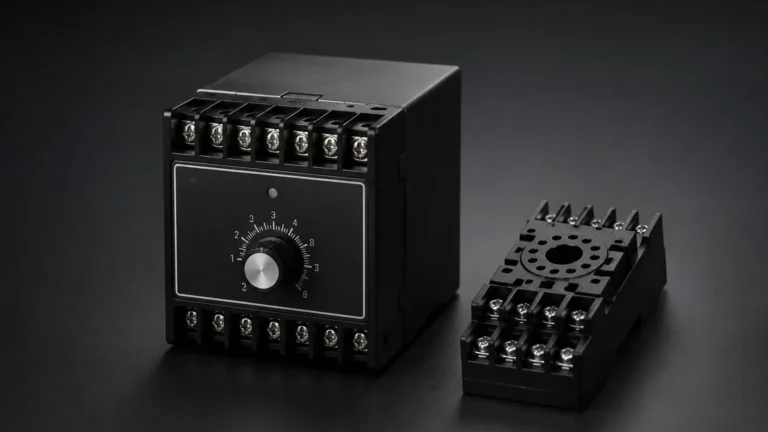
What Is Level Switch
What Is Level Switch
In industrial process control, maintaining the correct volume of liquids or solids within a vessel is critical for safety, efficiency, and environmental compliance. While continuous level transmitters provide real-time data across a range, many applications require a simpler, more robust solution to detect when a substance reaches a specific point. This is the primary function of a level switch. Understanding what is level switch technology involves examining the various physical principles used to trigger an electrical signal at a predetermined height.
A level switch is a point-level sensor designed to open or close an electrical circuit when it comes into contact with a material (liquid, powder, or granulated solid). Unlike continuous sensors that output a 4-20mA or digital signal representing the exact level, a switch acts as an "on/off" device. These instruments are fundamental components in overflow prevention, dry-run protection for pumps, and high/low-level alarms.
Measurement Principles of Level Switches
Before selecting a device, it is essential to understand the underlying physical principles that govern how these instruments interact with the process media. Each technology responds differently to physical properties such as density, conductivity, and dielectric constant.
Buoyancy Principle (Float Switches)
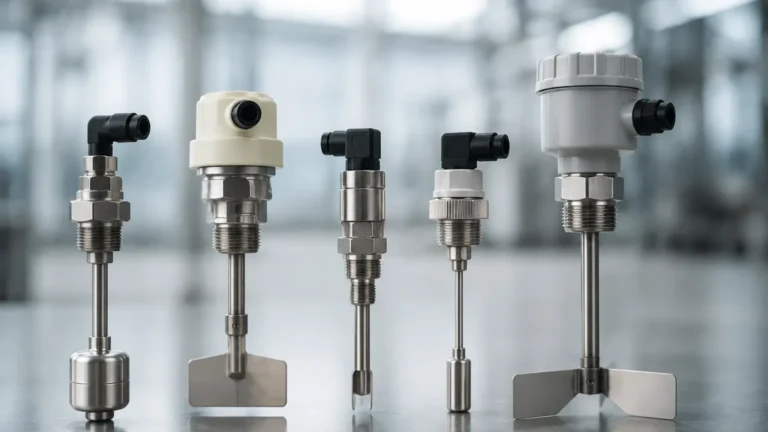
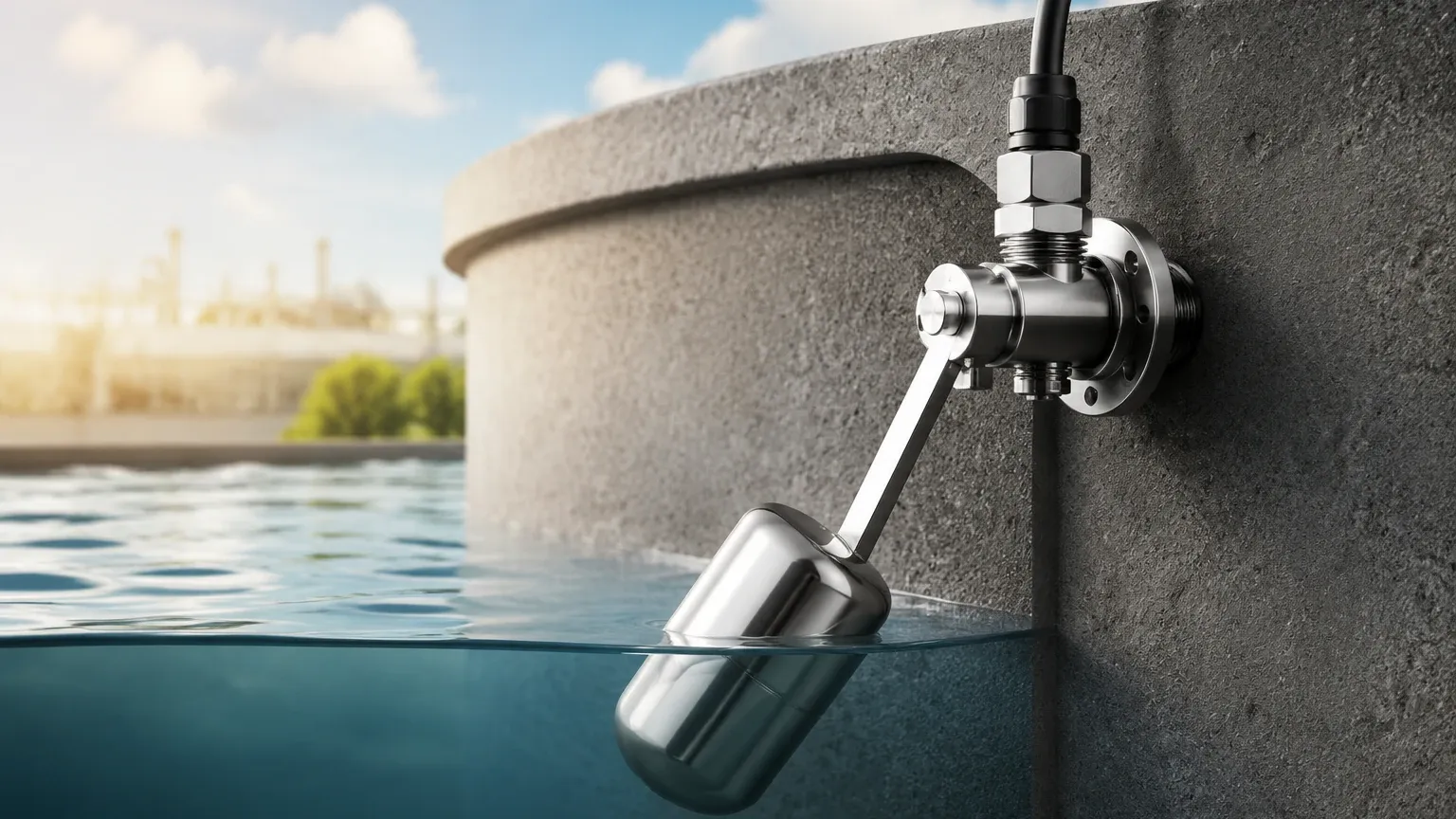
Float-based Level Switches operate on the principle of buoyancy. A float, containing a magnet, moves up and down a stem as the liquid level rises or falls. Inside the stem, a reed switch is positioned at a specific height. When the float’s magnetic field reaches the reed switch, the contacts close (or open), triggering the signal. This is a purely mechanical-to-electrical interaction that requires no external power for the sensing element itself.
Vibration Principle (Tuning Fork Switches)
The vibrating or "tuning fork" switch utilizes piezoelectric crystals to vibrate a metal fork at its natural resonant frequency in free air. When the fork is immersed in a liquid or solid, the frequency changes or the vibration is damped. An internal electronic circuit detects this change in frequency or amplitude and switches the output state. This technology is highly reliable because it is largely independent of the medium's chemical properties.
Capacitance Principle
Capacitance switches treat the sensor probe and the tank wall (or a second probe) as two plates of a capacitor. The material being measured acts as the dielectric. As the level rises and covers the probe, the dielectric constant changes, leading to a change in the measured capacitance. Once the capacitance crosses a calibrated threshold, the switch changes state. This method is effective for both liquids and solids but requires calibration based on the material's dielectric properties.
Conductivity Principle
Used exclusively for conductive liquids, these switches use a low-voltage electrode. When the liquid touches the electrode, it completes an electrical circuit between the probe and the tank wall (or a reference electrode). This completion of the circuit triggers the relay. It is a cost-effective solution for water-based applications but cannot be used with oils or non-conductive chemicals.
Common Types of Level Switches and Their Applications
Industrial environments vary from high-pressure steam boilers to dry grain silos. Consequently, different types of level switches have been developed to handle these specific challenges.
1. Magnetic Float Switches
These are the most common for clean liquid applications. They are available in single-point or multi-point configurations.
* Best for: Water tanks, fuel storage, and chemical processing.
* Materials: Stainless steel (304/316L), PP, PVC, or PVDF for corrosive environments.
2. Vibrating Level Switches (Tuning Forks)
Often referred to as "liquid level limit switches," these are favored for their immunity to bubbles, foam, and vibration.
* Best for: Food and beverage (hygienic versions), wastewater, and turbulent liquids.
* Advantage: No calibration required and no moving parts to wear out.
3. Rotary Paddle Switches
Designed specifically for bulk solids and powders. A small motor slowly rotates a paddle. When the material reaches the paddle, it creates a mechanical torque that stops the motor and flips the switch.
* Best for: Silos containing grain, sand, plastic pellets, or cement.
* Limitation: Not suitable for liquids or very fine, low-density dust that cannot stall the motor.
4. Ultrasonic Level Switches
These use ultrasonic waves to detect the presence of a medium. A gap in the sensor head prevents the signal from crossing until a liquid fills the gap, allowing the ultrasonic energy to pass through to the receiver. This is a non-contact sensing method within the probe head itself.
Selection Criteria: Choosing the Right Technology
Selecting the incorrect switch can lead to false positives (nuisance tripping) or, more dangerously, a failure to trip during an overflow. Engineers should evaluate the following parameters:
Physical Properties of the Medium
* Viscosity: Highly viscous liquids may stick to floats or tuning forks, causing "bridging" or coating that prevents the switch from resetting. Capacitance switches with coating rejection are better suited here.
* Density: Float switches must be weighted correctly to float in the specific gravity (SG) of the liquid. Most floats require an SG > 0.5.
* Conductivity: If using a conductivity switch, the liquid must have a minimum conductivity (usually > 10 μS/cm).
Process Conditions
* Pressure: Standard plastic switches may only handle up to 2 bar (29 PSI), while heavy-duty stainless steel versions can withstand over 100 bar (1450 PSI).
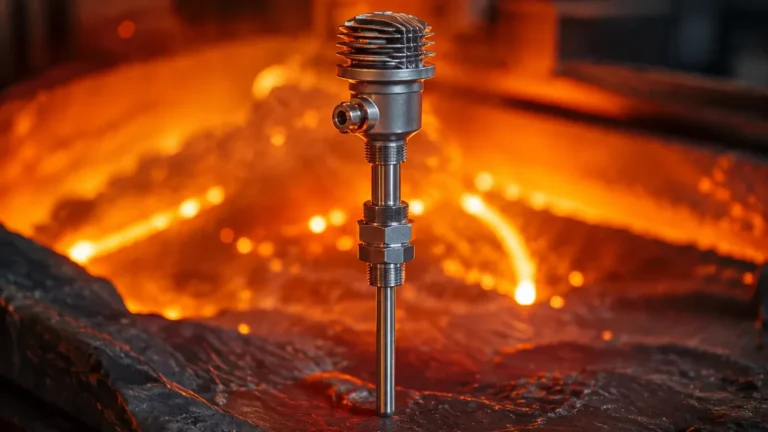
* Temperature: High-temperature applications (e.g., steam boilers) require switches with remote electronics or specialized cooling fins to protect the circuitry. Standard ranges often go up to 150°C (302°F), with specialized models reaching 400°C (752°F).
Selection Table for Level Switches
| Technology | Medium Type | Viscosity Tolerance | Pressure Range | Key Advantage |
| :— | :— | :— | :— | :— |
| Float | Clean Liquids | Low | Up to 40 bar | Low cost, simple |
| Tuning Fork | Liquids/Solids | Medium | Up to 64 bar | No calibration, reliable |
| Capacitance | Liquids/Solids | High | Up to 100 bar | Handles coatings well |
| Rotary | Bulk Solids | N/A (Dry) | Atmospheric | Robust for heavy solids |
| Conductive | Conductive Liquids | Low | Up to 20 bar | Very economical |
Installation Considerations and Best Practices
Correct installation is as important as selecting the right technology. Failure to follow engineering guidelines often results in premature device failure.
1. Avoid the Fill Stream: Never install a level switch directly in the path of the incoming material. The force of the falling liquid or solid can damage the probe or cause constant false triggering.
2. Mounting Orientation: Some switches, like tuning forks, can be mounted horizontally or vertically. However, float switches are often orientation-specific. Ensure the swing radius of a side-mounted float is not obstructed by tank internals like ladders or agitators.
3. Stilling Wells: In tanks with high turbulence or agitation, a stilling well (a pipe surrounding the sensor) should be used to provide a calm surface for the measurement. This is particularly important for float and ultrasonic switches.
4. Wiring and Sealing: Use proper cable glands and create a "drip loop" in the wiring to prevent moisture from entering the housing via the conduit. For hazardous areas, ensure the switch is ATEX or IECEx certified and wired through an intrinsic safety barrier if required.
5. Dead Zones: Be aware of the "dead zone" or unmeasurable area near the mounting thread. If a high-level alarm is needed at the very top of the tank, the switch must be positioned so the sensing element reaches that exact point.
Limitations and Common Risks
While level switches are robust, they are not universal solutions. Engineers must be aware of the following risks:
* Material Build-up: In applications involving slurries or sticky resins, material can accumulate on the sensor. This is known as "coating." If the coating is thick enough, a tuning fork may continue to signal "full" even after the tank is empty.
* Turbulence and Foam: Foam can be problematic. Some technologies (like ultrasonic or capacitance) might see foam as a solid level, while others (like tuning forks) may ignore it. The choice depends on whether you want to measure the liquid level or the foam level.
* Mechanical Wear: Any switch with moving parts, such as a rotary paddle or a float, will eventually suffer from mechanical fatigue or seal failure. In high-cycle applications, solid-state switches (tuning forks or capacitance) are preferred for their longer service life.
* Electromagnetic Interference (EMI): Electronic switches, particularly capacitance types, can be affected by nearby heavy machinery or variable frequency drives (VFDs) if not properly shielded and grounded.
Frequently Asked Questions (FAQ)
Q: Can a level switch be used for continuous level monitoring?
A: No. A level switch only provides a point-level signal (presence/absence). For continuous monitoring, a radar, ultrasonic, or hydrostatic level transmitter is required.
Q: What is the difference between N.O. and N.C. contacts?
A: N.O. (Normally Open) means the circuit is open when the switch is not activated. N.C. (Normally Closed) means the circuit is closed in its shelf state. Most industrial level switches offer SPDT (Single Pole Double Throw) contacts, allowing the user to choose either configuration.
Q: How do I test a level switch without filling the tank?
A: Many modern vibrating switches include a magnetic test point on the housing. Touching a magnet to this point simulates a dampening of the fork, allowing you to test the relay logic without a wet test. For float switches, the float must be manually moved along the stem.
Q: Are level switches suitable for hygienic food applications?
A: Yes, but they must feature polished stainless steel surfaces (typically Ra < 0.8 μm) and hygienic process connections like Tri-Clamp to prevent bacterial growth.
By understanding the technical nuances of what is level switch functionality, process engineers can implement safer and more reliable control loops. Whether preventing a catastrophic oil spill or ensuring a pump does not run dry, the humble level switch remains a cornerstone of industrial automation.