Feed Bin Level Sensor
Feed Bin Level Sensor
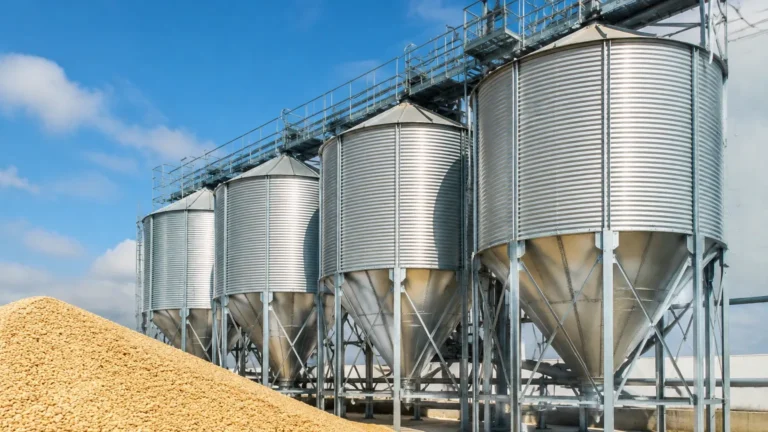
In modern livestock management and industrial feed processing, the ability to accurately monitor inventory is a cornerstone of operational efficiency. A feed bin level sensor provides the data necessary to prevent stockouts, optimize delivery schedules, and reduce the labor-intensive—and often dangerous—task of manually checking bins. However, the environment inside a feed silo is uniquely challenging, characterized by high dust concentrations, varying material moisture, and irregular surface topographies.
Selecting the correct instrumentation requires a deep understanding of the physical principles of measurement and how they interact with bulk solids like corn, soy, pellets, and mash. This guide explores the primary technologies used in feed bin level monitoring, their practical applications, and the engineering considerations required for successful deployment.
Understanding Feed Bin Level Measurement Principles
Level measurement in feed bins is generally divided into two categories: continuous level measurement and point level detection. Continuous sensors provide a real-time percentage or volume reading of the bin's contents, while point level sensors act as switches to signal when the material reaches a specific height (such as a high-level alarm to prevent overfilling).
Radar Level Measurement (FMCW)
Frequency Modulated Continuous Wave (FMCW) radar is widely considered the gold standard for feed bin applications. The sensor emits a high-frequency signal (typically 26 GHz or 80 GHz) that travels to the material surface and reflects back. By measuring the frequency shift of the reflected signal, the device calculates the distance with high precision.
For feed bins, 80 GHz radar is preferred because its narrow beam angle (often as low as 3 degrees) allows it to avoid internal obstructions like ladders or support struts. Radar signals are unaffected by the dense dust clouds generated during pneumatic filling, making them exceptionally reliable in agricultural environments.
Ultrasonic Level Measurement
Ultrasonic sensors use sound waves to measure distance. The sensor emits a pulse that bounces off the feed surface and returns to the transducer. The time-of-flight is used to calculate the level. While cost-effective, ultrasonic technology has significant limitations in feed bins. Sound waves can be absorbed by soft, porous materials (like certain types of mash) and are easily deflected by heavy dust, which can lead to signal loss during filling cycles.
Rotary Paddle (Point Level)
This is a mechanical method for point level detection. A small motor slowly rotates a paddle. When the feed level rises to reach the paddle, the resistance stalls the motor, which triggers a microswitch to signal that the bin is full. It is a robust, low-cost solution for high-level alerts but does not provide data on the actual volume remaining in the bin.
Capacitance Probes (Point Level)
Capacitance sensors detect the change in electrical capacitance between the sensor probe and the bin wall (or a reference ground) when feed is present. These are useful for detecting the presence or absence of material at specific points, though they can be sensitive to moisture changes in the feed or material buildup on the probe.
Selection Criteria for Feed Bin Level Sensors
Choosing the right sensor involves balancing accuracy requirements, budget, and the physical characteristics of the feed. The following table provides a comparison of the most common technologies used in the industry.
| Technology | Accuracy | Dust Resistance | Ideal Application | Maintenance Needs |
| :— | :— | :— | :— | :— |
| 80 GHz Radar | High (±2mm) | Excellent | Tall, narrow bins; high dust | Very Low |
| Ultrasonic | Moderate | Poor | Small bins; low-dust pellets | Moderate (cleaning) |
| Rotary Paddle | N/A (Switch) | Excellent | Overfill prevention | Low to Moderate |
| Capacitance | N/A (Switch) | Good | High/Low alarms | Moderate (calibration) |
When evaluating options, engineers should prioritize sensors that offer a high degree of signal processing. Advanced algorithms can filter out "noise" from dust or agitators, ensuring the output remains stable. For those looking to explore comprehensive industrial solutions, visiting the Main Page of professional manufacturers like Welk can provide deeper insights into specific model specifications and integration capabilities.
Installation and Engineering Considerations
The physical installation of a feed bin level sensor is just as critical as the technology itself. Improper placement is the leading cause of measurement errors in bulk solids.
1. Avoiding the Fill Stream
Sensors should never be mounted directly in the path of the incoming feed. The force of the material during filling can damage the sensor or cause erratic readings. For radar and ultrasonic sensors, the fill stream creates a "curtain" that the signal cannot easily penetrate.
2. Accounting for the Angle of Repose
Bulk solids do not sit flat like liquids; they form a cone (angle of repose) when filled and an inverted cone when emptied. To get an average volume reading, the sensor should typically be mounted at approximately one-third of the radius from the bin wall. Mounting too close to the center will overstate the volume during filling, while mounting too close to the wall will understate it.
3. Mounting Flanges and Aiming
Because of the cone shape of the feed, it is often beneficial to use an adjustable mounting flange (swivel flange). This allows the sensor to be aimed toward the center of the cone's slope, maximizing the strength of the reflected signal. This is particularly important for radar sensors in tall, narrow silos.
4. Environmental Protection
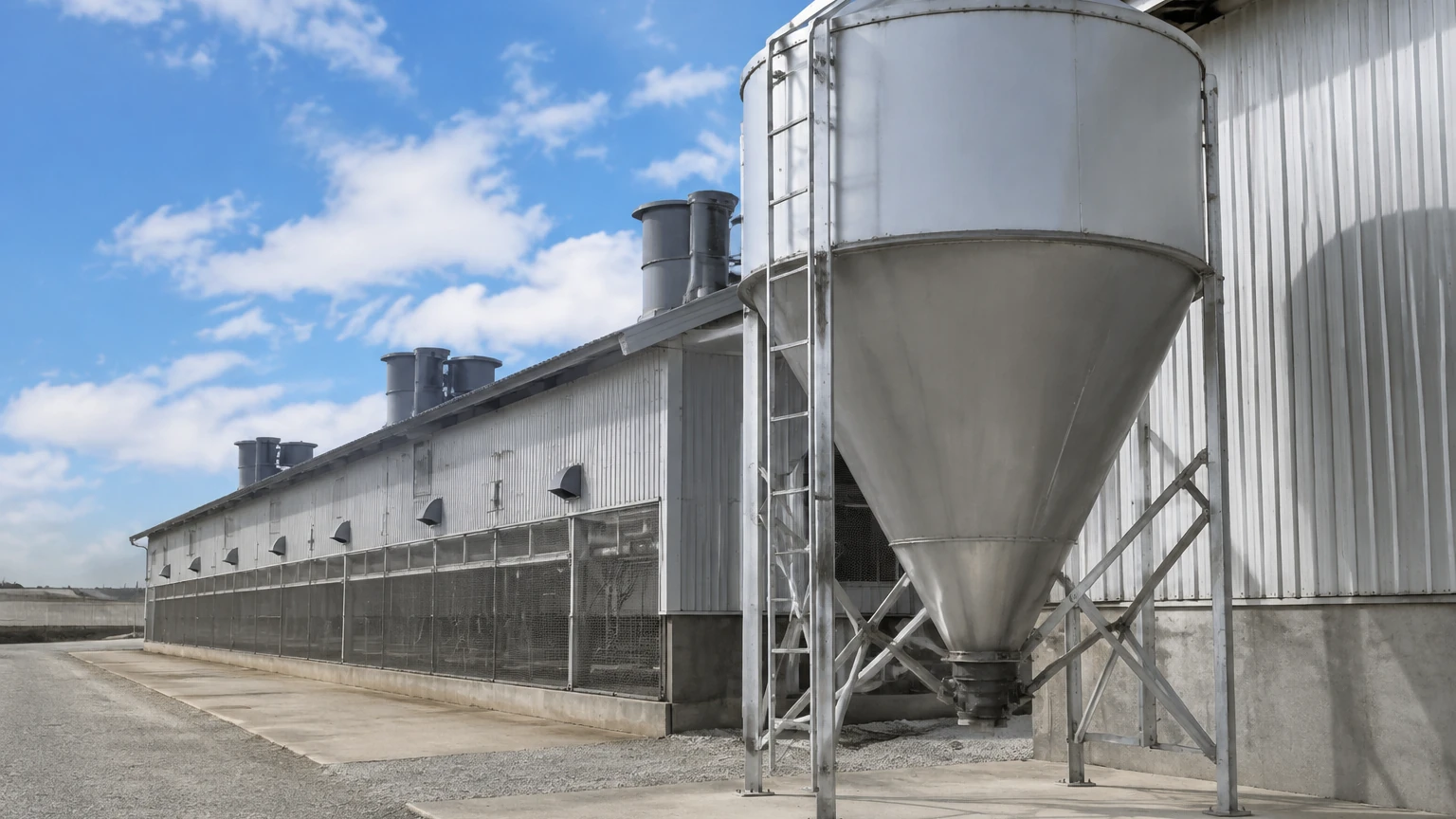
Feed bins are often located outdoors. Sensors must have an IP66 or IP67 rating to withstand rain, humidity, and temperature fluctuations. In regions with extreme heat, sunshades are recommended to prevent electronic overheating and to ensure the internal temperature compensation of the sensor remains accurate.
Limitations and Challenges
While modern sensors are highly capable, certain conditions still pose challenges for a feed bin level sensor:
* Material Bridging: If the feed sticks to the sides of the bin (bridging), a sensor may report that the bin is full even if the center is empty. Point level sensors at multiple heights can help identify this issue.
* Extreme Dust: While radar penetrates dust, extremely thick layers of dust settling on the sensor face (the antenna) can eventually attenuate the signal. Many high-end radar sensors feature a "flush" design or an air-purge connection to blow dust off the lens.
* Internal Obstructions: Cross-braces, ladders, and temperature cables can create false echoes. Modern radar software allows for "false echo suppression," where the sensor is taught to ignore reflections from these fixed objects.
Frequently Asked Questions
Can one sensor work for all types of feed?
Generally, yes, if using 80 GHz radar. However, if using ultrasonic or capacitance sensors, the settings may need to be adjusted when switching between dense pellets and light, airy mash, as the dielectric constant and sound absorption qualities differ.
How do I convert distance to weight?
Most sensors output a distance or level percentage. To convert this to weight (tons or kg), you must program the bin's geometry and the bulk density of the feed into your control system or the sensor’s software. Note that bulk density can change based on moisture content and compaction.
Is wireless connectivity available for these sensors?
Yes, many modern feed bin level sensors are integrated with LoRaWAN, NB-IoT, or cellular gateways. This is particularly useful for remote farm locations where running signal cables to a central office is cost-prohibitive.
Do I need a technician to calibrate the sensor?
Most modern radar sensors are "plug-and-play" to an extent. Basic calibration involves setting the "Zero" (empty) and "Span" (full) distances. However, for complex bin shapes, a professional commissioning may be required to map out internal obstructions.
Conclusion
Implementing a reliable feed bin level sensor system is a strategic investment in supply chain visibility. By selecting a technology that matches the specific environmental challenges of the facility—most notably dust and material topography—operators can eliminate the guesswork of inventory management.
For industrial-grade applications, it is recommended to consult with specialists who understand the nuances of bulk solids. Exploring the Main Page of an established instrument manufacturer like Welk allows project managers to compare radar, ultrasonic, and point-level technologies side-by-side, ensuring the chosen solution provides long-term accuracy and minimal maintenance requirements in the demanding agricultural sector.