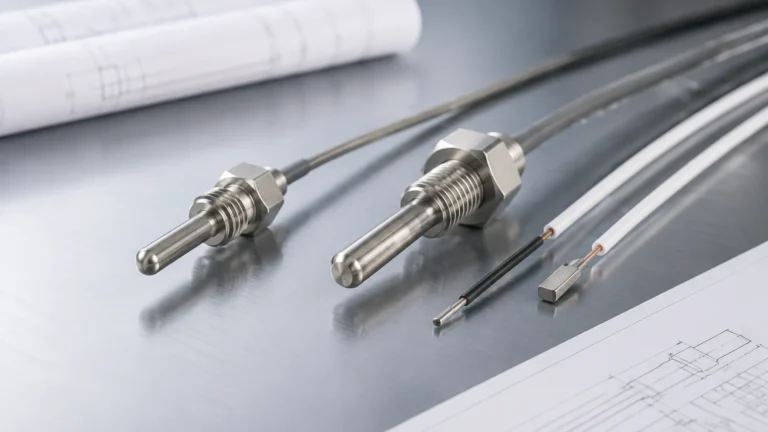
Ftl51b
Ftl51b
In the landscape of industrial process automation, point level detection serves as a critical fail-safe and operational control mechanism. The Ftl51b represents a sophisticated iteration of the vibronic point level switch, a technology specifically engineered for liquids. Designed to meet stringent safety requirements, such as SIL2 and SIL3 applications, this instrument is widely utilized for overfill prevention and dry-run protection in industries ranging from chemical processing to water treatment. Understanding the mechanical principles, selection criteria, and installation nuances of the Ftl51b is essential for engineers seeking to maintain high levels of process integrity.
The Vibronic Measurement Principle
Before evaluating the specific features of the Ftl51b, it is necessary to understand the underlying physics of vibronic level detection. This technology is often referred to as the "tuning fork" principle due to the shape of the sensing element.
Piezoelectric Excitation
The sensor consists of a symmetric vibrating fork. Inside the probe housing, a piezoelectric crystal drive excites the fork to vibrate at its natural resonance frequency in the air. This frequency is precisely monitored by the internal electronics.
Frequency Shift in Liquids
When the vibrating fork comes into contact with a liquid medium, the density of the liquid causes the vibration frequency of the fork to shift. Because liquids are significantly denser than air or gas, they dampen the vibration. The electronics detect this specific frequency change and convert it into an electronic switching signal (e.g., PNP, relay, or 4-20mA NAMUR).
Advantages of Vibronic Detection
Unlike float switches, which rely on moving mechanical parts that can jam, or conductive probes, which require the medium to be electrically conductive, vibronic switches like the Ftl51b are largely independent of the medium's physical properties. They are unaffected by:
- Dielectric constant changes.
- Conductivity variations.
- Turbulence or foam.
- Pressure and temperature fluctuations.
- External vibrations (due to the high-frequency resonance of the fork).
Key Technical Specifications and Capabilities
The Ftl51b is designed for high-demand environments where reliability is non-negotiable. It integrates digital diagnostics and robust hardware to ensure long-term stability. For a broader look at various level measurement technologies, engineers often consult a comprehensive Main Page to compare vibronic sensors with radar or ultrasonic alternatives.
Process Temperatures and Pressures
The device is engineered to withstand extreme process conditions. Standard versions typically handle temperatures from -50°C to +150°C (-58°F to +302°F), with specialized variants extending these limits. Pressure ratings often reach up to 100 bar (1450 psi), making it suitable for high-pressure reactor vessels and storage tanks.
Safety and Intelligence (Heartbeat Technology)
One of the defining features of the Ftl51b generation is the inclusion of advanced diagnostic suites.
1. Proof Testing: The device allows for proof testing according to SIL (Safety Integrity Level) requirements without the need to remove the sensor from the process or change the liquid level.
2. Verification: Internal electronics can perform a self-check to verify that all components are functioning within their original specifications.
3. Monitoring: The sensor can detect build-up or corrosion on the tuning fork, providing predictive maintenance alerts before a failure occurs.
Practical Selection Criteria
Choosing the correct configuration for an Ftl51b requires an analysis of the chemical compatibility, the physical space available, and the safety requirements of the facility. The following table summarizes key selection parameters for point level switches in this class.
| Parameter | Requirement/Specification | Notes |
| :— | :— | :— |
| Medium Density | Min. 0.5 g/cm³ (optional 0.4 g/cm³) | Critical for liquefied gases or light oils. |
| Viscosity | Up to 10,000 mPa·s | Higher viscosity may require specialized fork shapes. |
| Wetted Materials | 316L Stainless Steel, Alloy C22 | Ensure compatibility with corrosive acids or bases. |
| Process Connection | Thread (G, NPT), Flange (ASME, EN), Tri-Clamp | Hygienic connections required for food/pharma. |
| Output Signal | FEL61 (Relay), FEL64 (DC PNP), FEL68 (NAMUR) | Must match the PLC or DCS input card. |
| Safety Rating | SIL2 / SIL3 (redundant) | Mandatory for hazardous overfill prevention. |
| Housing Material | Plastic, Aluminum, or Stainless Steel | Stainless steel is preferred for offshore or wash-down areas. |
Installation Considerations
Correct installation is paramount to prevent false triggers and ensure the longevity of the vibronic sensor. While the Ftl51b is robust, certain physical orientations and environmental factors must be addressed during the engineering phase.
Orientation and Positioning
- Top-Down (Vertical): Used for high-level (overfill) detection. The fork should be positioned so that the liquid reaches the switching point at the desired safety margin.
- Side-Mount (Horizontal): Common for both high and low-level detection. In horizontal installations, the fork must be oriented so that the liquid can drain off easily. The "tines" of the fork should be vertical (standing on edge) rather than horizontal to prevent solids or bubbles from being trapped between them.
- Bottom-Mount: Used for dry-run protection in pumps. Ensure the fork is not placed in a "dead leg" where sediment might accumulate.
Turbulence and Flow
If the sensor is installed near an inlet pipe or an agitator, the mechanical force of the moving liquid can cause stress on the fork or lead to erratic switching. In these cases, a baffle plate or a protective pipe should be installed to shield the sensor from direct impact while still allowing the liquid level to reach the tines.
Nozzle Length
The nozzle (the pipe section connecting the tank to the sensor) should be as short as possible. If the nozzle is too long, liquid may be trapped inside due to surface tension (the "bridge" effect), causing the sensor to indicate a "full" state even after the tank has been emptied.

Limitations and Operational Risks
While vibronic switches are highly versatile, they are not universal solutions. Engineers must be aware of the following limitations:
1. Extreme Viscosity: If the medium exceeds 10,000 mPa·s, the liquid may stick to the fork tines so heavily that the vibration cannot restart once the level drops, leading to a false "full" signal.
2. Heavy Coating/Scaling: While the Ftl51b can detect build-up, excessive hard scaling (like calcium carbonate in water treatment) can eventually dampen the vibration to the point of error.
3. Solid Particles: If the liquid contains large solids, they may become wedged between the tines of the fork, preventing proper vibration.
4. Gas Bubbles: While small bubbles are ignored, a high concentration of gas (aeration) can lower the effective density of the liquid below the sensor's threshold (e.g., below 0.5 g/cm³), causing it to fail to detect the liquid.
Frequently Asked Questions (FAQ)
Q: Can the Ftl51b be used in solids or powders?
A: No. The Ftl51b is specifically designed for liquids. For solids or bulk powders, a different fork geometry and frequency (often called a "vibrating rod" or a different vibronic series) are required to handle the different damping characteristics of granular materials.
Q: How does the sensor handle foam?
A: In most cases, the Ftl51b will ignore light foam and only switch when the actual liquid reaches the tines. However, if the foam is extremely dense and "wet" (high density), it may trigger the switch. Testing with the specific medium is recommended if foam is a constant process variable.
Q: Is calibration required?
A: No. Vibronic switches are factory-calibrated. Since the switching point is based on a physical frequency shift related to density, no field calibration is necessary unless the medium has an exceptionally low density that requires a sensitivity adjustment (e.g., switching from 0.7 g/cm³ to 0.4 g/cm³ settings).
Q: What is the benefit of the Bluetooth interface?
A: The Bluetooth interface allows maintenance personnel to access diagnostics, status reports, and proof-test protocols from a smartphone or tablet without opening the housing. This is particularly valuable in hazardous areas (Ex zones) where opening an explosion-proof enclosure requires a hot-work permit.
Conclusion
The Ftl51b is a cornerstone of modern point level detection, offering a blend of mechanical reliability and digital intelligence. By utilizing the vibronic principle, it provides a stable switching solution that remains unaffected by most process variables. However, successful implementation depends on careful selection of wetted materials, understanding the density of the medium, and adhering to proper installation geometries. For organizations looking to integrate these sensors into a broader automation strategy, exploring the full range of measurement technologies at the Main Page provides the necessary context to choose the most cost-effective and accurate instrumentation for any industrial application.