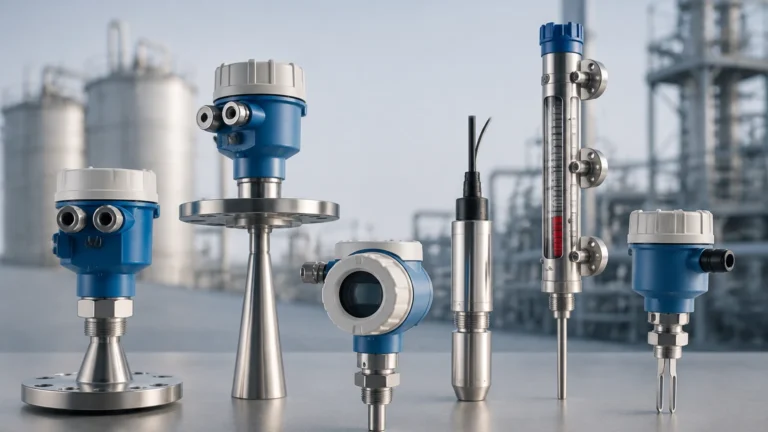
164520 Ls-7 Level Switch
164520 Ls-7 Level Switch
In the landscape of industrial automation and fluid management, the 164520 LS-7 level switch is recognized as a fundamental component for point-level detection. Designed for reliability in compact spaces, this specific model belongs to a broader category of float-actuated switches used to monitor high, low, or intermediate liquid levels in tanks and vessels. For engineering teams and procurement specialists, understanding the technical nuances of the LS-7 series is essential for ensuring system safety and process efficiency.
Industrial level measurement requires a balance between accuracy, durability, and cost-effectiveness. While advanced technologies like radar and ultrasonic sensors provide continuous data, point-level switches like the 164520 LS-7 remain the industry standard for overflow protection and pump control due to their simplicity and fail-safe nature. To explore a wider range of high-precision instruments, including advanced radar and ultrasonic solutions, professionals often refer to the Main Page of comprehensive industrial catalogs.
Measurement Principles of Float-Actuated Switches
The 164520 LS-7 level switch operates on a well-established electromechanical principle: magnetic buoyancy. This method is favored in B2B applications because it requires no external power to sense the liquid level, making it inherently robust against electrical noise.
The Magnetic Reed Switch Mechanism
At the core of the LS-7 is a hermetically sealed reed switch located inside the stationary stem of the unit. The reed switch consists of two overlapping, ferromagnetic blades (reeds) enclosed in a glass envelope. When a magnetic field is applied, the blades are drawn together (closing the circuit) or pushed apart (opening the circuit).
The Buoyant Float
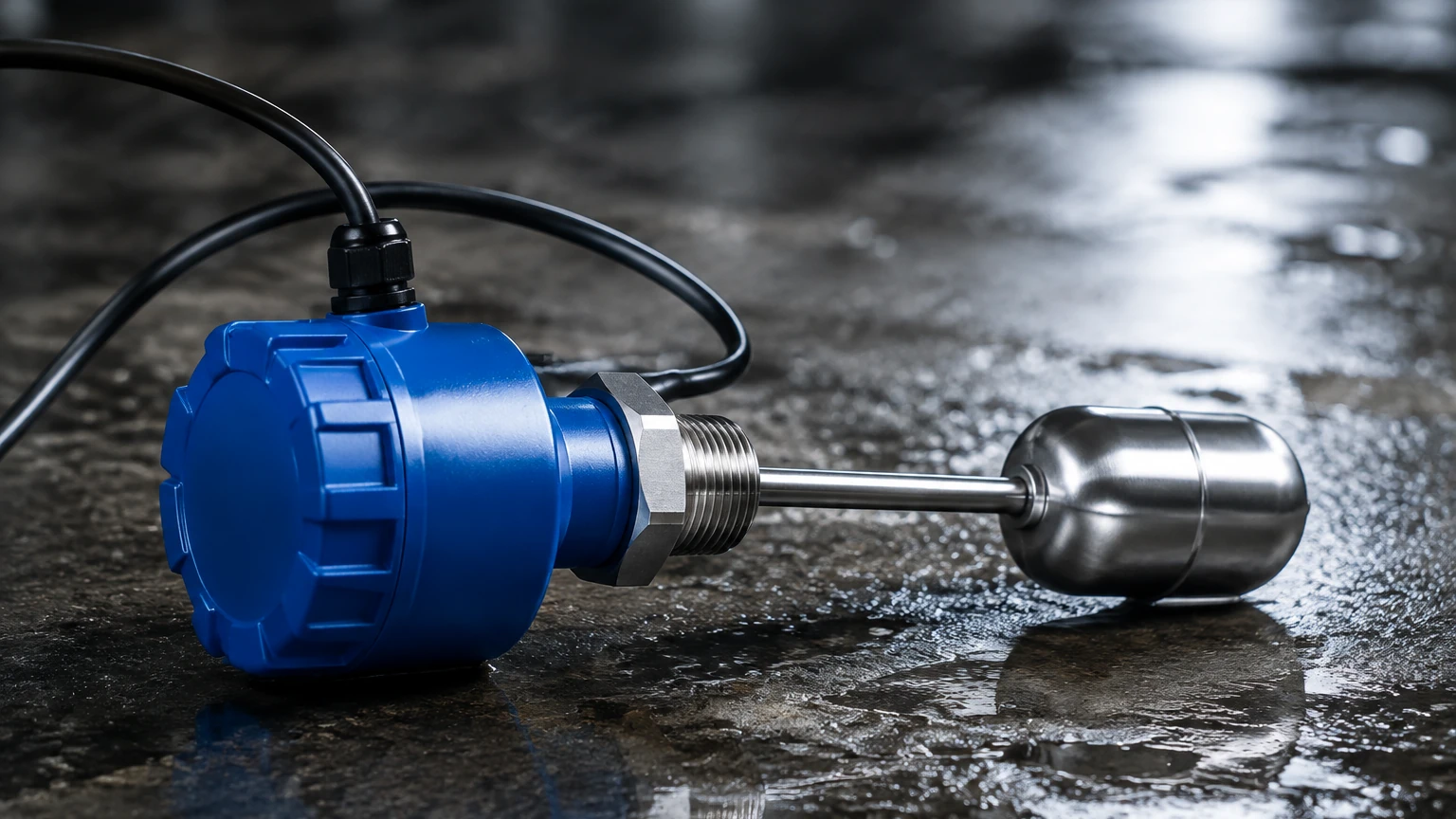
Surrounding the stem is a buoyant float containing a permanent magnet. As the liquid level rises or falls, the float moves along the stem. When the float reaches a predetermined position—the actuation point—the internal magnet aligns with the reed switch. This magnetic interaction triggers the switch, sending an electrical signal to a controller, alarm, or relay.
Logic Configuration (N.O. vs. N.C.)
One of the primary advantages of the LS-7 design is its versatility in logic. Most models allow the user to switch between Normally Open (N.O.) and Normally Closed (N.C.) operations simply by removing the float, inverting it, and replacing it on the stem. This flexibility is critical for engineers designing fail-safe systems where a power failure or wire break must trigger a specific safety state.
Technical Specifications and Material Compatibility
The "164520" designation typically refers to a specific material and mounting configuration within the LS-7 family. Understanding the materials is paramount, as the switch must withstand the chemical properties and physical conditions of the process media.
Material Options
1. Stainless Steel (316 SS): Used for high-pressure and high-temperature applications. It offers excellent resistance to corrosion in water treatment and mild chemical environments.
2. Polysulfone: A high-performance thermoplastic suitable for food-grade applications and many aqueous chemicals. It is lightweight and cost-effective.
3. NBR (Buna-N): Often used for the float material in oil and fuel applications due to its excellent buoyancy and hydrocarbon resistance.
Physical Limits
* Temperature Range: Standard units typically operate from -40°C to 150°C (-40°F to 300°F), depending on the material.
* Pressure Rating: Stainless steel variants can often handle up to 20.7 bar (300 psi), while plastic versions are generally limited to 3.4 bar (50 psi).
* Specific Gravity: The liquid must have a specific gravity high enough to lift the float. For the LS-7 series, the minimum specific gravity usually ranges from 0.45 to 0.80.
Selection Table for Compact Level Switches
When evaluating the 164520 LS-7 against other models, the following table provides a reference for typical selection criteria based on industrial requirements.
| Feature | 164520 LS-7 (Typical) | LS-3 Series (Miniature) | LS-800 Series (Multi-Point) |
| :— | :— | :— | :— |
| Mounting Thread | 1/2" NPT or 1/4" NPT | 1/8" NPT | Flanged or Large NPT |
| Max Pressure | 20 bar (300 psi) | 10 bar (150 psi) | 50 bar (750 psi) |
| Max Temp | 150°C (300°F) | 105°C (221°F) | 250°C (482°F) |
| Float Material | 316 Stainless Steel | Polysulfone / Buna-N | 316 SS / PVDF |
| Primary Use | General Industrial | OEM / Small Tanks | Large Process Vessels |
Installation and Wiring Guidelines
Proper installation is the most significant factor in the longevity of a 164520 LS-7 level switch. Because these are mechanical devices, they are sensitive to physical orientation and environmental turbulence.
Mounting Orientation
The LS-7 is a vertical mount switch. It should be installed within 30 degrees of vertical to ensure the float moves freely along the stem without binding. For side-mount requirements, engineers should look toward the LS-2 or similar horizontal series.
Turbulence and Slosh Shields
In tanks with high agitation or rapid filling, the float may "bounce," causing the reed switch to chatter (rapidly open and close). This can damage the switch or cause false alarms. In such environments, the use of a slosh shield—a protective tube around the float—is highly recommended to stabilize the liquid surface locally.
Electrical Considerations
Reed switches are sensitive to current spikes. While the 164520 is rated for specific voltage and amperage (often 20VA or 100VA), it is best practice to use an intermediate relay. Connecting the switch directly to a high-draw motor or a large solenoid valve will likely weld the reed contacts together, leading to permanent failure.
Application Environments
The 164520 LS-7 level switch is utilized across various sectors where reliable point-level detection is required in restricted spaces.
* Water Treatment: Monitoring chemical day tanks for coagulants or disinfectants. The stainless steel construction prevents degradation from moisture and common water treatment chemicals.
* Industrial Automation: Integrated into coolant reservoirs for CNC machines to prevent tool damage due to low coolant levels.
* Oil and Gas: Used in separator tanks or lubrication systems for pumps and compressors where space is at a premium.
* Food and Beverage: Utilized in steam tables or small bottling equipment, provided the materials meet FDA or local sanitary standards.
Limitations and Alternative Technologies
While the 164520 LS-7 is highly versatile, it is not a universal solution. Engineers must recognize the boundaries of float technology to avoid maintenance headaches.
Viscosity and Coating
If the liquid is highly viscous (like heavy syrups or crude oil) or has a tendency to crystallize, the float may stick to the stem. In these cases, non-contact methods such as ultrasonic sensors or radar level meters are preferred. These technologies do not have moving parts that can be fouled by the media.
Continuous Monitoring
The LS-7 only provides a binary signal (on/off). If the application requires knowing the exact percentage of tank fullness (e.g., 47% full), a hydrostatic pressure transmitter or a guided wave radar should be selected instead.
Particulate Matter
Liquids with high solid content or magnetic particles can interfere with the float's movement or the magnetic field of the reed switch. For slurries, a displacement-type level switch or a capacitive sensor is often more reliable.
Maintenance and Troubleshooting
Maintenance requirements for the 164520 LS-7 are minimal, but periodic checks are necessary for critical safety systems.
1. Visual Inspection: Check the float for signs of pitting, corrosion, or buildup. Ensure the retaining clip is secure.
2. Manual Actuation: During system shutdowns, manually move the float to confirm the control panel receives the correct signal.
3. Continuity Testing: Use a multimeter to check the resistance of the switch. A high resistance reading when closed indicates fouled contacts or impending failure.
Frequently Asked Questions (FAQs)
Q: Can the 164520 LS-7 be used in hazardous (Ex) areas?
A: Standard models are usually considered "simple apparatus" and can be used in intrinsically safe circuits with a proper barrier. However, always check the specific certification (ATEX/IECEx/UL) of the part number before installation in hazardous zones.
Q: What happens if the float is installed upside down?
A: Inverting the float changes the switch logic. If it was Normally Open, it will become Normally Closed. This is a design feature, but it must be documented to avoid confusion during future maintenance.
Q: Is it possible to repair a broken reed switch inside the stem?
A: No. The stem is hermetically sealed to protect the switch from the environment. If the reed switch fails, the entire unit must be replaced.
Q: How do I handle high-vibration environments?
A: High vibration can cause the reed switch to trip prematurely. In these cases, consider using a level switch with a built-in time delay or switching to a solid-state technology like an ultrasonic level switch.
In summary, the 164520 LS-7 level switch remains a cornerstone of industrial level control. By understanding its mechanical principles, respecting its material limits, and following strict installation protocols, facilities can ensure long-term, reliable performance. For those requiring more complex measurement solutions beyond point-level switches, consulting the broader technical resources available on the Main Page is the recommended next step for system design and optimization.