316l Sanitary Flow Sensor
316l Sanitary Flow Sensor
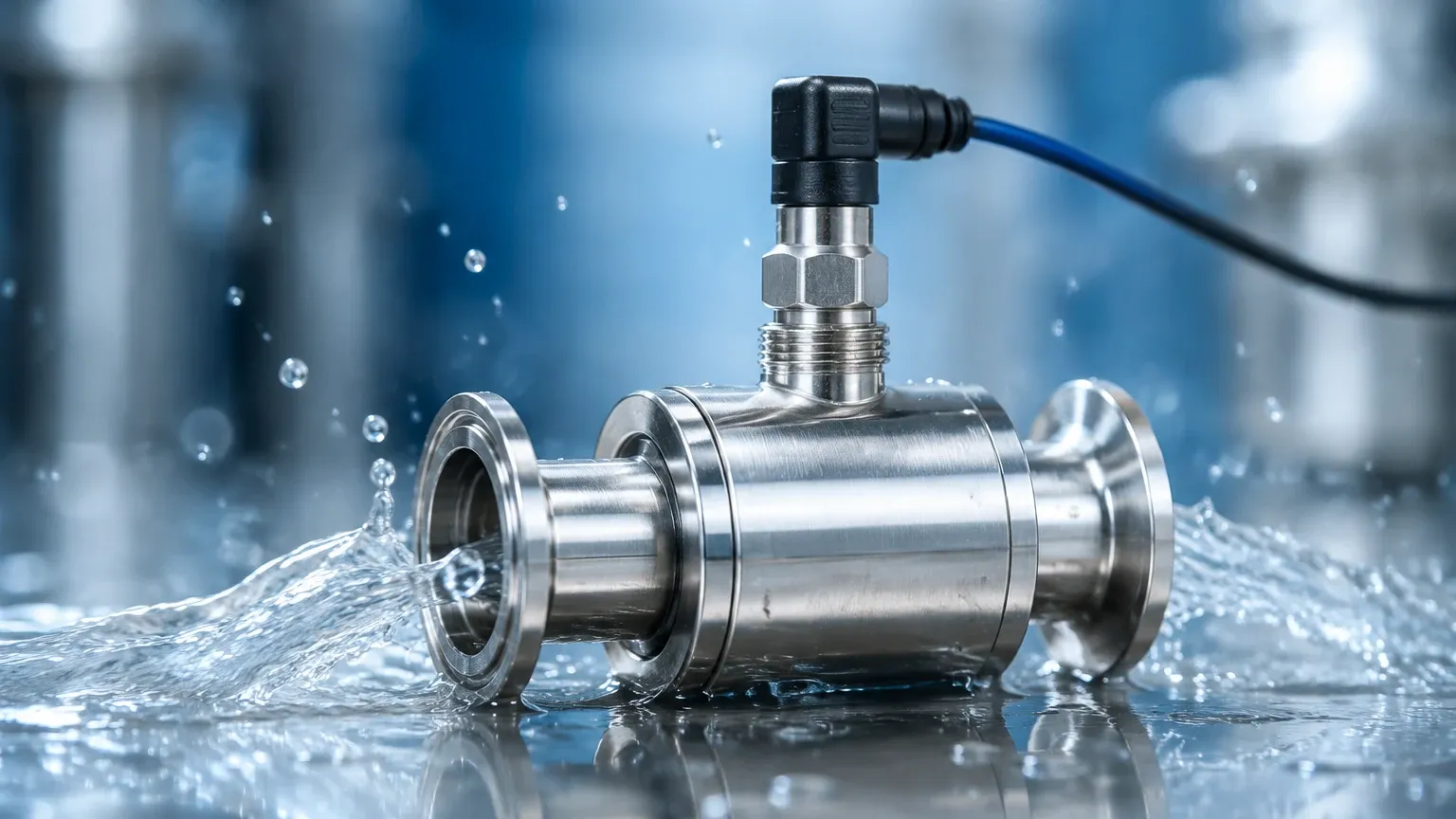
In the realm of industrial automation, particularly within the food, beverage, pharmaceutical, and biotechnology sectors, the precision of fluid measurement is inseparable from the integrity of the process environment. A 316L sanitary flow sensor represents the intersection of advanced fluid dynamics and stringent hygienic metallurgy. These instruments are engineered not only to provide accurate volumetric or mass flow data but also to withstand the rigorous cleaning cycles required to prevent microbial contamination and product spoilage.
As a professional manufacturer of industrial measurement instruments, Welk provides high-performance solutions that adhere to these demanding standards. Understanding the technical nuances of these sensors—from their material composition to their underlying measurement physics—is essential for process engineers tasked with maintaining system efficiency and regulatory compliance.
Understanding the 316L Material in Sanitary Applications
The designation "316L" refers to a specific grade of austenitic stainless steel that is the industry standard for sanitary applications. The "L" stands for "Low Carbon," indicating that the alloy contains a maximum of 0.03% carbon. This low carbon content is critical for components that require welding, such as the flow tubes and process connections of a flow sensor.
During welding, standard 316 stainless steel can undergo a process called carbide precipitation, where chromium and carbon react at high temperatures to form chromium carbides at the grain boundaries. This depletes the surrounding metal of chromium, significantly reducing its corrosion resistance. By using 316L, this risk is mitigated, ensuring that the sensor remains resistant to intergranular corrosion even after fabrication. Furthermore, 316L offers superior resistance to chlorides and organic acids compared to 304-grade steel, making it ideal for handling everything from saline solutions in pharmaceuticals to acidic fruit juices in the beverage industry.
Beyond the alloy chemistry, a 316L sanitary flow sensor must feature a specific surface finish. Most sanitary standards, such as 3-A or EHEDG, require an internal surface roughness (Ra) of less than 0.8 μm (32 micro-inches). This smooth finish ensures that there are no microscopic pits or crevices where bacteria can colonize, and it facilitates effective Clean-in-Place (CIP) and Steam-in-Place (SIP) procedures.
Primary Measurement Principles for Sanitary Flow
Before selecting a specific sensor, it is vital to understand the measurement principles commonly employed in hygienic environments. Each technology offers distinct advantages depending on the fluid's physical properties.
Electromagnetic Flow Measurement
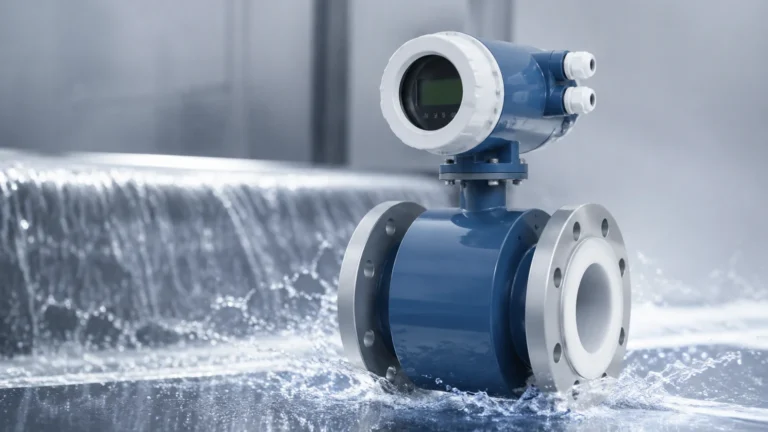
Electromagnetic flow meters, often called "mag meters," operate based on Faraday’s Law of Induction. This law states that a conductor (the fluid) moving through a magnetic field generates an electrical voltage proportional to its velocity.
In a 316L sanitary flow sensor using this principle, the flow tube is lined with a non-conductive, food-grade material like PFA or PTFE. Two electrodes, often made of 316L or more exotic materials like Hastelloy, are flush-mounted to the tube wall. Because there are no moving parts and no obstructions in the flow path, mag meters are ideal for fluids containing solids or fibers, such as fruit pulps or mashes. However, the fluid must have a minimum electrical conductivity, typically >5 μS/cm.
Ultrasonic (Transit-Time) Measurement
Ultrasonic flow sensors utilize sound waves to determine fluid velocity. In the transit-time method, two transducers send ultrasonic pulses back and forth through the liquid. The pulse traveling with the flow moves faster than the pulse traveling against it. The difference in time is directly proportional to the flow rate.
For sanitary applications, ultrasonic sensors can be designed as "clamp-on" units, where the transducers attach to the outside of the 316L pipe, or as inline units with integrated 316L flow cells. The primary advantage here is the lack of any contact with the process fluid, eliminating the risk of contamination and pressure drop.
Coriolis Mass Flow Measurement
Coriolis meters are the gold standard for accuracy. They measure mass flow directly by vibrating a 316L tube and measuring the phase shift caused by the Coriolis force as fluid passes through. Unlike volumetric meters, Coriolis sensors are unaffected by changes in fluid density, temperature, or pressure. They are frequently used in high-value pharmaceutical dosing where milligram-level precision is required.
Key Selection Criteria for Process Engineers
Choosing the right 316L sanitary flow sensor requires an evaluation of the process environment against the sensor's technical specifications. Engineers should consider the following factors:
1. Fluid Conductivity: If the fluid is non-conductive (e.g., deionized water or oils), electromagnetic meters cannot be used. In such cases, ultrasonic or Coriolis meters are preferred.
2. Viscosity and Solids: High-viscosity fluids or those with large particulates require a sensor with a straight-through bore to prevent clogging. Mag meters and certain ultrasonic designs excel here.
3. Temperature and Pressure: Sanitary processes often involve SIP cycles where temperatures can reach 140°C (284°F) or higher. The sensor’s electronics and seals (typically EPDM or FKM) must be rated for these extremes.
4. Connection Type: Most sanitary sensors utilize Tri-clamp (ISO 2852) or DIN 11851 connections. These allow for rapid disassembly for manual cleaning or inspection without the need for specialized tools.
Installation Guidelines for Hygienic Performance
Even the most accurate 316L sanitary flow sensor will underperform if installed incorrectly. To ensure reliable data and maintain hygiene, follow these engineering best practices:
* Straight Pipe Runs: Most flow technologies require a certain length of straight pipe upstream (typically 5 to 10 times the pipe diameter) and downstream (2 to 5 times the diameter) to stabilize the flow profile and eliminate turbulence caused by elbows or valves.
* Orientation: For liquid applications, the sensor should ideally be installed in a vertical pipe with upward flow. This ensures the pipe is always full and prevents air bubbles from being trapped at the sensor head, which can cause measurement errors.
* Drainability: In sanitary systems, the sensor must be installed at a slight angle or in a position that allows for complete self-draining. Residual fluid left in the sensor after a batch can lead to bacterial growth.
* Grounding: For electromagnetic meters, proper grounding is essential to eliminate electrical noise that can interfere with the micro-volt signals generated by the sensor. This often involves using grounding rings if the adjacent piping is plastic or lined.
Comparative Analysis of Sanitary Flow Technologies
The following table provides a quick reference for comparing common technologies used in 316L sanitary flow sensors:
| Feature | Electromagnetic (Mag) | Ultrasonic (Transit-Time) | Coriolis Mass Flow |
| :— | :— | :— | :— |
| Best For | Conductive liquids, slurries | Clean liquids, non-contact | High-precision dosing, oils |
| Accuracy | ±0.5% of rate | ±1.0% to ±2.0% | ±0.1% to ±0.2% |
| Moving Parts | None | None | None (Vibrating tubes) |
| Pressure Drop | Negligible | Negligible | Low to Moderate |
| Maintenance | Low | Low | Low |
| Cost | Moderate | Moderate to High | High |
Limitations and Operational Constraints
While 316L sanitary flow sensors are robust, they are not universal solutions. Engineers must be aware of specific limitations:
* Entrained Air: Air bubbles in the liquid stream can significantly disrupt ultrasonic and electromagnetic measurements. In the food industry, de-aerators are often installed upstream of the flow sensor to mitigate this.
* Liner Vacuum Resistance: In electromagnetic meters, if the process involves high-temperature cleaning followed by rapid cooling, a vacuum can form. If the PFA liner is not properly anchored to the 316L housing, it may collapse or deform.
* Minimum Flow Velocity: Most sensors have a "low-flow cutoff." If the velocity drops below a certain threshold (e.g., 0.1 m/s), the sensor may report zero flow even if fluid is moving slowly.
Frequently Asked Questions
Q: How often should a 316L sanitary flow sensor be calibrated?
A: Calibration frequency depends on the criticality of the process and regulatory requirements (e.g., FDA). Generally, an annual calibration is standard, but high-precision pharmaceutical applications may require semi-annual verification.
Q: Can 316L sensors be used with aggressive cleaning chemicals?
A: Yes, 316L is highly resistant to most alkaline cleaners and nitric acid-based sanitizers used in CIP. However, care should be taken with high concentrations of hydrochloric acid, which can cause pitting.
Q: What is the difference between 316L and 316Ti for flow sensors?
A: 316Ti contains a small amount of titanium for stabilization. While it offers similar corrosion resistance to 316L, 316L is generally preferred in the sanitary industry due to its better surface polishability and widespread availability in hygienic fittings.
Conclusion
Selecting a 316L sanitary flow sensor is a critical decision that impacts both the quality of the end product and the longevity of the processing equipment. By prioritizing high-grade materials, understanding the physics of measurement, and adhering to strict installation protocols, facilities can achieve high levels of operational efficiency. For those seeking to integrate these sensors into a broader automation strategy, it is helpful to Review product options and application support to ensure the selected hardware aligns with specific process demands. Whether managing water treatment, chemical processing, or food production, the right flow instrumentation provides the data necessary for informed decision-making and process optimization.