
Ammonia Storage Tanks
Ammonia Storage Tanks
Ammonia (NH3) is one of the most widely produced industrial chemicals globally, serving as a primary precursor for fertilizers, a refrigerant in large-scale cooling systems, and a critical component in chemical synthesis. However, the storage of ammonia presents significant engineering challenges due to its toxicity, corrosivity, and the specific physical properties required to maintain it in a liquid state. For process engineers and plant operators, selecting the correct instrumentation for ammonia storage tanks is essential for both operational efficiency and personnel safety.
Effective management of ammonia storage requires a deep understanding of the storage method—whether anhydrous or aqueous—and the environmental conditions within the vessel. Precise level measurement is the cornerstone of these systems, ensuring that tanks are neither overfilled nor run dry, both of which can lead to catastrophic equipment failure or hazardous releases.
Understanding Ammonia Storage Methods
Ammonia is typically stored in one of three ways, depending on the volume and the intended application. Each method dictates different requirements for the design of ammonia storage tanks and the instrumentation used to monitor them.
1. Pressurized Storage
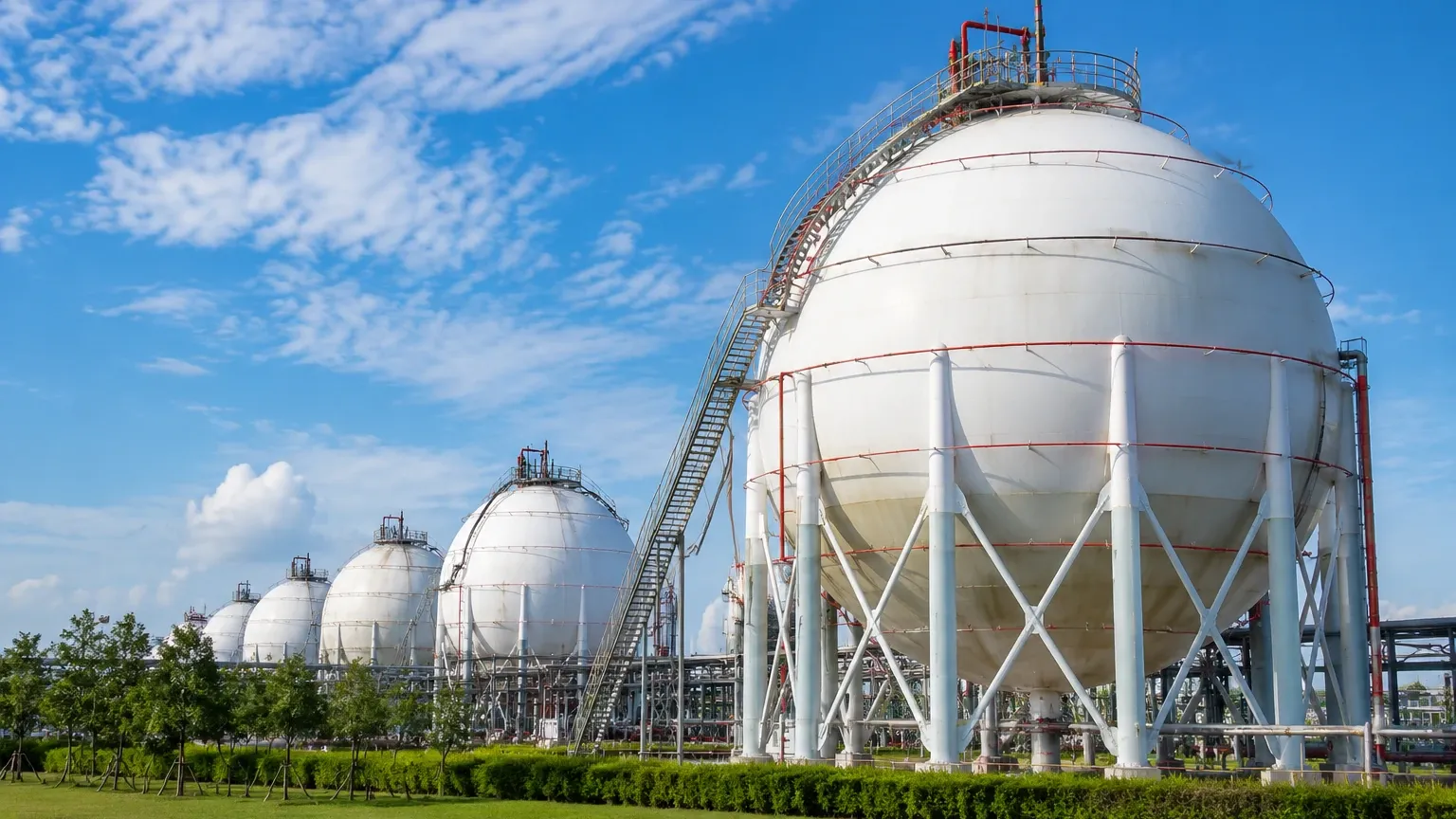
Small to medium quantities of anhydrous ammonia are often stored in horizontal "bullet" tanks or spherical vessels at ambient temperature. To keep the ammonia in a liquid state at 30°C (86°F), the internal pressure must be maintained at approximately 11.6 bar (168 psi). These tanks are subject to pressure fluctuations based on ambient temperature changes.
2. Refrigerated (Atmospheric) Storage
Large-scale industrial terminals use massive, insulated vertical tanks to store ammonia at its boiling point of -33.4°C (-28.1°F). At this temperature, the ammonia can be kept at near-atmospheric pressure. This method is common for bulk storage in the fertilizer industry. These tanks often feature double-wall construction for secondary containment.
3. Semi-Refrigerated Storage
This is a hybrid approach where ammonia is stored at a moderate pressure and reduced temperature (e.g., 4 bar at 0°C). It is often used in transport vessels and intermediate process tanks.
Measurement Principles for Ammonia Level Sensing
Because ammonia is a hazardous and volatile substance, non-mechanical or highly robust mechanical level measurement technologies are preferred. Before selecting a device, it is important to understand the underlying physics of how these sensors interact with the medium.
Radar Level Measurement (GWR and Non-Contact)
Radar technology is the industry standard for ammonia storage tanks. It operates on the principle of Time Domain Reflectometry (TDR) for Guided Wave Radar (GWR) or Frequency Modulated Continuous Wave (FMCW) for non-contact radar.
* Guided Wave Radar (GWR): A probe extends into the liquid. A high-frequency electromagnetic pulse travels down the probe, reflects off the liquid surface, and returns to the transmitter. GWR is highly effective for ammonia because the probe guides the signal, minimizing energy loss due to the low dielectric constant of ammonia ($ε_r$ ≈ 1.6 to 2.0).
* Non-Contact Radar: Using high-frequency signals (typically 80GHz), these sensors transmit pulses through the vapor space. While ammonia vapor can attenuate signals, modern high-frequency radars have the dynamic range to overcome this, provided the dielectric constant is accounted for in the sensitivity settings.
Magnetic Level Gauges (MLG)
Magnetic level gauges provide a clear visual indication and can be coupled with transmitters for remote monitoring. An MLG consists of a bypass chamber mounted to the side of the tank. A float containing a magnet assembly moves with the liquid level, flipping bicolored flaps on an external scale. This is a "seal-less" technology, meaning the toxic ammonia is completely contained within the pressure-rated chamber, with no risk of glass breakage common in traditional sight glasses.
Differential Pressure (DP)
DP transmitters measure the hydrostatic head pressure exerted by the liquid column. While reliable, DP measurement in ammonia storage tanks requires careful compensation for the gas phase pressure. In refrigerated tanks, the density of ammonia changes significantly with temperature, which can introduce errors if the system is not calibrated for the specific operating density.
Selection Criteria for Ammonia Storage Instrumentation
When evaluating level measurement solutions for ammonia storage tanks, several technical factors must be prioritized to ensure long-term reliability.
| Criteria | Requirement for Ammonia | Why it Matters |
| :— | :— | :— |
| Material Compatibility | 316L Stainless Steel / PTFE | Ammonia is highly corrosive to copper, brass, and zinc alloys. |
| Dielectric Constant | Low ($ε_r$ 1.6 – 2.1) | Requires high-sensitivity radar or Guided Wave Radar for accurate signal return. |
| Pressure Rating | Up to 25 bar (for pressurized) | Must withstand peak pressures during summer months or compressor failure. |
| Temperature Range | -35°C to +50°C | Must handle cryogenic temperatures in refrigerated tanks without seal failure. |
| Safety Certification | ATEX/IECEx (Ex d or Ex i) | Ammonia is flammable under specific conditions and requires explosion-proof ratings. |
For engineers looking for specific hardware configurations, it is advisable to Review product options and application support to match the sensor to the specific tank geometry.
Installation Considerations for Ammonia Service
Proper installation is as critical as technology selection. Ammonia's behavior as a "boiling" liquid creates unique challenges.
1. Stilling Wells and Bypass Chambers: For both GWR and non-contact radar, installing the sensor within a stilling well or a bypass chamber is highly recommended. This protects the sensor from surface turbulence and foam, and in the case of GWR, it increases the signal-to-noise ratio by concentrating the electromagnetic energy.
2. Nozzle Design: Nozzles should be kept short to prevent the accumulation of ammonia condensate, which can cause "false echoes" in radar systems. If long nozzles are unavoidable, a GWR with a nozzle-end connection is preferred.
3. Sealing and Gaskets: Ammonia is a "searching" gas that can leak through microscopic pores. Welk level instruments utilize high-integrity glass-to-metal seals or dual-seal designs to ensure that even if the primary process seal fails, the toxic gas cannot escape through the electrical conduit.
4. Vapor Space Compensation: In high-pressure anhydrous ammonia tanks, the density of the vapor can actually slow down the speed of radar pulses. Advanced radar transmitters include software algorithms to compensate for this gas phase effect, ensuring the reported level remains accurate despite pressure swings.
Limitations and Common Risks
While modern instrumentation is robust, there are inherent limitations to consider when managing ammonia storage tanks:
* Ultrasonic Limitations: Ultrasonic sensors are generally discouraged for anhydrous ammonia. The high concentration of ammonia vapor significantly alters the speed of sound, leading to massive measurement errors. Furthermore, the corrosive nature of the vapor can degrade many standard ultrasonic transducers.
* Boiling Surfaces: In refrigerated storage, ammonia is kept at its boiling point. This means the surface is constantly bubbling. Mechanical floats can bounce, and low-frequency radars may lose the signal. High-frequency 80GHz radar or GWR are the only reliable choices in these scenarios.
* Stress Corrosion Cracking (SCC): In pressurized tanks, the combination of ammonia, trace oxygen, and high-strength steel can lead to SCC. Level instrument mounting points (flanges and welds) should be inspected regularly as part of a mechanical integrity program.
Frequently Asked Questions (FAQs)
Q: Can I use a standard pressure transmitter to measure ammonia level?
A: Only if it is a differential pressure (DP) transmitter with materials compatible with ammonia (like 316L SS). You must also account for the vapor pressure above the liquid, which requires a second pressure tapping at the top of the tank.
Q: Why is Guided Wave Radar preferred over Non-Contact Radar for ammonia?
A: While both work, GWR is often preferred because the probe acts as a waveguide. Since ammonia has a very low dielectric constant, it reflects very little energy. The probe ensures that the small amount of reflected energy is directed back to the transmitter rather than scattering.
Q: How do I handle the risk of overfill in ammonia tanks?
A: Most regulatory bodies require a redundant, independent high-level alarm. This is often achieved by using a vibrating fork level switch or a secondary GWR transmitter configured for Safety Integrity Level (SIL 2/3) compliance.
Q: Is maintenance difficult for ammonia level sensors?
A: If using a bypass chamber with a magnetic level gauge or a GWR, maintenance can be performed by isolating the chamber with valves, allowing the sensor to be serviced without depressurizing the main storage tank.
Conclusion
Managing ammonia storage tanks requires a rigorous approach to instrumentation selection. By prioritizing materials like 316L stainless steel and utilizing advanced measurement principles like Guided Wave Radar or Magnetic Level Gauges, operators can ensure safe and accurate monitoring. For more detailed technical specifications and to explore a wide range of industrial level measurement instruments, including radar and ultrasonic solutions, visit the Welk Main Page for comprehensive engineering support.


