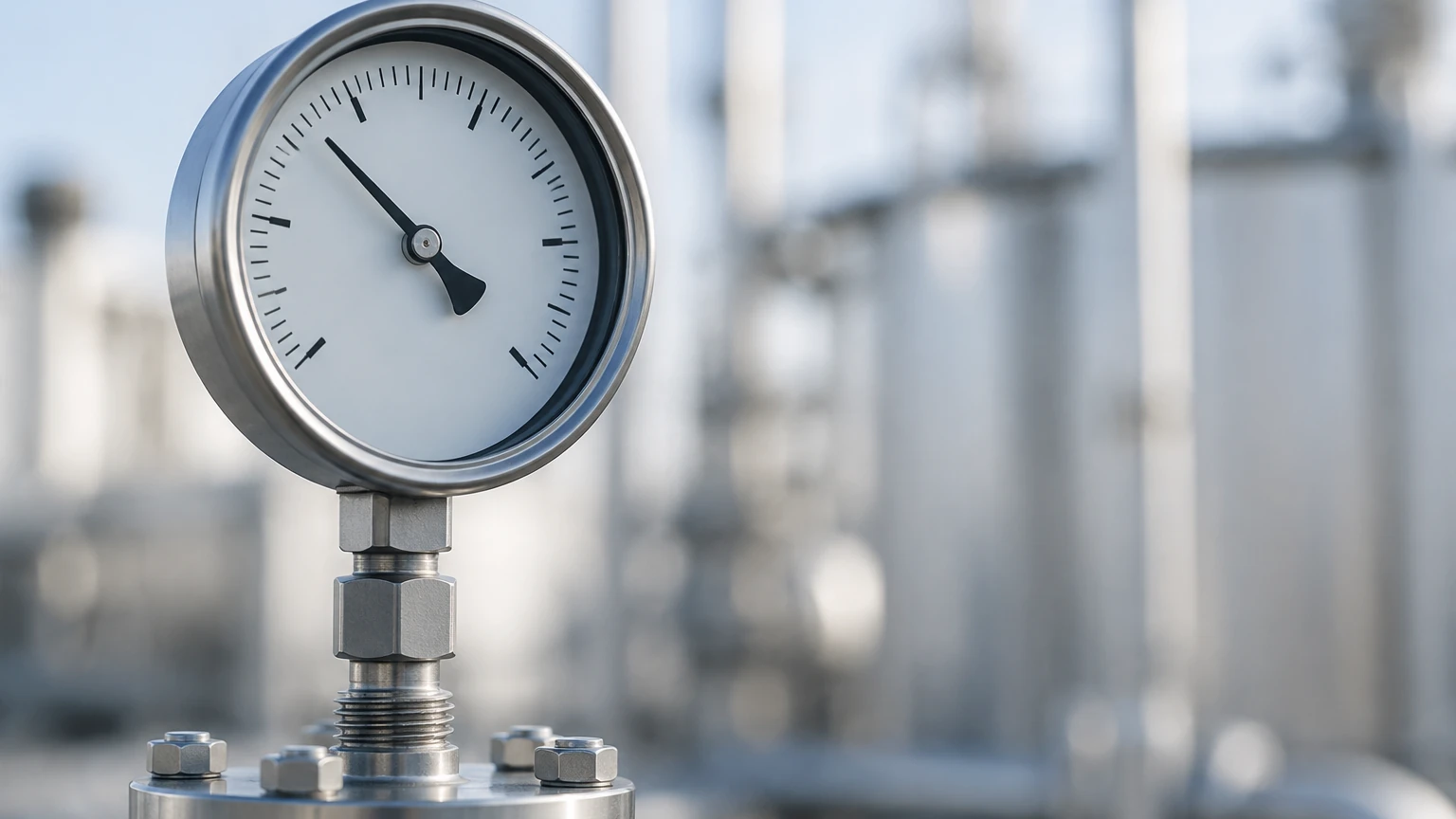
Analog Pressure Meter
Analog Pressure Meter
In industrial process control, the analog pressure meter remains a fundamental tool for monitoring system health and measuring liquid levels through hydrostatic principles. Whether utilized as a mechanical dial gauge for local indication or an electronic transmitter providing a 4-20mA signal to a PLC, these instruments provide the critical data necessary for safety and efficiency. For engineers and procurement specialists, understanding the nuances of pressure-based measurement is essential when selecting equipment from a Main Page of industrial instrumentation.
This guide explores the technical foundations, selection criteria, and installation best practices for analog pressure meters within the context of industrial level and pressure monitoring.
Measurement Principles of Analog Pressure Instruments
The operation of an analog pressure meter generally falls into two categories: mechanical deformation and electronic sensing. Both methods are widely used to infer the level of a liquid in a tank based on the hydrostatic pressure exerted by the liquid column.
The Hydrostatic Principle
In level measurement applications, the pressure at the bottom of a vessel is directly proportional to the height of the liquid above it, provided the density of the fluid remains constant. This is expressed by the formula:
P = ρ × g × h
* P: Hydrostatic pressure
* ρ (rho): Density of the liquid
* g: Acceleration due to gravity (approx. 9.81 m/s²)
* h: Height of the liquid column
By measuring the pressure (P), and knowing the density (ρ), an analog pressure meter can be calibrated to display the level (h) in meters or feet.
Mechanical Sensing (Bourdon Tube and Diaphragm)
Traditional analog gauges use a Bourdon tube—a C-shaped, coiled, or twisted tube that tends to straighten under pressure. This mechanical movement is transferred through a linkage to a pointer on a dial. Diaphragm-based meters use a flexible disk that deflects under pressure, which is particularly useful for low-pressure applications or when dealing with corrosive media that require a protective barrier.
Electronic Analog Transmitters
In modern B2B environments, an "analog pressure meter" often refers to a pressure transmitter that outputs a continuous analog signal, typically 4-20mA. These devices use piezoresistive or capacitive sensors to detect pressure and convert it into a standardized current loop signal. This allows for long-distance transmission with minimal signal degradation, making them ideal for integration into SCADA systems.
Key Evaluation Criteria for Selection
Selecting the right instrument requires a thorough analysis of the process conditions. Failure to match the meter to the environment can lead to premature failure or inaccurate readings.
Pressure Range and Overpressure Protection
The operating range should ideally fall within the middle 30% to 60% of the meter’s full scale. For example, if a tank is 5 meters (16.4 ft) high, the meter should be rated for at least 0.6 bar (8.7 psi) to account for full-scale measurement and potential surges. Overpressure protection is critical in systems where pump start-ups or valve closures may cause temporary pressure spikes.
Material Compatibility
The wetted parts—the components in direct contact with the process fluid—must be chemically compatible. Standard instruments often use 316L stainless steel, but highly corrosive chemicals may require Hastelloy, Monel, or Tantalum diaphragms. For food and beverage or pharmaceutical applications, sanitary connections (such as Tri-Clamp) and high-surface-finish requirements are mandatory.
Environmental Conditions
Consider the ambient temperature and the potential for vibration. Mechanical analog meters in high-vibration environments often require liquid filling (usually glycerin or silicone oil) to dampen pointer movement and lubricate internal parts. For electronic transmitters, the Ingress Protection (IP) rating (e.g., IP67 or IP68) must be sufficient for the installation site.
Comparison of Analog Pressure Measurement Technologies
| Technology | Typical Accuracy | Best Use Case | Limitations |
| :— | :— | :— | :— |
| Bourdon Tube Gauge | ±1.0% to ±2.5% | Local manual monitoring | No signal output; sensitive to vibration |
| Diaphragm Gauge | ±1.5% | Corrosive or viscous fluids | Lower pressure limits than Bourdon |
| Hydrostatic Transmitter | ±0.1% to ±0.5% | Continuous level monitoring | Requires stable fluid density |
| Differential Pressure | ±0.075% to ±0.2% | Pressurized tanks | Complex installation (two sensing points) |
Installation Considerations and Best Practices
Correct installation is as important as the quality of the instrument itself. Even the most accurate analog pressure meter will provide false data if installed incorrectly.
Mounting Position
For liquid level measurement, the meter must be installed at the lowest point of the measurement range (the "zero" level). If the meter is installed below the bottom of the tank, the additional head pressure from the piping must be accounted for during calibration (zero-suppression).
Impulse Lines and Venting
In applications using impulse lines (piping connecting the process to the meter), lines should be sloped to prevent gas pockets (in liquid lines) or liquid traps (in gas lines). For submersible hydrostatic pressure meters, a vent tube in the cable is necessary to compensate for changes in atmospheric pressure, ensuring the sensor measures gauge pressure rather than absolute pressure.
Isolation and Maintenance Valves
Always install a block-and-bleed valve or a needle valve between the process and the analog pressure meter. This allows the instrument to be isolated for maintenance, calibration, or replacement without shutting down the entire process line.
Common Risks and Limitations
While reliable, analog pressure measurement has inherent limitations that engineers must manage:
1. Density Fluctuations: Since hydrostatic meters measure weight, any change in the liquid's density (caused by temperature changes or concentration shifts) will result in a level error. If the density decreases, the meter will indicate a lower level than actually exists.
2. Mechanical Wear: In mechanical gauges, moving parts like gears and linkages wear out over time, especially in pulsating applications. Regular calibration is required to ensure the pointer has not drifted.
3. Clogging: Small pressure ports can become clogged in applications involving slurries or fluids that crystallize. In these cases, a flush-diaphragm design is preferred over a standard NPT threaded port.
4. Temperature Shifting: Extreme temperatures can affect the elasticity of sensing elements or the electronics of a transmitter. Using cooling elements (siphons) or capillary tubes with remote seals can protect the instrument from high-temperature process media.
Frequently Asked Questions (FAQ)
Q: Can an analog pressure meter be used for pressurized tanks?
A: A single pressure meter at the bottom of a pressurized tank will measure the sum of the liquid head and the gas blanket pressure. To measure level accurately in pressurized vessels, a differential pressure (DP) transmitter is required to subtract the top-side pressure from the bottom-side total pressure.
Q: What is the difference between a dry gauge and a liquid-filled gauge?
A: A liquid-filled gauge (usually containing glycerin) is used to dampen the effects of vibration and pressure pulsations. It also prevents condensation from forming inside the dial window in humid environments. Dry gauges are suitable for stable environments where vibration is not a concern.
Q: How often should an analog pressure transmitter be calibrated?
A: For most industrial B2B applications, an annual calibration check is standard. However, in critical safety loops or high-accuracy custody transfer applications, semi-annual or quarterly checks may be necessary.
Q: What is the maximum distance for a 4-20mA analog signal?
A: Depending on the wire gauge and the power supply voltage, a 4-20mA signal can typically travel up to 1,000 meters (approx. 3,280 ft) without significant loss, making it much more robust than voltage-based signals (0-10V).
Conclusion
The analog pressure meter remains a cornerstone of industrial instrumentation due to its simplicity, reliability, and cost-effectiveness. Whether you are looking for a simple mechanical gauge for a pump skid or a high-precision hydrostatic transmitter for a chemical storage farm, selecting the correct specifications is vital. Before finalizing a purchase, project managers should confirm chemical compatibility, required accuracy, and environmental ratings. For a comprehensive range of measurement technologies, including radar and ultrasonic alternatives, engineers are encouraged to Review product options and application support to ensure the selected device meets the specific demands of their facility.