Angus Measurement Services Lp
Angus Measurement Services Lp
In the complex landscape of industrial automation and hydrocarbon management, precision is the primary currency. Companies like Angus Measurement Services LP operate at the intersection of mechanical engineering and digital data acquisition, ensuring that every liter of fluid transferred is accounted for with scientific accuracy. For engineers and facility managers, understanding the underlying technologies that support these services is essential for maintaining operational integrity and regulatory compliance.
Level measurement is a cornerstone of industrial services, particularly in custody transfer, tank farm management, and chemical processing. This article explores the technical principles of level measurement, the role of service providers like Angus Measurement Services LP, and how to select the right instrumentation for demanding industrial environments.
Principles of Level Measurement Technology
Before selecting a service provider or an instrument, it is vital to understand the physics behind the measurement. Industrial level sensors generally fall into two categories: contact and non-contact. Each relies on specific physical properties to determine the distance from a reference point to the surface of a material.
Radar Level Measurement (ToF)
Radar level meters utilize Time of Flight (ToF) principles. These devices emit high-frequency electromagnetic waves (typically in the GHz range) that travel at the speed of light. When these waves encounter a change in dielectric constant—such as the transition from air to a liquid surface—they are reflected back to the sensor. The instrument calculates the level based on the time delay between transmission and reception.
Advanced systems use Frequency Modulated Continuous Wave (FMCW) technology. Instead of a single pulse, the transmitter emits a continuous signal with a varying frequency. The difference in frequency between the emitted and received signals is proportional to the distance, offering superior accuracy in turbulent or steaming environments.
Ultrasonic Level Measurement
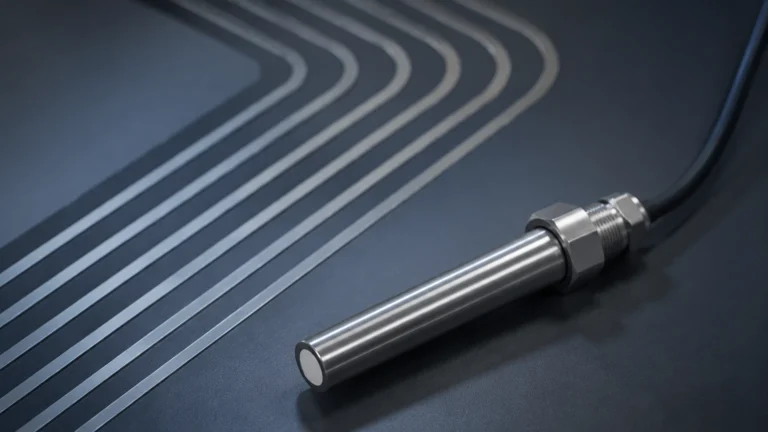
Similar to radar, ultrasonic sensors use the ToF principle but rely on sound waves rather than electromagnetic waves. A transducer emits an ultrasonic pulse (typically 20 kHz to 200 kHz) that reflects off the target surface. Because the speed of sound is influenced by air temperature, these sensors usually include integrated temperature compensation to maintain accuracy. They are highly effective for water treatment and non-corrosive chemical storage.
Hydrostatic Pressure Measurement
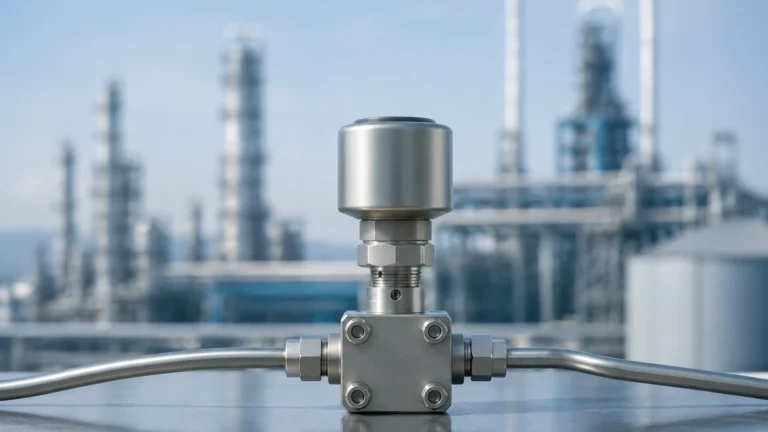
Hydrostatic level transmitters measure the pressure exerted by a liquid column at a specific point. According to Pascal’s Law, the pressure at the bottom of a tank is directly proportional to the height of the liquid and its density. By using a sensitive diaphragm and a pressure transducer, the system converts the measured pressure into a level reading. This method is robust and widely used in deep wells and vented tanks.
The Role of Angus Measurement Services LP in Industrial Operations
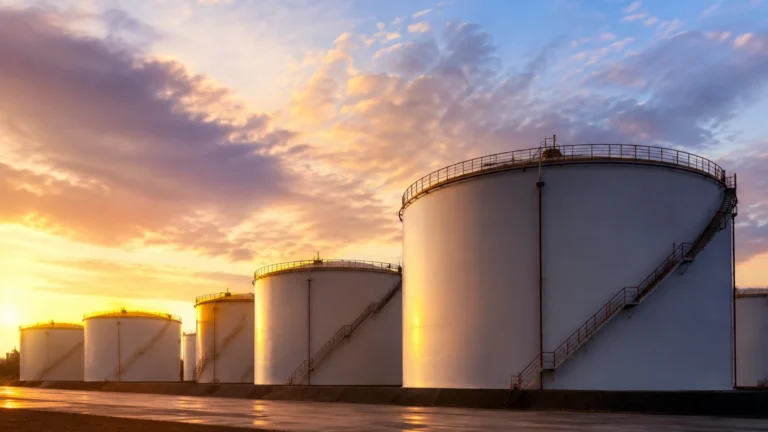
Angus Measurement Services LP is recognized for its expertise in custody transfer and flow measurement, particularly within the oil and gas sector. Their services often involve the design, fabrication, and maintenance of Lease Automatic Custody Transfer (LACT) units. These units are critical for the automated transfer of crude oil and petroleum products from the production site to trucks or pipelines.
In these applications, level measurement serves as a secondary verification and safety mechanism. While flow meters measure the volume passing through a pipe, level sensors in storage tanks ensure that the total inventory aligns with the transferred volumes. Service providers like Angus Measurement Services LP ensure that these systems are calibrated and maintained to meet industry standards such as API (American Petroleum Institute) and AGA (American Gas Association).
For those seeking comprehensive hardware solutions to complement these services, you can Review product options and application support to find instruments that meet the rigorous demands of custody transfer environments.
Key Evaluation Criteria for Level Measurement Services
When engaging with a firm like Angus Measurement Services LP or selecting instrumentation for a new project, several technical factors must be evaluated to ensure long-term reliability.
1. Accuracy and Repeatability: In custody transfer, even a 0.1% error can result in significant financial discrepancies over time. Instruments must provide high repeatability across varying temperature and pressure ranges.
2. Media Compatibility: The chemical properties of the fluid (viscosity, corrosivity, and dielectric constant) dictate the sensor material. For example, aggressive chemicals require PTFE-lined sensors or high-grade stainless steel.
3. Environmental Conditions: High-pressure tanks, vacuum conditions, or the presence of heavy foam can interfere with certain measurement types. Radar is often preferred for high-pressure applications where ultrasonic signals might dissipate.
4. Regulatory Compliance: Ensure the equipment and the service provider adhere to local safety standards, such as ATEX or IECEx for explosive atmospheres, which are common in the sectors served by Angus Measurement Services LP.
Technical Selection Table
The following table provides a comparison of common level measurement technologies used in industrial service applications.
| Technology | Best For | Advantages | Limitations | Typical Accuracy |
| :— | :— | :— | :— | :— |
| FMCW Radar | Custody transfer, high-temp tanks | Non-contact, unaffected by vapor/dust | Higher initial cost | ±1 mm to ±3 mm |
| Ultrasonic | Water/Wastewater, open channels | Cost-effective, easy installation | Affected by foam and wind | ±0.25% of range |
| Hydrostatic | Deep wells, constant density liquids | Simple, reliable, no moving parts | Sensitive to density changes | ±0.1% to ±0.5% |
| Magnetic Gauge | Visual bypass, high-pressure boilers | High visibility, no power required | Contact-based, moving parts | ±5 mm |
| Guided Wave Radar | Small tanks, low dielectric fluids | Direct measurement, handles foam | Contact-based (probe fouling) | ±2 mm |

Installation and Engineering Considerations
Successful integration of level measurement systems requires more than just high-quality hardware. Proper installation is critical to avoid common failure points.
Beam Angle and Obstructions
For non-contact sensors (Radar and Ultrasonic), the "beam angle" is a vital parameter. If a sensor is installed too close to a tank wall or near internal structures like ladders and agitators, the signal may reflect off these objects, creating a "false echo." Engineers must ensure a clear line of sight to the liquid surface. In many cases, software-based "false echo suppression" can be used to map out permanent internal obstructions.
Dead Zones (Blocking Distance)
Every ToF sensor has a minimum distance it cannot measure, known as the dead zone or blocking distance. This occurs because the sensor cannot receive a signal while it is still vibrating from the transmission. When designing tanks, the sensor must be mounted high enough that the maximum liquid level never enters this dead zone.
Mounting Nozzles
The height and diameter of the mounting nozzle can impact signal quality. A nozzle that is too long or too narrow can cause internal reflections. For radar applications, the antenna should ideally extend slightly beyond the nozzle to ensure the signal spreads correctly into the tank volume.
Limitations and Operational Challenges
While modern instrumentation is highly advanced, certain physical limitations remain. Understanding these helps in troubleshooting and system design.
* Vapor and Condensation: In ultrasonic systems, heavy steam or chemical vapors can change the speed of sound, leading to inaccurate readings. Radar is generally immune to this but can be affected by heavy condensation on the antenna lens, which may require a flushing connection or a specific lens shape (like a drop antenna) to shed droplets.
* Surface Turbulence: Rapid filling or agitation creates surface waves. This can scatter the return signal of a radar or ultrasonic sensor. Utilizing a stilling well—a vertical pipe that protects the sensor from turbulence—is a common engineering solution to provide a stable surface for measurement.
* Density Fluctuations: Hydrostatic sensors rely on a constant liquid density. If the temperature of the fluid changes significantly, its density changes, which will alter the pressure reading even if the level remains the same. In these cases, a multi-parameter system that includes temperature compensation is necessary.
Frequently Asked Questions (FAQ)
Q: How often should level sensors used in custody transfer be calibrated?
A: Most industry standards, and providers like Angus Measurement Services LP, recommend annual calibration. However, the frequency may increase based on the criticality of the measurement and the stability of the environment.
Q: Can radar level meters work in a vacuum?
A: Yes. Because radar uses electromagnetic waves, it does not require a medium (like air) to travel. This makes it superior to ultrasonic sensors, which cannot function in a vacuum.
Q: What is the difference between a level transmitter and a level switch?
A: A level transmitter provides continuous measurement (e.g., 4-20mA or Modbus signal representing 0-100% fill). A level switch is a point-level device that only triggers when the material reaches a specific height, typically used for high-level alarms or pump control.
Q: Is it necessary to use a stilling well for all radar installations?
A: No. Stilling wells are typically reserved for tanks with extreme turbulence, heavy foam, or very low dielectric fluids where signal enhancement is required.
By combining the field expertise of service providers like Angus Measurement Services LP with high-performance instrumentation from manufacturers like Welk, industrial operators can achieve the precision required for modern process control. Whether managing a simple water tank or a complex petroleum custody transfer station, the right technology choice ensures safety, efficiency, and fiscal accuracy.