Basin Cooling Tower
Basin Cooling Tower
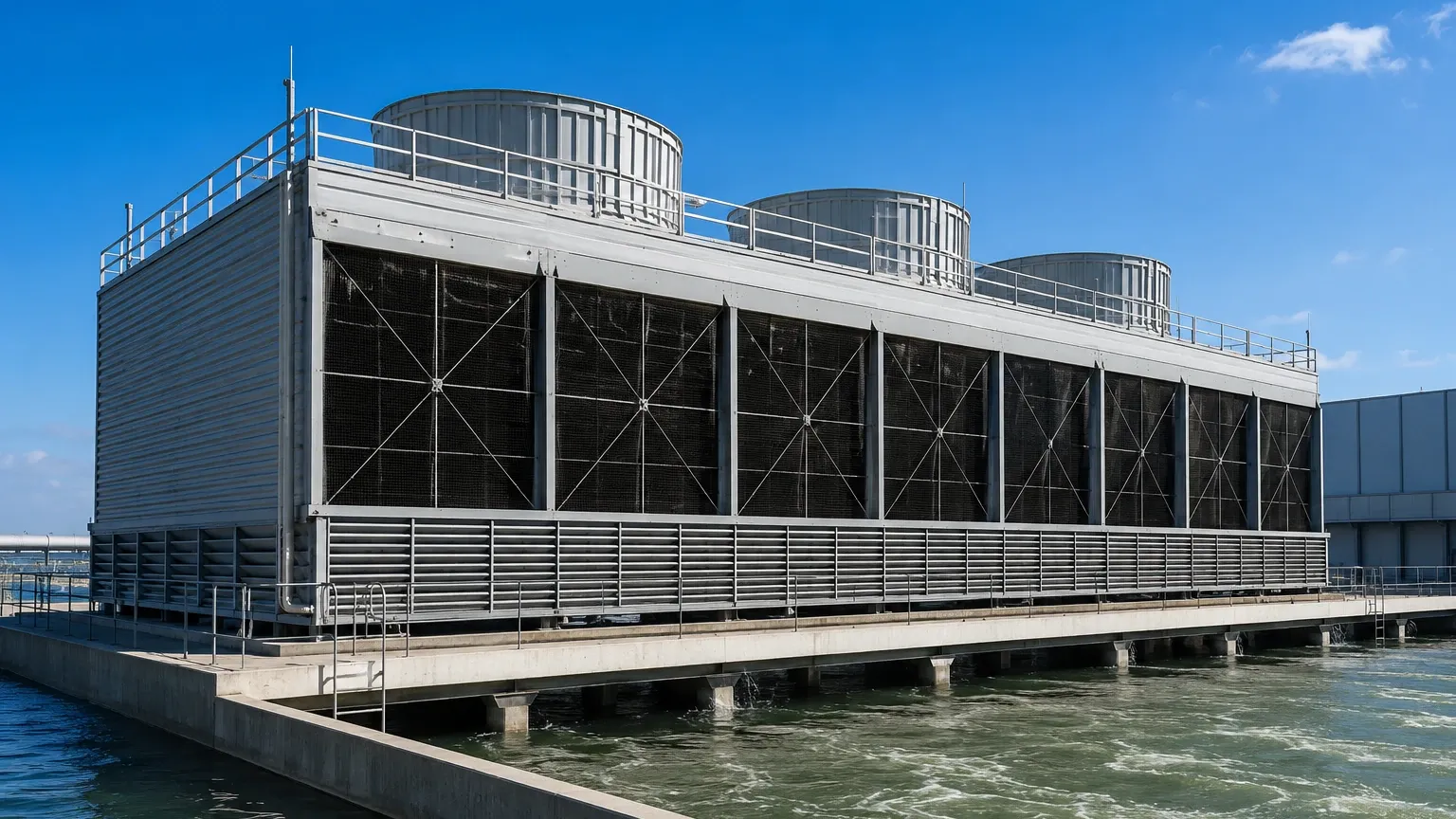
In industrial cooling systems, the basin cooling tower—specifically the cold water basin located at the base of the structure—serves as the critical reservoir for the entire thermal management cycle. Effective operation of a cooling tower depends not only on the heat exchange efficiency of the fill media but also on the precise management of the water volume within this basin. Maintaining the correct water level is essential to prevent pump cavitation, ensure consistent suction head, and manage the chemical balance of the recirculating water.
For process engineers and facility managers, selecting the right level measurement technology for a basin cooling tower involves navigating challenges such as surface turbulence, high humidity, chemical additives, and varying ambient temperatures. This guide examines the technical principles of level measurement in cooling tower basins and provides practical selection criteria for industrial applications.
The Role of the Basin in Cooling Tower Operations
The cooling tower basin acts as a collection point for water that has been cooled as it falls through the tower. From here, the water is pumped back to the heat source (such as a condenser or heat exchanger). The basin must maintain a minimum water level to ensure that the suction pipes of the circulation pumps remain fully submerged. If the level drops too low, air can be drawn into the pumps, leading to cavitation, mechanical damage, and system failure.
Conversely, an excessively high level in the basin cooling tower leads to water wastage through the overflow drain and can dilute the concentration of water treatment chemicals. Precise level control allows for the automation of "make-up" water valves and "blowdown" (bleed) cycles, which are necessary to manage the concentration of dissolved solids. To explore a wide range of industrial instrumentation for these applications, engineers often consult the Main Page of specialized manufacturers to compare sensor specifications.
Measurement Principles for Cooling Tower Basins
Several technologies are utilized to monitor levels in a basin cooling tower. Understanding the physics behind each method is the first step in making an informed selection.
1. Ultrasonic Level Measurement
Ultrasonic sensors operate on the time-of-flight principle. The sensor emits a high-frequency sound pulse that travels through the air, reflects off the water surface, and returns to the transducer. The distance is calculated based on the speed of sound and the time elapsed.
* Advantages: Non-contact measurement, relatively low cost, and easy installation.
* Limitations: The speed of sound is affected by air temperature. While most modern sensors include temperature compensation, extreme steam or heavy fog inside the tower can attenuate the signal, leading to inaccuracies.
2. Radar Level Measurement (Non-Contact)
Radar sensors, particularly those operating in the 26GHz or 80GHz frequency bands, also use time-of-flight but employ electromagnetic waves instead of sound.
* Advantages: Radar waves are unaffected by air temperature, steam, or pressure changes. They provide high precision (often within ±2 mm) and are ideal for basins where heavy evaporation creates a dense mist above the water surface.
* Limitations: Higher initial capital expenditure compared to ultrasonic or hydrostatic methods.
3. Hydrostatic Pressure Measurement
This method involves placing a pressure transmitter at the bottom of the basin or using a submersible probe. The sensor measures the head pressure exerted by the water column above it. Since the density of water is relatively constant, the pressure is directly proportional to the level.
* Advantages: Simple to install, highly reliable, and unaffected by surface foam or turbulence.
* Limitations: If the water density changes significantly due to high chemical concentrations (though rare in standard cooling towers), the calibration may drift. The sensor is in constant contact with the water, making it susceptible to scaling or algae buildup.
4. Magnetic Level Gauges and Switches
For localized control or high/low-level alarms, mechanical systems like magnetic float switches are common. A float containing a magnet moves with the water level, triggering reed switches at specific setpoints.
* Advantages: Provides a physical, visual indication and requires no power for basic switch functions.
* Limitations: Moving parts can become stuck due to debris or mineral scaling common in basin cooling tower environments.
Technical Comparison Table
| Technology | Contact Type | Accuracy | Suitability for Steam/Fog | Maintenance Needs |
| :— | :— | :— | :— | :— |
| Ultrasonic | Non-contact | ±0.25% of range | Moderate | Low (Clean face) |
| Radar (80GHz) | Non-contact | ±2 mm | Excellent | Very Low |
| Hydrostatic | Contact | ±0.1% to 0.5% | Excellent | Moderate (Cleaning) |
| Float Switch | Contact | N/A (Point) | Excellent | High (Moving parts) |
Selection Criteria for Basin Cooling Tower Sensors
When specifying a level sensor for a basin cooling tower, engineers must evaluate the following environmental and operational factors:
Turbulence and Surface Conditions
In a basin cooling tower, water is constantly falling from the fill media above, creating significant surface turbulence and ripples. Non-contact sensors (Radar and Ultrasonic) may require software filtering or the installation of a stilling well to provide a stable reading. Hydrostatic sensors are naturally more resistant to surface agitation.
Chemical Compatibility
Cooling water is often treated with biocides, algaecides, and corrosion inhibitors. If using a contact-based sensor like a hydrostatic transmitter, the wetted materials (usually 316L stainless steel or specialized plastics like PVDF) must be compatible with these chemicals. For non-contact sensors, the housing should be resistant to the corrosive atmosphere found within the tower structure.
Ambient Environment
Cooling towers are typically located outdoors. Sensors must have an IP67 or IP68 rating to withstand rain, humidity, and direct sunlight. Furthermore, in cold climates, the risk of ice formation on the sensor face or the water surface must be considered. Radar is generally the most robust choice for extreme weather conditions.
Integration Requirements
Modern industrial automation requires seamless integration. Most sensors for basin cooling tower applications provide a 4-20mA HART signal, but digital protocols like Modbus RTU or Profibus are increasingly used to transmit diagnostic data, such as internal sensor temperature or signal strength.
Installation Considerations and Best Practices
Proper installation is as critical as sensor selection for achieving reliable data in a basin cooling tower.
1. Placement: The sensor should be installed in a location that represents the average water level. Avoid placing the sensor directly under the "rain" of the cooling tower fill or immediately adjacent to the make-up water inlet, as these areas experience localized level fluctuations.
2. Stilling Wells: For ultrasonic and radar sensors, a stilling well (a vertical pipe with vent holes) can be used to dampen surface turbulence. This provides a calm surface for the signal to reflect off, significantly increasing measurement stability.
3. Dead Band (Blocking Distance): All non-contact sensors have a "dead band" or minimum measuring distance near the sensor face. Ensure the sensor is mounted high enough so that even at the maximum possible water level (overflow point), the water does not enter the dead band.
4. Mounting Orientation: Ensure the sensor is mounted perfectly perpendicular to the water surface. Even a few degrees of tilt can cause the signal to reflect away from the receiver in non-contact applications.
Limitations and Common Risks
While modern instrumentation is highly advanced, certain risks remain inherent to the basin cooling tower environment:
* Scaling and Biofouling: Mineral deposits (calcium carbonate) and algae growth can coat hydrostatic sensor diaphragms or float mechanisms. Regular inspection cycles are necessary to ensure the sensors remain sensitive and accurate.
* Foaming: High concentrations of organic matter or certain water treatments can cause foam. Ultrasonic pulses may be absorbed by foam, leading to a "lost signal" error. Radar and hydrostatic sensors are generally better at ignoring foam layers.
* Signal Interference: In large metal cooling towers, radar signals can occasionally reflect off internal structural beams. Selecting a radar with a narrow beam angle (e.g., 80GHz) or using "false echo suppression" software can mitigate this risk.
Frequently Asked Questions (FAQs)
Q: How often should I calibrate the level sensor in my basin cooling tower?
A: For most industrial applications, an annual calibration check is sufficient. However, if the basin is prone to heavy scaling or if the sensor is a critical safety interlock for a high-pressure pump, semi-annual inspections are recommended.
Q: Can I use a simple float switch for make-up water control?
A: Yes, float switches are often used for basic on/off control of make-up valves. However, they do not provide continuous level data. For optimized water management and blowdown control, a continuous transmitter (Radar or Hydrostatic) is preferred.
Q: What is the benefit of 80GHz radar over 26GHz radar for this application?
A: 80GHz radar has a much narrower beam angle. This makes it easier to install in cramped spaces or near the side of the basin without the signal hitting the walls or internal supports of the cooling tower.
Q: How do I prevent my hydrostatic sensor from being damaged by ice?
A: In very cold climates, the basin cooling tower should be equipped with basin heaters. If the water freezes, the expansion of ice can crush the sensitive diaphragm of a hydrostatic transmitter. If freezing is a risk, a non-contact radar sensor is a safer alternative.
By carefully considering the measurement principles and the specific environmental challenges of the basin cooling tower, engineers can implement a level control strategy that enhances system reliability and reduces operational costs. For more detailed technical specifications on level measurement hardware, visiting the Main Page of an industry-leading supplier is the recommended next step for procurement and system design.