Chlorine Residual Measurement
Chlorine Residual Measurement
In industrial water treatment and process engineering, chlorine residual measurement is a critical parameter for ensuring disinfection efficacy, regulatory compliance, and equipment protection. Chlorine is widely utilized as an oxidizing agent to eliminate pathogens, control biofilm growth in cooling towers, and oxidize organic contaminants. However, maintaining the precise concentration—the "residual"—remaining after the initial demand is met requires sophisticated instrumentation and a deep understanding of chemical dynamics.
This guide explores the technical principles of chlorine residual measurement, the selection of appropriate sensor technologies, and the integration of these analytical tools into broader process control systems, including their relationship with chemical inventory management.
Introduction to Chlorine Disinfection Dynamics
When chlorine is added to water, it does not remain in a single form. It undergoes rapid chemical reactions based on the water's pH, temperature, and the presence of organic or inorganic compounds. To accurately perform chlorine residual measurement, engineers must distinguish between three primary states:
1. Free Chlorine: The sum of hypochlorous acid (HOCl) and hypochlorite ion (OCl-). HOCl is the more potent disinfectant and is the primary target for measurement in potable water and swimming pools.
2. Combined Chlorine: Formed when free chlorine reacts with ammonia or organic nitrogen compounds (forming chloramines). While still possessing some disinfecting power, it is much slower-acting than free chlorine.
3. Total Chlorine: The sum of Free Chlorine and Combined Chlorine.
The "residual" is the concentration of chlorine remaining in the water after a specific contact time. If the residual is too low, disinfection may be incomplete; if it is too high, it can lead to corrosion, unpleasant tastes, or the formation of harmful disinfection by-products (DBPs) like trihalomethanes.
Measurement Principles: Amperometric vs. Colorimetric
There are two primary methodologies used for continuous industrial chlorine residual measurement: Amperometric and Colorimetric (DPD). Each has distinct mechanical and chemical foundations.
Amperometric Measurement
Amperometric sensors are electrochemical cells that measure the change in current resulting from the chemical reduction of chlorine at a cathode. The current produced is directly proportional to the concentration of chlorine in the sample.
* Membrane-Covered Sensors: These feature a gas-permeable membrane that separates the electrodes and electrolyte from the sample water. Only specific molecules (like HOCl) can pass through the membrane, making these sensors highly selective. They are less sensitive to changes in sample flow and are generally preferred for clean water applications.
* Open-Cell Sensors: These lack a membrane and rely on a constant flow of water across the electrodes. While they have a faster response time, they are more susceptible to fouling and require more frequent cleaning, often utilizing internal grit or beads to mechanically scrub the electrodes.
Colorimetric (DPD) Measurement
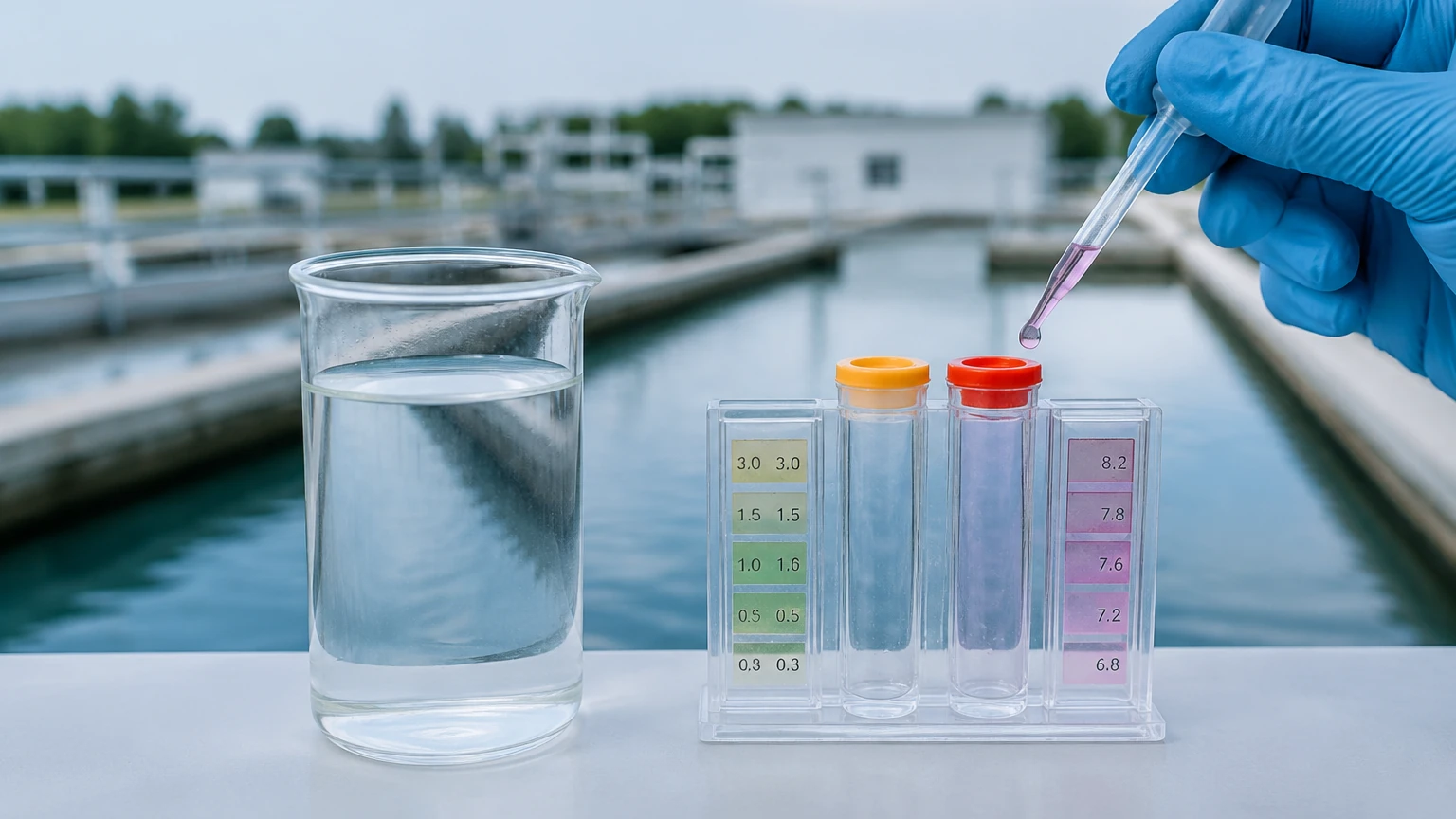
The DPD (N,N-diethyl-p-phenylenediamine) method is the gold standard for laboratory verification but is also available in automated online analyzers. The instrument adds a reagent to a water sample, which reacts with chlorine to produce a pink color. The intensity of the color is measured photometrically at a specific wavelength (typically 510–565 nm). According to the Beer-Lambert Law, the absorbance of light is proportional to the concentration of the colored compound.
| Feature | Amperometric Sensors | Colorimetric (DPD) Analyzers |
| :— | :— | :— |
| Measurement Type | Continuous (Real-time) | Batch (Cyclical) |
| Reagents Required | None (or minimal electrolyte) | Continuous reagent consumption |
| Maintenance | Membrane/Electrolyte replacement | Reagent replenishment, tubing changes |
| Response Time | Very Fast (seconds) | Moderate (minutes per cycle) |
| Interferences | pH, Pressure, Temperature | Turbidity, Sample color |
Selection Criteria for Industrial Chlorine Monitoring
Selecting the right instrument for chlorine residual measurement depends on the specific process environment and the required level of automation. Engineers should evaluate the following factors:
Water Quality and Application
In potable water treatment, free chlorine is the primary metric. However, in wastewater effluent or systems using chloramination, total chlorine measurement is necessary. For high-purity water systems, such as those in the pharmaceutical or semiconductor industries, sensors must be capable of detecting trace levels (parts per billion).
pH Stability
Amperometric measurement is highly sensitive to pH because the ratio of HOCl to OCl- changes as pH fluctuates. Since amperometric sensors primarily measure HOCl, a rise in pH will result in a lower reading even if the total free chlorine remains constant. In systems with fluctuating pH, an integrated pH sensor is required to provide software-based compensation.
Integration with Level Measurement
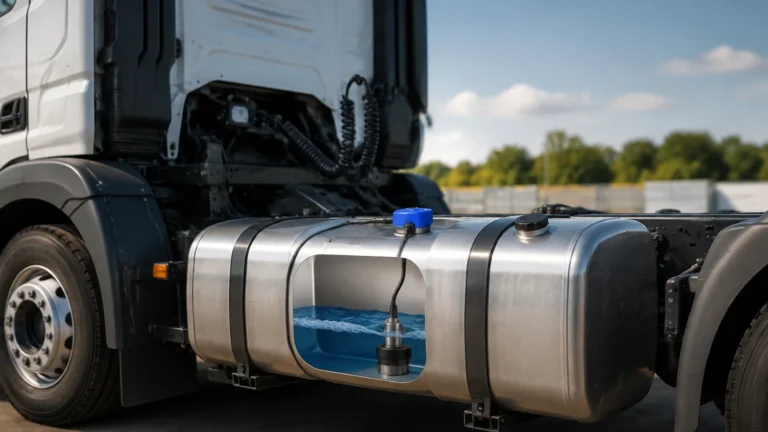
In any chemical dosing skid, chlorine residual measurement is only one part of the control loop. To ensure an uninterrupted supply of disinfectant, the residual analyzer must work in tandem with tank monitoring systems. While the chlorine sensor manages the output quality, industrial level meters manage the input inventory. For instance, radar or ultrasonic level sensors provide real-time data on the volume of sodium hypochlorite remaining in storage tanks.
For engineers designing integrated dosing systems, it is vital to source instruments that offer standardized communication protocols (such as 4-20mA or Modbus). You can Review product options and application support to see how various level measurement technologies can be integrated into your chemical monitoring infrastructure.
Installation Guidelines and Hydraulic Requirements
Proper installation is paramount for accurate chlorine residual measurement. Unlike level meters, which can often be installed at the top of a tank, chlorine sensors require a representative sample of the process water.
1. Sample Point Location: The sample should be taken from a point of high turbulence to ensure the chlorine is well-mixed. It must be downstream of the injection point, allowing for sufficient contact time (usually 30 seconds to several minutes depending on the process).
2. Flow Regulation: Amperometric sensors are flow-sensitive. Most require a constant flow rate between 30 and 60 liters per hour (L/h). Using a flow cell with an integrated pressure regulator or a constant-head overflow tank is recommended to prevent measurement drift caused by hydraulic fluctuations.
3. Pressure Limits: Most membrane-covered sensors are rated for low-pressure applications, typically not exceeding 1 bar (14.5 psi) at the inlet. If the process line is high-pressure, a pressure-reducing valve must be installed before the sensor.
4. Drainage: Online analyzers are typically "flow-through" devices. The sampled water must be directed to a drain. In some jurisdictions, DPD-reacted waste must be treated as chemical waste due to the reagents used.
Maintenance, Calibration, and Quality Assurance
To maintain the integrity of chlorine residual measurement data, a rigorous maintenance schedule is required.
* Calibration (Slope and Zero): Sensors should be calibrated against a known standard, typically using a portable DPD spectrophotometer. A "zero-point" calibration is performed using dechlorinated water, while a "slope" calibration is performed at the operating concentration.
* Membrane and Electrolyte Care: For amperometric sensors, the electrolyte solution should be replenished every 3 to 6 months, and the membrane cap replaced if it becomes fouled or torn.
* Reagent Management: For DPD analyzers, reagents must be kept cool and shielded from light to prevent degradation. Most systems provide a low-reagent alarm to prevent data loss.
Limitations and Process Interferences
No measurement technology is without limitations. Understanding these interferences prevents false readings and process upsets.
* Temperature: Chemical reaction rates and membrane permeability are temperature-dependent. Most modern analyzers include an NTC or Pt100 thermistor for automatic temperature compensation.
* Biofouling: In wastewater or cooling water, biological growth can coat the sensor membrane or the DPD flow cell, leading to sluggish response times and artificially low readings.
* Oxidizing Interferences: Other oxidants, such as bromine, ozone, or chlorine dioxide, can be detected by chlorine sensors, leading to a "false positive" or over-reporting of the chlorine residual.
Frequently Asked Questions (FAQs)
Q: How often should I calibrate my online chlorine analyzer?
A: For most industrial applications, a weekly verification against a handheld DPD test is recommended. A full recalibration should be performed if the deviation exceeds 10% or after any maintenance task like a membrane change.
Q: Can I use a free chlorine sensor to measure total chlorine?
A: No. A free chlorine sensor is designed to be selective for HOCl and OCl-. Measuring total chlorine (which includes chloramines) requires a specific total chlorine sensor, usually featuring a different electrolyte and membrane configuration that facilitates the reduction of chloramines.
Q: What is the impact of low flow on an amperometric sensor?
A: Amperometric sensors rely on the continuous arrival of chlorine molecules at the cathode. If the flow drops below the manufacturer's specified minimum (e.g., <30 L/h), the sensor will become "starved," and the reported chlorine concentration will drop significantly, even if the actual concentration in the main line is stable.
Q: Does the concentration of the chlorine source affect the sensor?
A: The sensor measures the residual in the process water, not the concentration of the source chemical. However, high-concentration dosing (like 15% sodium hypochlorite) requires robust level monitoring in the storage tank to ensure the dosing pump does not run dry, which would lead to a loss of residual and potential bio-growth in the system.
By adhering to these engineering principles and selecting the appropriate technology for the specific water chemistry, operators can ensure that chlorine residual measurement remains a reliable pillar of their process control strategy.