Best Ingredient Handling System for Bakery
Best Ingredient Handling System for Bakery
In the industrial baking sector, the transition from manual scaling to automated ingredient handling is a critical step for improving batch consistency, reducing waste, and ensuring food safety. The best ingredient handling system for bakery operations is not merely a collection of silos and conveyors, but a precision-engineered ecosystem where level measurement plays a foundational role. Accurate inventory data allows for automated replenishment, precise recipe execution, and the elimination of human error in high-volume production environments.
Whether managing bulk solids like flour and sugar or liquid components such as oils and sweeteners, the efficiency of the system depends on the reliability of the sensors monitoring the storage vessels. This guide explores the technical requirements for these systems, focusing on how level measurement technologies integrate into the broader ingredient handling framework.
The Role of Level Measurement in Ingredient Handling
Automated ingredient handling systems rely on real-time data to manage the flow of materials from storage silos to mixing stations. Without accurate level measurement, a bakery faces risks ranging from production downtime due to empty silos to dangerous overfills that can damage equipment and compromise hygiene.
In the context of the best ingredient handling system for bakery facilities, level sensors provide the "eyes" of the operation. These instruments must withstand the unique challenges of the baking industry, including high dust concentrations in flour silos, the viscosity of liquid sugars, and the strict sanitary requirements of food-grade environments. By integrating advanced sensors from a professional manufacturer like Welk, engineers can ensure that the control system receives high-resolution data for both continuous monitoring and point-level alerts.
Measurement Principles for Bakery Ingredients
Before selecting a system, it is essential to understand the physical principles governing level measurement. Different ingredients interact with sensor signals in distinct ways, necessitating a tailored approach for solids and liquids.
Radar Level Measurement (Time-of-Flight)
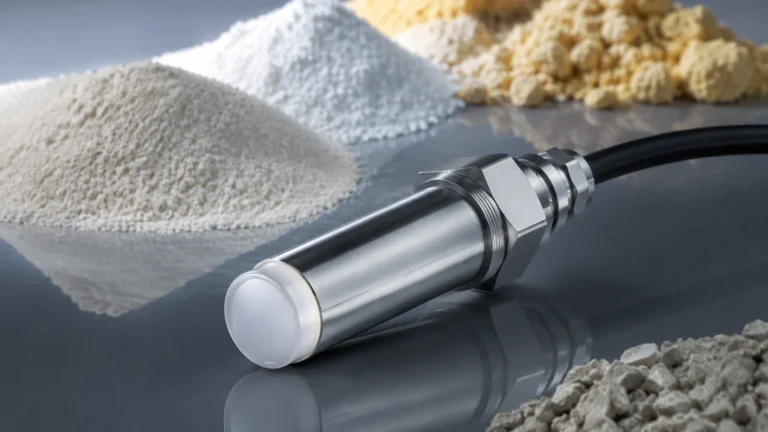
Radar level meters, particularly high-frequency non-contact units (e.g., 80 GHz), are often considered the gold standard for bulk solids. The instrument emits a microwave pulse that reflects off the surface of the ingredient. By measuring the time it takes for the pulse to return, the system calculates the distance and, consequently, the volume of material remaining.
Radar is highly effective for flour and sugar because it is unaffected by the heavy dust clouds generated during pneumatic filling. Unlike ultrasonic waves, radar signals penetrate dust and vapor, providing a stable reading even in turbulent conditions.
Ultrasonic Level Sensors
Ultrasonic sensors use sound waves to detect the level of a substance. While generally more cost-effective than radar, they are better suited for liquid ingredients where dust is not a factor. In a bakery, ultrasonic sensors are frequently used for water tanks or clean oil storage. However, they can struggle in silos containing fine powders because the dust can absorb the sound energy, leading to signal loss.
Hydrostatic Pressure
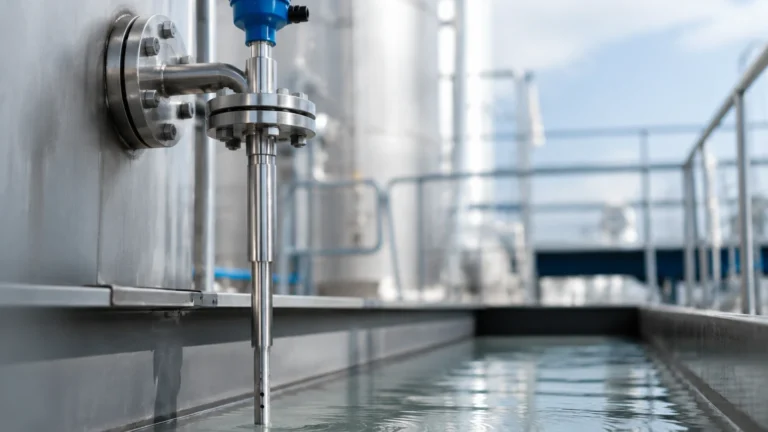
For liquid ingredients stored in tall tanks, such as liquid eggs or corn syrup, hydrostatic pressure transmitters offer a reliable solution. These sensors measure the pressure exerted by the liquid column at the bottom of the tank. Since pressure is directly proportional to the height of the liquid, the system can provide a highly accurate continuous level reading, provided the density of the liquid remains constant.
Point Level Detection (Switches)
While continuous measurement is vital for inventory, point level switches serve as critical safety components. Tuning fork switches or rotary paddle switches are installed at the top and bottom of silos to provide redundant high-level and low-level alarms. This prevents overfilling and ensures the discharge pumps do not run dry.
Choosing the Best Ingredient Handling System for Bakery Applications
Selecting the best ingredient handling system for bakery production requires an evaluation of material characteristics and vessel geometry. The following factors are primary considerations for engineering teams:
1. Material Flow Properties: Flour is prone to "bridging" or "rat-holing," where the material sticks to the sides of the silo. Level sensors must be positioned to account for the angle of repose (the cone shape formed by the material) to ensure the reading reflects the actual volume.
2. Hygiene and Sanitation: All sensors must meet food-grade standards (such as 3-A or EHEDG). This involves using stainless steel (316L) process connections and ensuring the sensor face is easy to clean and free of crevices where bacteria could grow.
3. Dust Explosion Risks: Flour dust is highly combustible. Any electrical equipment used in the ingredient handling system must be appropriately rated (e.g., ATEX or IECEx) for hazardous zones.
4. Accuracy Requirements: For high-cost ingredients like specialty seeds or cocoa powder, higher accuracy sensors (±2mm) are required to maintain tight inventory control.
Technical Selection Table
| Ingredient Type | Recommended Technology | Primary Benefit | Potential Limitation |
| :— | :— | :— | :— |
| Flour / Sugar | 80 GHz Radar | High dust penetration | Higher initial cost |
| Vegetable Oil | Ultrasonic / Hydrostatic | Non-contact / Reliable | Foam can affect ultrasonic |
| Liquid Sweeteners | Hydrostatic Pressure | Accurate for viscous liquids | Sensitive to density changes |
| Yeast Slurry | Radar (Non-contact) | Sanitary, no moving parts | Surface agitation |
| Toppings (Seeds) | Rotary Paddle Switch | Robust point detection | Mechanical wear over time |
Installation Considerations and Best Practices
Even the highest quality sensor will underperform if installed incorrectly. For the best ingredient handling system for bakery efficiency, follow these installation guidelines:
* Avoid the Fill Stream: Sensors should never be mounted directly in the path of the incoming material. This creates signal noise and can cause physical damage to the instrument.
* Nozzle Geometry: For radar and ultrasonic sensors, the mounting nozzle should be as short and wide as possible to prevent "ringing" or false echoes from the nozzle walls.
* Dead Zones: Every non-contact sensor has a "dead zone" (blocking distance) near the sensor face where measurement is impossible. Ensure the sensor is mounted high enough that the maximum fill level does not enter this zone.
* Internal Obstructions: In silos with internal ladders, braces, or agitators, use sensors with "false echo suppression" capabilities. This allows the software to map out static obstructions and ignore them during measurement.
Limitations and Operational Risks
While modern instrumentation is highly advanced, there are inherent limitations to consider in bakery environments:
* Signal Attenuation: In extremely large silos (over 30 meters), the signal strength of some sensors may weaken. High-gain antennas or specialized radar units are required for these applications.
* Surface Turbulence: In liquid tanks with high-speed agitators, the surface may be too turbulent for a clean ultrasonic reflection. In these cases, a stilling well (a pipe that stabilizes the liquid surface) or a guided wave radar may be necessary.
* Condensation: High-humidity bakeries can experience condensation on sensor faces. Selecting sensors with PTFE-coated antennas or integrated air purge systems can help shed moisture and maintain signal integrity.
Frequently Asked Questions (FAQ)
Q: Can one sensor type be used for all bakery ingredients?
A: While 80 GHz radar is the most versatile for both solids and liquids, it may be over-engineered for simple water tanks. A hybrid approach—using radar for bulk solids and ultrasonic or hydrostatic for liquids—is often the most cost-effective strategy for the best ingredient handling system for bakery operations.
Q: How often do level sensors in a bakery need calibration?
A: Most modern digital radar and ultrasonic sensors are factory-calibrated and do not drift over time. However, a yearly verification check is recommended to ensure that material buildup on the sensor face hasn't reached a critical level.
Q: How does dust affect the accuracy of flour measurement?
A: Traditional ultrasonic sensors are significantly affected by dust, as the particles scatter the sound waves. Non-contact radar, however, uses electromagnetic waves that are largely unaffected by dust particles, making it the preferred choice for flour silos.
Q: Is it necessary to use a continuous level sensor if I only need to know when the silo is full?
A: For simple overfill protection, a point level switch is sufficient. However, for efficient production planning and to avoid emergency deliveries, continuous level measurement is essential for modern bakery management.
For more detailed technical specifications and to explore specific instrument models for your facility, visit the Main Page of our product catalog. By selecting the right measurement technology, bakeries can transform their ingredient handling from a manual chore into a streamlined, data-driven process.
Download Best Ingredient Handling System for Bakery as a PDF