Beverage Line Efficiency
Beverage Line Efficiency
In the high-volume world of beverage production, efficiency is measured by more than just the speed of the bottling line. True beverage line efficiency is a composite of throughput, waste reduction, and the minimization of unplanned downtime. At the heart of this optimization lies precise process control, specifically the accurate measurement of liquid levels in storage tanks, mixing vessels, and filler bowls. For engineers and plant managers, selecting the correct level measurement technology is a fundamental step in ensuring that the production facility operates at peak performance.
Welk, as a professional manufacturer of industrial level measurement instruments, provides the technical foundation necessary to achieve these goals. By integrating advanced radar, ultrasonic, and hydrostatic sensors, facilities can transition from reactive maintenance to proactive process optimization. To explore the full range of instrumentation available for these applications, users can visit the Main Page for detailed technical specifications and product options.
Measurement Principles for Beverage Applications
Before selecting a sensor to improve beverage line efficiency, it is essential to understand the physics behind the various measurement technologies. Each principle has distinct advantages and limitations depending on the physical properties of the beverage, such as carbonation, foam, and viscosity.
Radar Level Measurement (FMCW)
Frequency Modulated Continuous Wave (FMCW) radar is often considered the gold standard for beverage applications. The sensor emits a continuous signal with a constantly changing frequency. The signal reflects off the liquid surface and is received by the antenna. The difference in frequency between the emitted and received signal is proportional to the distance.
Modern 80GHz radar sensors are particularly effective because their narrow beam angle allows them to avoid internal tank obstructions like agitators or spray balls. Furthermore, radar is largely unaffected by changes in pressure, temperature, or the presence of vapors, making it ideal for carbonated soft drinks or hot-fill juices.
Ultrasonic Level Measurement
Ultrasonic sensors operate on the Time-of-Flight (ToF) principle. The sensor transmits an ultrasonic pulse that travels through the air, hits the liquid surface, and returns to the transducer. The distance is calculated based on the speed of sound. While cost-effective, ultrasonic sensors are sensitive to the gas composition in the headspace. In beverage lines where CO2 or nitrogen is used for blanketing, the speed of sound changes, which can lead to measurement errors unless compensated for correctly.
Hydrostatic Pressure Measurement
This principle relies on the relationship between the height of a liquid column and the pressure it exerts at the base of the tank ($P = \rho \cdot g \cdot h$). By measuring the head pressure with a sensitive diaphragm, the level can be calculated. Hydrostatic transmitters are widely used in atmospheric tanks for milk or water. However, in pressurized vessels (such as bright beer tanks), a differential pressure setup is required to subtract the top-gas pressure from the total bottom pressure.
Key Selection Criteria for Beverage Line Efficiency
Improving beverage line efficiency requires matching the instrument to the specific process environment. Engineers must evaluate several criteria to ensure long-term reliability and accuracy.
1. Product Characteristics: Does the beverage foam? Is it carbonated? Foam can absorb ultrasonic signals and scatter low-frequency radar waves. High-frequency radar (80GHz) is generally the best solution for penetrating light foam or reflecting off the liquid surface beneath it.
2. Sanitary Requirements: Beverage production requires strict adherence to food safety standards. Instruments must feature hygienic process connections (such as Tri-clamp or Varivent) and be constructed from FDA-approved materials like 316L stainless steel and PTFE. The surface roughness (Ra) must typically be less than 0.8 μm to prevent bacterial growth.
3. Cleaning Processes: Most beverage lines undergo Clean-in-Place (CIP) or Steam-in-Place (SIP) cycles. Sensors must be able to withstand high temperatures (up to 130°C or 150°C for SIP) and aggressive chemical cleaning agents without losing calibration or suffering hardware failure.
4. Tank Geometry: Small, narrow tanks or vessels with complex internal structures require sensors with narrow beam angles to prevent "false echoes" from walls or agitator blades.
Technical Comparison and Selection Table
The following table provides a practical reference for selecting level measurement technologies based on common beverage industry requirements.
| Technology | Accuracy | Foam Resistance | CIP/SIP Suitability | Primary Application |
| :— | :— | :— | :— | :— |
| 80GHz Radar | ±1 mm | Excellent | High | Carbonated drinks, syrups, juices |
| Ultrasonic | ±0.25% of range | Poor | Moderate | Water storage, wastewater treatment |
| Hydrostatic | ±0.1% to 0.2% | Good | High | Milk silos, wine fermentation |
| Magnetic Gauge| ±5 mm | Excellent | Moderate | External visual monitoring |
| Level Switch | N/A (Point) | Good | High | Overfill protection, pump dry-run |
Installation and Engineering Considerations
Even the most advanced sensor will fail to contribute to beverage line efficiency if installed incorrectly. Proper engineering at the installation phase prevents many common measurement errors.
Mounting Position
For non-contact sensors (Radar and Ultrasonic), the device should be mounted away from the tank wall to avoid interference. A general rule is to keep the sensor at least 200 mm from the wall. Additionally, sensors should not be mounted directly above the filling inlet, as the turbulence and splashing during filling will create erratic readings.
Stilling Wells and Bypass Pipes
In applications with extreme turbulence or heavy surface foam, a stilling well or a bypass pipe can be used. This provides a calm liquid surface for the sensor to measure. However, these must be designed with cleaning in mind; if the beverage contains solids (like fruit pulp), stilling wells can become clogged and create a sanitary risk.
Dead Zones (Blocking Distance)
Every non-contact sensor has a "dead zone" directly beneath the transducer where measurement is impossible. When aiming for maximum beverage line efficiency, tanks are often filled to the brim. Engineers must ensure the sensor is mounted high enough (perhaps using a nozzle) so that the maximum liquid level never enters the dead zone.
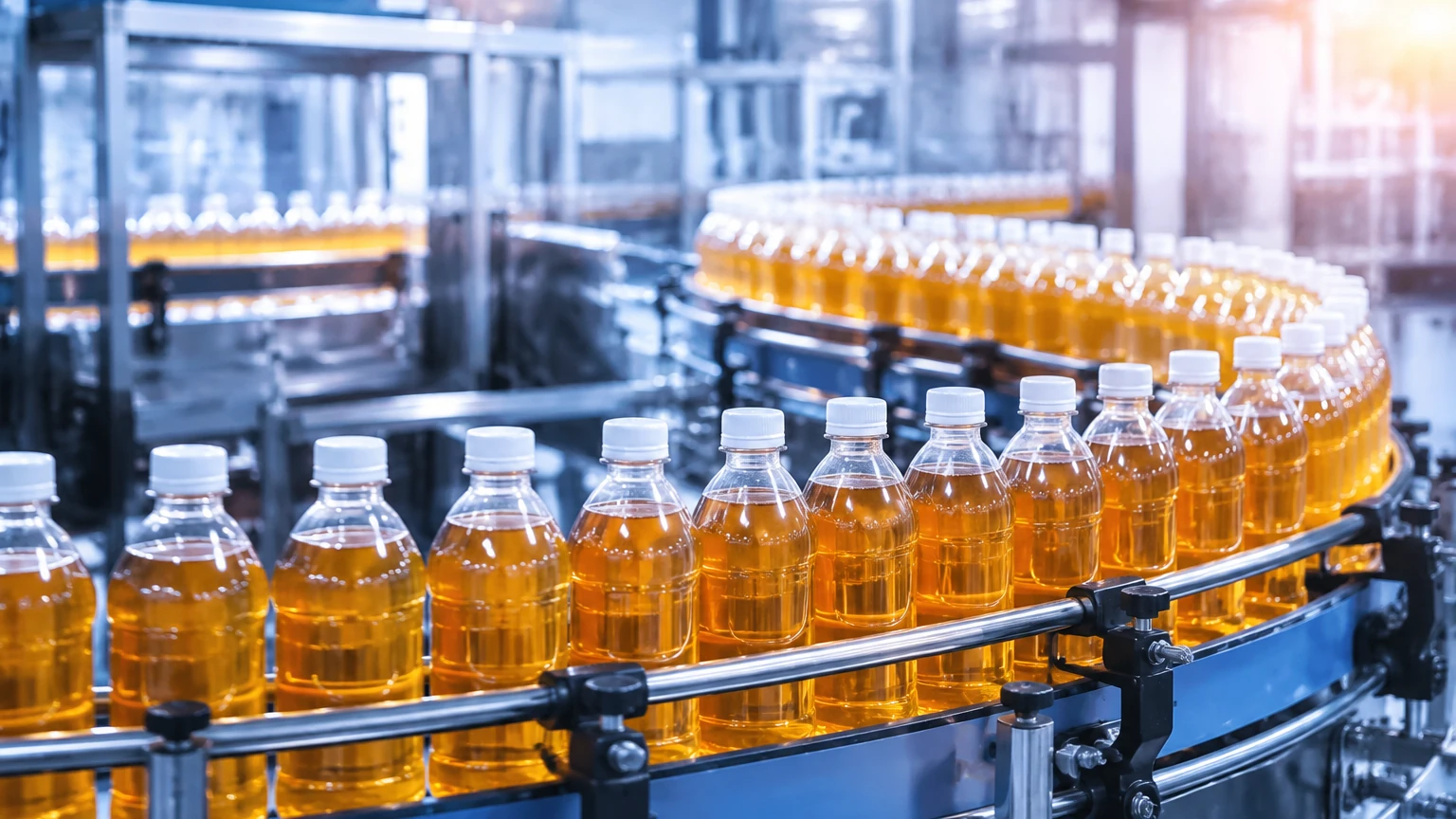
Impact of Precise Level Control on Efficiency
How exactly does level measurement translate to beverage line efficiency? The impact is felt in three primary areas:
1. Reduction of Product Loss (Shrinkage)
Inaccurate level sensors can lead to overfilling or inconsistent batching. In a high-speed line producing 60,000 bottles per hour, even a 1% error in a mixing tank can result in thousands of liters of wasted product over a week. Precise radar measurement ensures that recipes are followed exactly and that every drop of product is accounted for.
2. Prevention of Pump Cavitation and Dry Runs
Level switches and continuous transmitters act as the first line of defense for expensive pumping equipment. If a tank runs dry and a pump continues to operate, the resulting cavitation can destroy seals and impellers. By utilizing reliable level data, the automation system can trigger an orderly shutdown or switch to a secondary tank, preventing costly mechanical repairs and downtime.
3. Optimized Cleaning Cycles
By knowing the exact level and the "emptiness" of a tank, CIP systems can be triggered more efficiently. Instead of running cleaning cycles based on estimated times, sensors can confirm when a tank is fully drained, reducing water and chemical usage while ensuring the line is ready for the next product changeover as quickly as possible.
Limitations and Challenges
While modern technology has solved many issues, certain limitations remain.
* Heavy Foam: While 80GHz radar is resilient, extremely thick, dense foam (like that found in some beer fermentation processes) can still attenuate signals. In these cases, hydrostatic pressure or vibrating fork level switches may be more reliable for point-level detection.
* Condensation: In cold-fill applications, condensation can form on the sensor lens. While many Welk sensors feature drip-off antenna designs to minimize this, heavy buildup can still interfere with ultrasonic pulses. Radar is significantly more resistant to this phenomenon.
* High Pressure: In carbonation tanks, the high dielectric constant of the gas phase at high pressures can slightly shift the perceived distance in radar applications. Professional calibration and the use of the Main Page resources for parameter adjustment are recommended for these specialized environments.
Frequently Asked Questions (FAQs)
Q: Why is 80GHz radar preferred over 26GHz for beverage tanks?
A: 80GHz radar has a much narrower beam (often as small as 3 degrees). This allows the signal to pass through narrow nozzles and avoid hitting agitators or internal tank walls, which are common in beverage processing vessels.
Q: Can ultrasonic sensors be used for beer or soda?
A: It is generally not recommended. The high concentration of CO2 in the headspace changes the speed of sound significantly compared to air, leading to large measurement errors. Radar is a much more stable choice for carbonated liquids.
Q: How do I ensure my level sensor is "food-grade"?
A: Look for certifications such as 3-A or EHEDG. Ensure the wetted parts are 316L stainless steel and that the process connection is a sanitary type like a Tri-clamp, which eliminates crevices where bacteria can hide.
Q: What is the maintenance schedule for a radar level meter?
A: Radar meters are solid-state and have no moving parts, so they require very little maintenance. Periodic visual inspection of the antenna for buildup and an annual calibration check are usually sufficient to maintain beverage line efficiency.
Conclusion
Achieving high beverage line efficiency is a technical challenge that requires a deep understanding of both the product and the instrumentation. By selecting the right measurement principle—whether it be the precision of 80GHz radar or the reliability of hydrostatic pressure—and adhering to strict sanitary installation standards, beverage producers can significantly reduce waste and increase throughput. Welk remains a committed partner in this process, providing the industrial-grade tools necessary for modern automation. For further technical guidance and to view our full catalog of solutions, please refer to our Main Page.