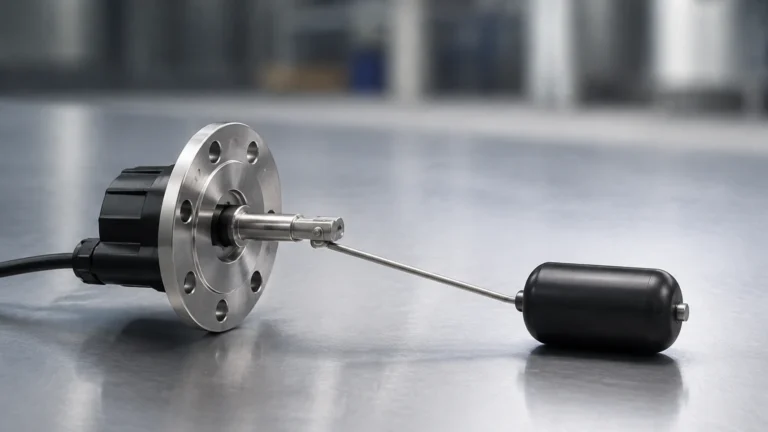
Bin Monitor Level Detector
Bin Monitor Level Detector
In industrial bulk solids handling, the ability to accurately monitor the contents of silos, bins, and hoppers is critical for operational efficiency and safety. A bin monitor level detector serves as the primary interface between the physical material storage and the automated control system. These devices prevent overfills that lead to material waste and equipment damage, while also ensuring that processes do not run empty, which can cause significant downtime.
Welk provides a comprehensive range of industrial level measurement instruments designed to meet the rigorous demands of sectors such as water treatment, chemical processing, and oil and gas. Selecting the correct bin monitor level detector requires a deep understanding of the material being measured, the vessel geometry, and the specific environmental conditions of the application.
Understanding Bin Monitor Level Detection Technologies
Before selecting a specific instrument, it is essential to understand the underlying physical principles used to detect the presence or level of bulk solids. These technologies are generally categorized into point level detection (sensing a specific threshold) and continuous level measurement (providing a real-time percentage or volume).
Rotary Paddle Level Switches
Rotary paddle detectors are among the most common mechanical solutions for point level detection in bins. A low-torque motor slowly rotates a paddle. When material reaches the paddle, it creates mechanical resistance, causing the motor to stall or shift. This shift triggers a microswitch that signals a high, mid, or low level. These are highly reliable for materials with a bulk density of at least 16 kg/m³ (1 lb/ft³).
Vibrating Rod and Tuning Fork Sensors
The vibrating level detector utilizes piezoelectric crystals to vibrate a rod or a fork-shaped element at its natural resonant frequency. When the element is covered by bulk solids, the vibration is dampened. The electronic circuit detects this change in frequency or amplitude and switches the output. This technology is ideal for fine powders and low-density materials where mechanical paddles might be too heavy.
Capacitance Level Sensors
Capacitance sensors operate by measuring the change in electrical capacitance between the sensor probe and the vessel wall (or a reference probe). As material fills the bin, it replaces air, which has a lower dielectric constant. This change in capacitance is proportional to the level of the material. While versatile, these sensors require calibration and can be affected by material buildup on the probe.
Ultrasonic Level Transmitters
Ultrasonic sensors are non-contact devices that emit high-frequency sound pulses. The pulses reflect off the surface of the material and return to the sensor. By measuring the "time of flight," the device calculates the distance to the material. These are effective for many applications but can struggle in environments with heavy dust or high noise, as sound waves can be scattered or absorbed.
Radar Level Meters
Radar technology, particularly Frequency Modulated Continuous Wave (FMCW) or Pulsed Radar, uses electromagnetic waves rather than sound. Because radar waves are not affected by air temperature, pressure, or heavy dust, they are often the preferred choice for continuous monitoring in challenging silo environments. Radar can penetrate dust clouds that would render ultrasonic sensors ineffective.
Key Selection Criteria for Bulk Solid Monitoring
Choosing a bin monitor level detector is not a one-size-fits-all process. Engineers must evaluate several factors to ensure long-term reliability.
1. Material Density and Particle Size: Lightweight powders require high-sensitivity vibrating forks, while heavy ores or rocks may require heavy-duty rotary paddles or non-contact radar to avoid mechanical damage.
2. Dielectric Constant: For capacitance and radar sensors, the dielectric constant ($\\epsilon_r$) of the material is vital. Materials with low dielectric constants (like plastic pellets) reflect radar waves less effectively than metallic ores or moist grains.
3. Moisture Content: High moisture can cause material to clump or stick to sensors. In such cases, non-contact methods or sensors with "active shield" technology to ignore buildup are necessary.
4. Vessel Geometry and Internal Obstructions: Bins often contain ladders, agitators, or reinforcement struts. A bin monitor level detector must be positioned to avoid these obstructions, or in the case of radar, have software capabilities to "map out" or ignore false reflections.
5. Environmental Conditions: Consider the temperature and pressure inside the bin. If the process involves explosive dust, the detector must carry appropriate ATEX or IECEx certifications.
Technology Comparison and Selection Table
The following table provides a general guideline for selecting a bin monitor level detector based on common industrial requirements.
| Technology | Type | Best For | Limitations | Maintenance Level |
| :— | :— | :— | :— | :— |
| Rotary Paddle | Point | Grains, plastics, sand | Mechanical wear, heavy loads | Medium |
| Vibrating Rod | Point | Fine powders, fly ash | High-viscosity coatings | Low |
| Capacitance | Point/Cont. | Liquids, granules | Sensitive to moisture changes | Medium |
| Ultrasonic | Continuous | Liquids, some solids | Affected by dust and foam | Low |
| Radar | Continuous | Heavy dust, high silos | Higher initial cost | Very Low |
Installation Guidelines for Optimal Performance
Proper installation is as important as selecting the right technology. Even the most advanced bin monitor level detector will fail if it is poorly positioned.
Avoiding the Fill Stream
Never install a level detector directly in the path of the incoming material. The force of the falling material can damage mechanical probes and cause significant signal noise for ultrasonic and radar units. If the sensor must be near the fill point, a protective baffle or shield should be installed.
Accounting for the Angle of Repose
Bulk solids do not sit flat like liquids; they form a cone when filling (angle of repose) and an inverted cone when emptying. A sensor mounted near the wall will report a different level than one mounted in the center. For continuous measurement, the sensor is typically mounted at 1/6th to 1/3rd of the diameter from the vessel wall to represent the average volume accurately.
Mounting and Orientation
* Side Mounting: Common for point level switches (high/low alarms). Ensure the probe is angled slightly downward to prevent material from collecting on top of the sensor body.
* Top Mounting: Standard for continuous transmitters. Ensure the sensor has a clear "line of sight" to the material surface.
* Nozzle Length: For radar and ultrasonic sensors, the mounting nozzle should be as short as possible. If the nozzle is too long, the signal may reflect off the internal edges of the pipe, creating a "near-zone" interference.
Operational Limitations and Maintenance Requirements
While modern bin monitor level detectors are designed for industrial durability, they are not immune to the harsh conditions of bulk handling.
* Material Buildup: In applications involving cement or moist flour, material can cake onto the sensor. This is particularly problematic for capacitance and ultrasonic sensors. Periodic cleaning or the use of self-cleaning vibrating probes may be required.
* Abrasive Wear: In mining or aggregate industries, the constant flow of abrasive material can wear down rotary paddles or probe coatings. Hardened steel or specialized polymer coatings can extend the service life.
* Signal Attenuation: In very tall silos (over 30 meters / 100 feet), the signal return for non-contact sensors can become weak. High-gain antennas or lower-frequency radar units are often used to overcome this.
For engineers looking to integrate these systems into a broader automation framework, it is helpful to Review product options and application support to ensure the chosen device matches the communication protocols (such as 4-20mA HART, Modbus, or Profibus) required by the facility.
Frequently Asked Questions (FAQs)
Q: Can a single bin monitor level detector handle both high and low-level alarms?
A: A continuous level transmitter (like radar) can be programmed with multiple relay outputs to act as both a high and low alarm. However, for safety-critical applications, it is standard engineering practice to use independent point level switches for high-high (overfill) protection.
Q: How does dust affect radar vs. ultrasonic sensors?
A: Ultrasonic sensors rely on air as a medium for sound travel. Heavy dust changes the density of the air and can absorb the sound energy, leading to signal loss. Radar uses electromagnetic waves that pass through dust particles with negligible interference, making it superior for dusty environments like flour mills or cement silos.
Q: Is calibration required for all bin monitors?
A: Point level switches like rotary paddles and vibrating forks usually require little to no calibration. Capacitance and continuous transmitters (ultrasonic/radar) require a setup process where the "empty" and "full" distances are programmed into the device.
Q: What is the best sensor for very light powders?
A: Vibrating rod or tuning fork sensors with high-sensitivity settings are typically best for light powders (densities as low as 5-10 kg/m³). Some specialized capacitance sensors can also be tuned for these applications.
By following these technical guidelines and understanding the specific needs of the stored material, facilities can implement a robust bin monitor level detector system that enhances safety and optimizes inventory management. For further technical specifications and customized OEM/ODM solutions, visiting the Main Page of a dedicated manufacturer like Welk provides access to the latest advancements in level measurement technology.